
Complete guide to Sighetu Marmației
A town on the Tisza at the Ukrainian border and the historic capital of Maramureș: the Memorial to the Victims of Communism in a former political prison, the ethnographic museums, the town's Jewish heritage and the wooden villages around it.
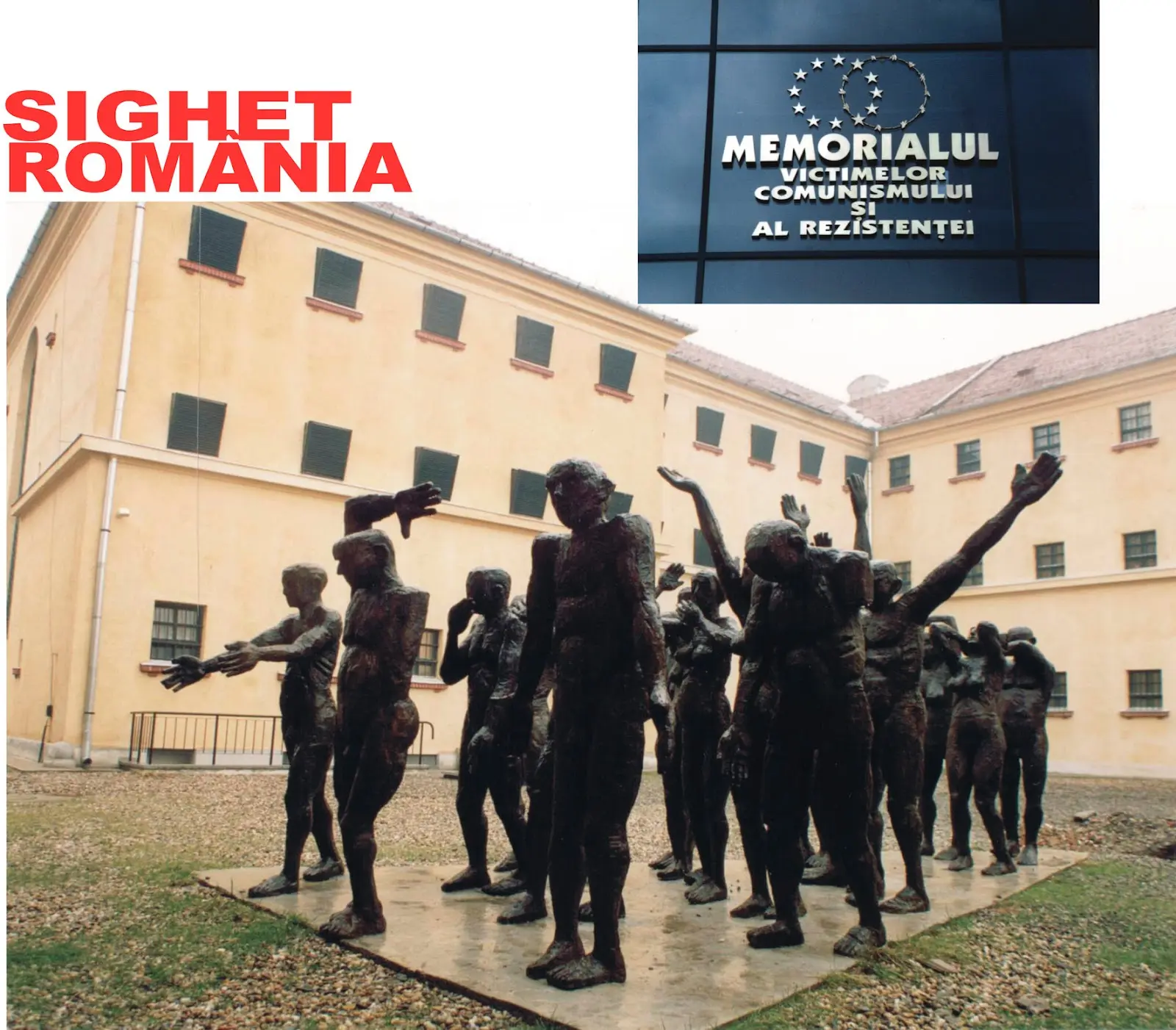
Sighetu Marmației sits in Romania's far north, on the Tisza, with Ukraine a few hundred metres away across the water. It is a small town of low houses and a quiet central square, and yet it holds one of the most important sites of memory in Central Europe. Few people leave it quite as they arrived.
Why Sighetu Marmației
Sighet is the historic capital of Maramureș and, for many travellers, the gateway to Romania's most archaic region. The town works on two registers that seem hard to reconcile but together explain the place: on one side the painful memory of the twentieth century, preserved in a former political prison turned memorial; on the other the wood civilisation of the surrounding villages, with churches, carved gates and farmsteads that are still lived in.
- It is the natural base for Săpânța, the Iza Valley and the Mara Valley — all less than an hour away.
- It is a town that is multi-ethnic through history: Romanian, Hungarian, Ukrainian, Jewish, German, with traces of each community in its buildings and street names.
- It is best seen on foot and unhurried: the centre is compact and the main museums are minutes apart.
One thing is worth saying up front: Sighet is not a spectacular town in itself. It has no citadel, no monumental pedestrian centre, and it makes no attempt to win you over. Its value lies in what it preserves — memory, museums, a rare geographical position — and in what sits a few kilometres around it.
If you want the wider picture of the region before the detail, start from the guide to Maramureș and come back here for the town.
A town on the Tisza, at the northern border
The Tisza draws the border with Ukraine at the very edge of town, and a pedestrian bridge connects it with the settlement on the far bank. That sense of being at the country's edge is part of Sighet's identity: here the roads stop going north and turn inland instead, up the valleys that lead into the mountains.
The centre keeps a civic architecture of the nineteenth and early twentieth centuries, with the facades of a Central European provincial town. Among its places of worship, the Reformed Church is one of the oldest testimonies of the Hungarian community here. For a green break, locals head to Grădina Morii, the town's leisure park, good for an end-of-day walk.
The Memorial to the Victims of Communism and of the Resistance
The building in the centre of Sighet was a political prison. Many of interwar Romania's leaders were held here and died here — ministers, academics, bishops, politicians imprisoned without real trial and with no known grave. Today the Memorial to the Victims of Communism and of the Resistance occupies the former cells as a museum and centre of studies, and is regarded as one of the most important sites of memory in Central Europe.
A visit here is not a sightseeing stop and should not be treated as one. The cells have been turned into thematic rooms, arranged by year and by subject, and the route asks for time and silence. A few practical things, plainly said:
- Allow at least two hours. The texts are dense, and hurrying makes the visit pointless.
- Go in the morning if you can. The rest of the day will need air afterwards.
- Think carefully about bringing small children. The subject is heavy, and some rooms are explicitly about death and torture.
- Keep your voice down. In this building people are reading the names of relatives.
This is not a place to call unmissable. It is a place you visit because it happened.
The town's Jewish heritage
Until the middle of the twentieth century, Sighetu Marmației was an important centre of Jewish life in northern Transylvania. In 1944 the town's Jewish community was deported. Among the survivors was Elie Wiesel, born here, a writer and Nobel Peace Prize laureate who turned his testimony about the Holocaust into literature and into a public duty.
Anyone who walks the centre with that knowledge sees the town differently: part of its buildings, its courtyards and the silences between its houses belong to a community that did not return. It deserves to be stated soberly, without ornament, because it is part of what Sighet is today.
The ethnographic museums
The second Sighet, the one of peasant civilisation, is best seen in two museums:
- The Maramureș Village Museum — an open-air museum on a hill at the edge of town, with houses, outbuildings, gates and wooden churches brought from the region's villages and rebuilt there. It is the best introduction to the timber architecture of Maramureș, especially if you have no time to work through the villages one by one.
- The Ethnographic Museum of Maramureș — the indoor collection, with textiles, costumes, household objects, tools and ceremonial masks. It complements the open-air museum: there you see the house, here you see what was inside it.
Both can be done in the same day at an unhurried pace.
Nearby: Săpânța
Less than half an hour to the west lies Săpânța and its Merry Cemetery — crosses painted blue, each with a portrait of the person who died and an epitaph in verse, sometimes wry and almost always direct. The same village holds Peri Monastery, with one of the tallest wooden churches in the world.
For the full itinerary of sights in and around town, see what to see in Sighetu Marmației and Maramureș.
Getting there and getting around
- By car is much the best option. The villages of the Iza and Mara valleys cannot be visited seriously without one, and the roads are short but winding — allow more time than the map suggests.
- By train or coach you can reach the town itself, but for the rest of the region you will depend on local transport or a driver.
- On foot is enough within town: the memorial, the ethnographic museum and the centre are close together. The Village Museum involves a short climb.
When to go
- Late spring and early summer — everything is green, the orchards are in blossom and the villages look their best.
- Summer — the long days help, but midday light is harsh for photography and the organised groups reach Săpânța around noon. Set out early.
- Autumn — colour along the valleys, low light and the fruit season. Probably the loveliest time.
- Winter — harsh but authentic; mountain roads demand care, and the visit concentrates on the town.
Food and daily life
Maramureș cooking is rich, salty and honest: smoked fat, sheep and cow cheeses, stuffed cabbage rolls, stews, pies, and at the end horincă — the local plum spirit, strong and served in small glasses, almost ritually. The best meals are not in restaurants but at your hosts' table in a village guesthouse, where what is cooked is what the house and the garden have.
- Arrange dinner in advance if you are staying in a village. Restaurants close early and in some places there are none.
- Cash remains useful in small villages and with roadside sellers.
- Sunday morning is when the villages are at church; it is the loveliest moment to see them and the one that asks for the most discretion.
Things to know before you go
- You are at a border. Carry your documents; if you intend to cross into Ukraine, check the situation at the crossing separately.
- Phone signal is good in town and patchy in the valleys. Download the map offline.
- Church dress — shoulders and knees covered, especially at monasteries.
- Photographing people requires permission. The answer is almost always yes, but the asking is what separates a guest from a tourist.
How long to stay
Two nights is the sensible minimum: one day for the town and the memorial, one for Săpânța and the nearby villages. With three nights you can take the Iza Valley at leisure. For accommodation options, from the town centre to village farmsteads, see where to stay in Sighetu Marmației and Maramureș.
Plan your trip
Stays nearby
Stays in Romania
Experiences
Tours & activities
Guided tours, day trips and hand-picked experiences via GetYourGuide — free cancellation on most.
See all experiencesGetting to Romania
Flights, transfer & car
Fly into Romania
Compare fares to Bucharest Otopeni (OTP) and regional airports — Cluj, Sibiu, Iași, Timișoara.
Airport transfer
Private, fixed-price door-to-door transfer — driver waiting from the moment you land.
Rent a car — see the real Romania
A rental car is the key to Romania: the Transfăgărășan, the painted monasteries of Bucovina, mountain roads and the villages of Maramureș that no train reaches.
Find a car











