
Faith & art
Monasteries & churches
The painted monasteries of Bukovina, the ensembles of Oltenia and Moldavia, the wooden churches of Maramureș — five centuries of faith and colour, many UNESCO-listed.
 Monastery
Mănăstirea Bârsana
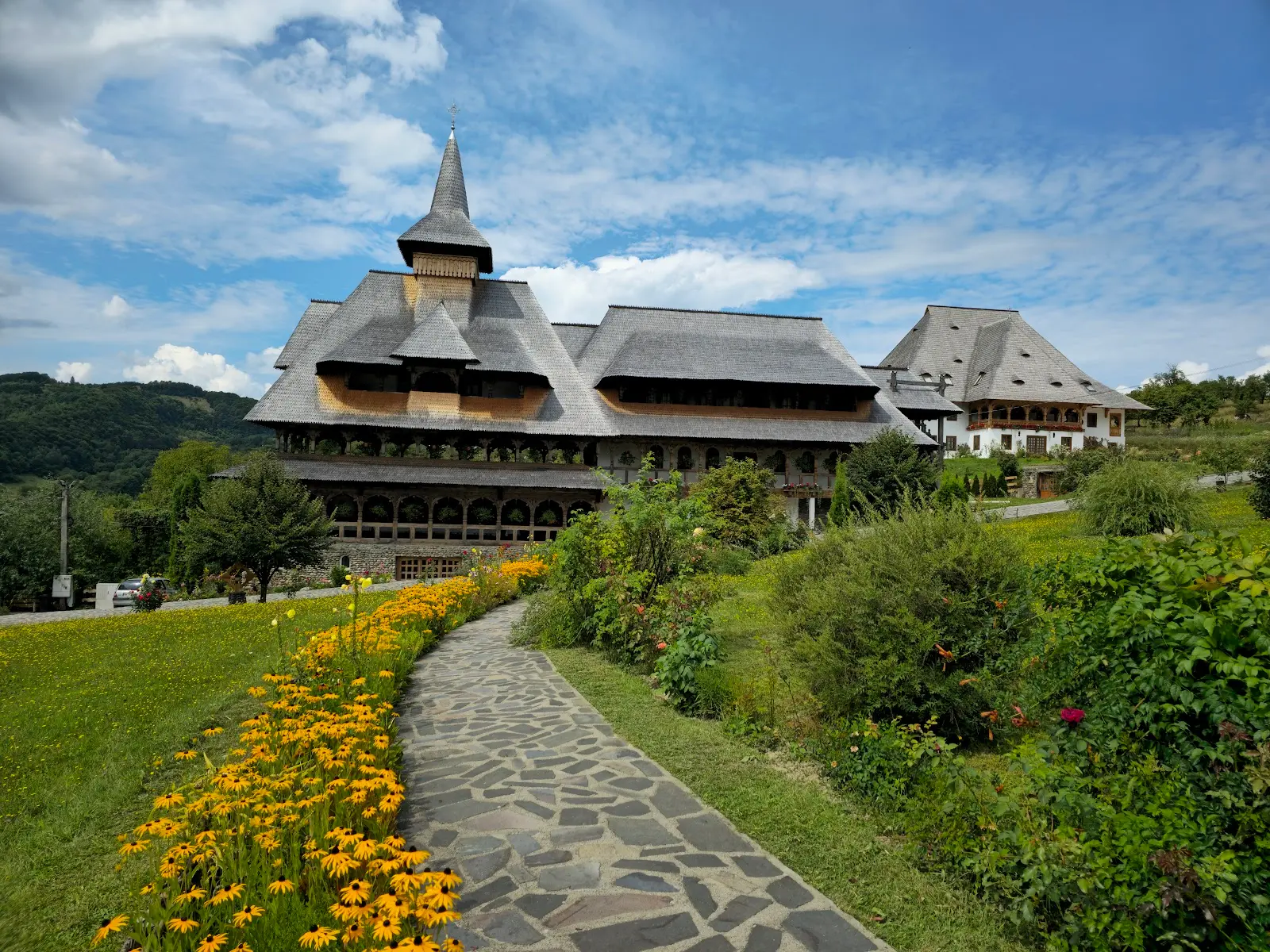
Bârsana Monastery in Maramureș is the most spectacular expression of wooden architecture in northern Romania, an ensemble of churches, cells and carved gates that seems a gateway to heaven. Although the present monastic community was re-established in the 1990s, the tradition of the place reaches much further back, and the new buildings were raised by local craftsmen in the authentic Maramureș style, with slender, soaring spires, cascading shingle roofs and lacework in wood. The main church, one of the tallest wooden structures in Europe, rises skyward above a well-tended flower garden. The whole complex, set on a hill, breathes calm and craftsmanship. It is an essential stop on the trail of Maramureș wooden churches, some inscribed on the UNESCO heritage list. Modest dress is advised; check the visiting schedule.
 Church
Șumuleu Ciuc
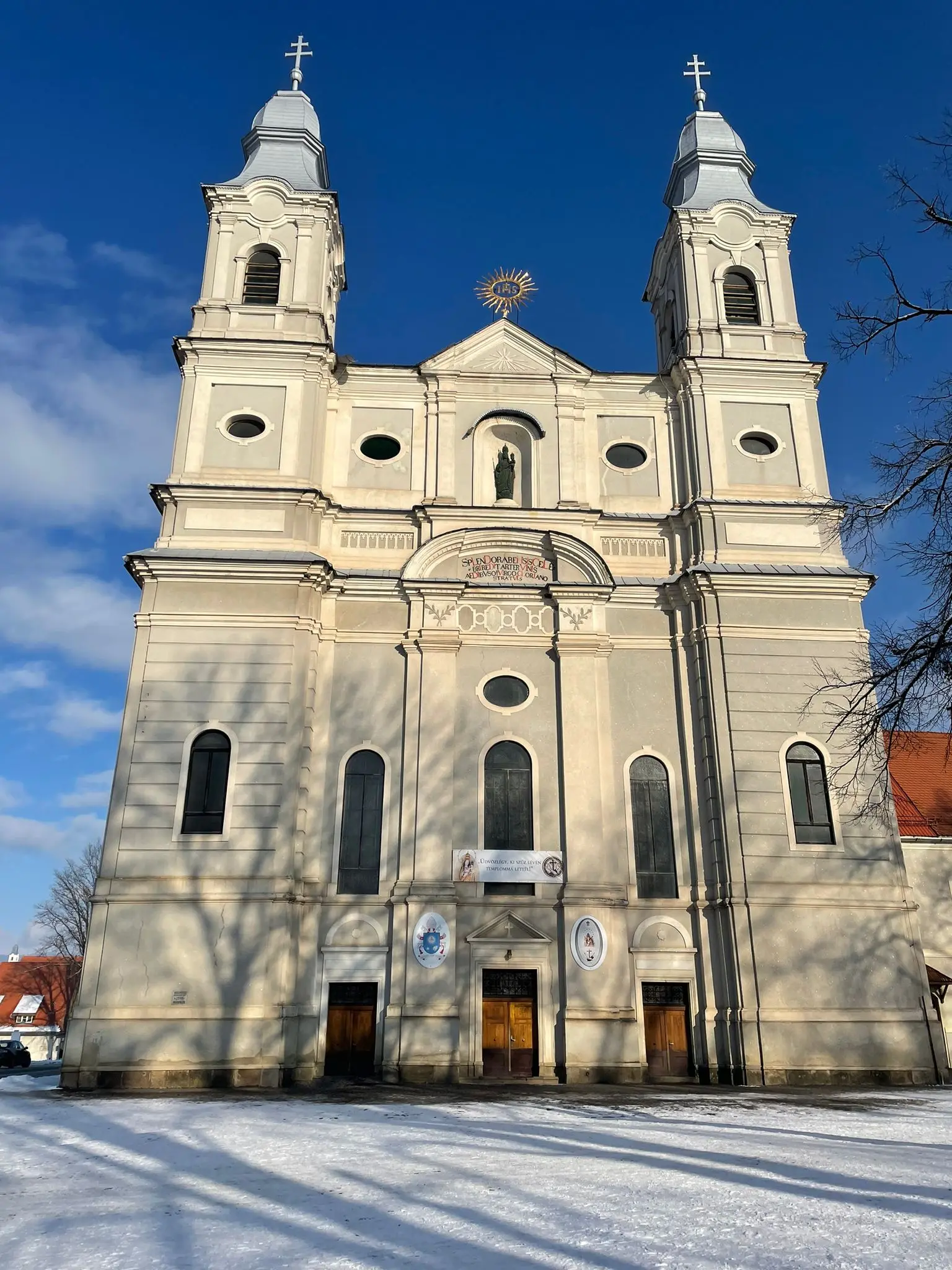
Șumuleu Ciuc is the most important Roman Catholic pilgrimage centre in Romania, set on a hill at the edge of the town of Miercurea Ciuc, in the heart of the Szekler land in eastern Transylvania. The ensemble is dominated by the imposing Franciscan church, a baroque edifice raised in the eighteenth century on the site of older places of worship, which shelters a medieval wooden statue of the Virgin Mary, considered miraculous and deeply venerated by the faithful. The place is renowned above all for the great Whitsun pilgrimage, one of the largest religious events in the region, which year after year gathers impressive crowds of believers from across the Hungarian world, in a display of faith and cultural identity. On the nearby hill lies the saddle where the festive open-air mass is held. The monastic ensemble also preserves an old printing house and heritage objects. The natural setting, with wooded hills, completes the atmosphere of contemplation. Visitors are asked to respect the sacred character of the place and the quiet of the pilgrims.
 Monastery
Mănăstirea Sihăstria
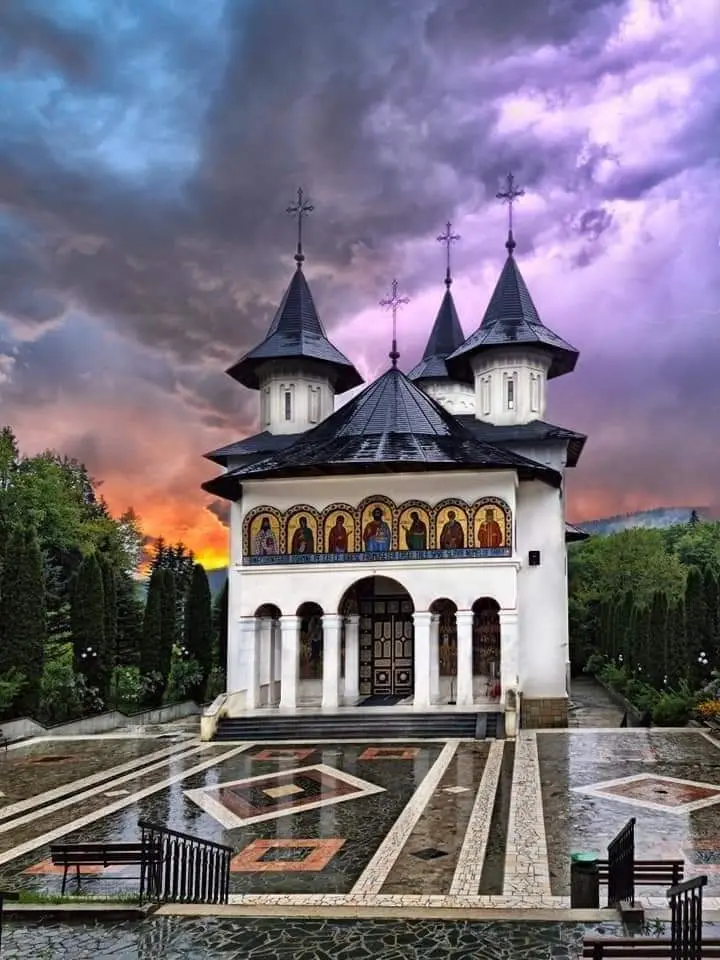
Sihăstria Monastery is one of the best-known and most beloved monasteries in Moldavia, set in a secluded, peaceful clearing in the wooded massif of the mountains near the town of Piatra Neamț, in the famous land of the Neamț monasteries. The settlement, with origins reaching back to the seventeenth century, developed over time into an important centre of spiritual and monastic life, becoming renowned above all for the great spiritual fathers who lived here, among them father Cleopa Ilie and father Paisie Olaru, key figures of twentieth-century Romanian Orthodoxy, to whose graves many pilgrims come. The main church and the cells blend harmoniously into the natural setting, among conifer forests, in an atmosphere of deep peace and contemplation. The monastery preserves worship objects and a valuable library. Its proximity to other settlements, such as Sihla and Secu, places it on a spiritual circuit. Visitors are asked to respect the quiet, the proper dress and the rules of an active monastic settlement.
 Monastery
Mănăstirea Sihla
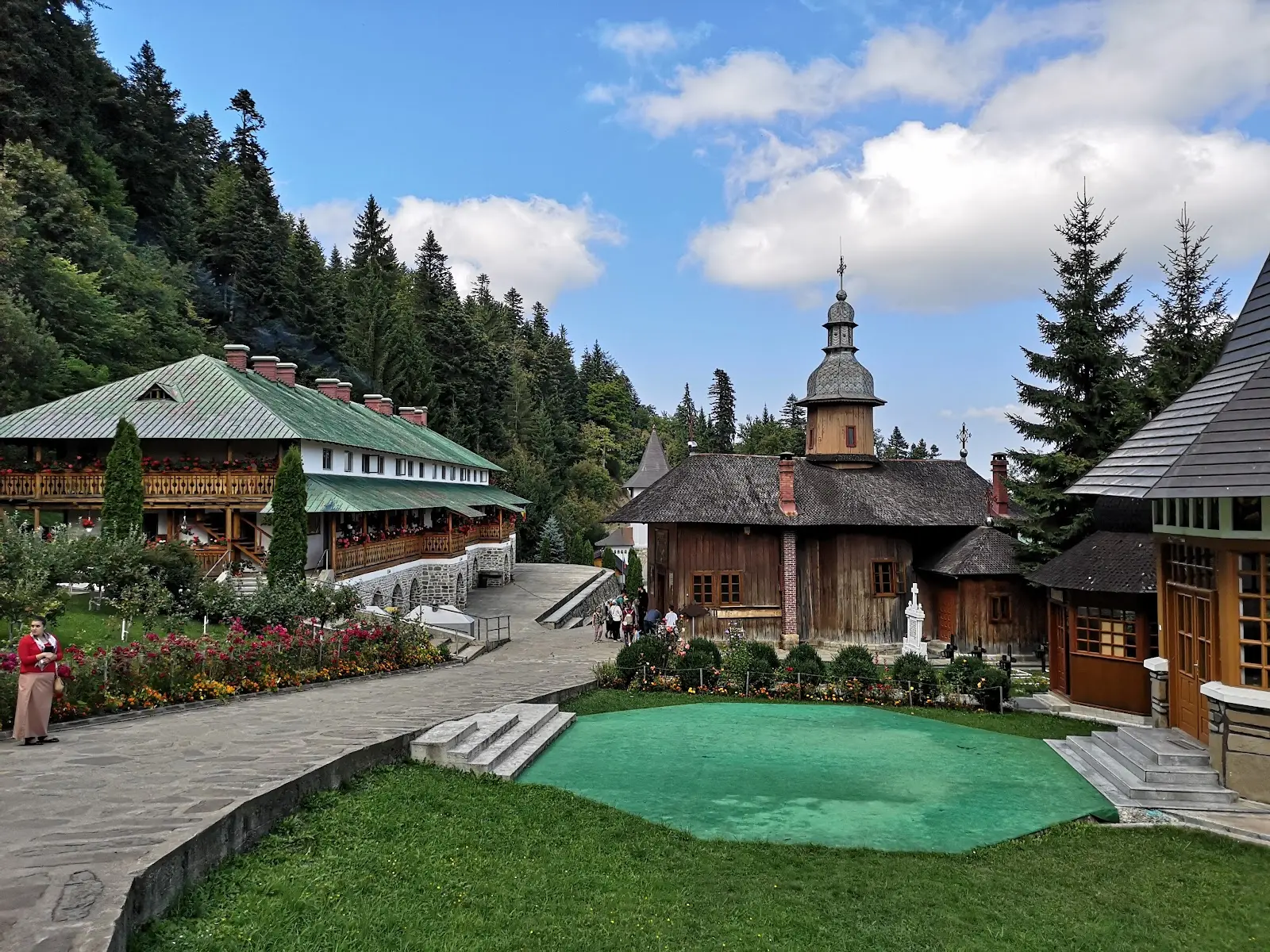
Sihla Monastery, hidden deep in the Stânișoara mountains of Neamț county, is one of the most secluded and spiritually charged retreats in Moldavia. It is closely linked to Saint Theodora of Sihla, who lived in ascetic seclusion in the nearby cave that has since become a place of pilgrimage. The complex includes a small wooden church and a stone one, perched among rocks and coniferous forests in a landscape of wild beauty. The road to the monastery passes through forest and spectacular rock formations, and the stillness of the place, broken only by the rustling of the woods, deepens the sense of contemplation. The cave of Saint Theodora, reached by a marked path, is a special destination for pilgrims. Sihla lies near Sihăstria Monastery and the Ceahlău massif and is often included in a spiritual itinerary through the Neamț region. It is a destination for those seeking peace, untouched nature and a profound sense of spirituality.
 Monastery
Prislop - Mănăstirea Prislop
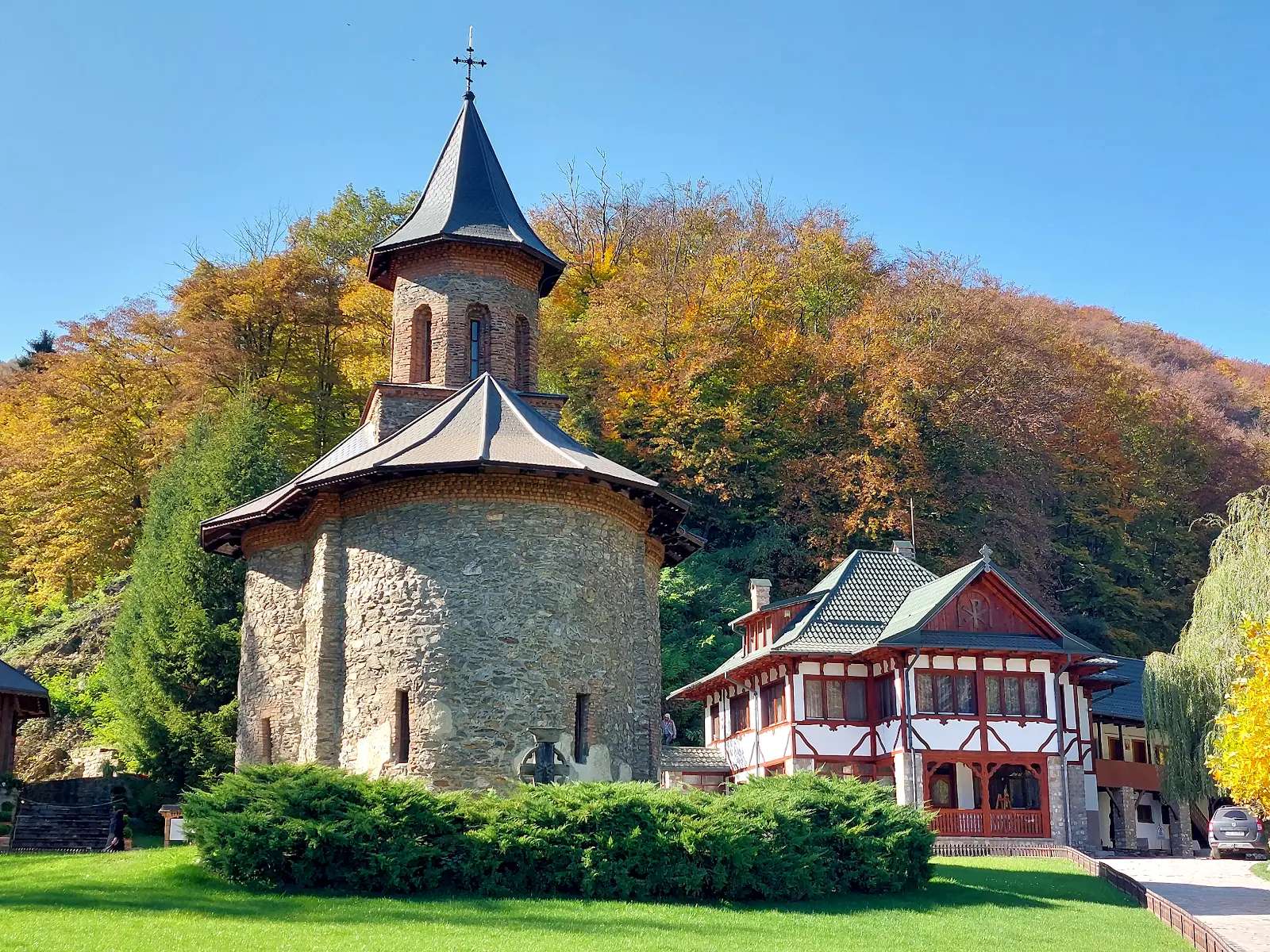
Prislop Monastery, hidden in a wooded glade in the Hațeg Land of Hunedoara county, is one of the most visited pilgrimage sites in Transylvania. Founded in the 14th century and linked to the monk Nicodemus of Tismana, the settlement has a rich history, renewed over the centuries and connected to leading figures of Romanian Orthodoxy. Its contemporary fame owes much to Father Arsenie Boca, a renowned confessor whose grave in the monastery cemetery draws tens of thousands of the faithful each year. The natural setting, with forest, a spring and deep silence, reinforces the atmosphere of contemplation. Visitors find a modest church, monastic cells and a landscape that invites reflection. As an active place of worship, modest dress and respect for services are advised; check the liturgical and visiting schedule.
 Church
Catedrala Mitropolitană Iași
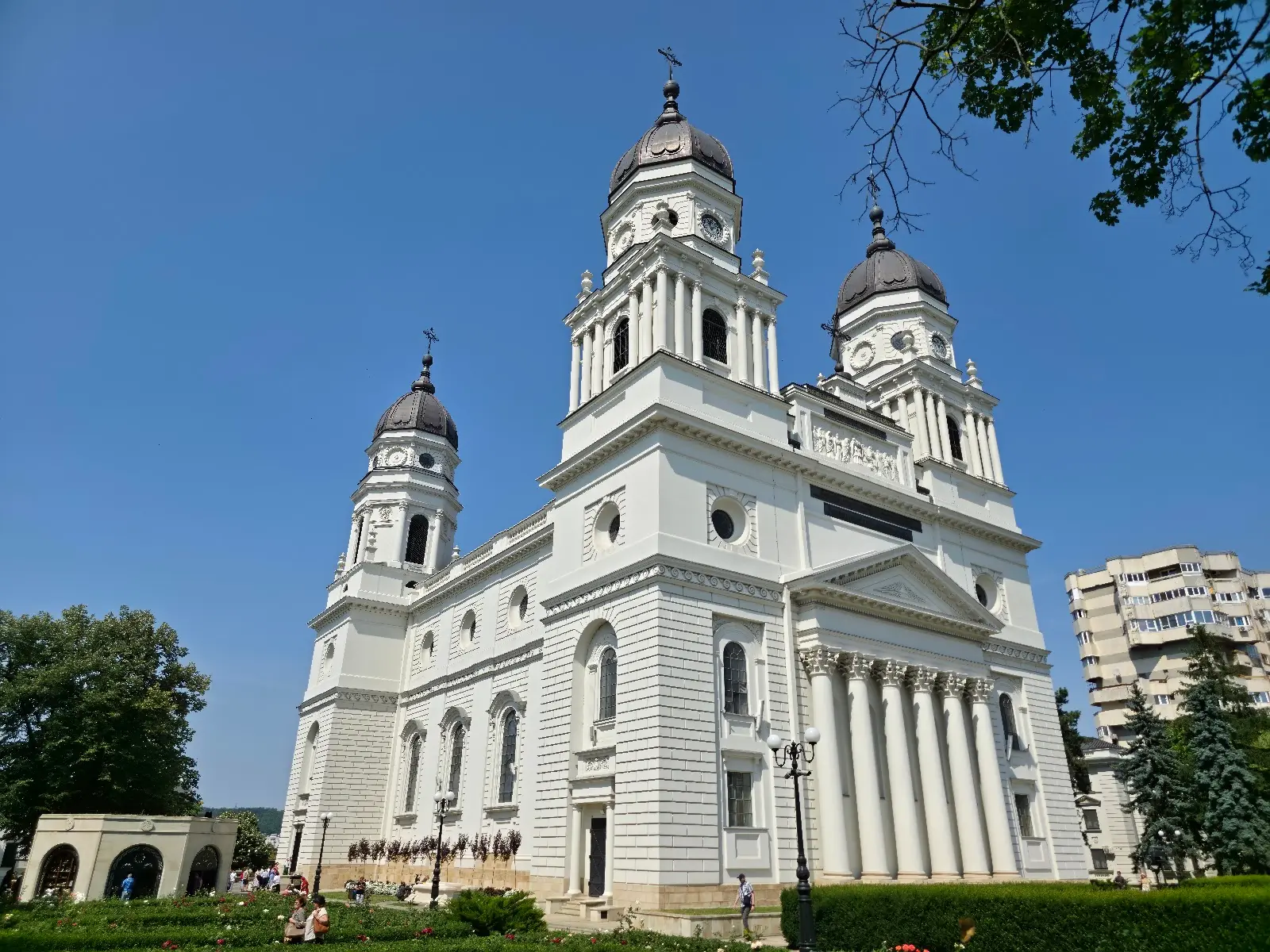
The Metropolitan Cathedral of Iași, the largest historic Orthodox church in Romania, is the spiritual heart of Moldavia and a monumental landmark of the city. Built in the second half of the 19th century in the neoclassical style with Renaissance influences, the cathedral impresses with its dimensions, its four massive spires and elegant façades. The interior, bright and spacious, is adorned with murals by the renowned painter Gheorghe Tattarescu. Here rest the relics of Saint Parascheva, protector of Moldavia, on whose feast in October hundreds of thousands of pilgrims come in procession to Iași, in one of the largest religious events in Romania. Around the cathedral stretches a pleasant park. It is a place of faith but also a monument to visit. Modest dress is advised; check the schedule of services and pilgrimages.
 Monastery
Mănăstirea Sucevița
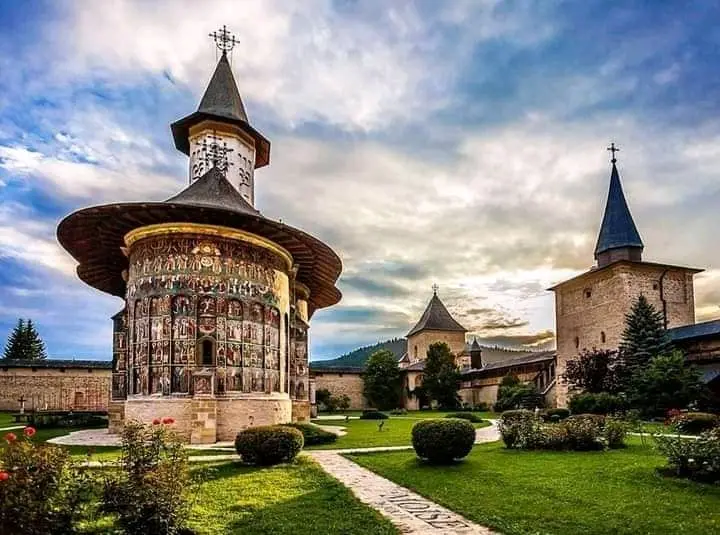
Sucevița Monastery is the most imposing of Bukovina's painted monasteries and the last built in this style, at the end of the 16th century, by the Movilă family. Unlike its sisters, it is surrounded by massive fortress walls with corner towers, giving it the look of a citadel rather than a place of prayer. The exterior frescoes, dominated by an intense green rarely seen elsewhere, cover almost the entire walls and include the famous ‘Ladder of Virtues', a vast and dramatic composition. The northern wall is said to have been left unpainted because the artist fell from the scaffolding — a legend that adds to the site's charm. A UNESCO World Heritage site, Sucevița is an essential stop on the monastery trail, set in a landscape of hills and quiet villages. Respect the dress code and the calm of the place, and check visiting hours, especially during services.
 Monastery
Mănăstirea Brâncoveanu (Sâmbăta de Sus)
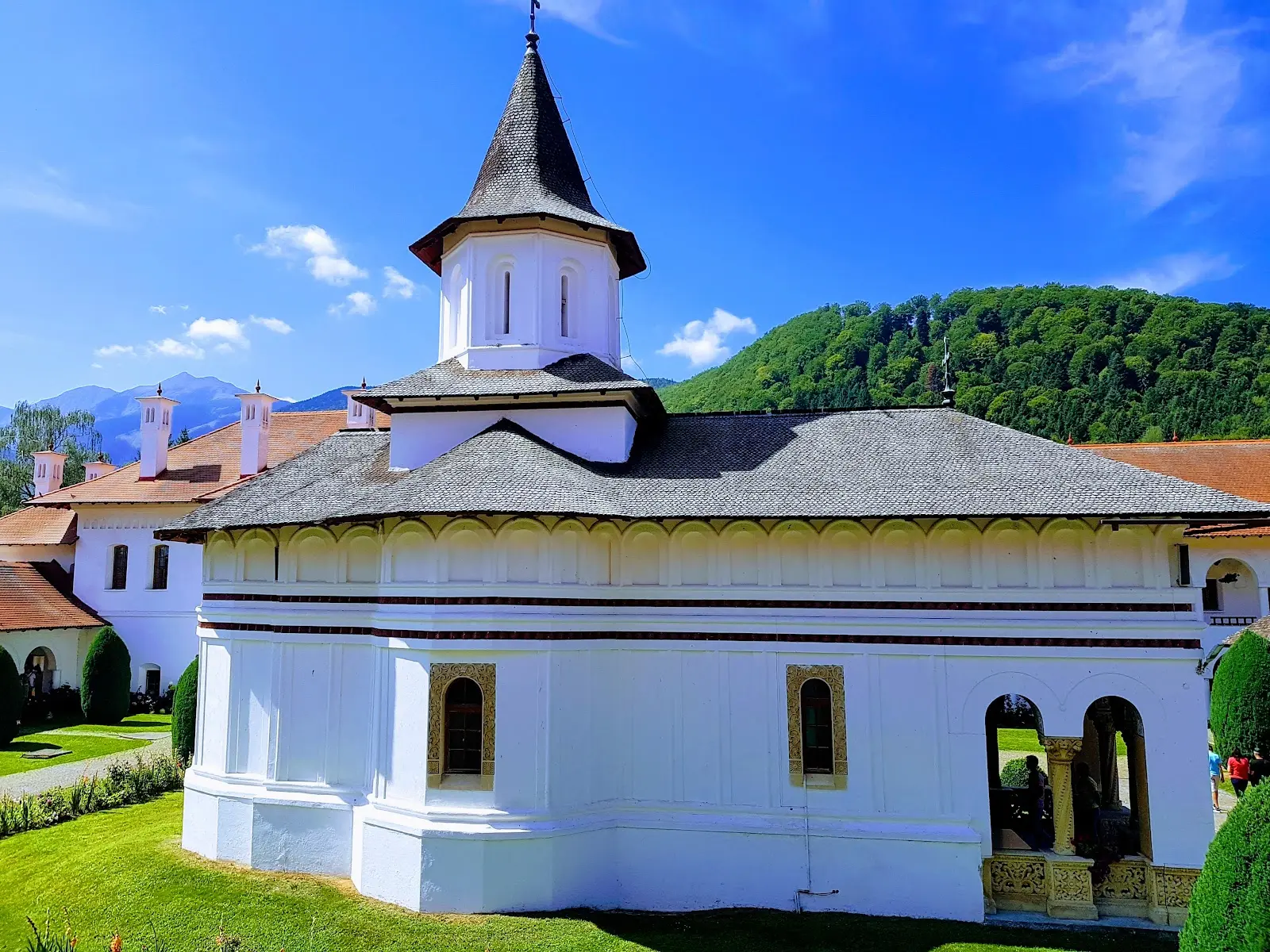
Brâncoveanu Monastery at Sâmbăta de Sus, at the foot of the Făgăraș Mountains, is one of the most important and best-loved Orthodox sites in Transylvania. Founded in the early 18th century by prince Constantin Brâncoveanu, it was destroyed by the Austrians and rebuilt and extended in the 20th century by Metropolitan Nicolae Bălan, becoming a great spiritual and cultural centre. The Brâncovenesc-style complex, with fine stone frames and open porches, is mirrored in a lake, in a superb natural setting with the Făgăraș ridges as a backdrop. The monastery hosts an academy, a glass-icon painting workshop and a museum, and is renowned for its spring, considered healing. It is a natural stop for those setting out on the Transfăgărășan or exploring the Făgăraș country. Respect the dress code and the calm of the place, and check the service and museum hours.
 Monastery
Mănăstirea Moldovița
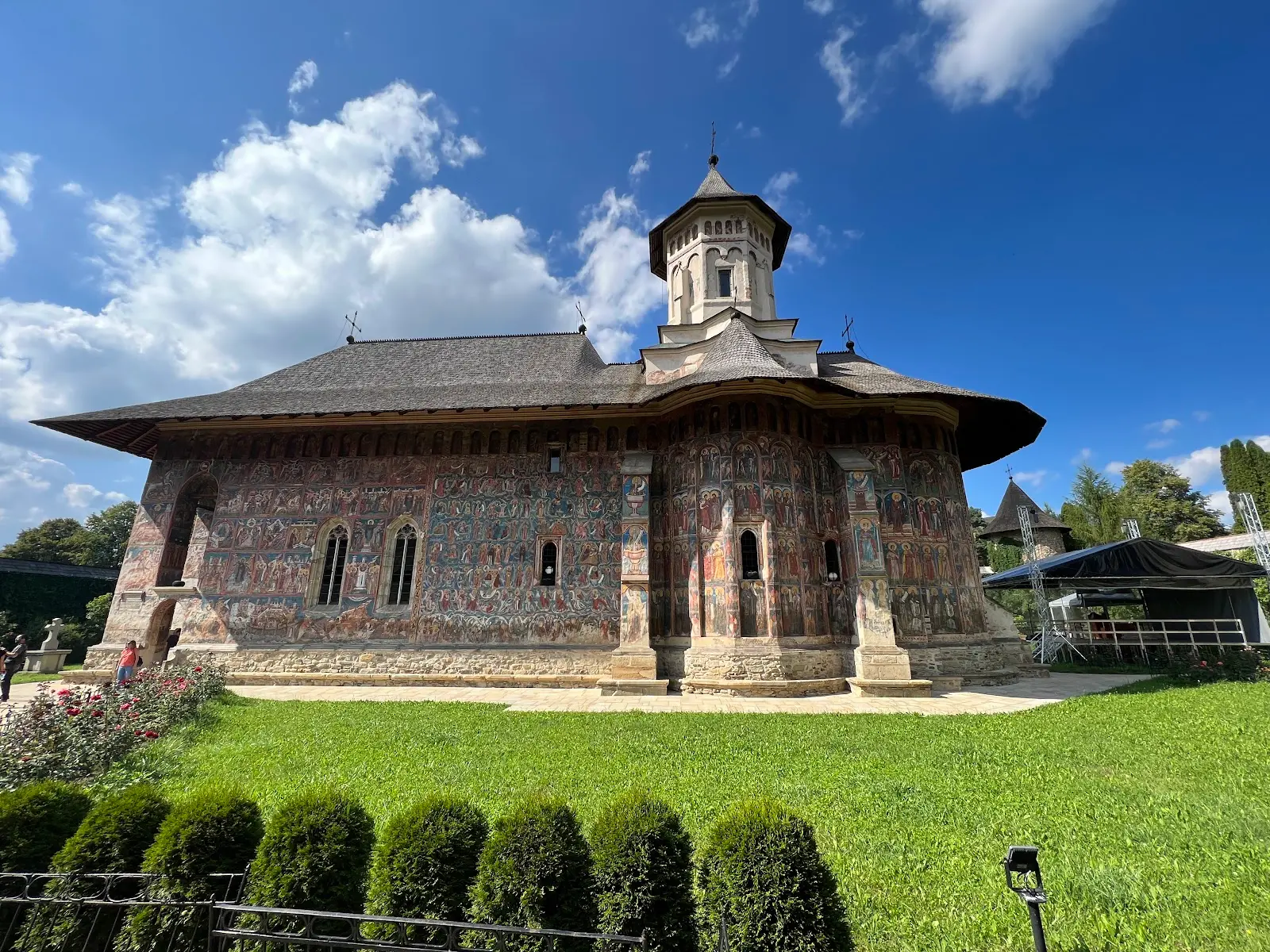
Moldovița Monastery is one of the most beautiful painted monasteries of Bukovina, founded in 1532 by prince Petru Rareș, son of Stephen the Great. The stone churches, surrounded by walls and defensive towers, keep on their outer façades 16th-century frescoes of remarkable vividness, dominated by a warm golden yellow. The most famous scene is the Siege of Constantinople, a vast, dynamic composition, alongside the Tree of Jesse and the Akathist Hymn. Within the precinct a small museum preserves heritage objects, including valuable documents and embroideries. Set in a quiet valley, among hills and villages where tradition is still alive, Moldovița belongs to the group of monasteries inscribed on the UNESCO list. It is an essential stop on the painted-monastery trail, alongside Voroneț, Sucevița and Humor. Respect the dress code and the calm of the place, and check visiting hours, especially during services.
 Monastery
Mănăstirea Agapia
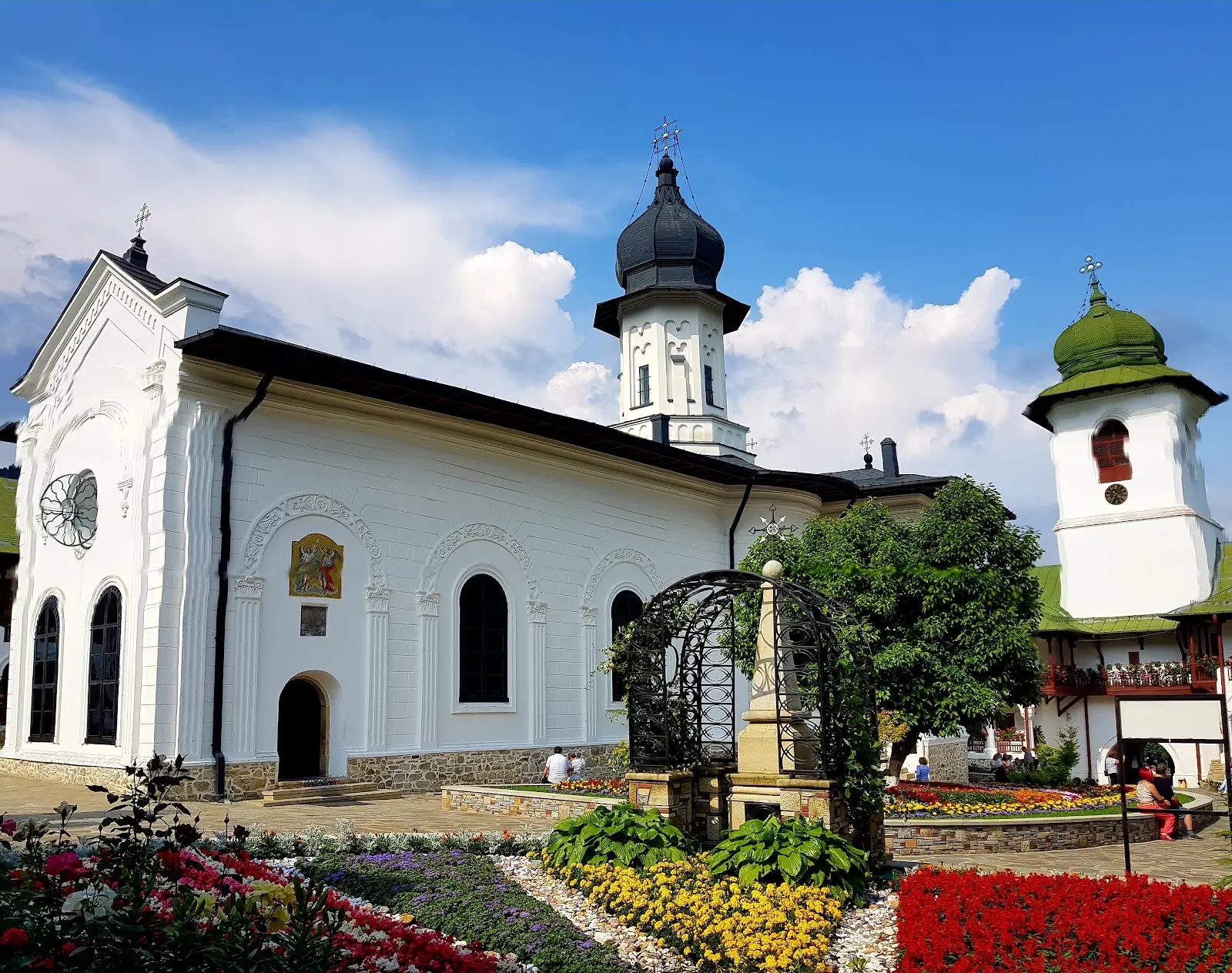
Agapia Monastery, hidden in a forested valley of the Neamț Mountains, is one of the largest and most beautiful convents in Romania, a true monastic village where many nuns live in white houses scattered across the hillside. The main church, built in the 17th century, is renowned for the interior painting created in his youth by the great painter Nicolae Grigorescu, a landmark work of Romanian art. Within the precinct is a museum of icons, embroideries, manuscripts and old art objects, while the atmosphere of calm and the well-kept gardens make Agapia a place of reflection loved by pilgrims and visitors. Its setting amid the forests also offers superb natural surroundings, ideal for walks. The monastery combines naturally with Văratec, Secu, Sihăstria and Neamț Monastery nearby, forming a true pole of Moldavian monasticism. Respect the dress code and the calm of the place, and check the museum and service hours.
 Church
Catedrala Ortodoxă Mitropolitană Timișoara
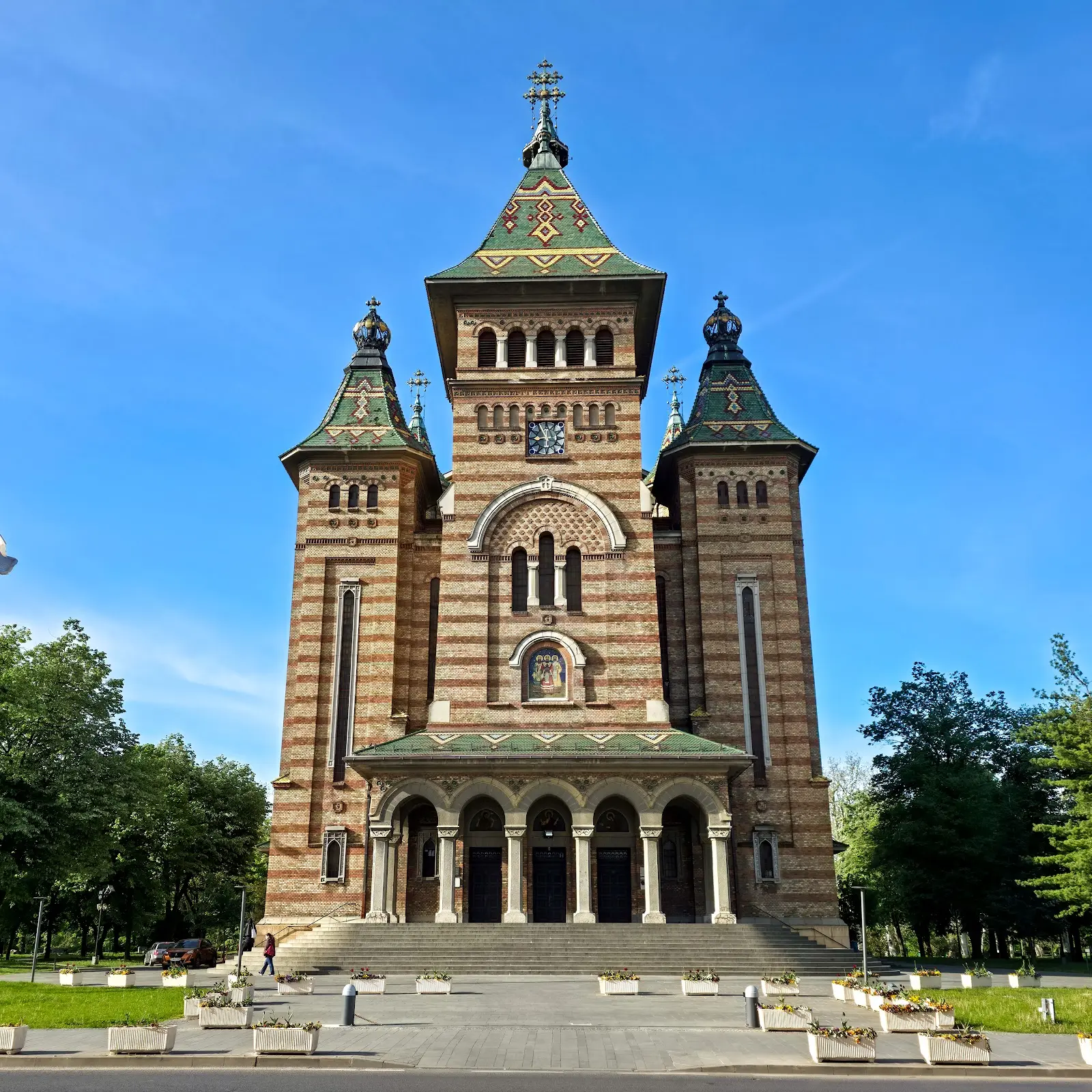
The Orthodox Metropolitan Cathedral of Timișoara, dedicated to the Three Holy Hierarchs, is one of the most representative places of worship in western Romania and a symbol of the city. Built in the 1930s and 1940s, the cathedral impresses with its verticality and its eleven towers roofed in colourful glazed ceramic, blending elements of Byzantine architecture with motifs typical of Moldavian churches. Its slender silhouette, with a tall central tower, dominates the perspective of the boulevard descending toward Victory Square, the heart of the city. The interior holds rich painting, a remarkable iconostasis and a collection of old church art. The cathedral has also become a place charged with historical meaning, tied to the events of December 1989, when dramatic moments of the revolution unfolded in front of it. Set in the pedestrian centre, near the theatre and the opera, it is easy to reach. Visitors are asked to respect the quiet and the dress appropriate to an active place of worship.
 Monastery
Mănăstirea Văratec
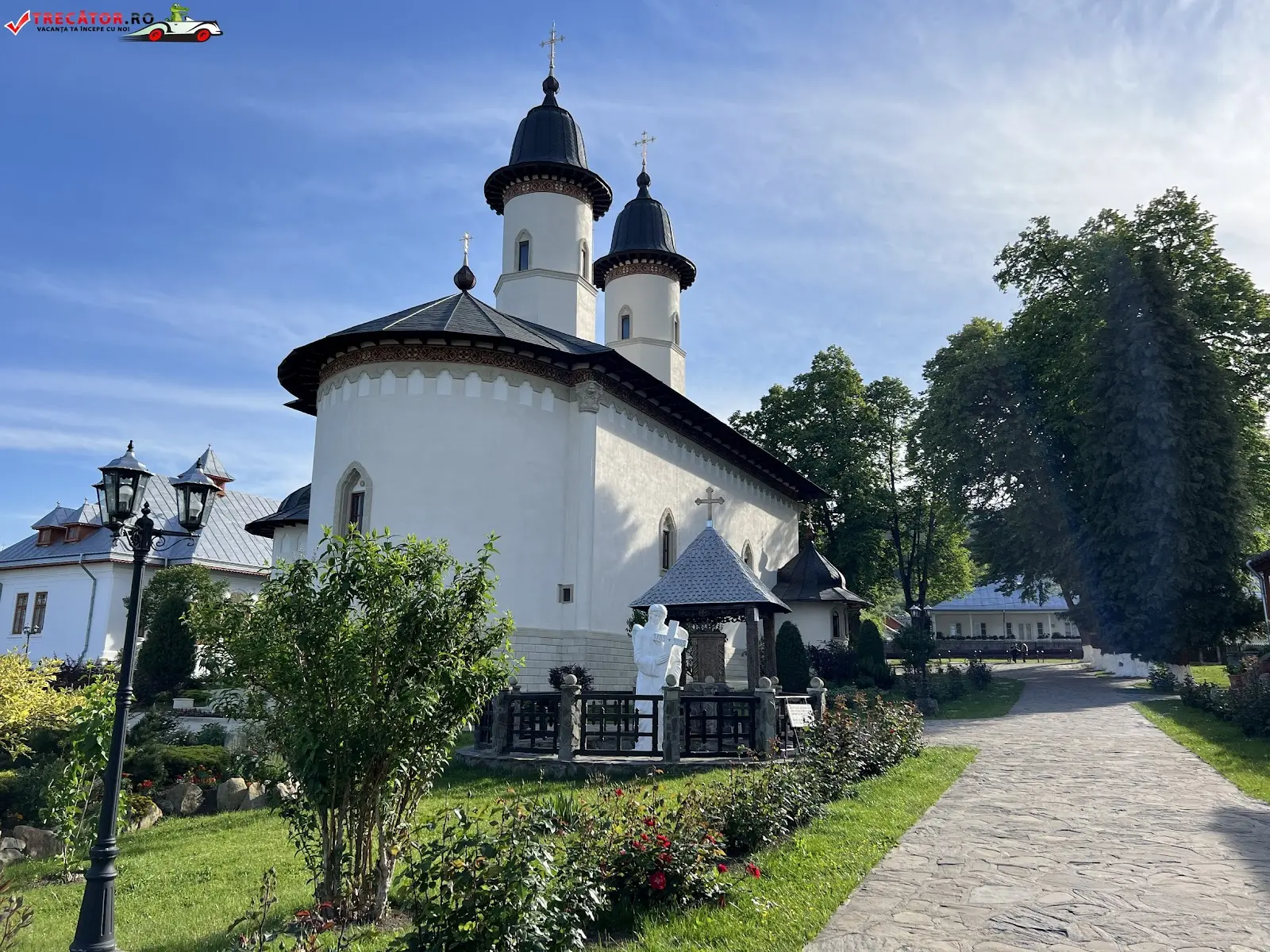
Văratec Monastery is the largest convent for nuns in Romania, set in a peaceful clearing at the foot of wooded hills near the town of Piatra Neamț, in the land of the Neamț monasteries. Founded at the end of the eighteenth century by mother Olimpiada together with the spiritual father Paisie of Neamț, the settlement grew over time into a true monastic hearth, with churches, cells scattered like a village, and renowned workshops of weaving and embroidery. The main church holds old icons and heritage objects, and in the monastery cemetery lies the grave of the poet Veronica Micle, linked to the figure of the great poet Mihai Eminescu. The atmosphere of peace, the traditional Moldavian architecture and the natural setting make Văratec a place of pilgrimage and contemplation, as well as a cultural destination. The monastery museum preserves collections of old church art. Set near other famous monasteries such as Agapia, Văratec fits into a spiritual circuit. Visitors are asked to respect the proper dress and the quiet of the place.
 Church
Biserica Stavropoleos
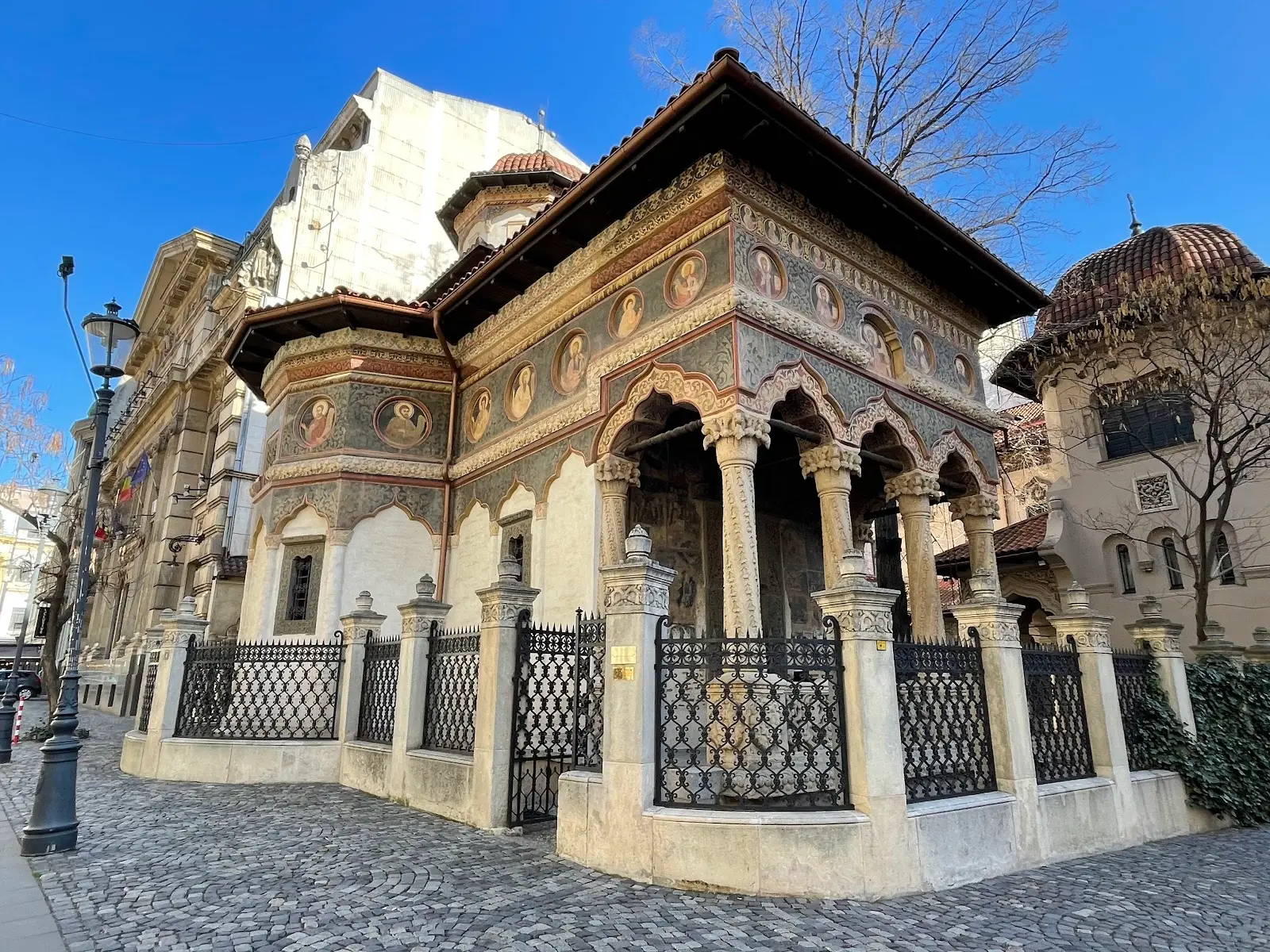
Stavropoleos Church is one of the most beautiful architectural jewels in the old centre of Bucharest, a small Orthodox place of worship raised at the beginning of the eighteenth century, during the Phanariot rule. Built in the Brâncovenesc style, a Romanian synthesis of Byzantine tradition and baroque influences, the church impresses with its richly carved facades, elegant columns and porch with fine arcades decorated with delicate floral motifs. The interior preserves valuable murals and a remarkable iconostasis, and the quiet inner courtyard, with a lapidarium sheltering fragments of old stone, offers an unexpected corner of peace amid the urban bustle. The monastery is also known for its choir of Byzantine music and for an important library of old books. Set near Manuc's Inn and the Old Princely Court, Stavropoleos is an essential landmark of walks through the historic centre. Visitors are asked to respect the quiet and dress appropriate to an active place of worship and to admire the carved details discreetly.
 Church
Catedrala Sfânta Treime din Sibiu
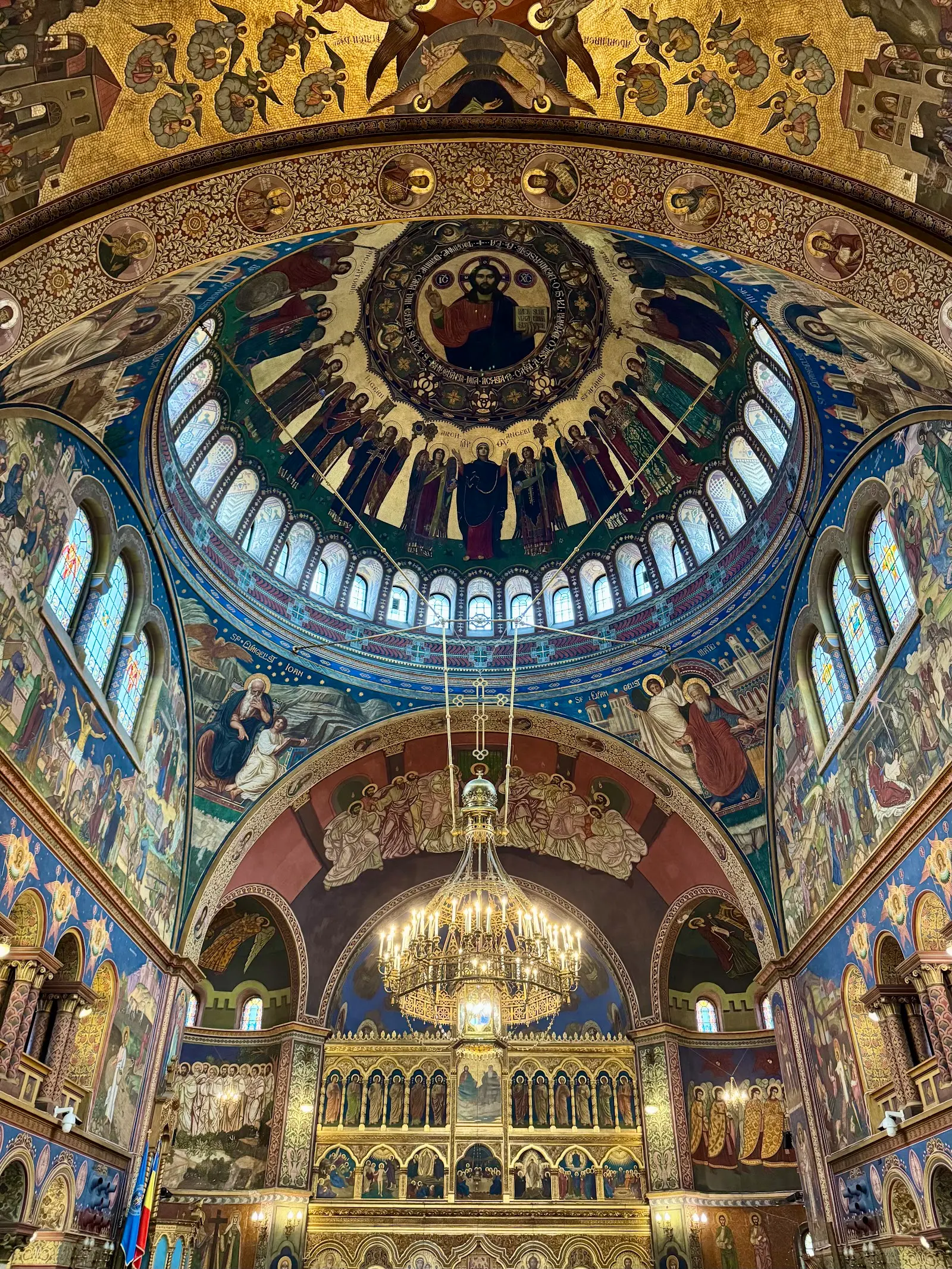
The Holy Trinity Cathedral of Sibiu is the city's main Orthodox cathedral and an important landmark of Transylvanian religious architecture. Raised in the early twentieth century, the cathedral was built in a Neo-Byzantine style, visibly inspired by the great Hagia Sophia church in Constantinople, with an imposing central dome and a spacious, bright interior decorated with rich murals and a remarkable iconostasis. The edifice reflects the assertion of the Romanian Orthodox community of Sibiu at a time when the city was dominated by the Saxon tradition and Lutheran churches. The facade, with its towers and alternating brickwork, and the tall dome roofed in ceramic, stand out in the urban landscape. The cathedral lies near the historic centre, in an area easily reached on foot, forming part of the circuit of Sibiu's monuments. The interior, with its solemn atmosphere and fine acoustics, impresses visitors. As an active place of worship, the cathedral holds regular services, and visitors are asked to respect the quiet and dress appropriate to a sacred space.
 Monastery
Mănăstirea Peri Săpânța
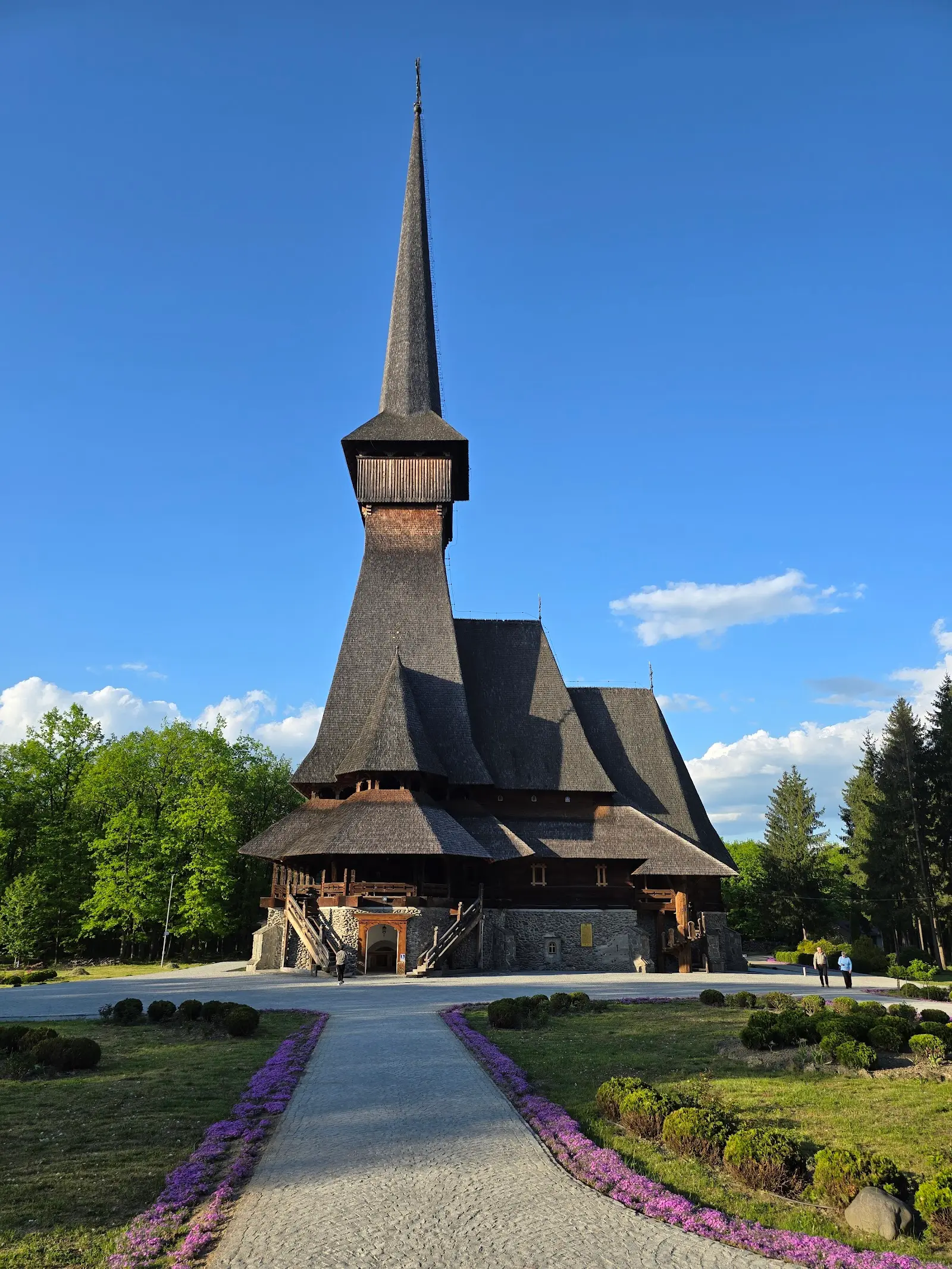
Peri Săpânța Monastery is known for its wooden church, considered one of the tallest wooden churches in the world, a remarkable spiritual and architectural landmark set near the village of Săpânța in northern Maramureș, close to the border with Ukraine. Raised at the beginning of the twenty-first century, the church continues the centuries-old tradition of the Maramureș wooden churches, with its extremely tall, sharp spire, which reaches over seventy metres and dominates the whole valley. The settlement evokes the old Peri Monastery, an important medieval monastic and cultural centre of northern Maramureș, today on Ukrainian territory, where some of the oldest religious texts in the Slavonic language of the region are said to have been printed. The modern construction blends the mastery of traditional carpentry with the ambition of an impressive silhouette. Set not far from the famous Merry Cemetery of Săpânța, the monastery forms part of a tourist and spiritual circuit of the area. Visitors are asked to respect the sacred character of the place, proper dress and the quiet of a monastic settlement.
 Monastery
Mănăstirea Dealu
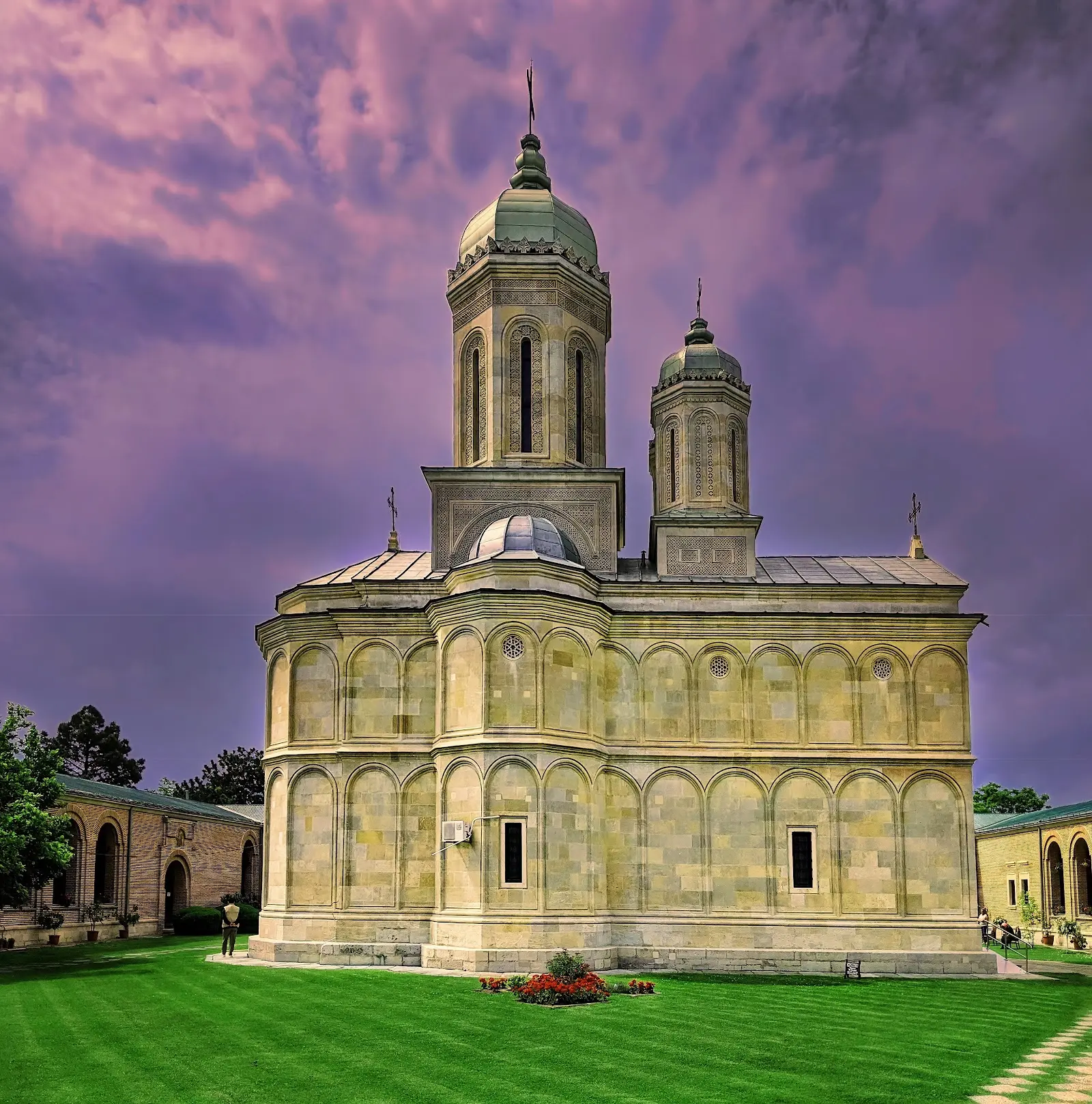
Dealu Monastery rises on a hill near the town of Targoviste, in Dambovita county, overlooking the old capital of Wallachia. Founded in the early sixteenth century by the ruler Radu the Great, the church is a masterpiece of Romanian medieval architecture, remarkable for its facades adorned with stone carvings of great refinement. Here one of the first books in the Romanian lands was printed, and here too lies the tomb of Michael the Brave, where the head of the great unifying voivode is kept, brought after his death. The monastic complex, surrounded by walls and a peaceful setting, played an important role in the cultural and religious life of the country. Today the monastery is home to a monastic community and remains a place of contemplation and historical memory, a short distance from the centre of Targoviste and the Princely Court of the old capital.
 Monastery
Mănăstirea Dintr-un Lemn
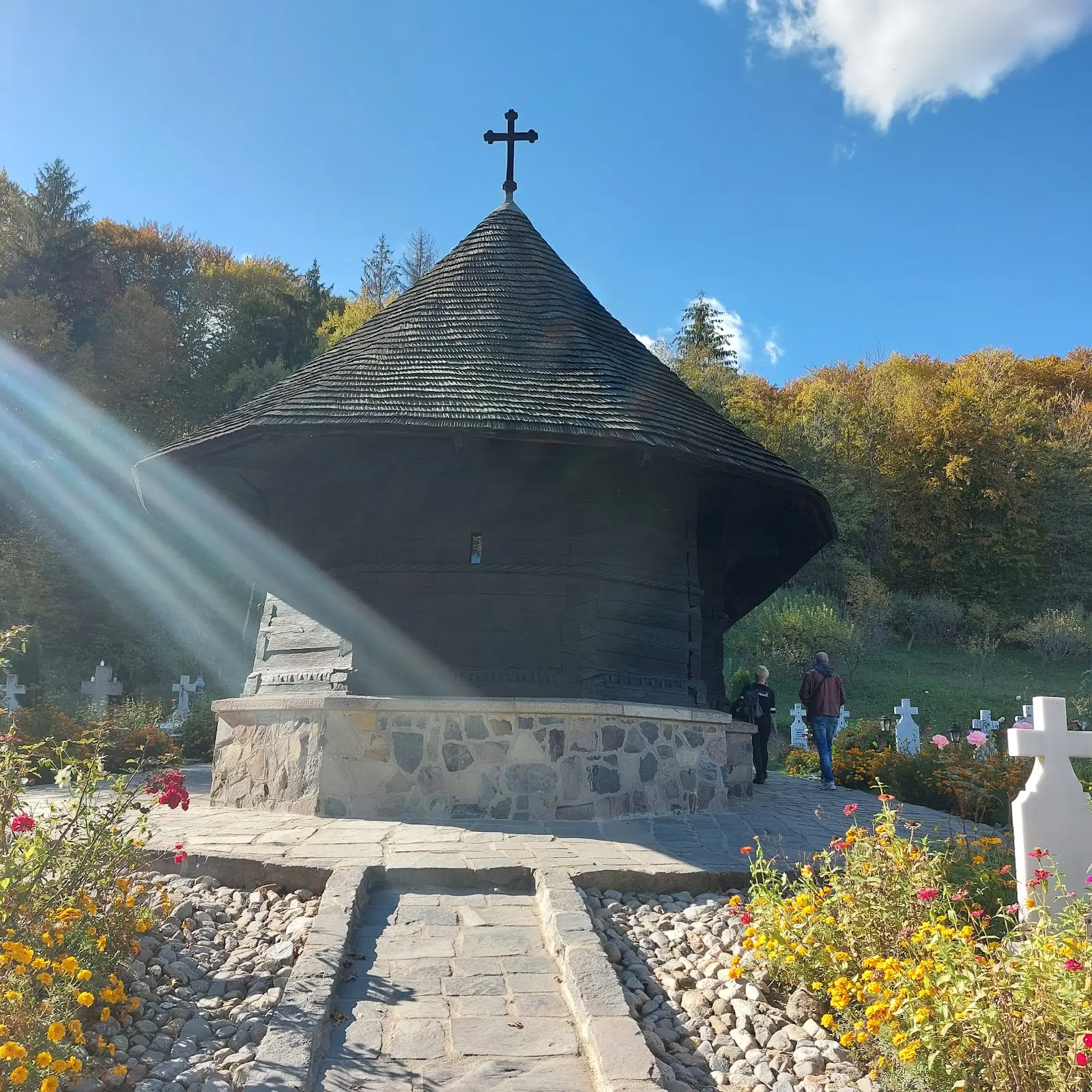
The Monastery from a Single Tree is located in Valcea county, near the town of Ramnicu Valcea, in a quiet natural setting surrounded by forests. The unusual name of the monastery comes from a legend according to which the first church here was carved from a single old oak, on the spot where a monk is said to have found an icon of the Mother of God. The old wooden church, preserved to this day, is one of the most valuable buildings of its kind in Oltenia. Beside it rises a larger masonry church, founded in the seventeenth century, adorned with paintings and precious liturgical objects. The monastic complex, with its cells and old walls, conveys an atmosphere of contemplation and continuity. Set not far from other renowned monasteries of Valcea, the Monastery from a Single Tree is a precious stop on the pilgrimage route of northern Oltenia, in a landscape of wooded hills.
 Monastery
Mănăstirea Râmeț
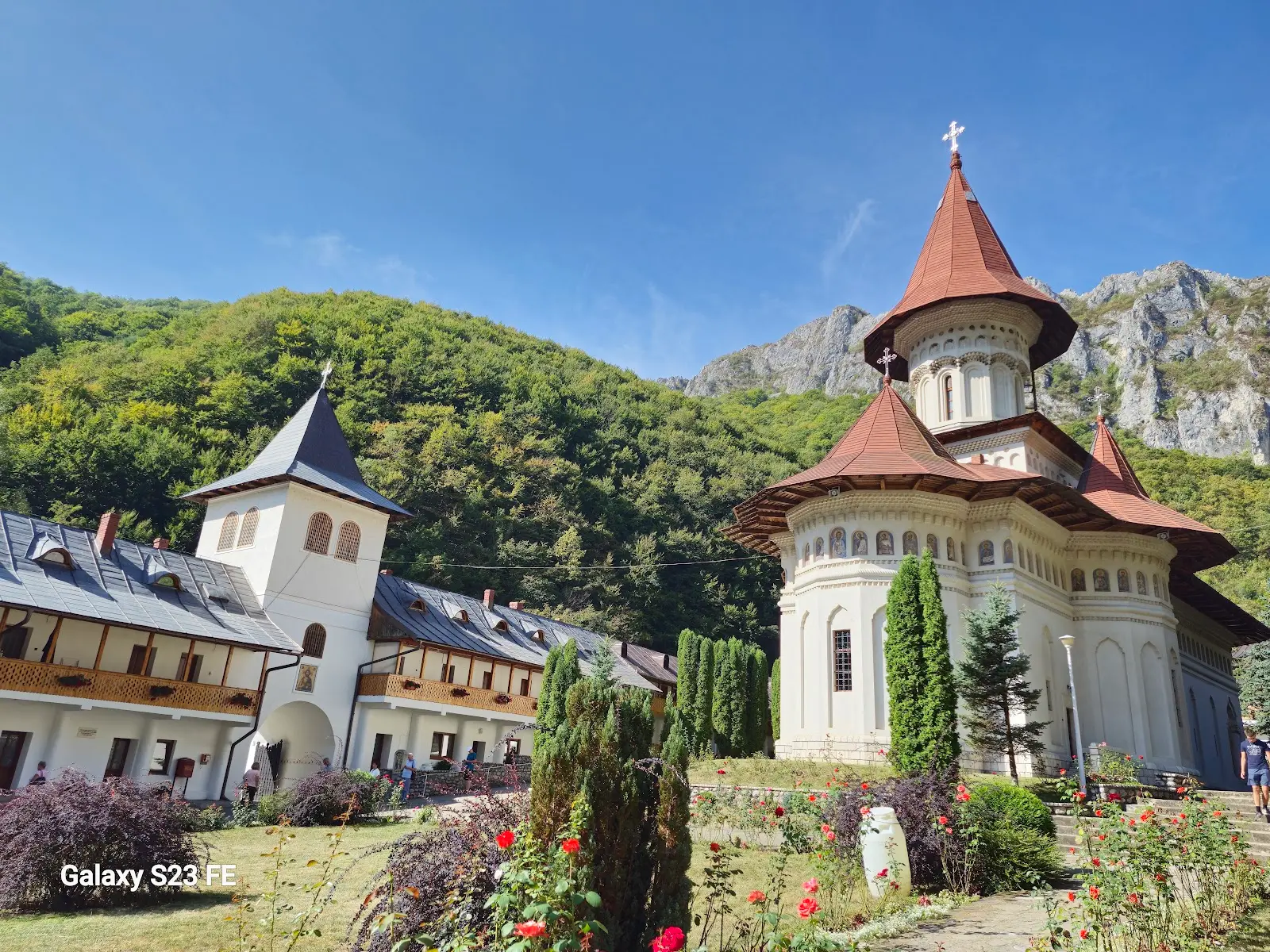
Ramet Monastery is one of the oldest monastic settlements in Transylvania, set in a spectacular natural setting in the Trascau Mountains, in Alba county, near the town of Alba Iulia. Placed at the entrance to the famous Ramet Gorges, the monastery is surrounded by high cliffs, forest and clear waters, which give it an atmosphere of deep quiet. The old church preserves fragments of mural painting of great value, and some of the earliest inscriptions in the Romanian language were discovered here, a testimony to the age and importance of the place. Over the centuries the monastery went through many trials, being rebuilt several times. Today it is home to a community of nuns and remains an important place of pilgrimage and contemplation. The mountain setting and the nearby gorges make Ramet a sought-after destination both for the faithful and for lovers of nature exploring the Trascau Mountains.
 Monastery
Mănăstirea Turnu
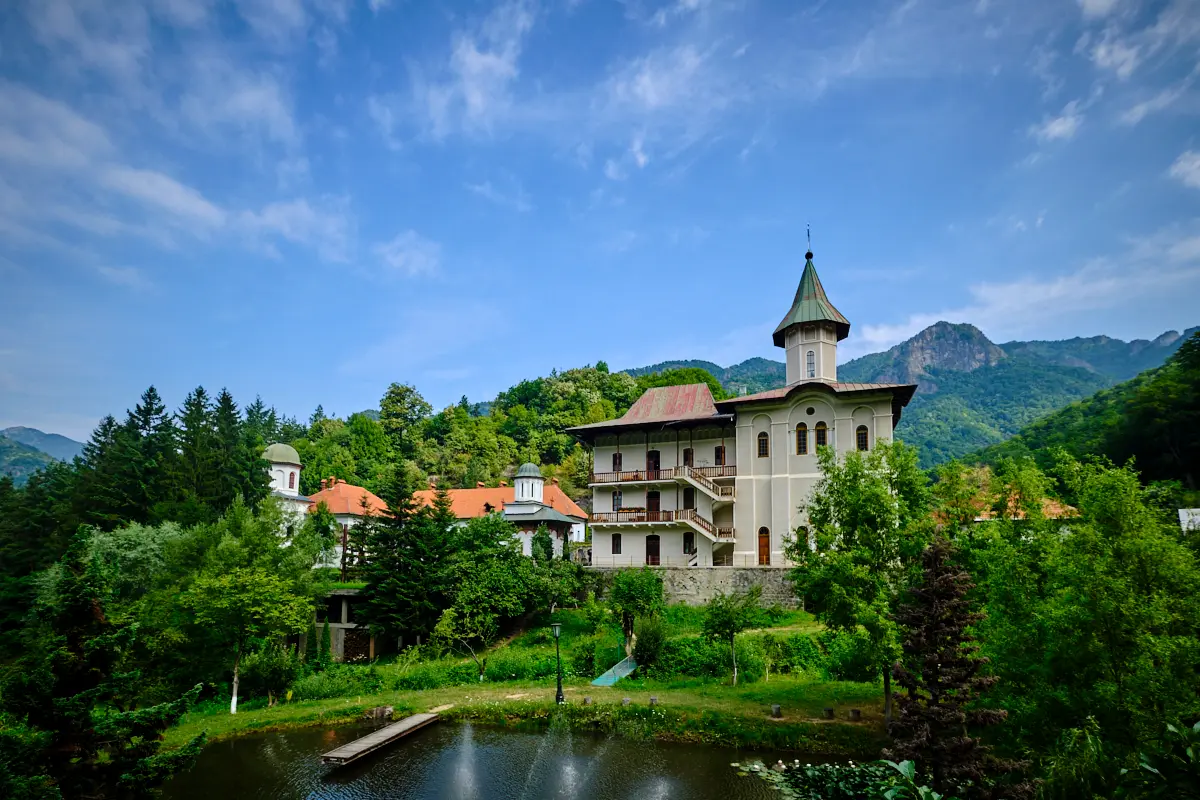
Turnu Monastery lies in Valcea county, near Ramnicu Valcea and the Cozia resort, at the foot of the Cozia Mountains, in a particularly beautiful landscape on the bank of the Olt river. The settlement has old origins, linked to the hermits who withdrew into the caves and cells carved into the mountain rock for a life of prayer and asceticism. The name of the monastery comes from the old ruins of a Roman tower nearby, a testimony to the ancient presence in the area. The church and the monastery buildings rise in an isolated natural setting, surrounded by forests and the cliffs of the Cozia massif. Visitors can climb paths towards the old rock-hewn cells, in an excursion both spiritual and into nature. Set close to Cozia Monastery and the Olt valley, Turnu Monastery is a quiet and picturesque stop for pilgrims and for those crossing the gorge between the mountains.
 Church
Patriarhia Română (Catedrala Patriarhală)
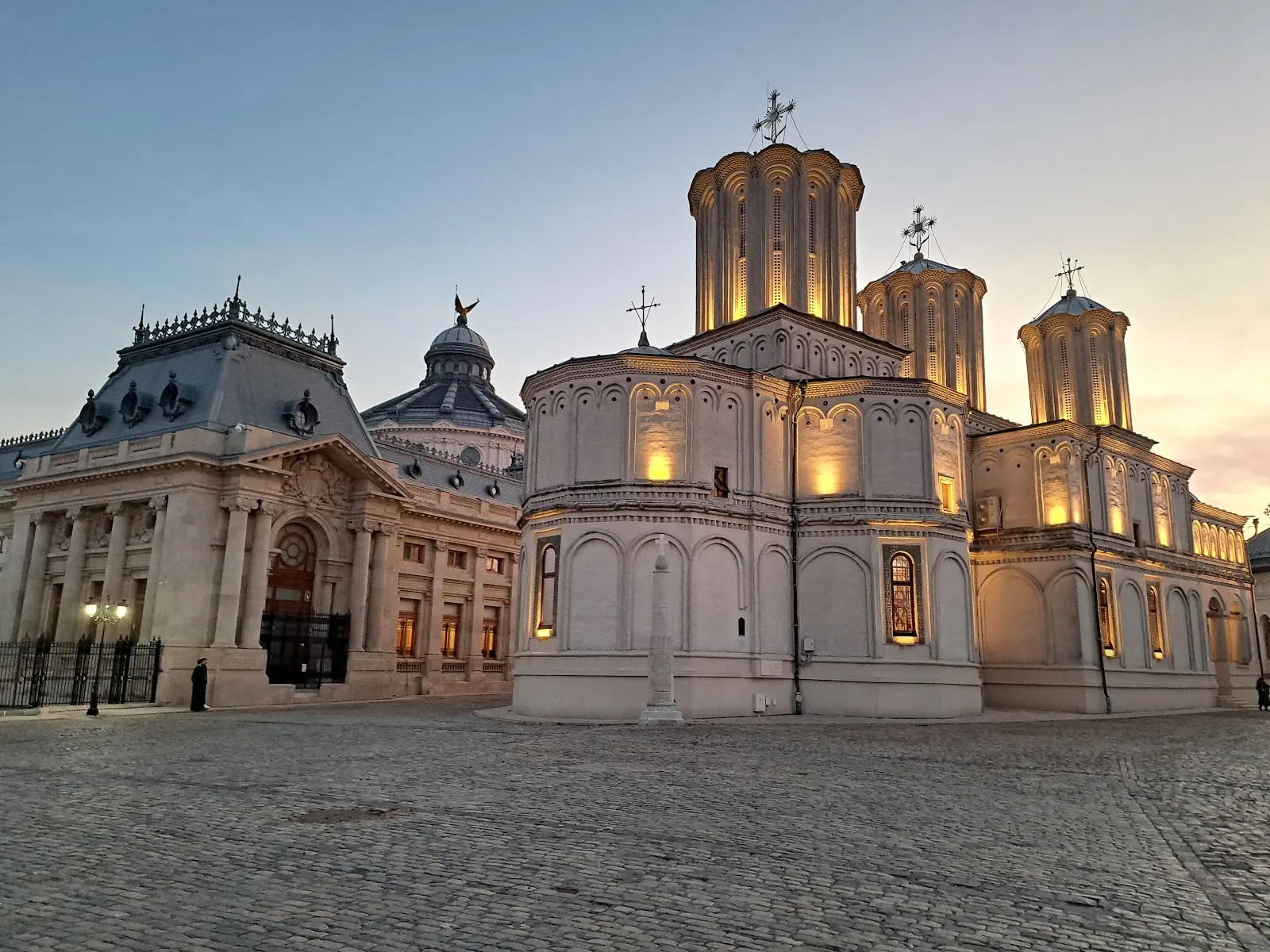
The Romanian Patriarchate, with its Patriarchal Cathedral, stands on Metropolitan Hill in the centre of Bucharest and represents the spiritual centre of the Romanian Orthodox Church. The cathedral was founded in the seventeenth century by the ruler Constantin Serban and was over time the metropolitan and then the patriarchal seat of Romanian Orthodoxy. The church preserves the traditional architecture of Wallachian places of worship, with paintings and liturgical objects of great value, as well as the relics of Saint Dimitrie the New, protector of Bucharest. Around the cathedral stand the Patriarchal Palace, the bell tower and administrative buildings, forming an important historic complex. From the hill a view opens over the city, and every year, on the feast of Saint Dimitrie, impressive pilgrimages take place here. Set close to the historic centre, the Patriarchate is a significant stop for those interested in the history and spirituality of the capital.
 Monastery
Mănăstirea Trei Ierarhi
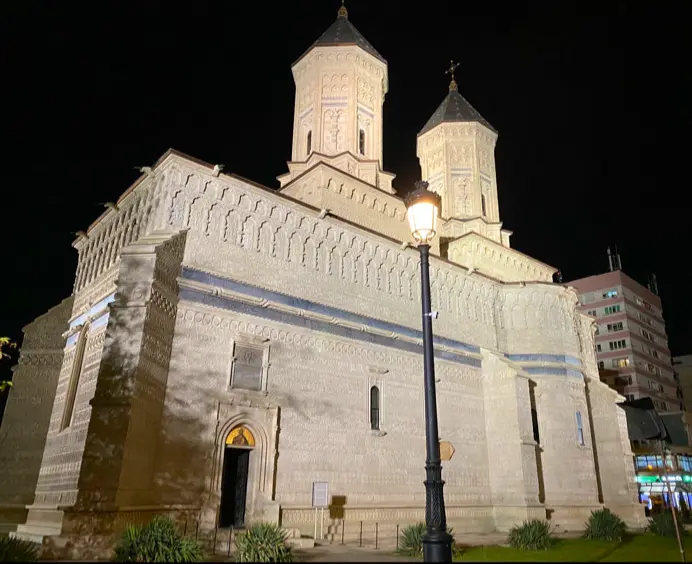
The Three Hierarchs Monastery in Iasi is one of the most valuable masterpieces of Romanian medieval architecture, founded in the seventeenth century by the ruler Vasile Lupu. The church is famous for its facades entirely covered in stone carvings of extraordinary refinement, a lacework of geometric and floral motifs that has no equal in the Romanian lands. In its time, some of the ornaments are said to have been gilded, adding to the brilliance of the church. Here lie the tombs of the founding ruler, and here too are kept the relics of Saint Parascheva, protector of Moldavia. The monastery housed the first printing press in Moldavia and a renowned school. Set in the centre of Iasi, near the Palace of Culture, the Three Hierarchs is an essential stop for visitors to the city, who can admire one of the most refined achievements of medieval art in Moldavia, restored in the early twentieth century.
 Monastery
Mănăstirea Rohia
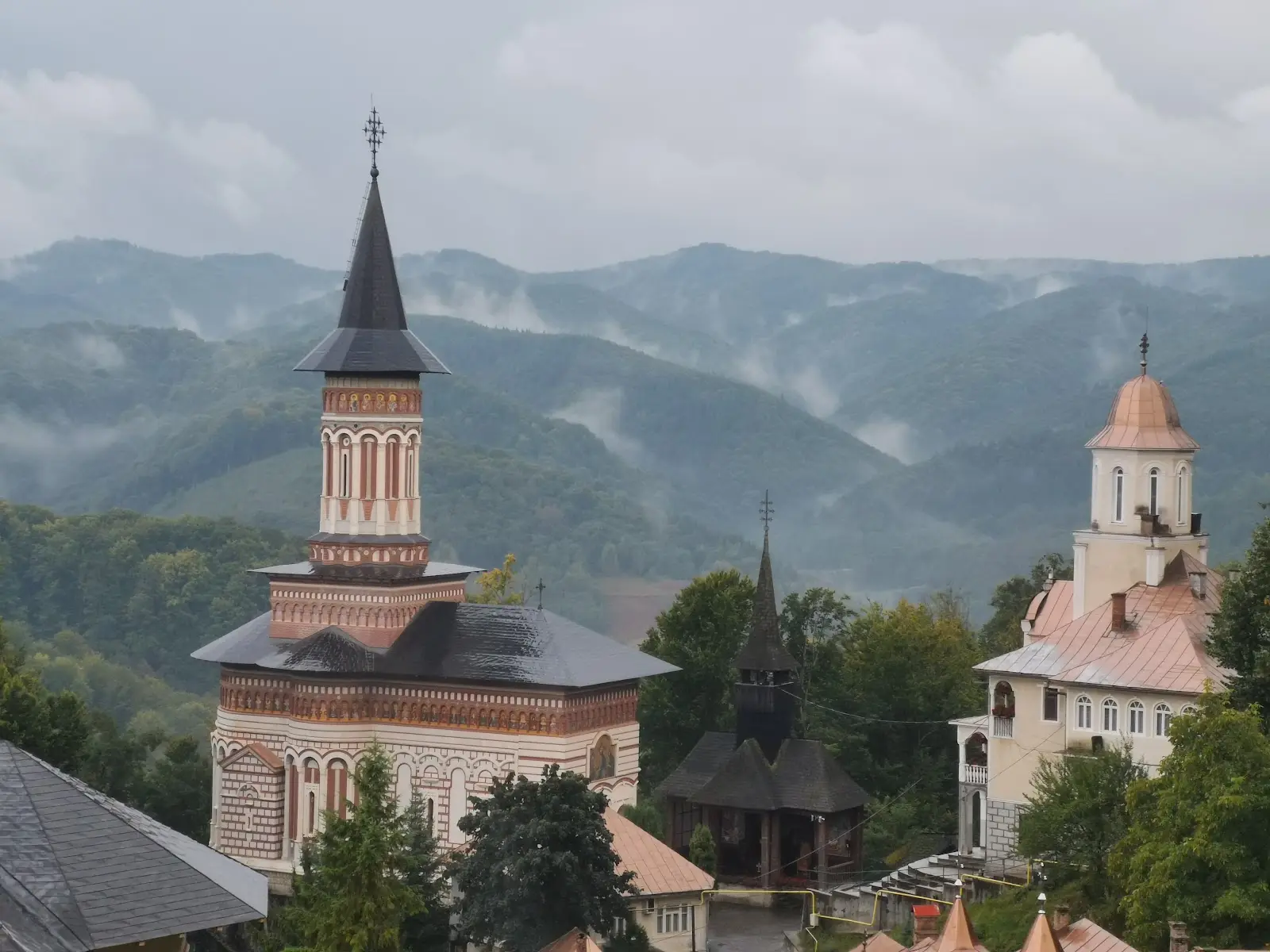
Rohia Monastery lies in Maramures county, near the town of Baia Mare, in a striking natural setting on a wooded hill in the Lapus Land area. The settlement, dedicated to Saint Parascheva, was founded in the early twentieth century and became known above all through its connection with the writer and theologian Nicolae Steinhardt, author of the Diary of Happiness, who lived here as a monk and librarian in the last part of his life. The monastery holds a valuable library, with numerous rare books, and preserves the cell in which Steinhardt lived, which has become a place of literary and spiritual pilgrimage. The quiet setting, the surrounding forest and the view over the hills of Maramures give the place an atmosphere of deep contemplation. Rohia is a sought-after destination for pilgrims, but also for lovers of culture who wish to discover the memory of an important Romanian thinker.
 Monastery
Mănăstirea Dragomirna
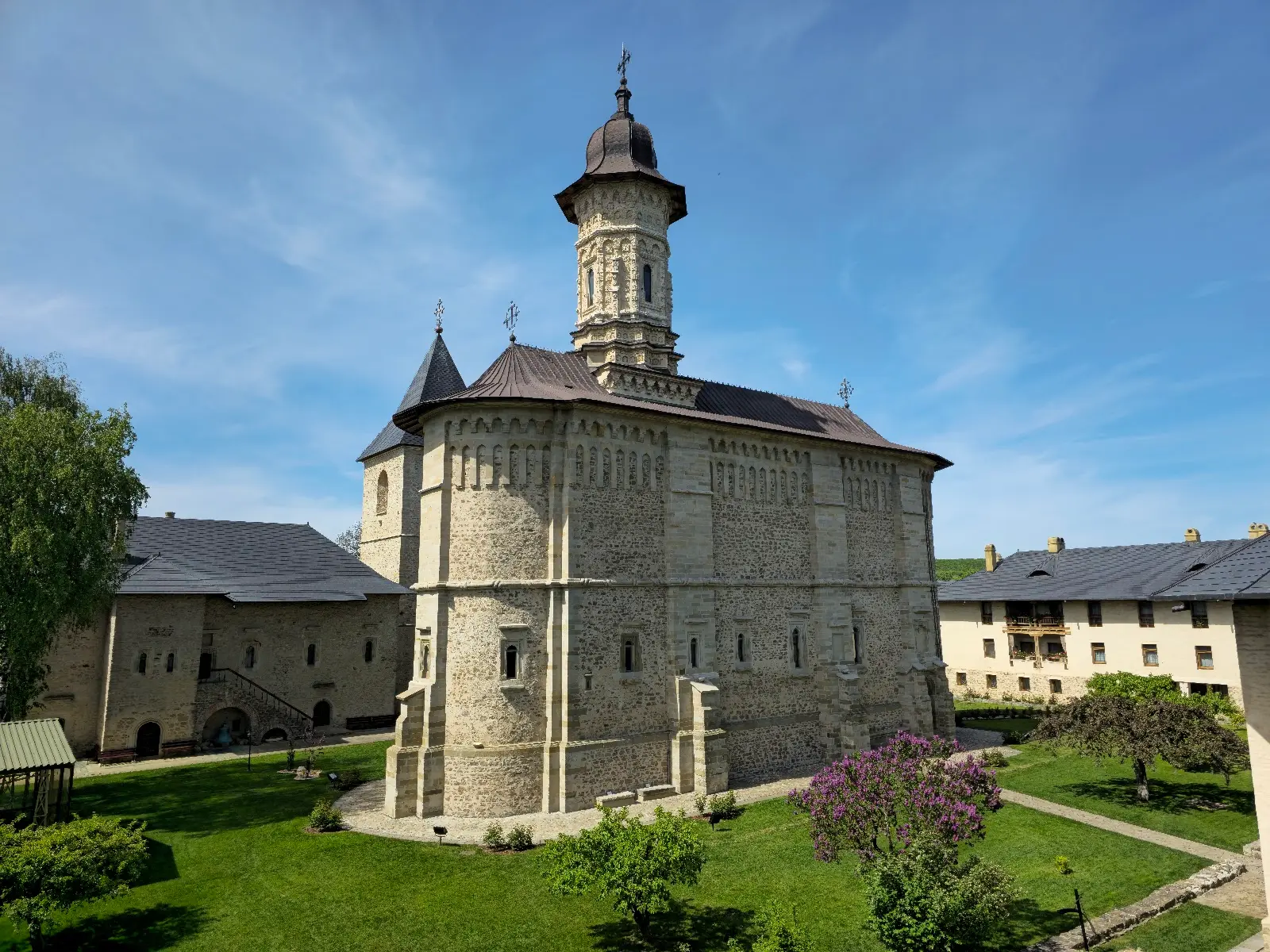
Dragomirna Monastery is one of the most valuable monuments in Bukovina, founded in the early seventeenth century by the scholarly metropolitan Anastasie Crimca. Its church stands out through unusually slender proportions: it is remarkably tall and narrow, crowned by a richly carved stone tower whose rare refinement recalls lace worked in hard material. The complex is surrounded by massive defensive walls with corner towers, added later, giving it the appearance of a fortified monastery typical of the troubled times in which it was built. Inside are preserved frescoes, liturgical objects and a tradition of illuminated manuscripts linked to the personality of its founder. The natural setting, a quiet forest near Suceava, reinforces the atmosphere of contemplation. Practical note: the monastery is active, so decent attire and respect for silence are recommended; it can be visited together with the other painted monasteries of Bukovina.
 Monastery
Mănăstirea Bistrița Vâlcea
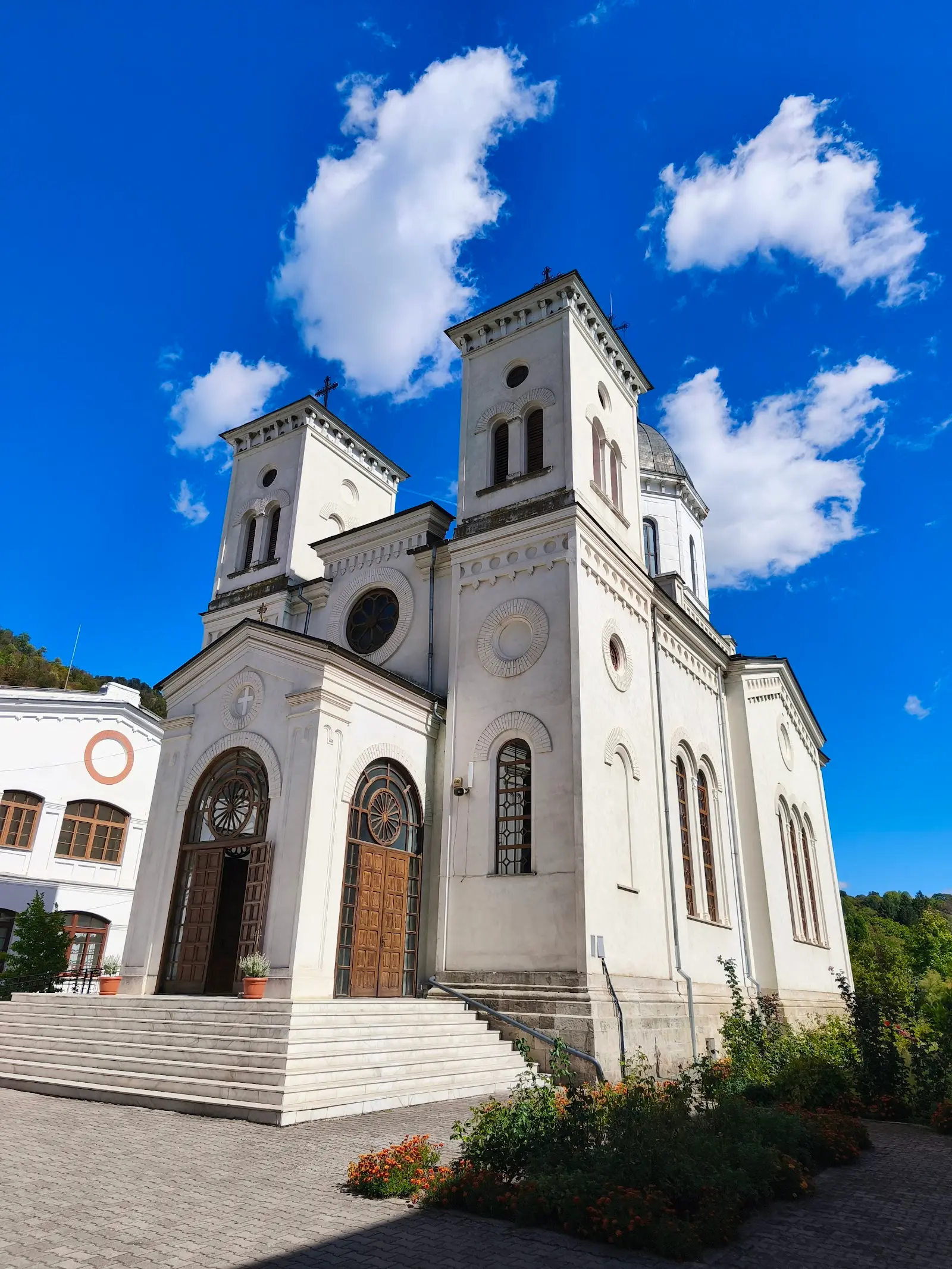
Bistrita Monastery in Valcea is an important monastic settlement founded at the end of the fifteenth century by the powerful boyar family of the Craiovesti, in a spectacular natural setting at the foot of the Capatanii Mountains, near the Bistrita Gorges. Over the centuries the monastery was destroyed and rebuilt several times, and the present appearance of the great church bears the mark of nineteenth-century restorations. It has preserved the relics of Saint Gregory the Decapolite and once housed one of the first printing presses in Wallachia, making it a centre of spirituality and culture of remarkable antiquity. Nearby are the Cave of Saint Gregory the Decapolite and rock hermitages carved into the cliff. The mountain setting and the quiet complete the atmosphere. Practical note: the monastery can be combined with a hike in the Bistrita Gorges and a visit to the nearby cave; it is active, so respect the customs of the place.
 Church
Biserica Fortificată Hărman
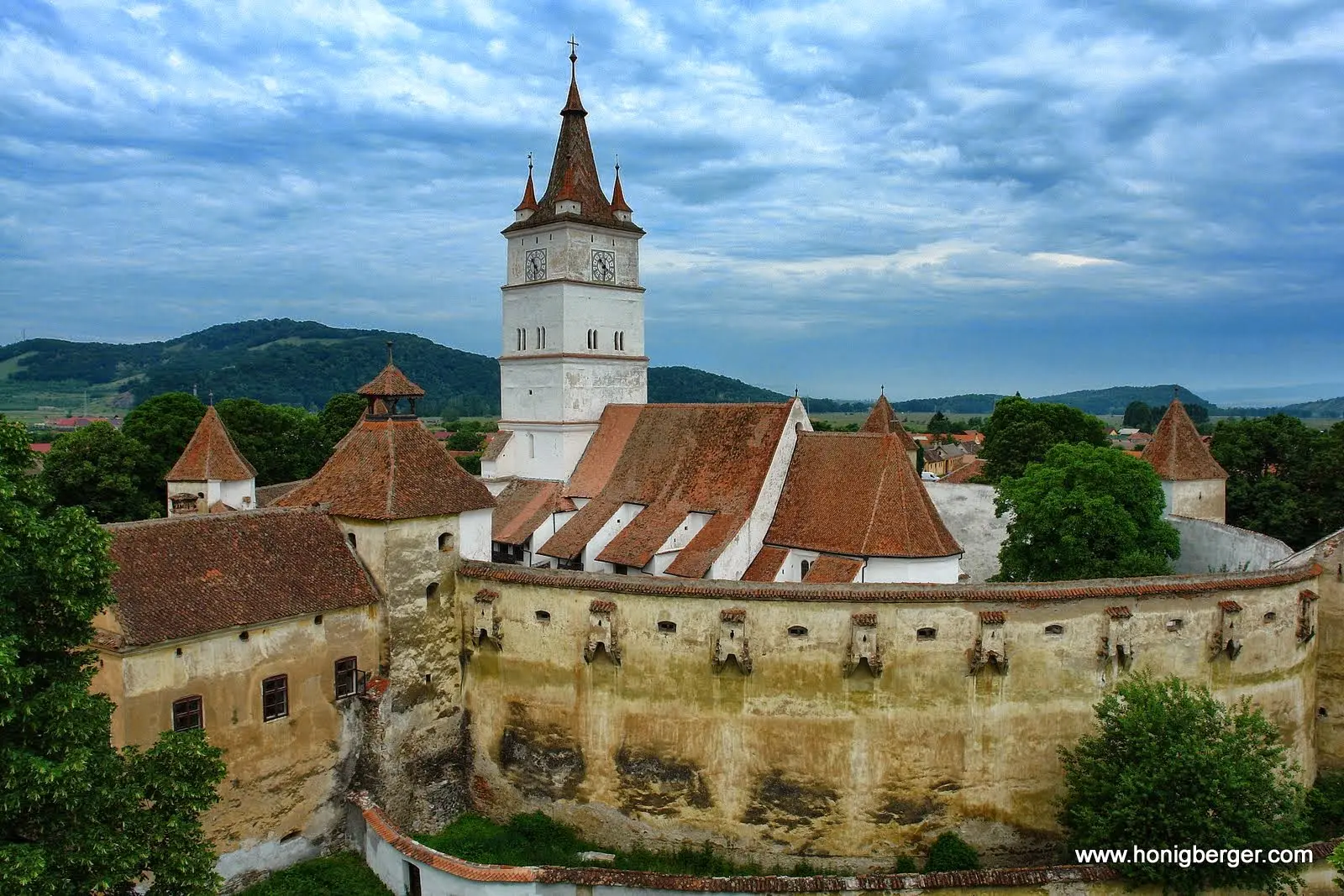
The Fortified Church of Harman, located near Brasov, is one of the best-preserved ensembles of its kind in the Barsa Land, a testimony to the defensive architecture of the Transylvanian Saxons in the Middle Ages. The Gothic church, built by the Saxon community, is surrounded by massive defensive walls fitted with towers and a wall walk, which turned the place of worship into a genuine peasant fortress where the inhabitants could take refuge during invasions. In the towers and chambers at the base of the walls, spaces still remain that recalled their role as storehouse and shelter, including the famous bacon hung in the communal larder. Inside a defensive tower, fragments of valuable medieval frescoes can still be seen. The ensemble belongs to the category of internationally recognised fortified churches of Transylvania. Practical note: the visit can easily be combined with the fortified church of nearby Prejmer, on the UNESCO list, in a tour of the Barsa Land.
 Monastery
Mănăstirea Hurezi
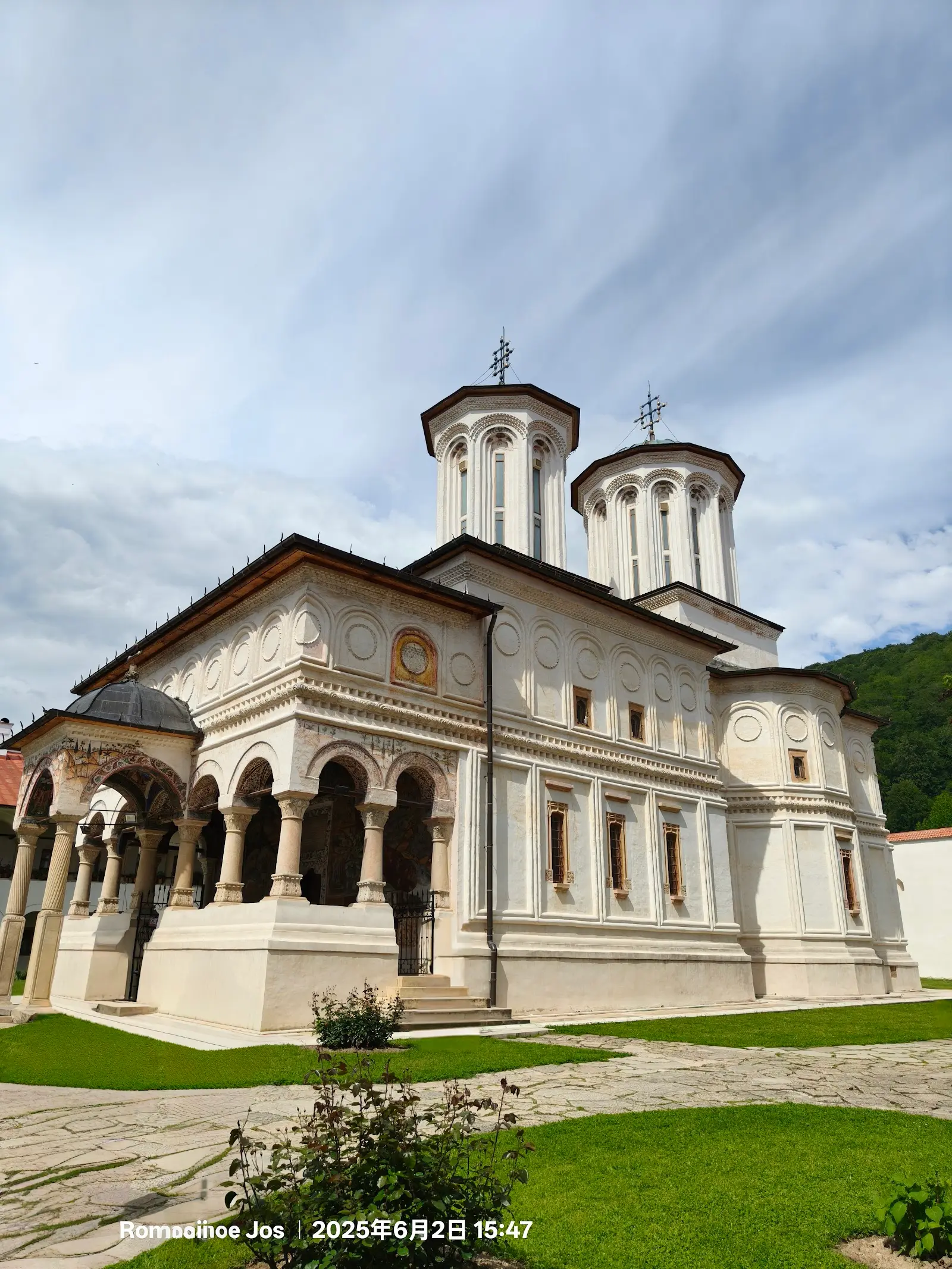
Horezu Monastery, located near the town of Horezu in Oltenia, is the largest monastic ensemble in Wallachia and the masterpiece of the Brancovan style, which is why it has been inscribed on the UNESCO World Heritage list. Founded at the end of the seventeenth century by the ruler Constantin Brancoveanu, the monastery impresses through its architectural balance, the richness of its stone and wood carving and its ensemble of remarkably well-preserved frescoes, which include portraits of the founder and his family. Elegant columns, arcades, porches and fine decoration define this style, a synthesis of Byzantine tradition and Western influences. The complex includes the great church, chapels, cells and a valuable library, a testimony to its cultural role. The quiet setting at the foot of the mountains reinforces the atmosphere of spirituality. Practical note: allow time to admire the frescoes and painting; the visit combines naturally with the Horezu pottery centre, famous for its traditional ceramics.
 Church
Catedrala Reîntregirii
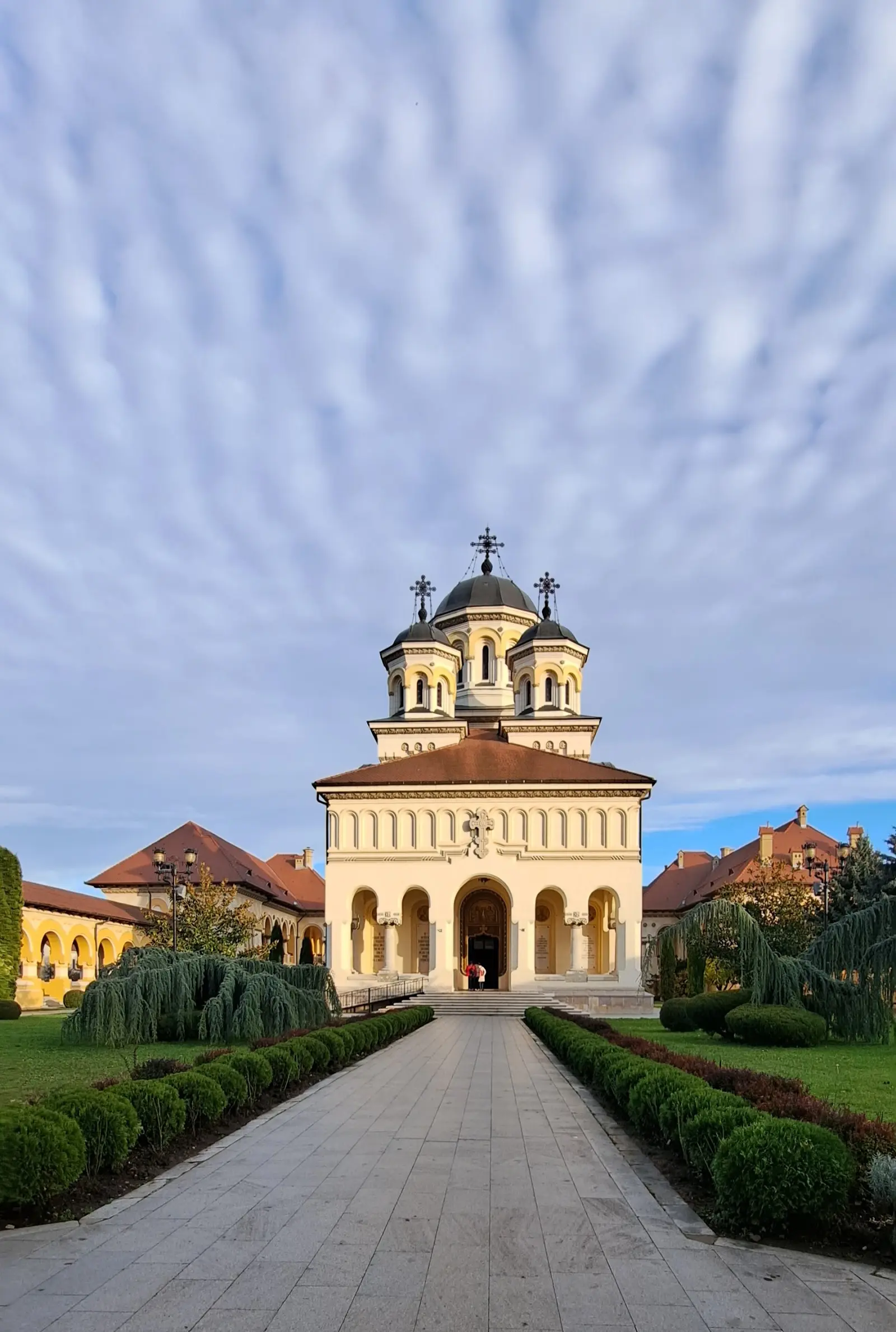
The Reunification Cathedral in Alba Iulia, also known as the Coronation Cathedral, is a monument of deep national significance, built in the early 1920s within the Alba Carolina fortress to mark the Great Union of 1918 and the coronation of King Ferdinand and Queen Marie as sovereigns of a reunited Romania, a ceremony that took place here in 1922. The cathedral, built in the Neo-Romanian style inspired by traditional church architecture, has an ample plan, an imposing bell tower at the entrance and an inner courtyard recalling the Brancovan monasteries. The interior is decorated with paintings that evoke important moments of national history, and in the narthex are preserved the portraits of the crowned sovereigns. The place is closely tied to the symbolism of Romanian unity. Practical note: the visit combines naturally with exploring the Alba Carolina fortress and the nearby Roman Catholic Cathedral, in a tour of the city's history.
 Monastery
Mănăstirea Antim
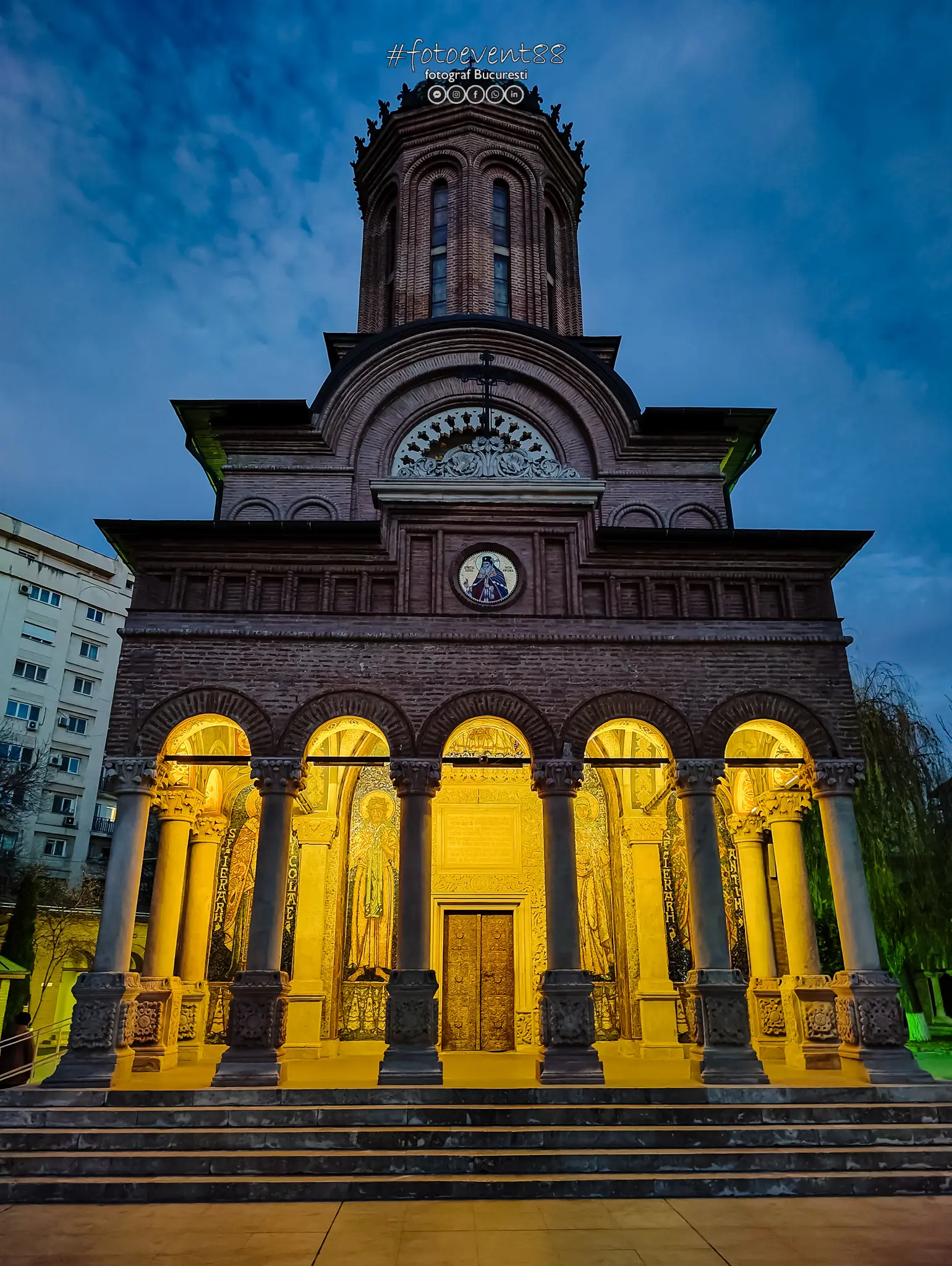
The Antim Monastery in central Bucharest was built between 1713 and 1715 at the command of Metropolitan Antim Ivireanul, a scholar of Georgian origin who was a printer and artist and left a deep mark on Romanian culture. The complex stands out for its triconch church, whose carved stone portal was designed after the metropolitan's own drawings, for the bell tower at the entrance, and for a quiet courtyard set apart from the bustle of the city. Over the centuries the church suffered from earthquakes and from communist urban planning, when it was moved on rails to save it from demolition. Today it houses a monastic community and a museum displaying heritage objects, old prints, and liturgical treasures. Visitors find a corner of peace with restored paintings, a gilded iconostasis, and well-kept gardens. A practical note is to respect the services and the silence of the place while walking through the courtyard.
 Monastery
Mănăstirea Celic Dere
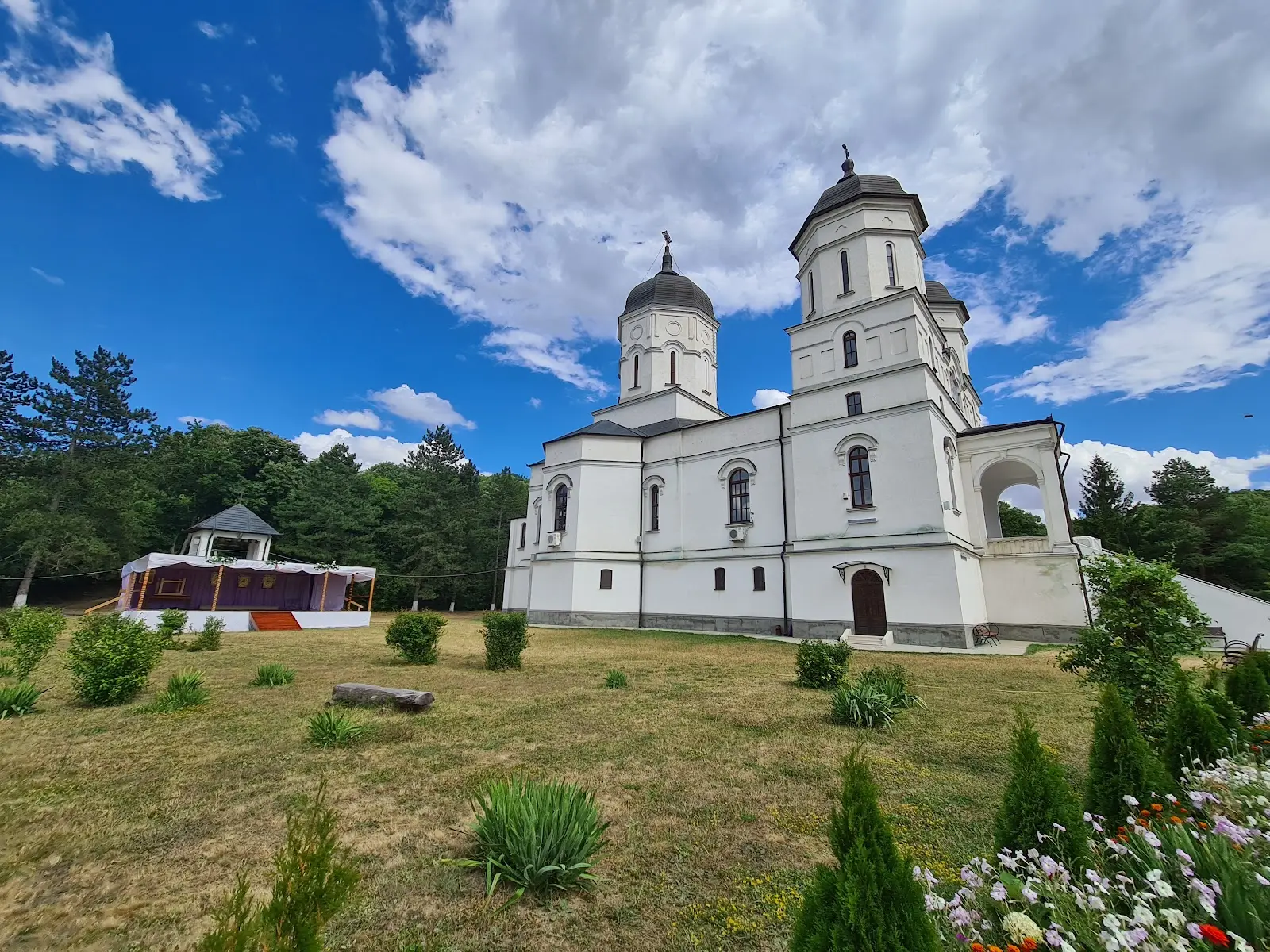
Celic Dere Monastery lies in northern Dobruja, on the road between Tulcea and Isaccea, in a landscape of wooded hills that contrasts with the dry steppe around it. The name comes from a Turkish phrase referring to a nearby stream, a reminder of Ottoman rule over the region. The settlement was founded in the second half of the nineteenth century by monks who came from Romanian-inhabited areas south of the Danube, and it quickly became an important centre of faith for the local community. The complex includes a large painted church, cells arranged around the enclosure, and a museum of religious art with old icons, ancient books, and embroidery made by the nuns. The place is known for its calm atmosphere and for a communal style of monastic life, where the nuns tend the household and the vineyard. Visitors can combine a spiritual stop with a walk through the surrounding hills.
 Church
Biserica Densuș
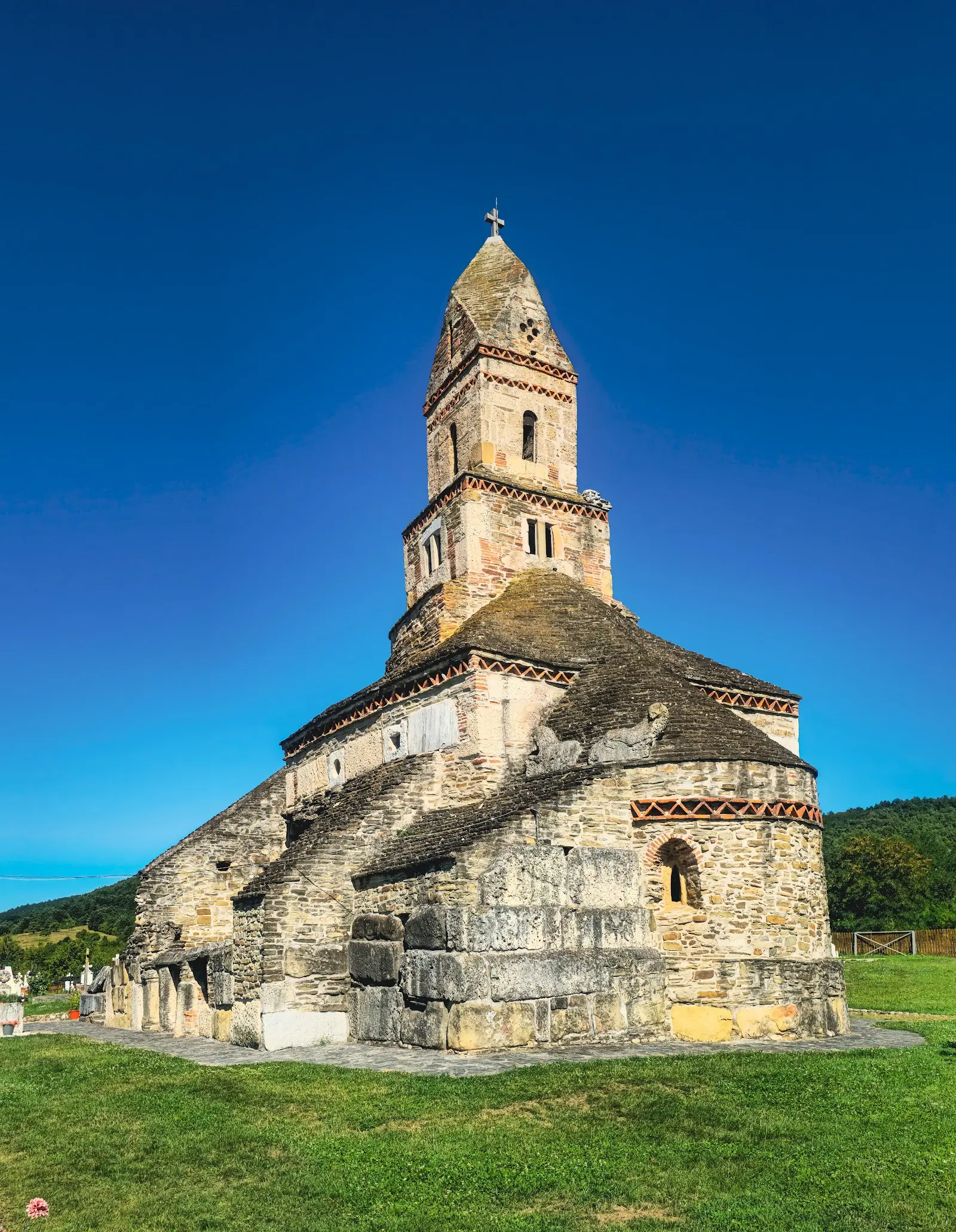
The church of Densuș in Hunedoara County is regarded as one of the oldest stone churches in Romania still in use, and its unusual appearance has fascinated visitors for centuries. Probably built in the thirteenth century on the site of older structures, it was raised largely from Roman stones brought from the nearby fortress of Ulpia Traiana Sarmizegetusa. In its walls one can recognise slabs with Latin inscriptions, shaped blocks, and reused column fragments, a true collage of ancient material. The very narrow interior shelters fresco fragments from the fifteenth century, painted by local masters. The massive silhouette, with a central tower resting on heavy pillars and a stone roof, gives it an archaic, almost unreal character. Visitors should look closely at the walls to find the Roman traces and respect the cramped space of a church that is still in liturgical use.
 Monastery
Mănăstirea Arnota
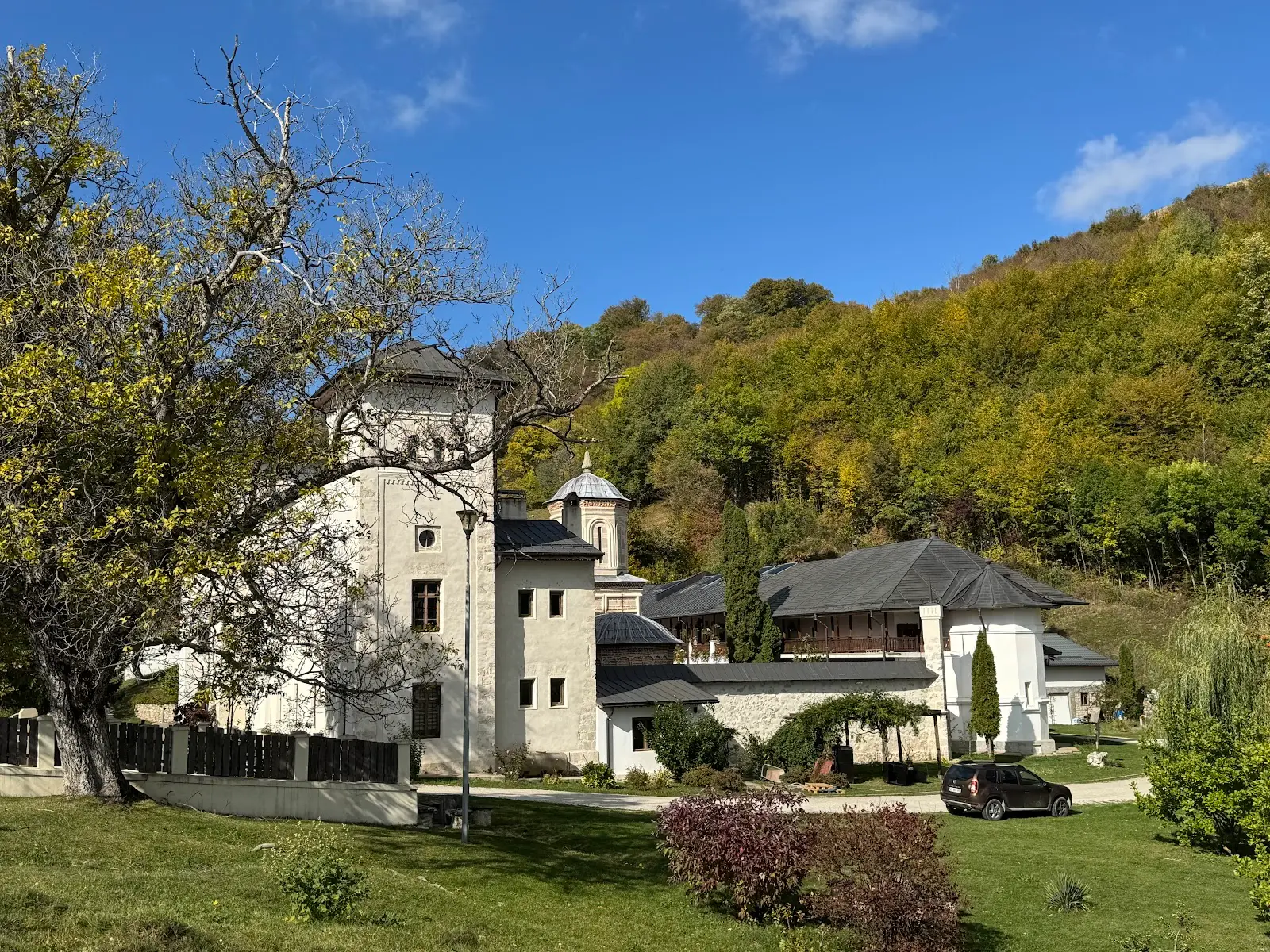
Arnota Monastery rises in solitude on a mountain peak in northern Oltenia, above the village of Costești, in a landscape of rocks and forests that heightens the sense of withdrawal. It was founded in the first half of the seventeenth century by the ruler Matei Basarab, who chose this sheltered spot to also prepare his tomb, which lies today inside the church. The church preserves a particularly valuable carved iconostasis and fragments of wall painting from the founder's era, testimonies of early Brâncoveanu-style art. The road climbing up to the monastery offers wide views over the sub-Carpathian hills and the nearby limestone quarry. The atmosphere is quiet and fit for contemplation, and the monastic community carefully maintains the complex. Visitors who reach this place are rewarded with a blend of the site's historic value and the beauty of the surrounding nature. Suitable footwear is recommended for the access road.
 Church
Biserica Sfântul Mihail
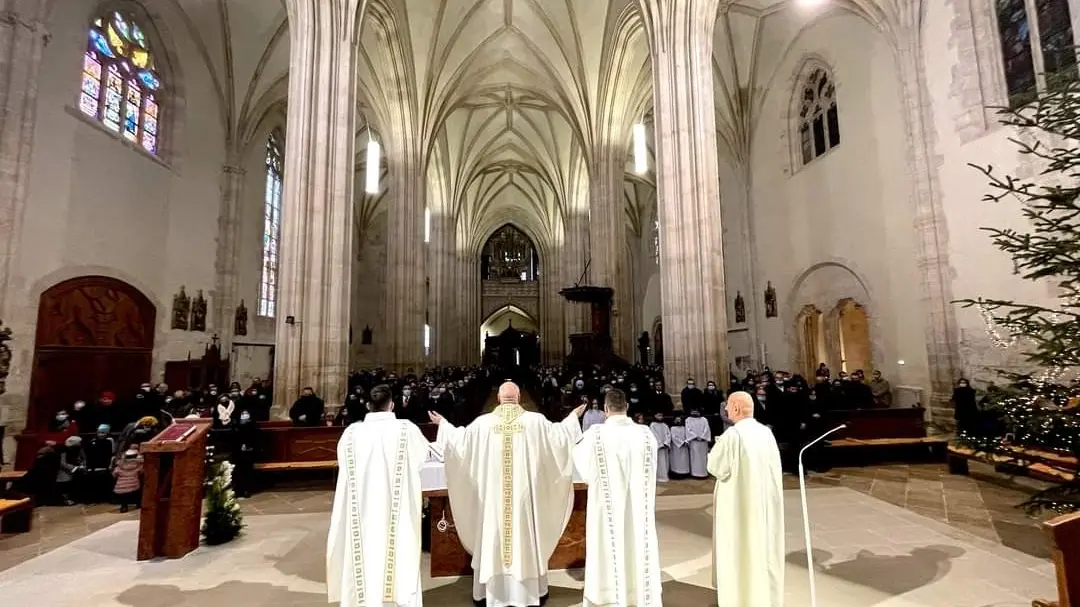
St. Michael's Church in Cluj-Napoca is one of the most important Gothic buildings in Transylvania and dominates Union Square, the heart of the city, with its silhouette. Its construction began in the fourteenth century and lasted more than a hundred years, producing a large hall church with high vaults, pointed windows, and a richly decorated western portal. The neo-Gothic tower that now rises beside it was added in the nineteenth century and is the tallest church tower in the region. The interior preserves valuable elements such as a carved Baroque pulpit, medieval fresco fragments, and statues, witnesses to its passage through Catholicism and the Reformation. In front of the church stands the equestrian statue of King Matthias Corvinus, born in Cluj. Visitors can admire the details of the Gothic architecture and combine the visit with a walk through the central square. It is best to respect the services when they take place.
 Monastery
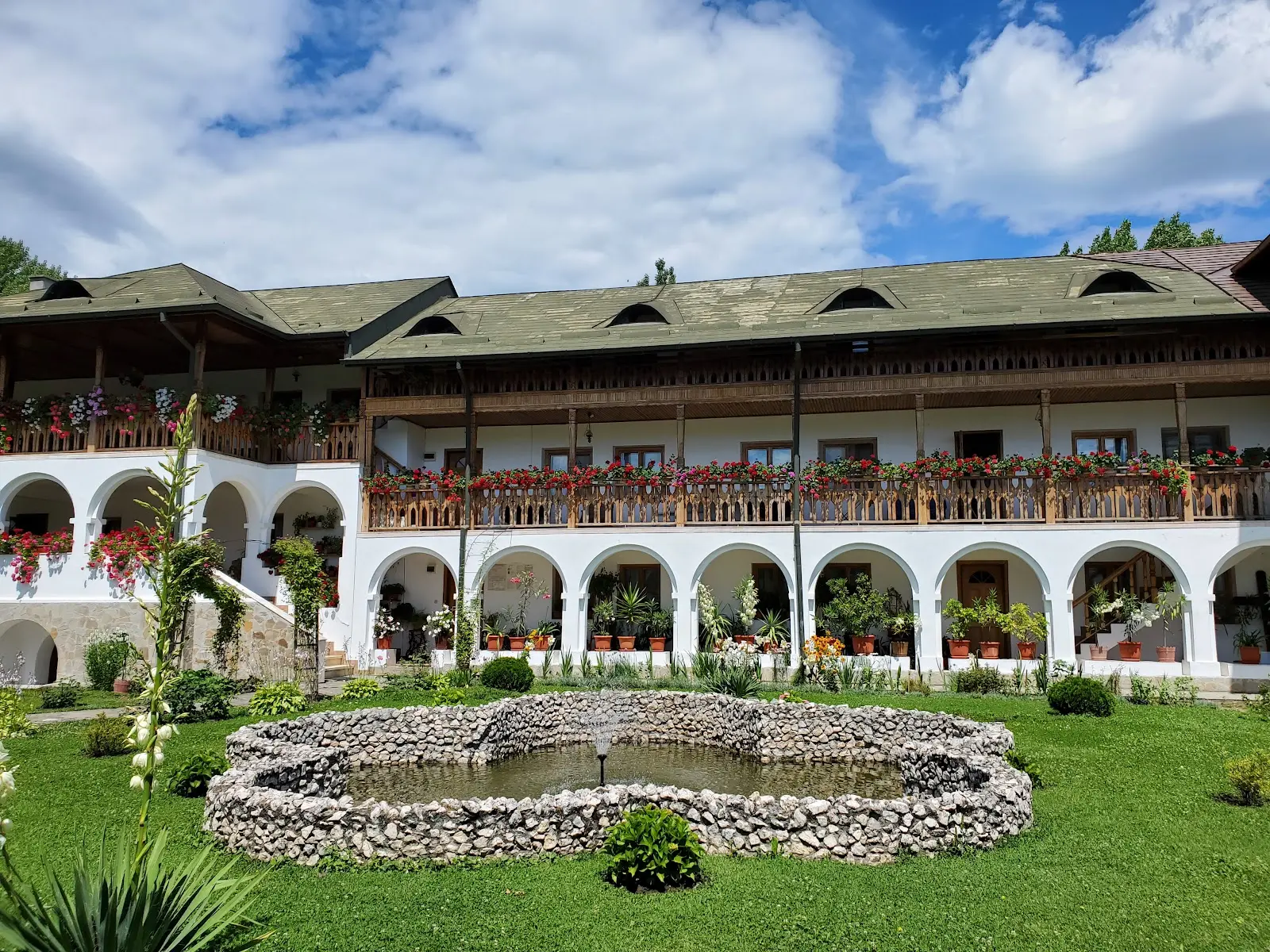
Mănăstirea Ostrov Călimănești
Ostrov Monastery stands on a small island in the Olt River, in the resort of Călimănești in Vâlcea, in a natural setting that makes it seem to float above the water. It is considered one of the oldest nunneries in Wallachia, the present church having been founded in the early sixteenth century by the ruler Neagoe Basarab and his wife, Lady Despina. The small church preserves fragments of old wall painting and an atmosphere of contemplation heightened by the island's isolation. Around the church, the monastic community keeps gardens and cells, and the view over the Olt and the surrounding hills is remarkable. The place has been tied to legends of healing waters in the area, near the mineral springs of Călimănești and Căciulata. Visitors can easily reach the island and combine a spiritual stop with a walk along the riverbank. Appropriate dress is recommended when visiting a place of worship.
 Monastery
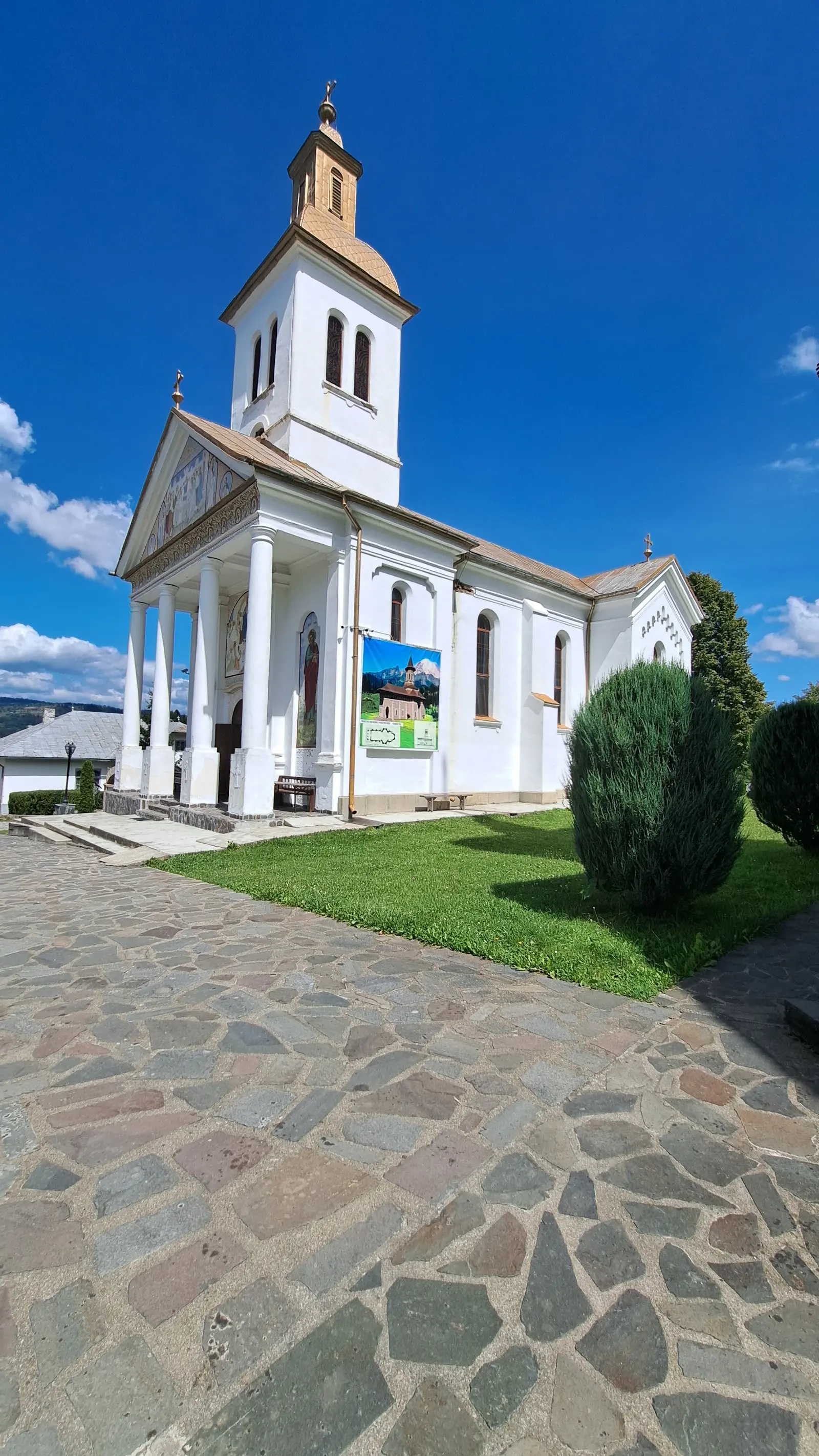
Mănăstirea Moisei
Moisei Monastery lies in northern Maramureș, near the town of Borșa, at the foot of the Rodna Mountains, in a natural setting of great beauty. It is one of the oldest monastic settlements in the area, with origins reaching back to the seventeenth century, when it was founded by local nobles. The wooden church in the Maramureș style, with its tall spire and characteristic roof, is an example of the traditional architecture of the region. The place is closely tied to the faith of the local community and hosts an important annual pilgrimage. Nearby stands the Moisei Monument, raised in memory of the peasants killed here during the Second World War, a work of the sculptor Vida Gheza. Thus the area combines the dramatic history of the place with religious tradition. Visitors can link a stop at the monastery with a visit to the memorial monument. It is best to respect the sacred character of the church and the meaning of the monument.
 Monastery
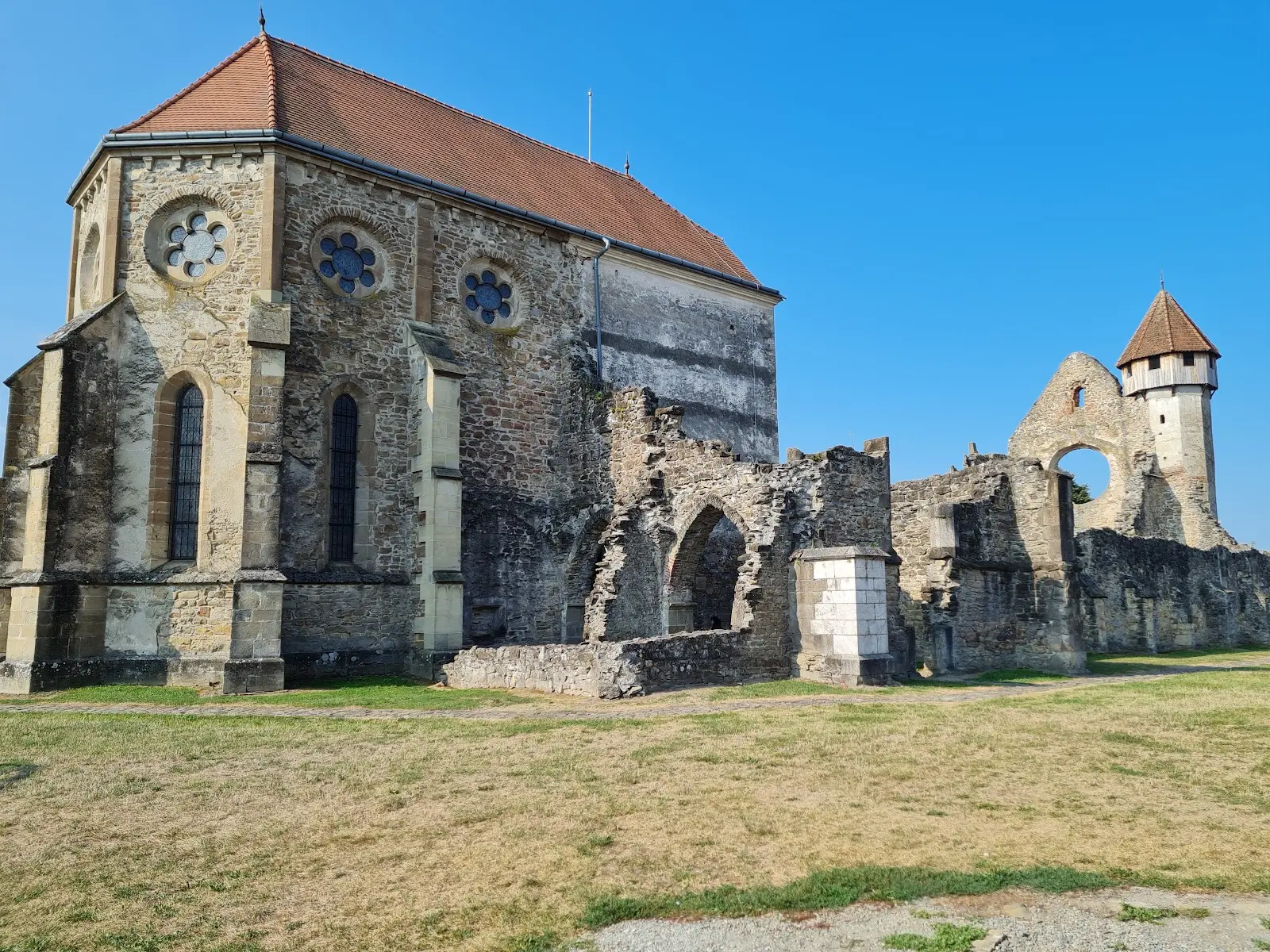
Mănăstirea Cârța
Cârța Monastery, near Făgăraș at the foot of the mountains that share its name, is one of the oldest Cistercian monasteries in the Romanian lands, founded in the 13th century by monks who came from the West. Today, impressive ruins survive from the old Gothic abbey, including the church choir, some arches and fragments of walls that evoke the refinement of Cistercian architecture, a style rarely found in this part of Europe. Beside the ruins stands an Evangelical church used by the local Saxon community. The quiet setting, with grass growing among the old stones and the Făgăraș mountains rising in the background, gives the place a melancholy and photogenic atmosphere. Cârța Monastery is of great value to those interested in medieval history, Gothic architecture and the encounter between Western civilisation and the Transylvanian world. Located near the road leading to the Transfăgărășan, it makes an ideal cultural stop on the way to the mountains.
 Church
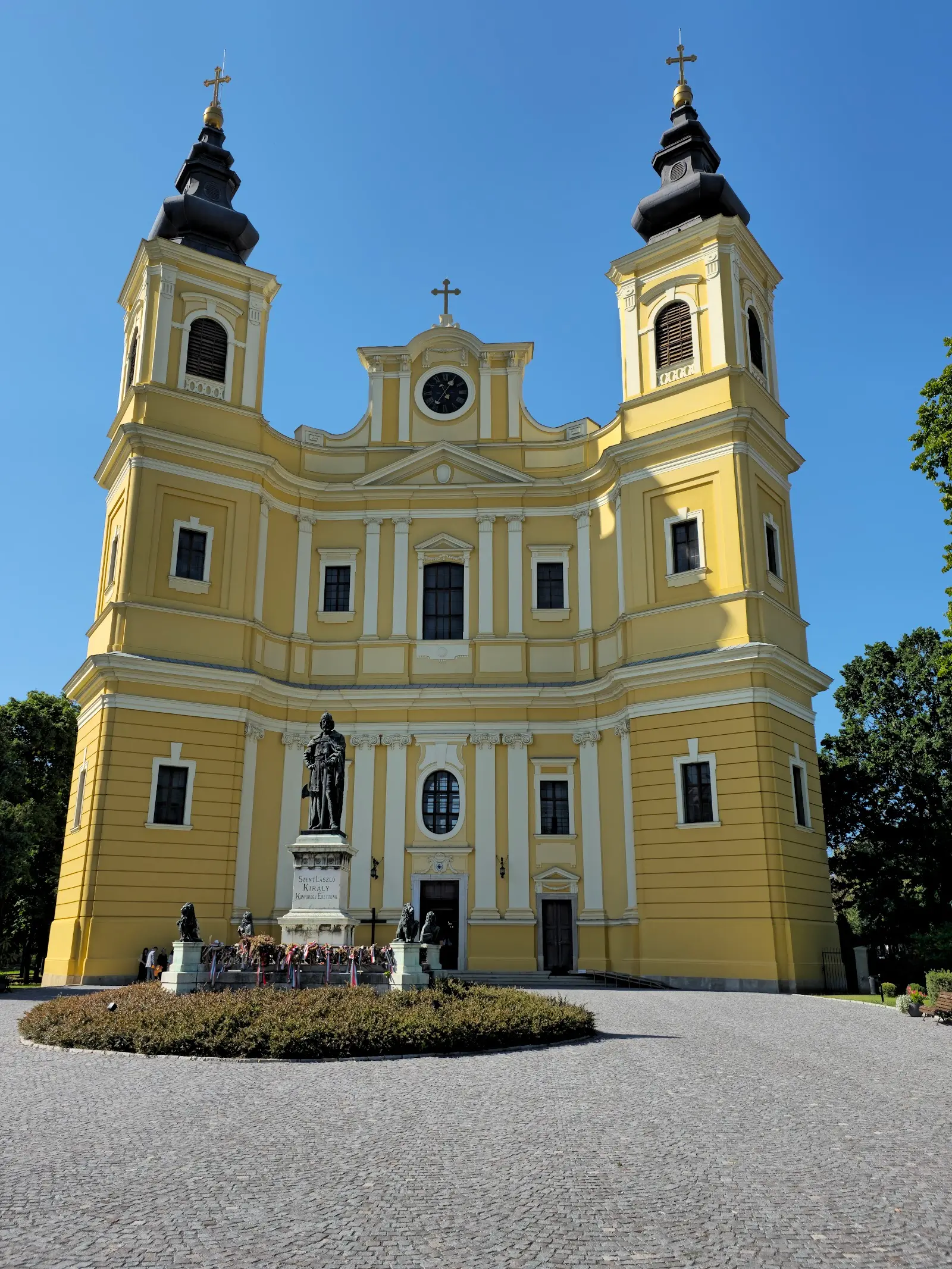
Catedrala Romano-Catolică Oradea
The Roman Catholic Cathedral in Oradea, also known as the Basilica of Saint Mary, is the largest Baroque cathedral in Romania and a landmark of religious architecture in Crișana. Built in the 18th century, it forms part of the impressive ensemble of the Baroque Palace and the Episcopal Complex, which together make up a monumental group of rare stylistic unity. The elegant facade with its two towers and the luminous interior, decorated with stucco, marble and paintings, convey the grandeur of the Baroque era. The cathedral houses a large historic organ, considered one of the most valuable in the country, which sounds at concerts and services. Visitors admire the side altars, the painted vaults and the solemn atmosphere of the sacred space. Located in the episcopal district of the city, the cathedral is easy to visit together with the Baroque Palace, which today houses a museum. It is an essential destination for anyone wishing to discover the architectural and spiritual heritage of Oradea.
 Monastery
Mănăstirea Govora
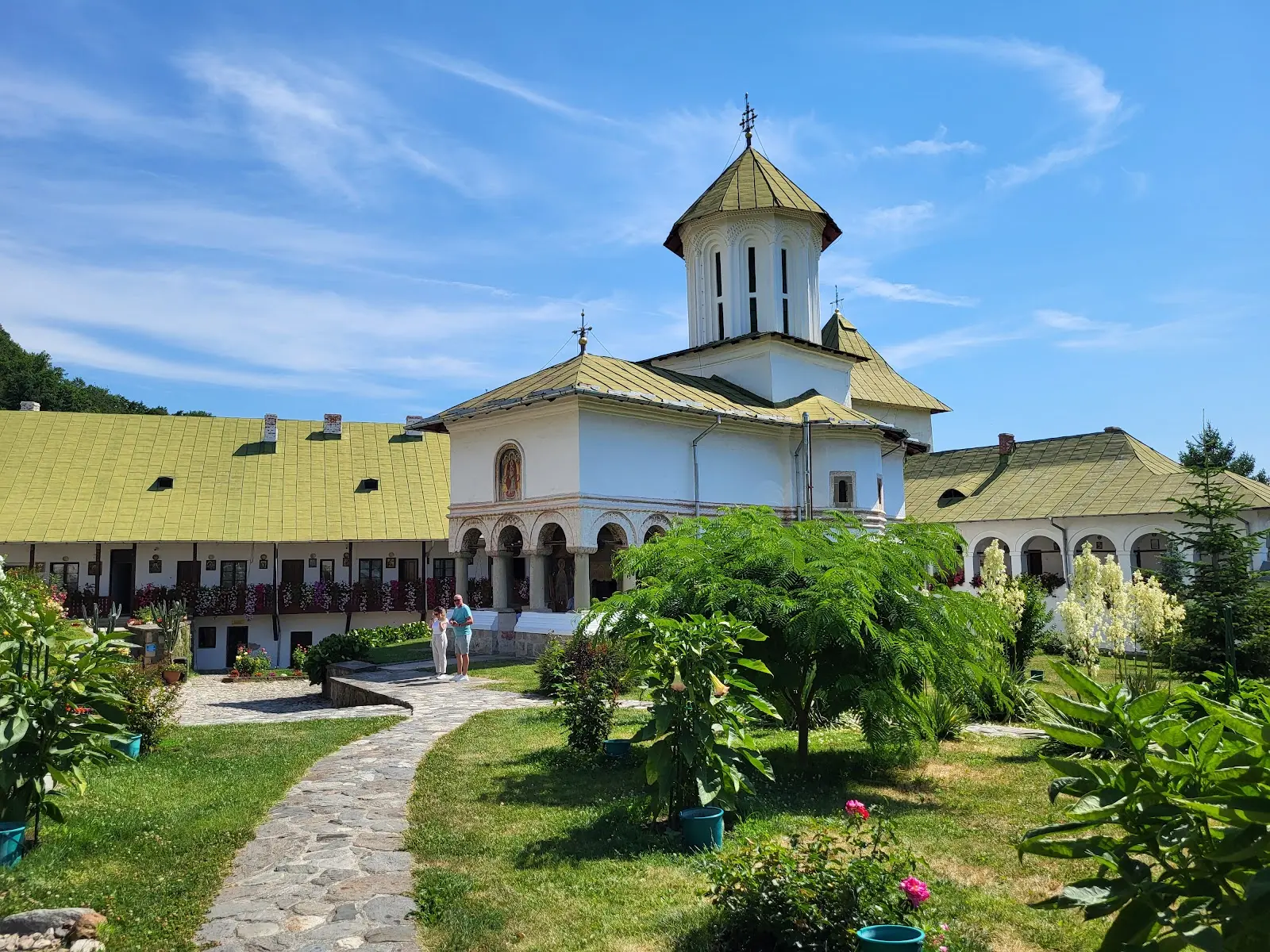
Govora Monastery, near Râmnicu Vâlcea, is one of the oldest and most important monasteries in Oltenia, with a history reaching back to the 15th century. It played a notable cultural role, for it was here in the 17th century that a famous printing press operated, producing the Govora Law Code, one of the first collections of laws in the Romanian language. The ensemble, rebuilt and embellished during the reigns of Matei Basarab and Constantin Brâncoveanu, blends elements of the Brâncovenesc style with the tradition of Moldavian-Wallachian architecture, standing out through its carved columns, valuable murals and elegant porch. Set on a wooded hill in a quiet and picturesque setting, the monastery radiates an atmosphere of peace and contemplation. Here visitors discover not only an active place of worship but also an important centre of old Romanian culture. Located near the Băile Govora spa resort, the monastery is a valuable stop for those interested in history, religious art and spirituality.
 Church
Biserica Millennium Timișoara
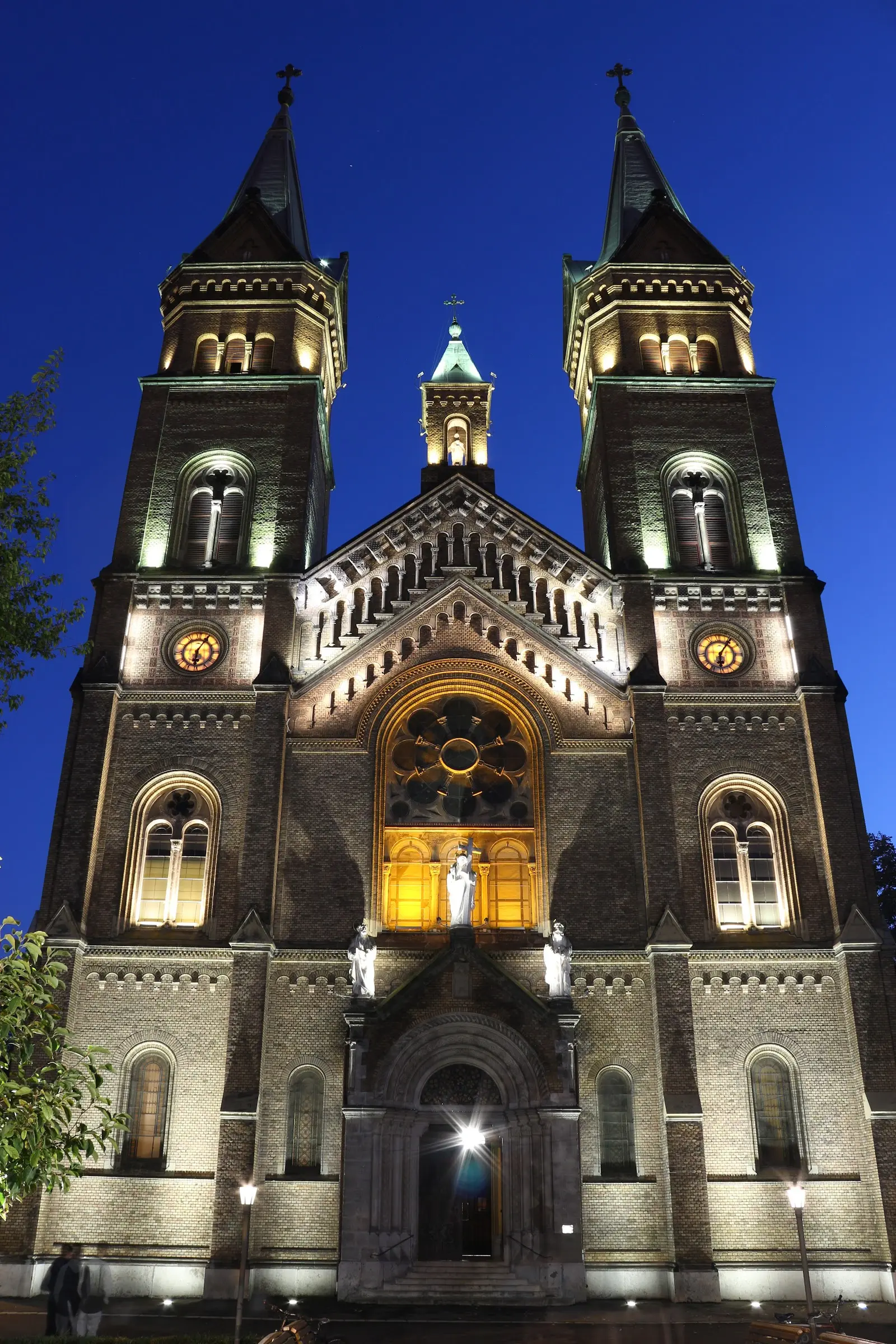
The Millennium Church in Timișoara, in the Fabric district, is the city's largest Roman Catholic place of worship, an imposing church raised in the early 20th century to mark a thousand years since the settlement of the Hungarians in the Carpathian basin. The edifice, built in Neo-Romanesque style with Neo-Baroque accents, stands out for the two twin towers flanking its facade, for its central dome and for its generous dimensions, which make it dominate the landscape of the Fabric district, one of Timișoara's old industrial and residential nuclei. Inside, the church houses a monumental altar, a valuable organ and painted decoration that heightens the solemnity of the space. Raised in exposed brick, with elaborate ornament, the Millennium is an architectural landmark of the city known as a European Capital of Culture. Practical note: combine the visit with a walk through the Fabric district, with its Secession buildings, and with the discovery of Union Square in the historic centre.
 Church
Catedrala Sfântul Mihail Alba Iulia
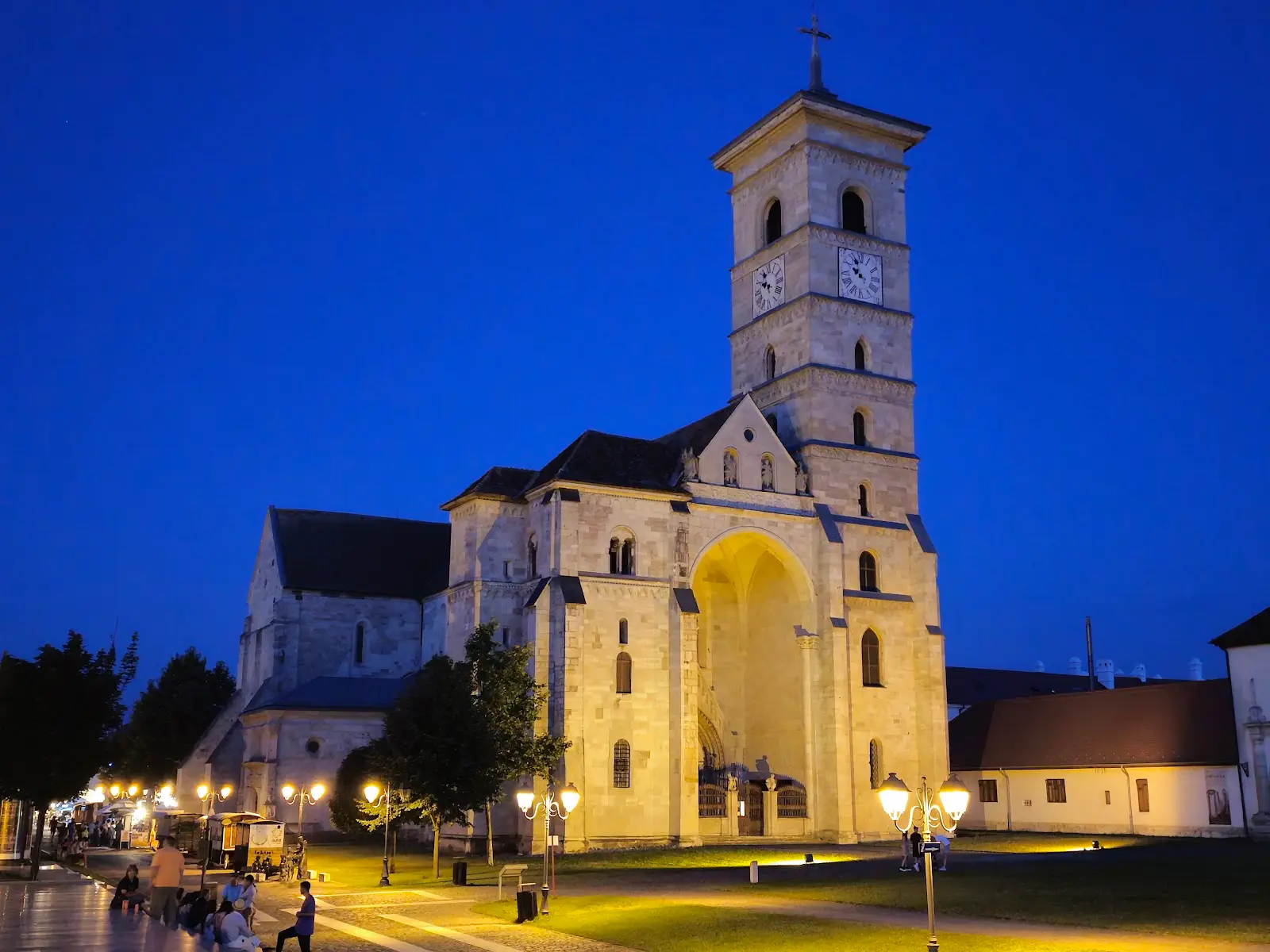
The Roman Catholic Cathedral of Saint Michael in Alba Iulia, in the heart of the Alba Carolina citadel, is the city's oldest and most valuable architectural monument, an edifice built in Romanesque style in the 12th and 13th centuries, on the site of earlier churches. Over the ages, the cathedral has witnessed crucial events in the history of Transylvania and has undergone numerous Gothic, Renaissance and Baroque transformations, which enriched its appearance without diminishing its original grandeur. Inside lie the tombs of notable figures, among them John Hunyadi, the great voivode and defender of Christendom, alongside his son and brother, as well as the tombs of princes of Transylvania. The cathedral, seat of the Roman Catholic bishopric, is a central point of the Baroque Vauban citadel. Practical note: combine the visit with a tour of the Alba Carolina citadel, with the nearby Orthodox Coronation Cathedral and with the changing of the guard ceremony.
 Church
Biserica Sfântul Nicolae Drăgășani
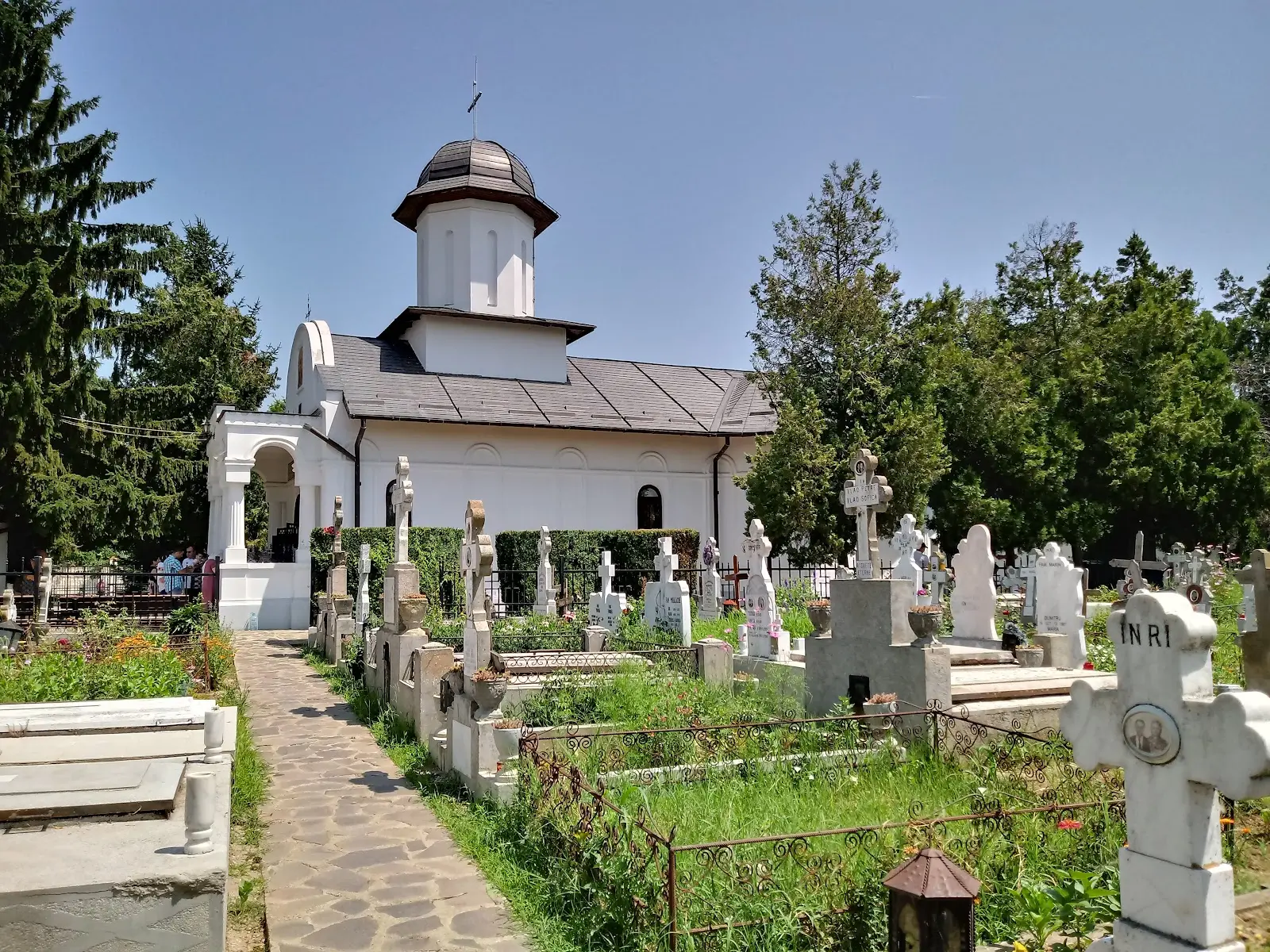
The Church of Saint Nicholas in Dragasani is a traditional Orthodox place of worship in the heart of the Oltenia wine country, a spiritual landmark for the local community across several generations. Built in the style typical of southern Romanian town churches, it combines a nave-based plan with towers rising above the porch and naos, while the interior preserves wall paintings and icons depicting biblical scenes and the faces of saints. The feast of Saint Nicholas, protector of the poor and of travellers, is marked each year with a service attended by the faithful of the area. Set in a town famous for its wines, the church makes a fitting stop for those exploring Dragasani and the surrounding vineyard hills. Visitors are asked to respect the quiet and the schedule of services when they enter.
 Monastery
Mănăstirea Slatina
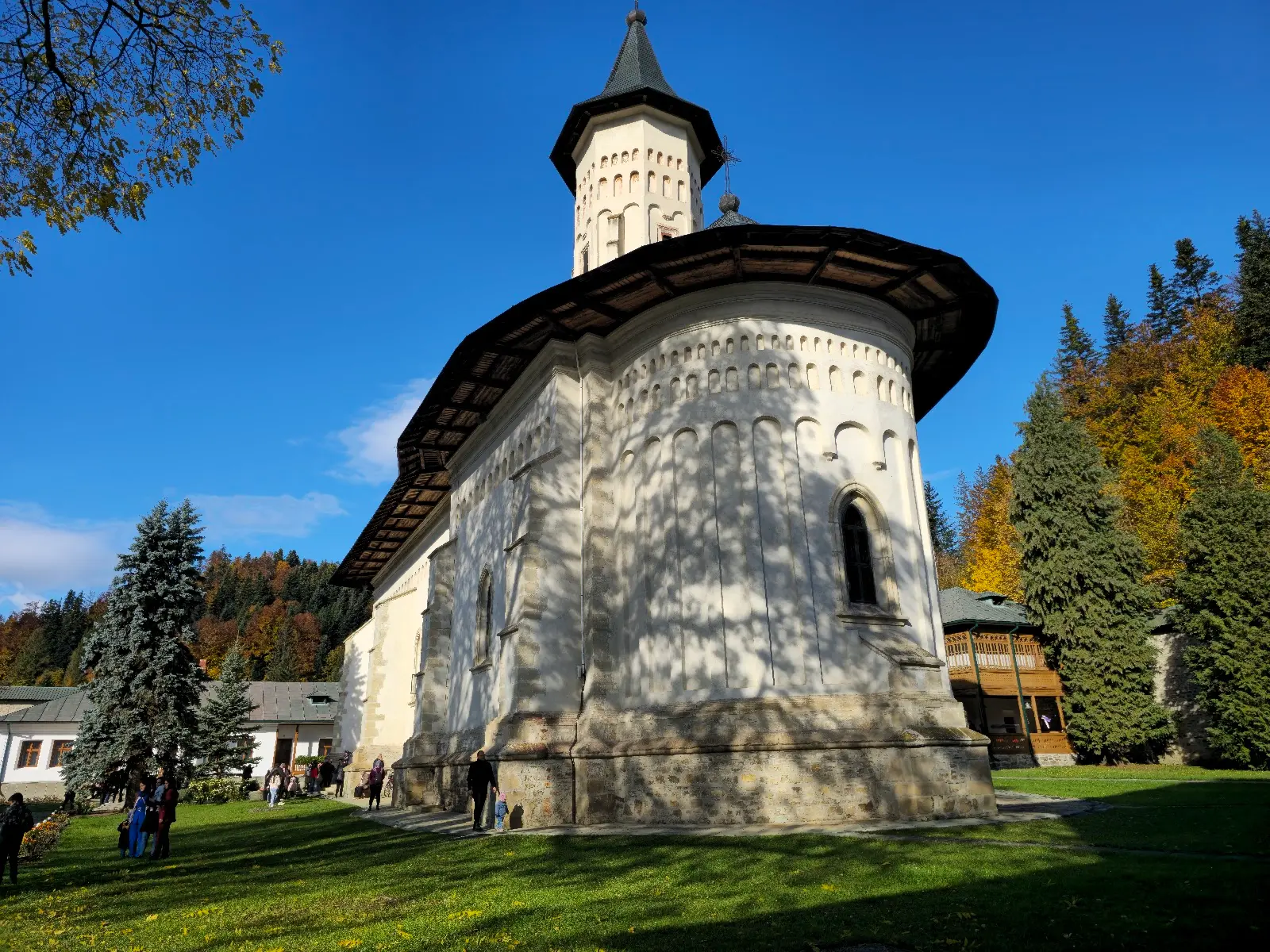
Slatina Monastery in Suceava county is an important monastic settlement of Bukovina, founded in the sixteenth century by the ruler Alexandru Lapusneanu. The complex is dominated by the great church dedicated to the Transfiguration, an imposing building in the Moldavian style, with thick walls and characteristic towers, enclosed by a precinct and outbuildings. The monastery played a notable part in the religious and cultural life of Moldavia and belongs to the tradition of great princely foundations. Set in a quiet natural landscape among wooded hills, it offers visitors an atmosphere of contemplation far from the bustle of towns. Slatina forms part of the circuit of Bukovinian monasteries, alongside the famous painted churches of the region. As an active monastic community, visitors are asked to respect the schedule of services and the attire befitting a place of prayer.
 Church
Domul Romano-Catolic Timișoara
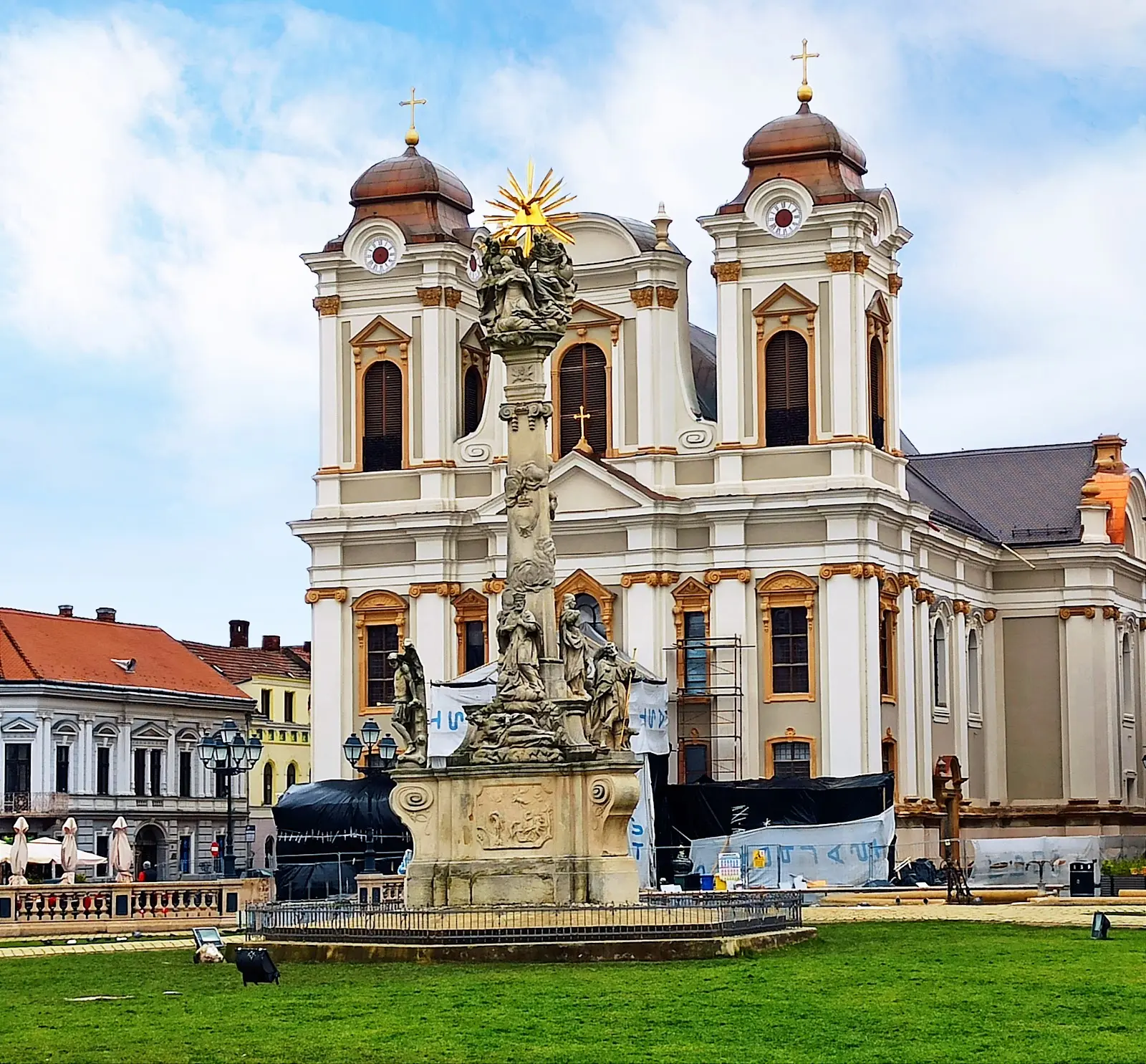
The Roman Catholic Dome in Timisoara, also known as Saint George's Cathedral, is one of the most valuable Baroque buildings in Romania, set in Union Square in the heart of the historic centre. Raised in the eighteenth century under Habsburg rule, the edifice impresses with its elegant twin-towered facade, its richly decorated interior and its Baroque altars. The dome holds its historic organ and religious works of art of great value, standing as a remarkable example of Central European ecclesiastical architecture. The building reflects the Austrian cultural influence and the role of the Catholic community in the multicultural history of the Banat. Union Square, with its ensemble of colourful historic buildings, forms an exceptional setting for the monument. The dome is a must-see attraction of Timisoara; visitors are asked to respect the quiet and the schedule of services inside.
 Church
Catedrala Sfântul Dumitru
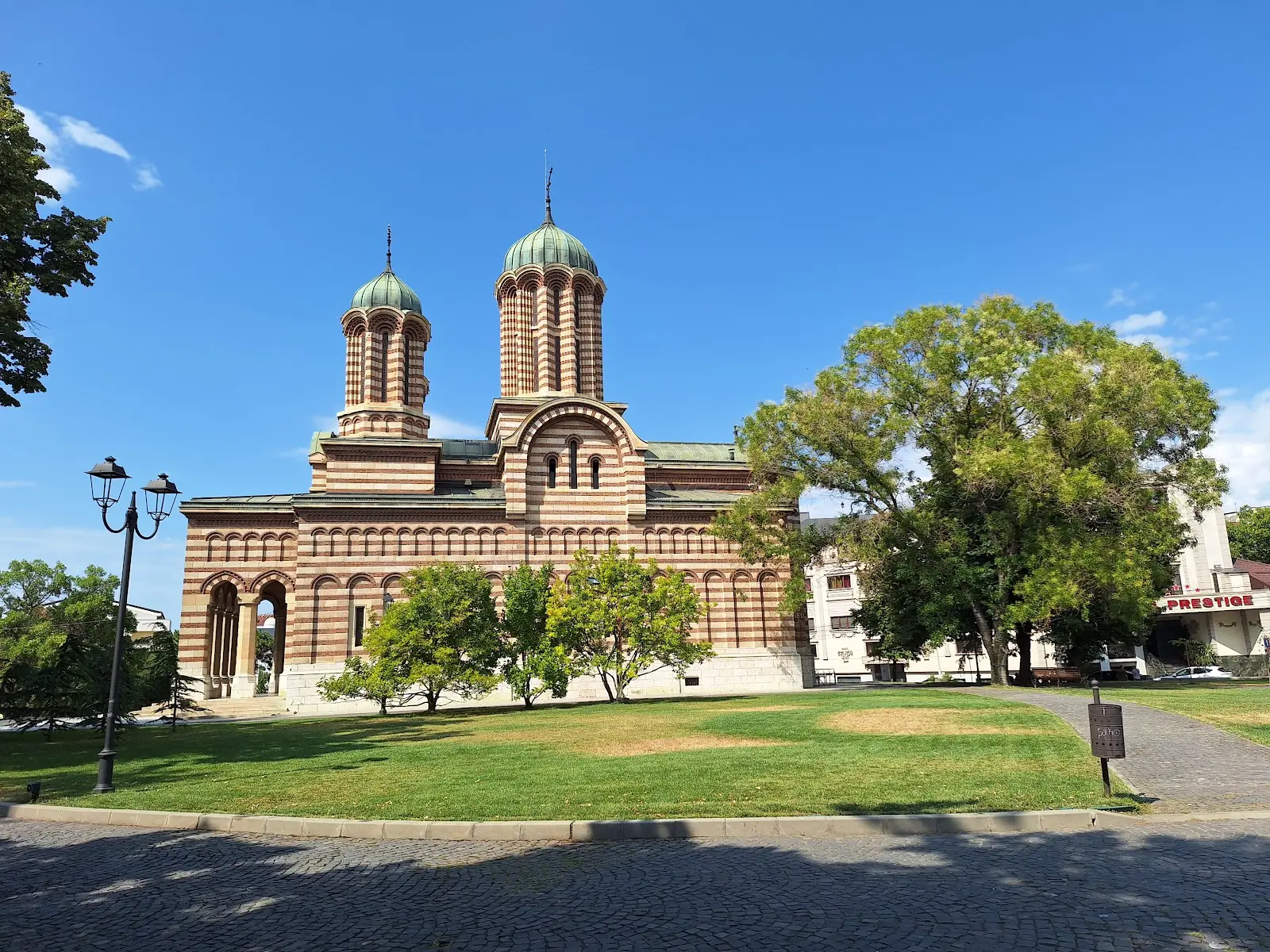
Saint Demetrius Cathedral is the metropolitan cathedral of Craiova and one of the most important Orthodox foundations in Oltenia. Raised on the site of a much older church linked to the Craiovesti family and to the medieval history of the town, the present building was rebuilt in the second half of the 19th century in the Neo-Byzantine style, to the plans of the French architect André Lecomte du Noüy, well known for his restorations in Romania. The interior is impressive for its mural painting, its richly carved iconostasis and the solemn atmosphere of the space. The cathedral holds relics and valuable liturgical objects and remains a spiritual landmark for the local community. Standing in the historic centre of Craiova, near other significant monuments, it is easy to include in a walk through the city. Visitors are asked to respect the dress and quiet appropriate to a place of worship, especially during services.
 Church
Catedrala Romano-Catolică Satu Mare
 Church
Biserica Rupestră Sfântul Andrei
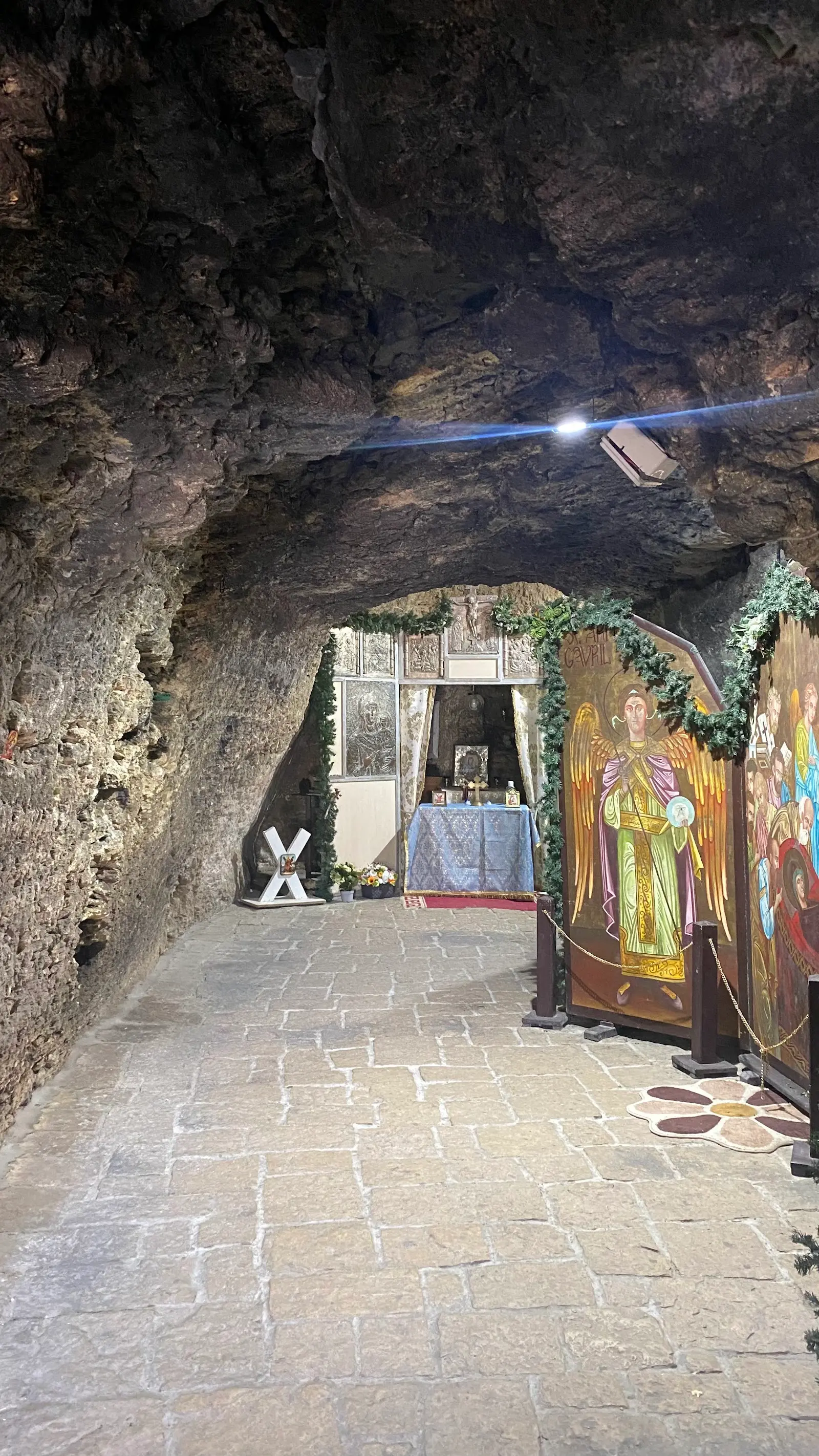
The Rock Church of St Andrew lies near Eforie, in Dobrogea, and is considered a place linked by tradition to the preaching of Christianity in these lands by the Black Sea. The sanctuary is partly carved into the rock, a modest grotto turned into a place of prayer that preserves an air of simplicity and contemplation. Local tradition connects this place with the Apostle Andrew, regarded as the one who brought the Christian message to the region of ancient Dobrogea, known long ago as Scythia Minor. Over time, the grotto became a pilgrimage destination, and a small monastic complex developed around it. The natural setting, with the vegetation of the Dobrogean plain and the quiet of the place, reinforces the atmosphere of a sanctuary. Practical note: as this is a religious pilgrimage site, decent dress and a respectful attitude are appropriate, and the visit can be combined with the archaeological and spa attractions of the coastal area.
 Church
Biserica de lemn din Șurdești
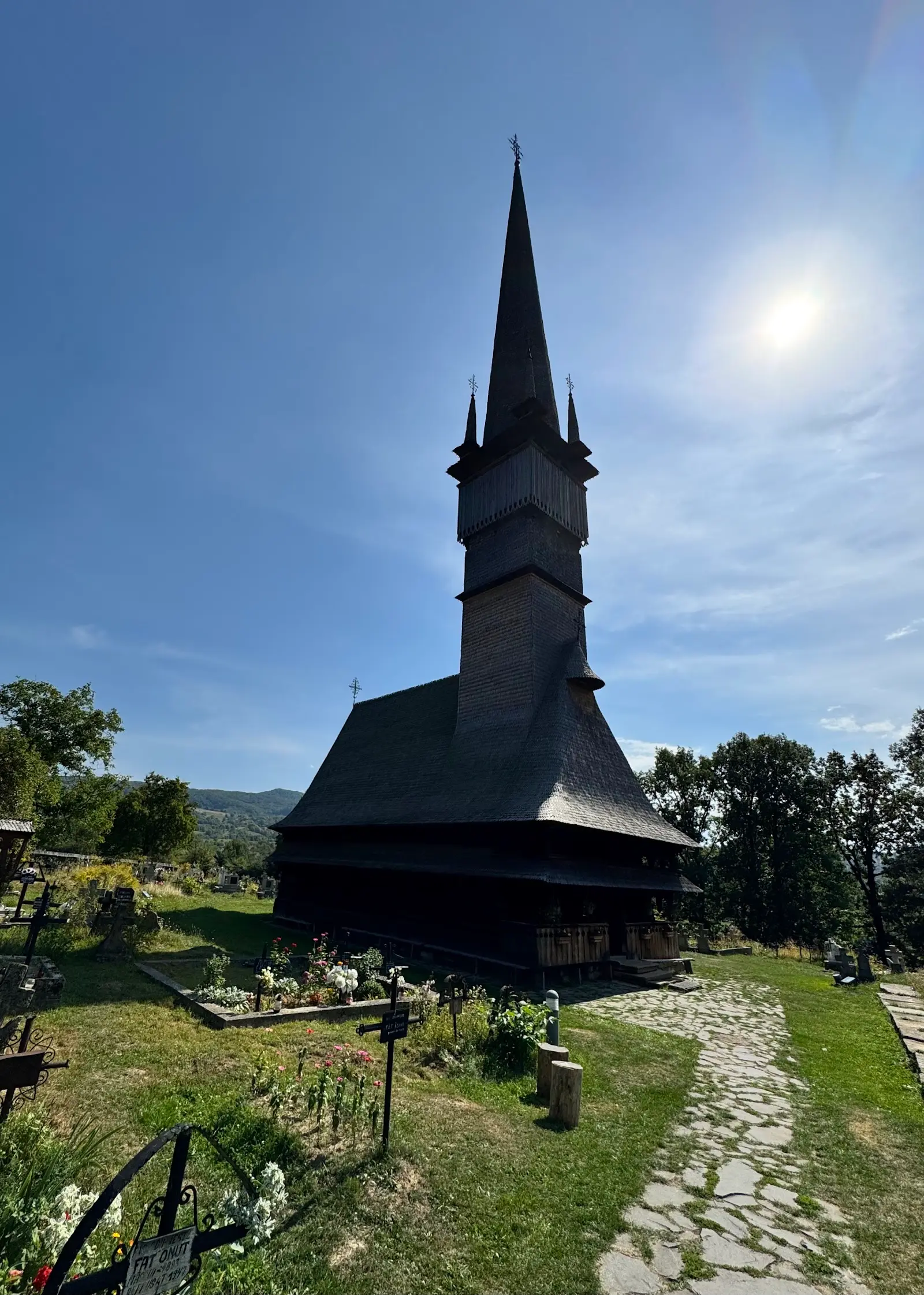
The wooden church of Șurdești is one of the most impressive wooden churches in Maramureș and part of the UNESCO World Heritage. Built in the 18th century, it stands out for its extremely tall tower, whose slender spire ranks among the highest wooden structures of its kind in Europe. Made entirely of oak, the church illustrates the skill of the Maramureș craftsmen, who combined the log structure with a steep roof and delicately carved decorations. The interior preserves mural painting on wood, with religious scenes rendered in a folk manner that reflects the faith and sensibility of the local community. Set on a hill, with a carved porch and a cemetery around it, the church blends naturally into the rural landscape of the area. Practical note: the visit combines with other wooden churches nearby, and access to the interior may require contacting the person who keeps the key, as is customary in the villages of Maramureș.
 Church
Catedrala Mitropolitană Târgoviște
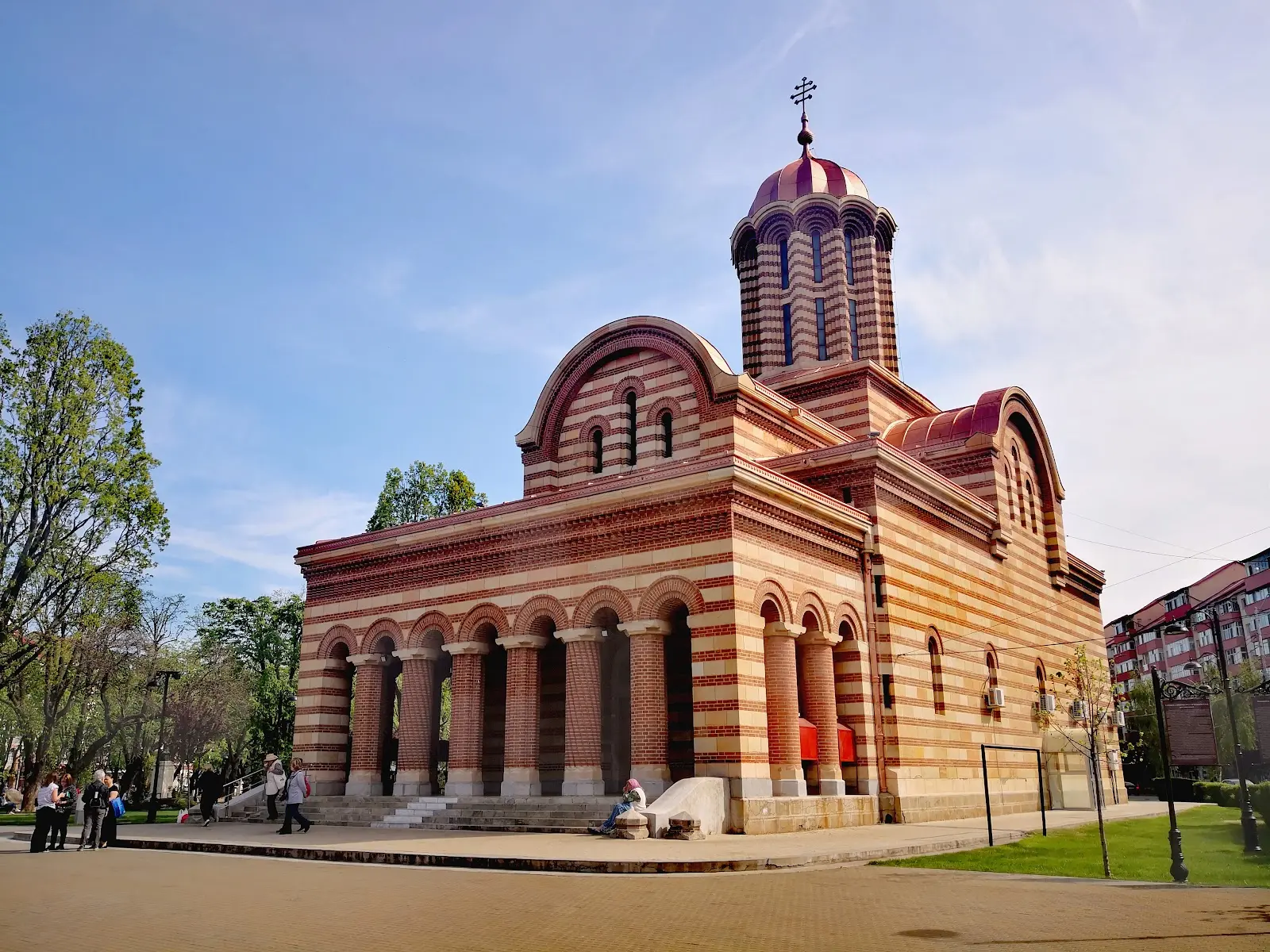
The Metropolitan Cathedral of Târgoviște is a monument of great historical importance, tied to the period when the town was the capital of Wallachia and a princely residence for more than two centuries. Raised on the site of the country's former metropolitan seat, the cathedral recalls the times when the political and religious life of the medieval Wallachian state unfolded here. Its architecture, in the tradition of the voivodal churches, blends the characteristic Orthodox plan with distinctive decorative elements, while the interior preserves mural painting and liturgical objects that evoke the spiritual role of the place. The cathedral stands near the Princely Court and the celebrated Chindia Tower, together forming a historic ensemble that represents the heart of the old capital. A visit helps convey the link between princely power and the church in the Romanian medieval era. The site remains a place of pilgrimage and a central point on the cultural trails of Târgoviște, a town rich in voivodal remains.
 Church
Biserica Fortificată Moșna
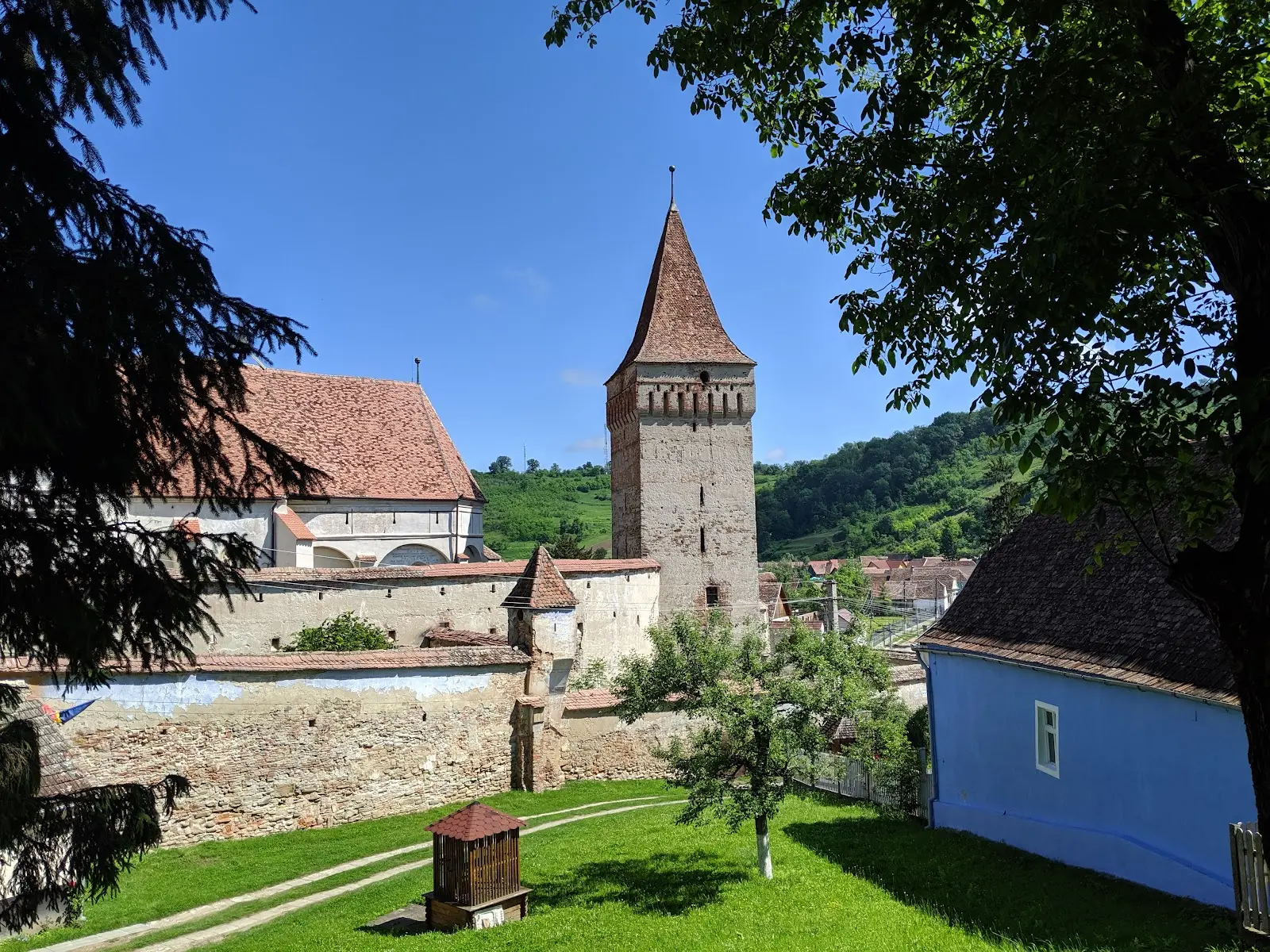
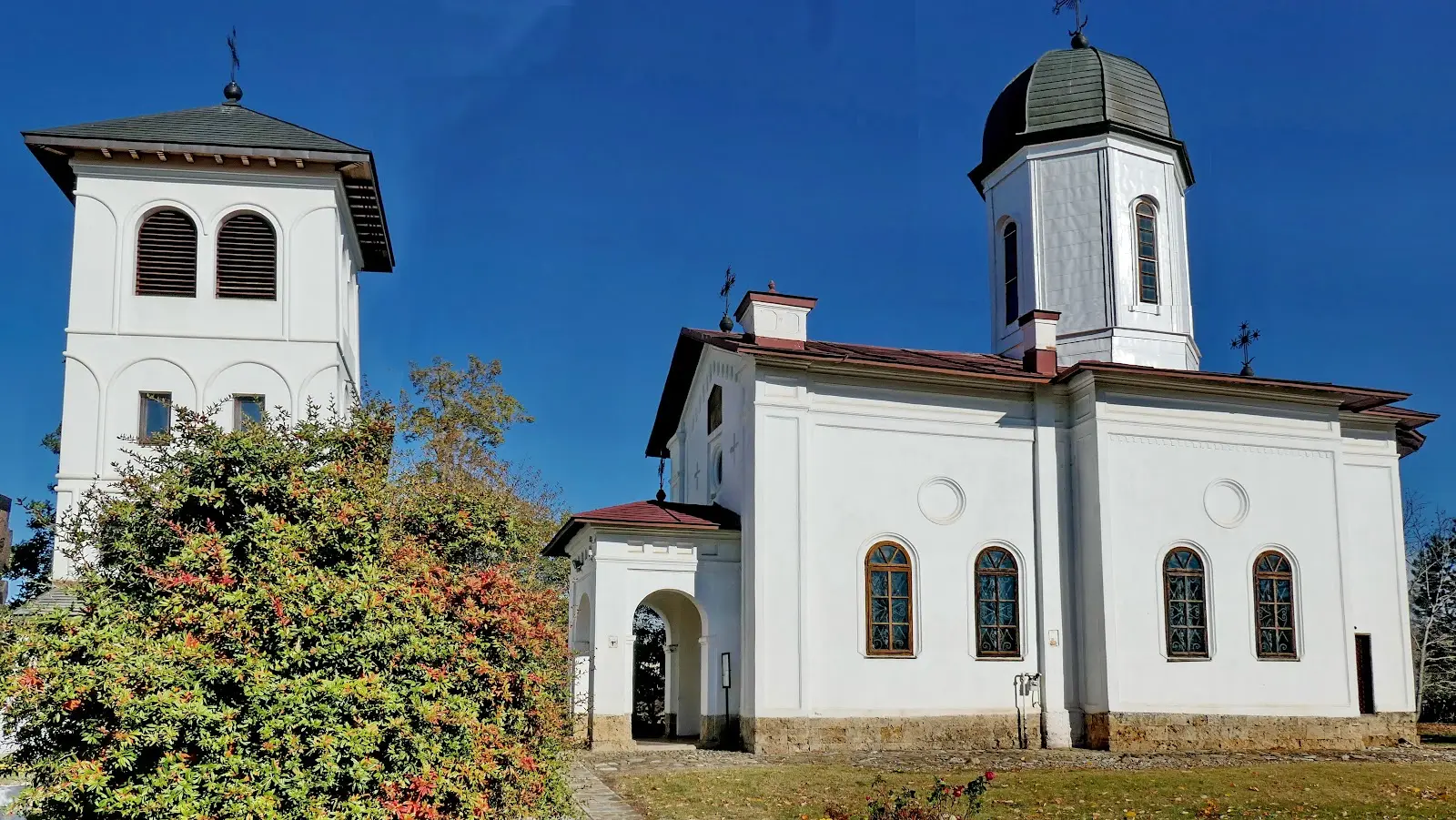
The Fortified Church of Moșna, a village near Mediaș in the heart of the Saxon land on the Târnava Mare valley, is one of the most valuable monuments of defensive ecclesiastical architecture in Transylvania. Built in the late Gothic style by the Saxon community, the church was surrounded by a fortified enclosure with high walls, defensive towers and bastions, forming an imposing peasant fortress meant to shelter the population in times of invasion. The church stands out for its generous dimensions, its net vaulting and its carved portals, while the interior conserves valuable pieces such as the stone tabernacle, considered a masterpiece of local Gothic art. The enclosure preserves the towers and provision chambers that bear witness to the communal life of old. Alongside the other fortified churches of the Saxon villages, Moșna is part of a heritage recognised worldwide. A visit offers an authentic picture of the ingenuity and faith of the communities that built and defended these monuments over the centuries.
 Church
Biserica Sfântul Nicolae Câmpina
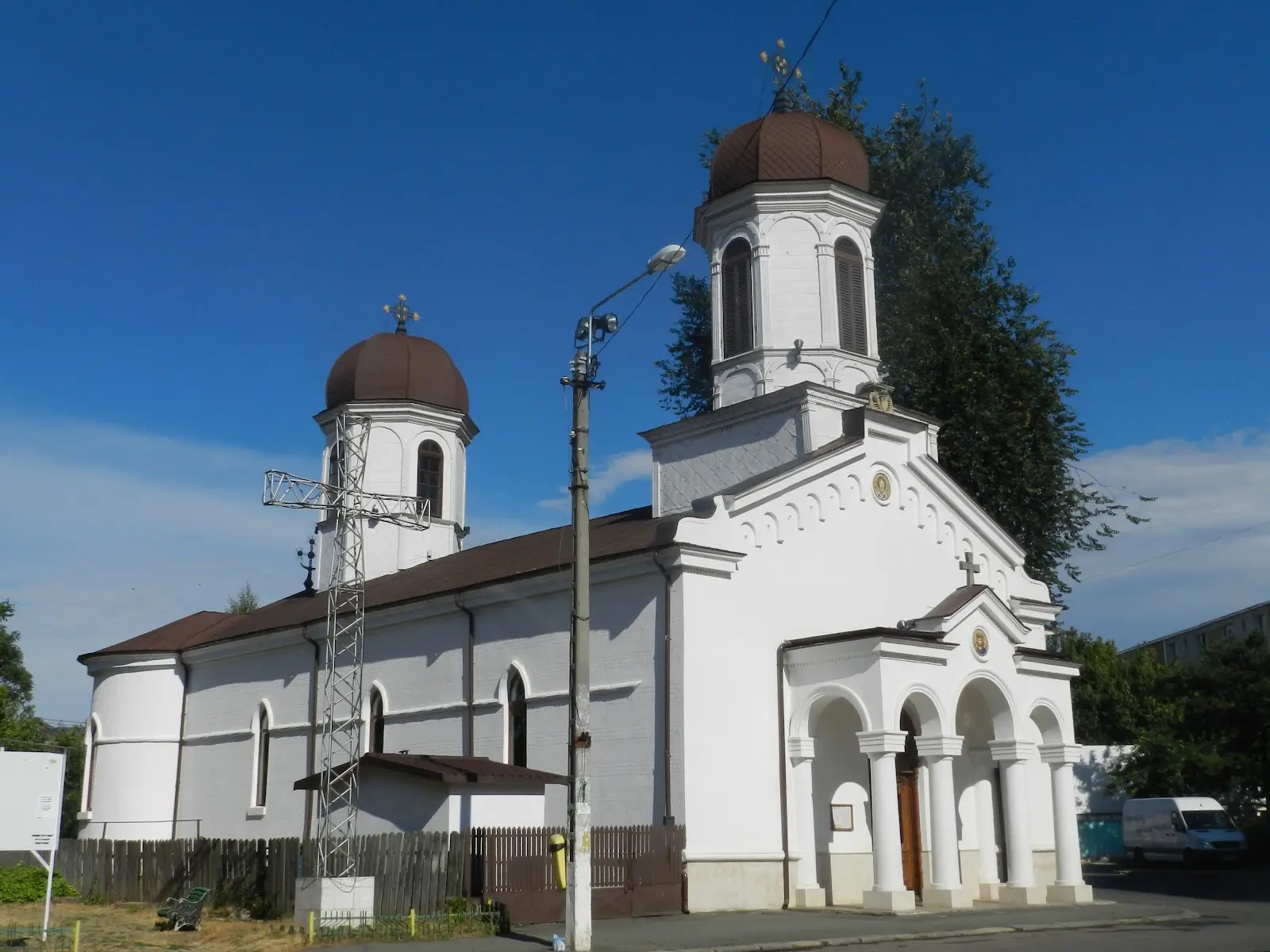
St Nicholas Church in Câmpina is one of the representative places of worship of this Prahova town set along the Prahova Valley, at the foot of the sub-Carpathian hills. Câmpina, known above all for its oil-producing past and for its links to figures such as the painter Nicolae Grigorescu and the scholar Bogdan Petriceicu Hasdeu, finds in this Orthodox church a spiritual landmark for the local community. The building preserves the tradition of Wallachian church architecture, with towers rising above the houses of the centre and an interior adorned with mural painting, an iconostasis and icons. Câmpina lies on the road between Bucharest and the mountain resorts of the Prahova Valley, making it a natural stop for travellers. Nearby stand the Iulia Hasdeu Castle, raised by the scholar in memory of his daughter, and the Nicolae Grigorescu Museum, arranged in the painter's former home. The church thus rounds out the picture of a town with a cultural heritage richer than its size would suggest.
 Monastery
Mănăstirea Predeal (Schitul Predeal)
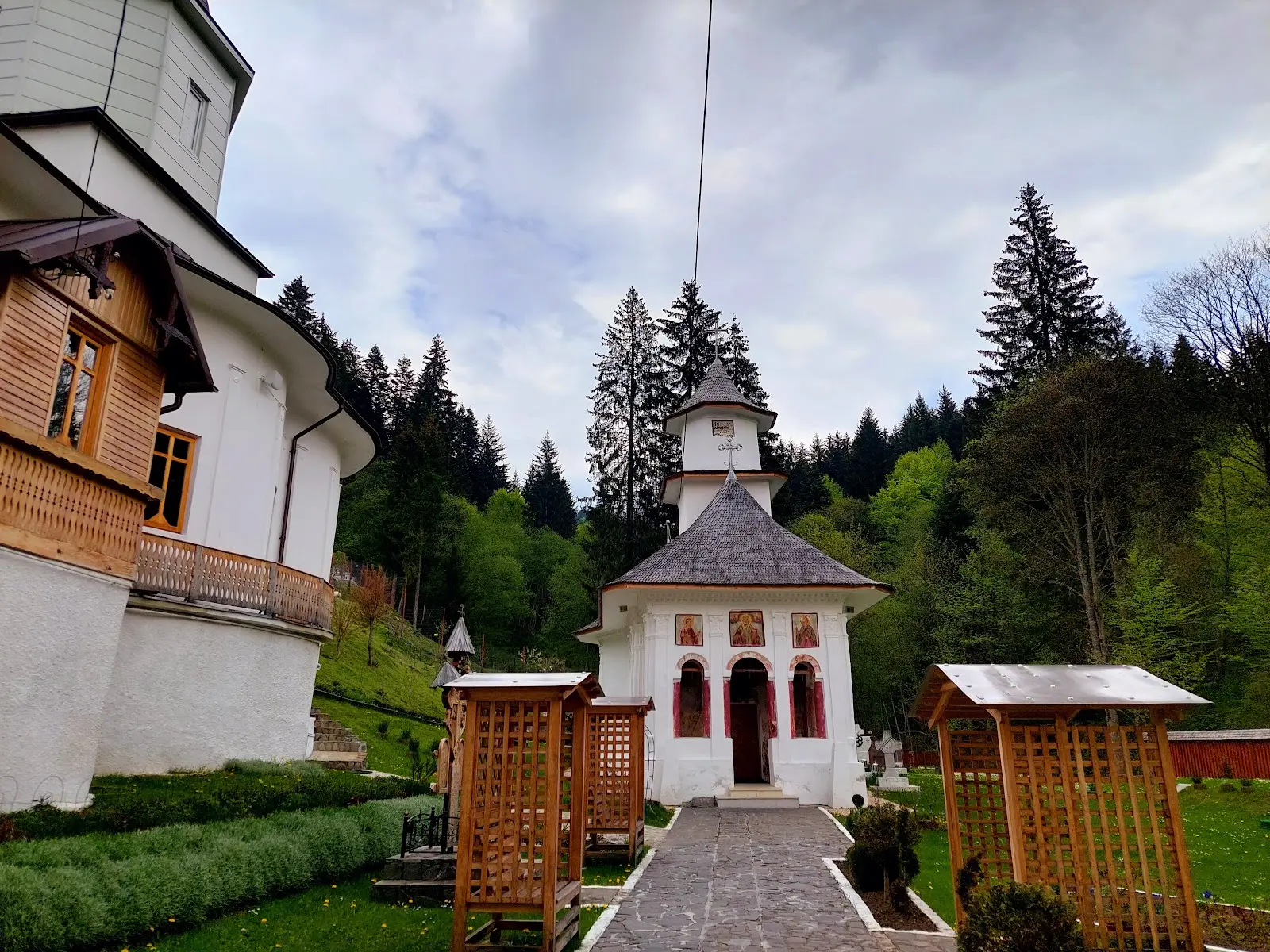
Predeal Monastery, also known as the Predeal Skete, is an Orthodox monastic settlement located in the mountain resort of Predeal, the highest-altitude town in Romania, in the pass between the Bucegi Mountains and the Baiu Mountains. Usually dedicated to St Paraskeva or other saints, the skete offers a place of prayer and reflection in an exceptional mountain setting, surrounded by coniferous forests and the ridges of the Carpathians. Its architecture belongs to the tradition of mountain places of worship, with wood and characteristic painting, blending austerity with the beauty of the landscape. Predeal, loved both in summer for its hikes and in winter for its ski slopes, gains through this settlement a spiritual dimension that complements its tourist offer. Visitors who stop here find quiet and a moment of contemplation away from the bustle of the resort. A short distance from the town centre and the Predeal railway station, the monastery is easily accessible and makes a natural stop for those discovering the Prahova Valley.
 Church
Catedrala Sfântul Nicolae Călărași
 Monastery
Mănăstirea Curtea de Argeș
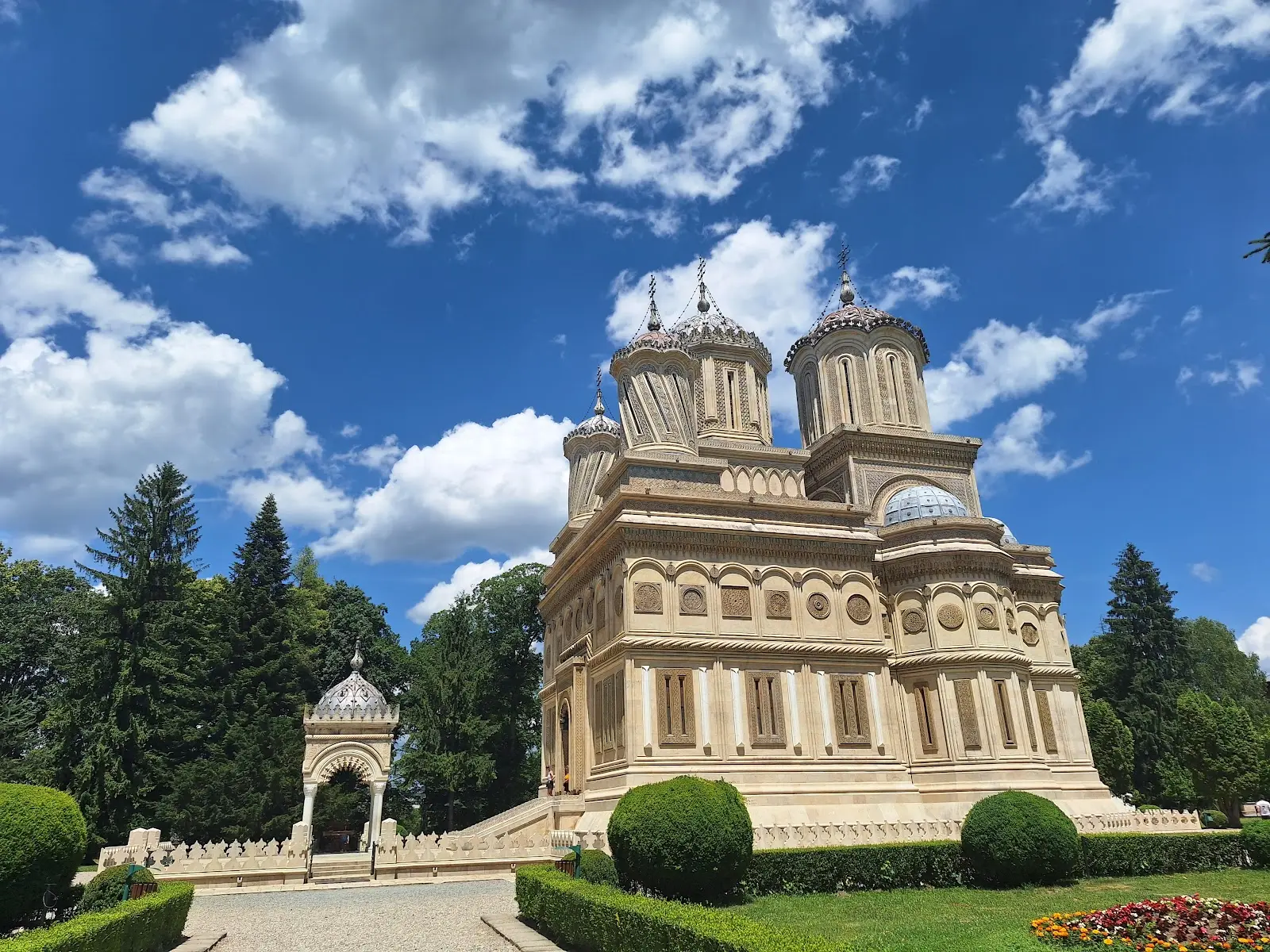
Curtea de Argeș Monastery is one of the most beautiful and legend-laden churches in Romania, a masterpiece of early 16th-century architecture built by the ruler Neagoe Basarab. Its finely carved stone façades, spires twisted like little spirals and rich ornamentation make it unique, a dialogue between Byzantine tradition and Oriental influences. To its name is bound the ballad of Master Manole, the legend of the mason who is said to have sacrificed his wife within the walls so that the church would endure. The church holds the tombs of the kings of Romania — the royal necropolis — giving it a double significance, spiritual and national. The tended gardens and the nearby Manole's Well complete the visit. It is a place of pilgrimage and a first-rank monument; modest dress is advised, and check the visiting schedule.
 Monastery
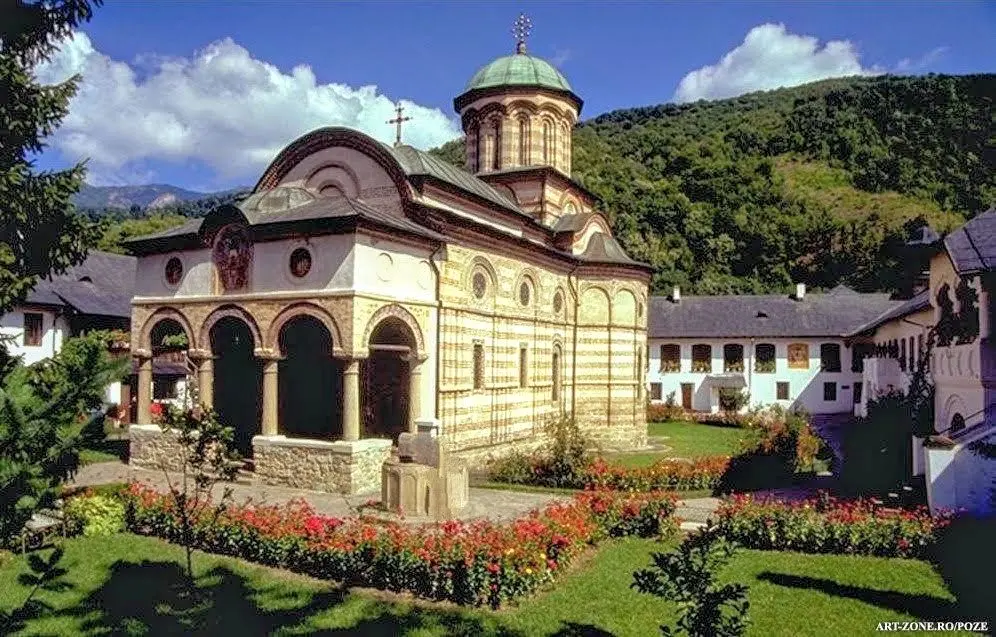
Mănăstirea Cozia
Cozia Monastery, on the bank of the Olt near Călimănești, is one of the oldest and most important medieval foundations in Wallachia, built in the late 14th century by the ruler Mircea the Elder, whose tomb lies here. The main church is a brilliant example of Byzantine architecture, with walls striped in stone and brick, stone carvings of rare finesse and old frescoes depicting the founders and religious scenes. Set in a superb natural landscape, at the foot of the mountains and near the Olt gorge, the monastery breathes calm and history. Visitors can admire the carved porch, Neagoe Basarab's fountain and the museum of heritage objects. It is a natural stop on the road between Sibiu and Râmnicu Vâlcea. Modest dress is advised; check the schedule for visiting and services.
 Monastery
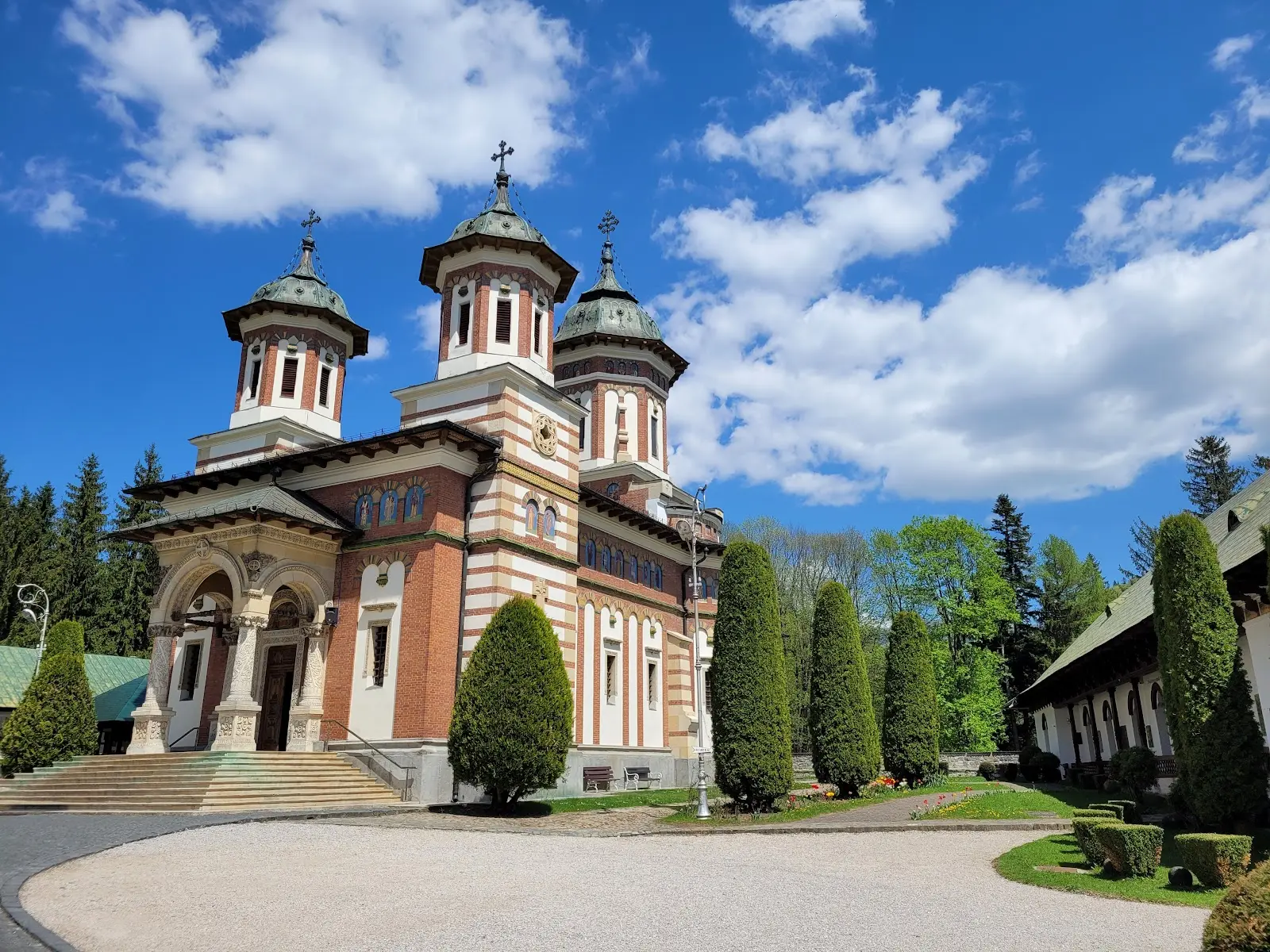
Mănăstirea Sinaia
Sinaia Monastery, founded in 1695 by nobleman Mihail Cantacuzino after a pilgrimage to Mount Sinai, gave its name to the whole town that later grew around it. The complex has two churches: the old church, from the 17th century, with Brâncovenesc-style painting, and the great church, built in the 19th century — the first in Romania lit by electricity, in the era of King Carol I, who lived here temporarily before Peleș Castle was finished. The quiet courtyard, with white cells and a small museum holding religious objects and the first Bible printed in Romanian, offers a pleasant contrast to the resort's bustle. Set at the foot of the Bucegi, the monastery is often the first stop for tourists heading up to Peleș, just a few minutes' walk away. It is a place of reflection and an important page in the history of the Royal House. Mind the dress code when entering the churches and check service times.
 Monastery
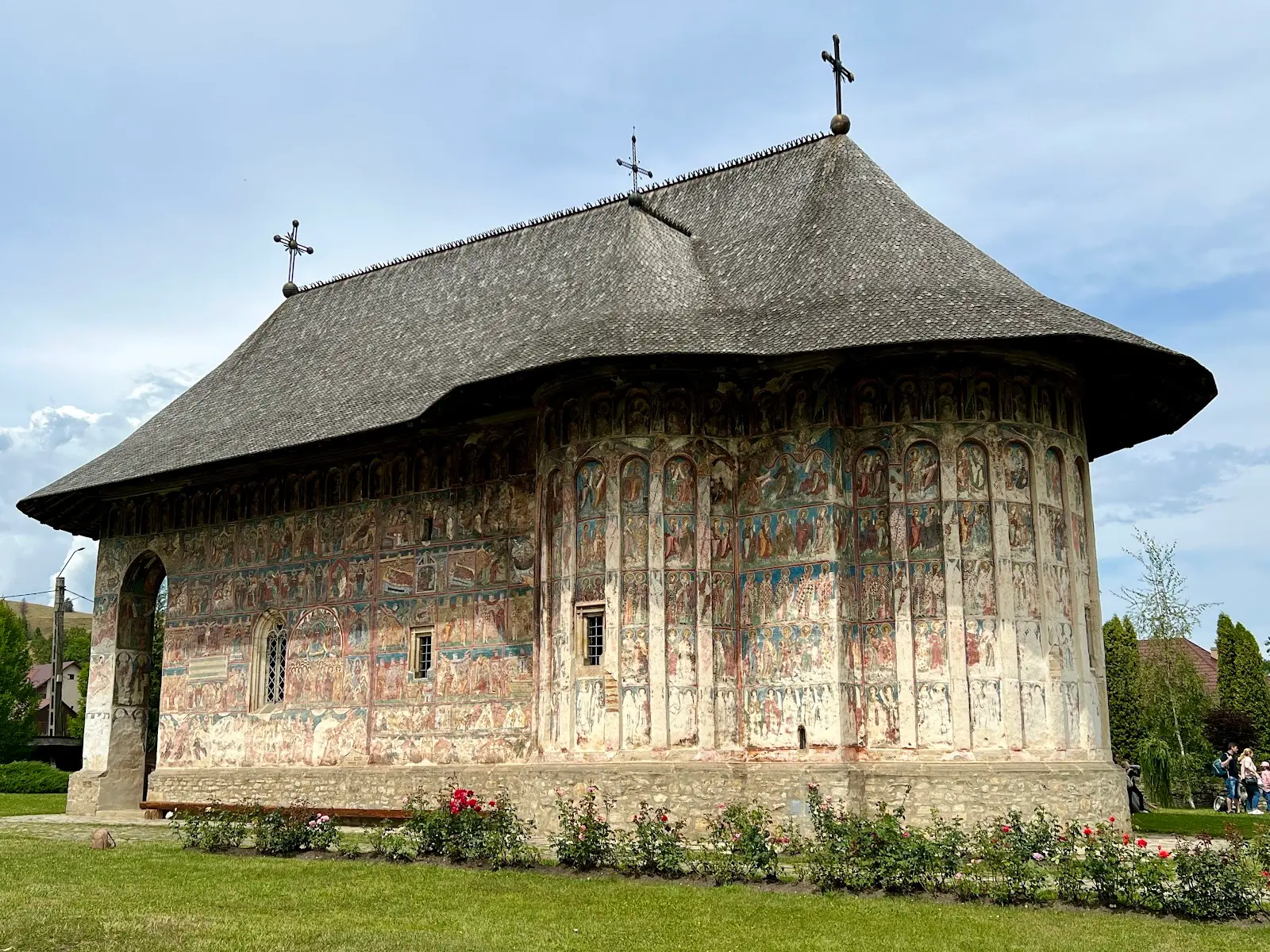
Mănăstirea Humor
Humor Monastery is one of the oldest and most treasured painted monasteries of Bukovina, built in 1530 during the reign of Petru Rareș. The small, harmonious church, without a tower, keeps on its outer façades 16th-century frescoes dominated by a warm brick-red, with famous scenes such as the Akathist Hymn, the Siege of Constantinople and the Last Judgement. Beside the church rises a defensive tower offering a fine view over the complex and the surrounding village. Though more modest in size than its sisters, Humor impresses through its balance, the freshness of its colours and its intimate atmosphere. It belongs to the group of Moldavian monasteries inscribed on the UNESCO list and is a natural stop on the painted-monastery trail, close to Gura Humorului. Respect the dress code and the calm of the place, and check visiting hours, especially during services and off-season.
 Church
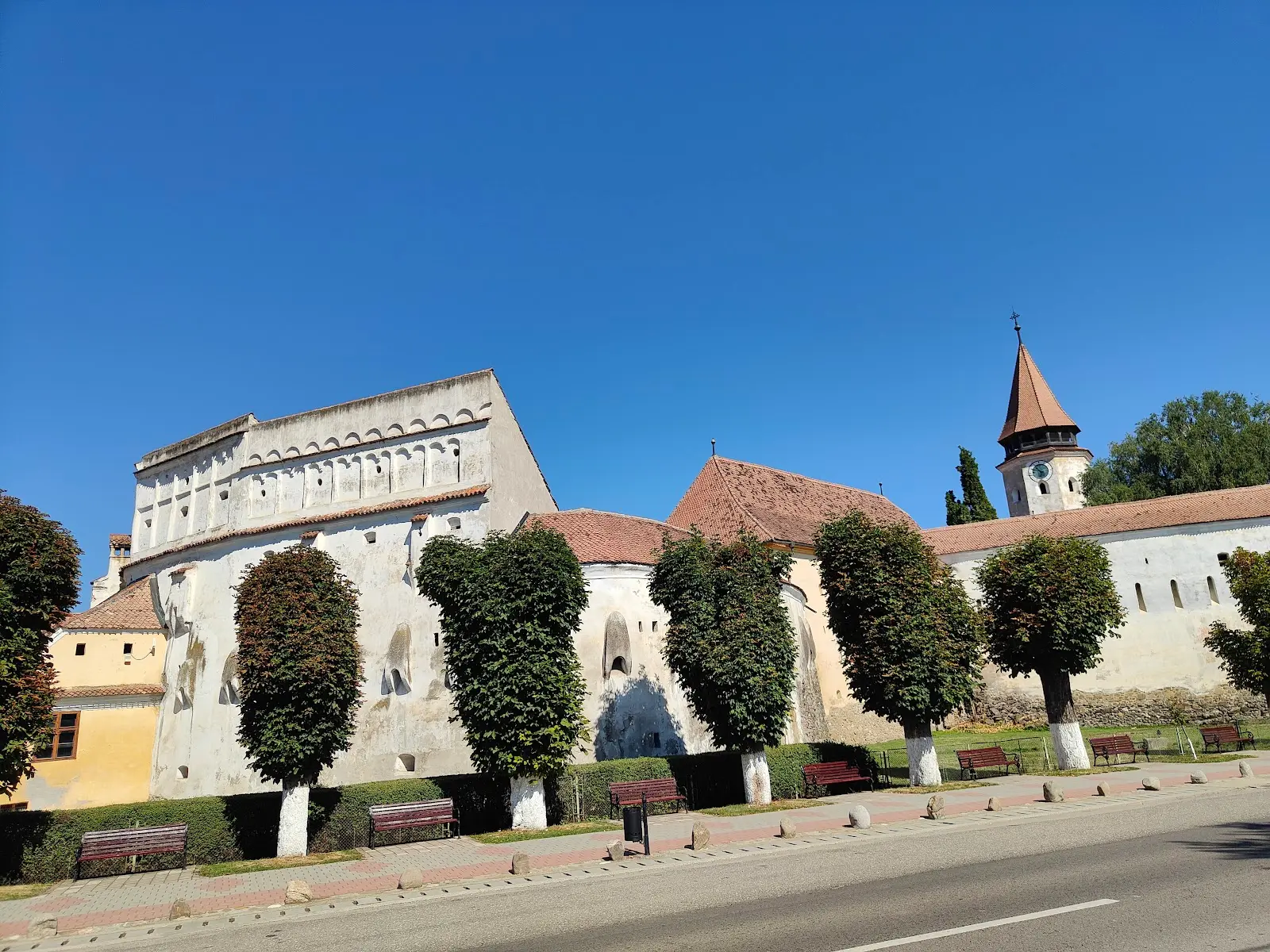
Biserica Fortificată Prejmer
The Fortified Church of Prejmer is one of the strongest and best-preserved Saxon peasant citadels in Transylvania, inscribed on the list of protected world heritage, set in the village of Prejmer near Brașov. The ensemble, first raised by the Teutonic Knights and later developed by the Saxon community from the thirteenth century, is dominated by a cross-plan church in early Gothic style, surrounded by imposing defensive walls, thick and tall, fitted with a sentry walkway. What impresses most is the inner ring of more than a hundred rooms arranged on several levels, small chambers in which each family of the village had its own space for refuge and storage in times of siege, a true fortified settlement in miniature. The citadel withstood many attacks over the centuries. The church preserves a valuable Gothic polyptych altar. The ensemble is a remarkable testimony to the way of life and defence of the Saxons. Visitors can explore the inner courtyard, the sentry walk and the rooms of refuge.
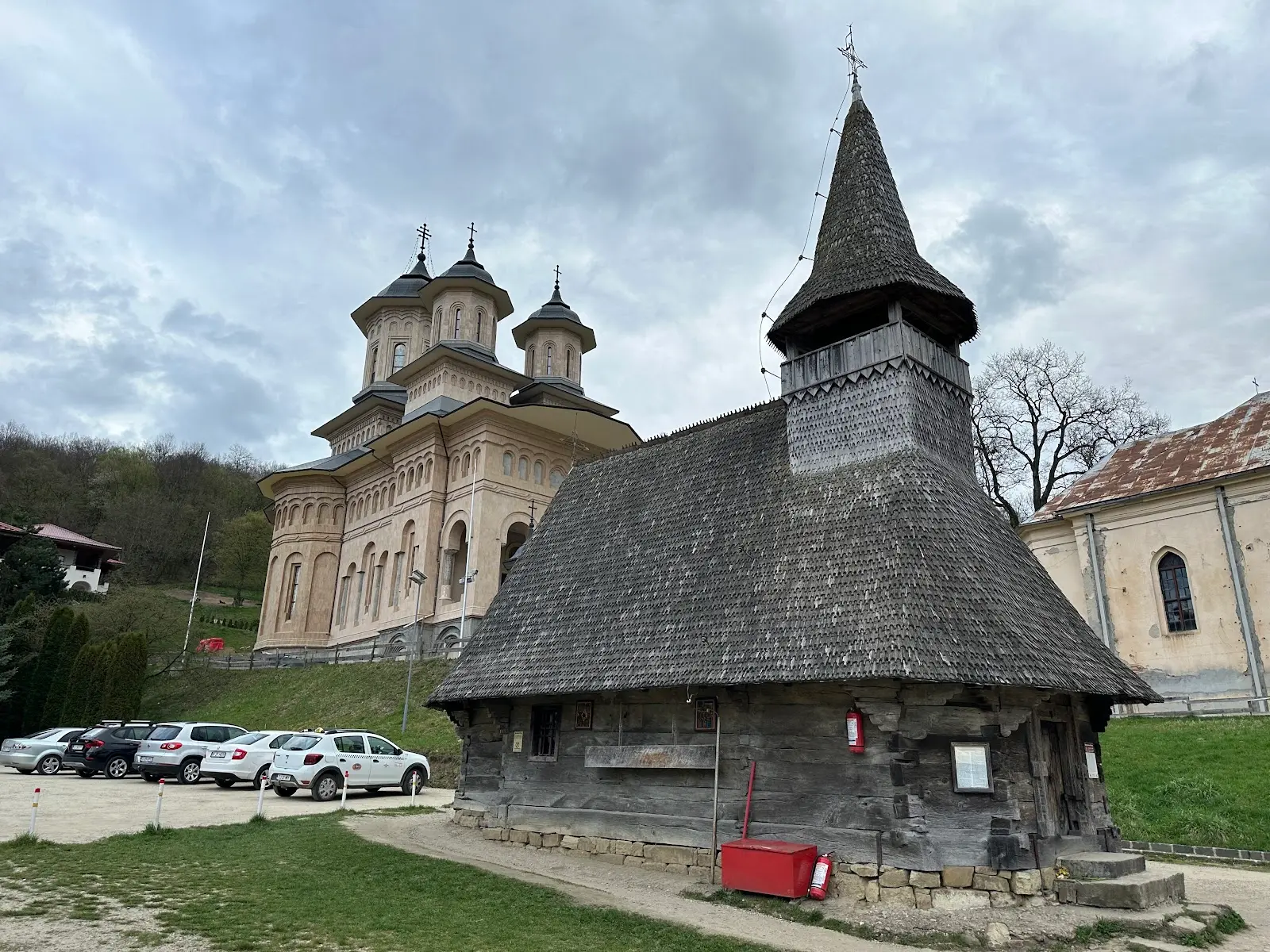 Monastery
Mănăstirea Nicula
Nicula Monastery is one of the most important centres of Orthodox pilgrimage in Transylvania, set near the city of Cluj-Napoca, on a quiet hill in Cluj county. The settlement is known for the miracle-working icon of the Mother of God, which tradition says wept in the seventeenth century, drawing crowds of faithful ever since. The monastery is also a renowned centre of glass icons, a Transylvanian folk art that developed here and is preserved through workshops and collections. Every year, on the feast of the Dormition of the Mother of God, Nicula hosts impressive pilgrimages, with thousands of participants from across the country. The monastic complex includes old wooden churches and newer buildings, in a restful natural setting. Nicula remains a spiritual and cultural landmark of Transylvania, both for pilgrims and for tourists who wish to discover living religious traditions.
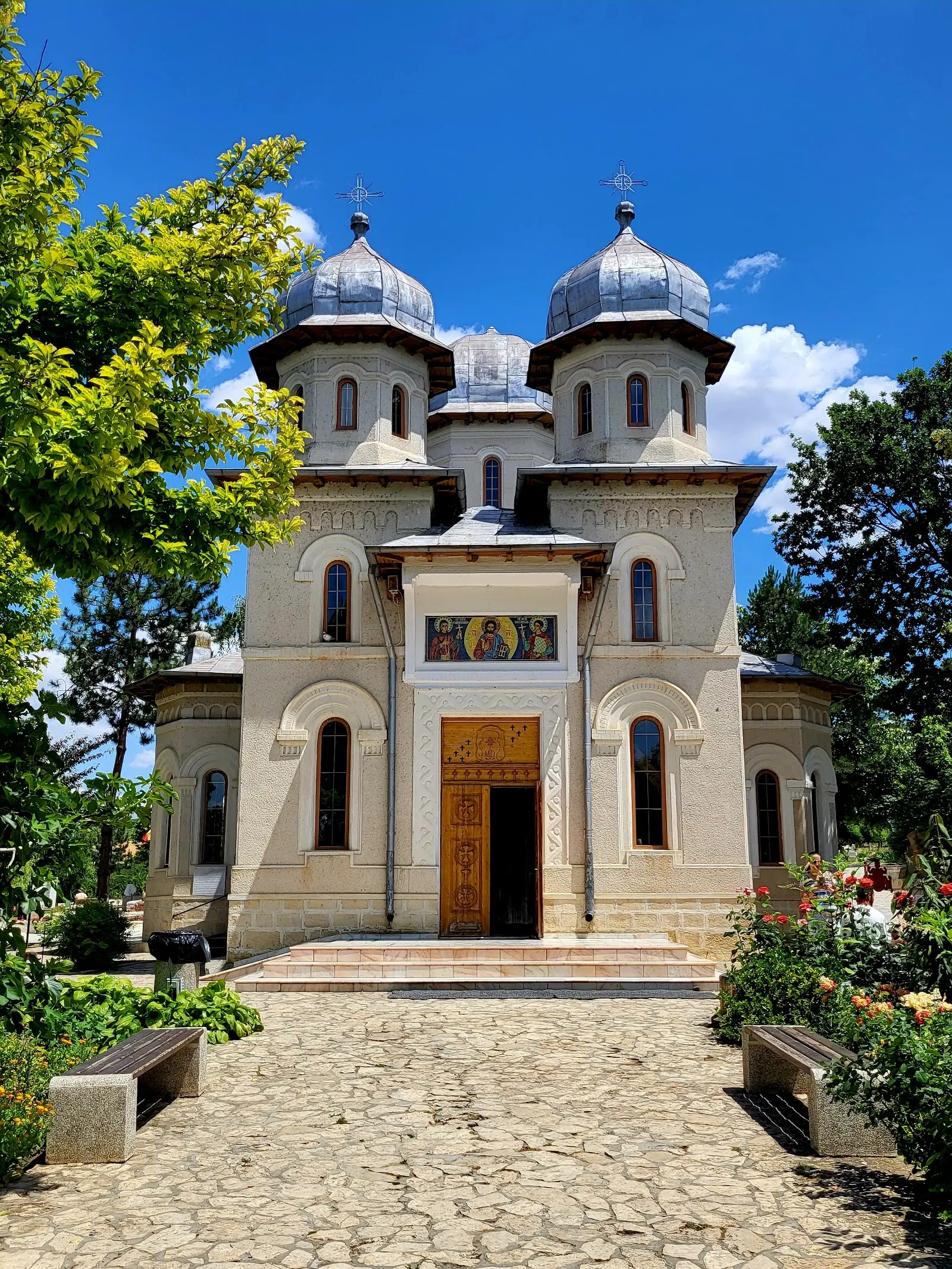 Monastery
Mănăstirea Dervent
Dervent Monastery is an important place of pilgrimage in Dobrogea, set near the Danube in Constanta county, not far from the border with Bulgaria. The settlement is known above all for its stone crosses regarded as miracle-working, which local tradition says appeared in the early Christian centuries, linked to martyrs from the time of the persecutions. The faithful come here for prayer and for the spring of healing water within the grounds. The monastery was rebuilt in the twentieth century and remains a landmark of spirituality in the southern part of Dobrogea, a region with a very ancient Christian history. The peaceful setting, the closeness to the great river and the atmosphere of contemplation make Dervent a fitting stop for pilgrims and for tourists exploring the villages and landscapes of the southern province between the Danube and the Black Sea.
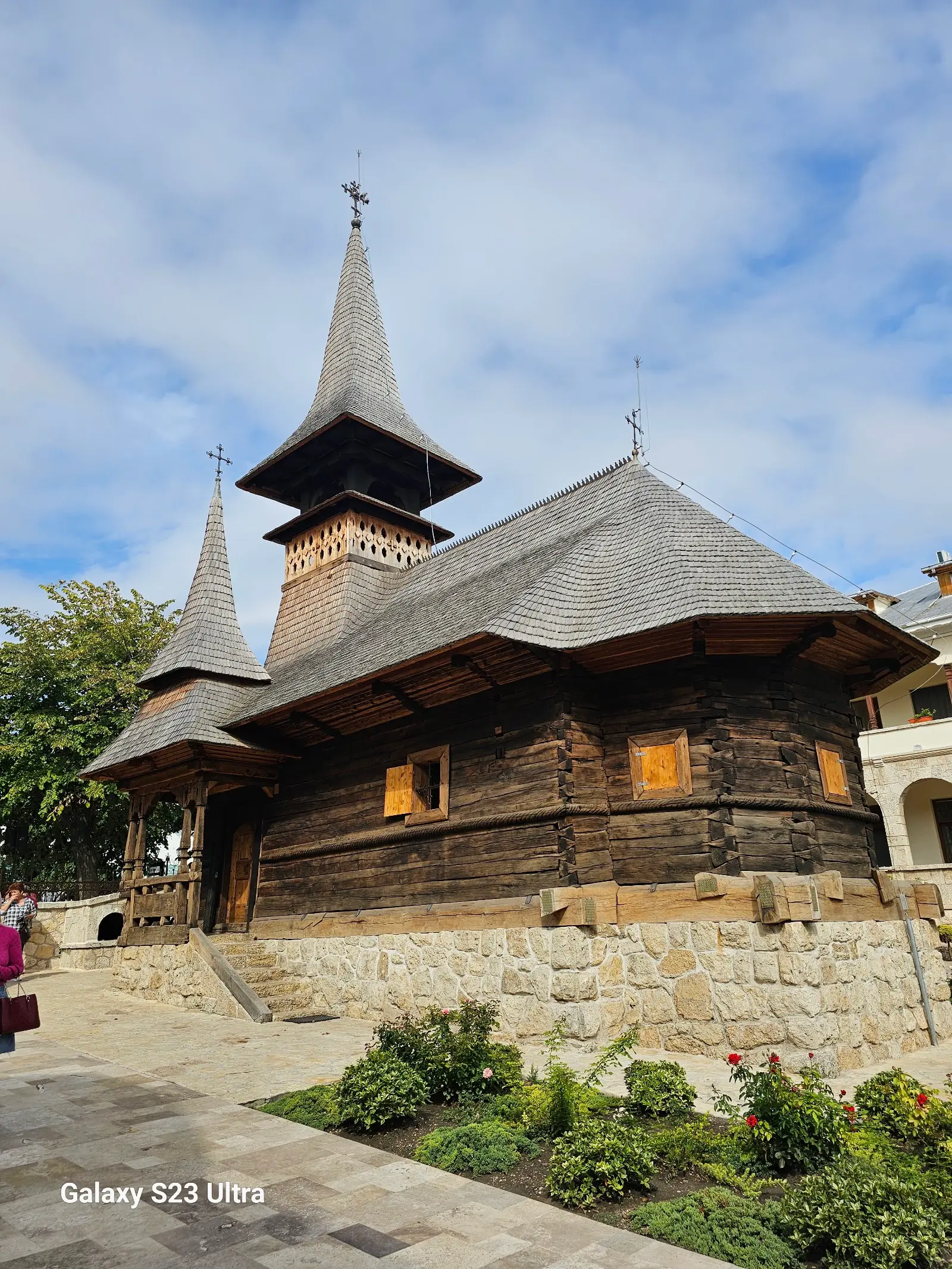 Monastery
Mănăstirea Techirghiol Sfânta Maria
Saint Mary Monastery of Techirghiol is a monastic settlement set on the shore of Lake Techirghiol, near the resort of Eforie in Constanta county. The monastery arose as a social and spiritual establishment, linked to the renowned therapeutic properties of the mud and salt water of Lake Techirghiol, long known for their beneficial effects. Over time, the monastic community developed a guest house and care facilities here, combining a life of prayer with hospitality towards pilgrims and those coming for treatment. The church and buildings of the monastery are surrounded by a peaceful setting, with a view towards the lake. The establishment is a spiritual landmark on the Dobrogea coast and a fitting stop for those seeking quiet away from the crowded beaches, in a landscape marked by the calm water of the lake and the long spa tradition of the area.
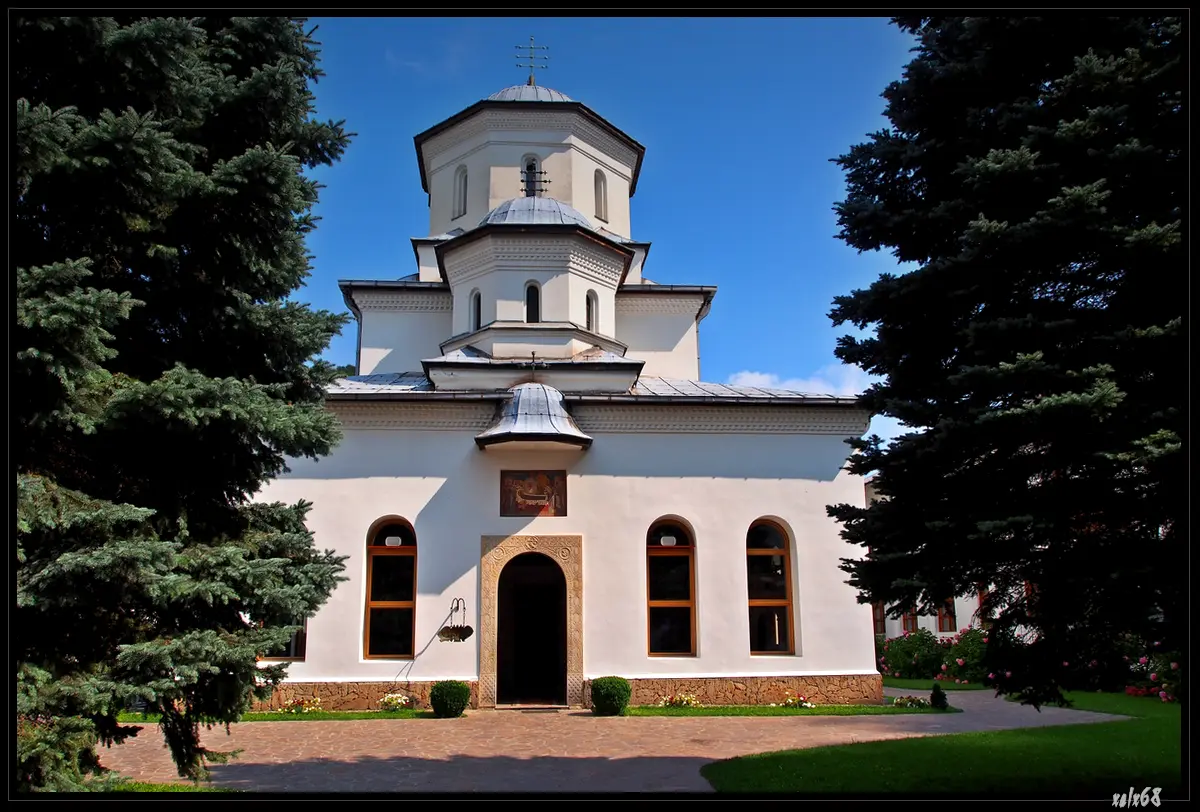 Monastery
Mănăstirea Tismana
Tismana Monastery is the oldest monastery in Wallachia, set in Gorj county, near Targu Jiu, in a spectacular natural setting in the Valcan Mountains. Founded in the fourteenth century by Saint Nicodim of Tismana, the founder of organised monasticism in Oltenia, the monastery rises on a high rock, at the foot of which a mountain stream and a waterfall flow. The picturesque position, between forest and cliffs, gives it a special atmosphere of contemplation and beauty. The church preserves old paintings and precious liturgical objects, and over the centuries the monastery was an important cultural and defensive centre. In times of hardship, valuables and treasures of the country were sheltered here. Today, the community of nuns keeps the living tradition of the place alive. Tismana is a destination of pilgrimage and a wonderful natural corner of sub-Carpathian Oltenia, worth the journey for its history and scenery.
Plan your trip
Stay, tour and get there
Stays nearby
Where to stay
Experiences
Tours & activities
Guided tours, day trips and hand-picked experiences via GetYourGuide — free cancellation on most.
See all experiencesGetting to Romania
Flights, transfer & car
Fly into Romania
Compare fares to Bucharest Otopeni (OTP) and regional airports — Cluj, Sibiu, Iași, Timișoara.
Airport transfer
Private, fixed-price door-to-door transfer — driver waiting from the moment you land.
Rent a car — see the real Romania
A rental car is the key to Romania: the Transfăgărășan, the painted monasteries of Bucovina, mountain roads and the villages of Maramureș that no train reaches.
Find a car