The Complete Guide to Timișoara
The capital of the Banat, the city where the 1989 Revolution began and the first city in Europe with electric street lighting. A complete guide to the most graceful, multicultural city in western Romania, with baroque squares, Secession façades and a café scene without equal.
Timișoara feels like no other part of Romania. Here, on the plain of the Banat, only a few kilometres from the borders with Serbia and Hungary, the city carries an easy Central European elegance – with squares you would swear you had seen in Vienna, and a rhythm of life the locals live over a slow coffee.
Why Timișoara
Few cities in the region hold so many important stories in one place. Timișoara is the city where the Revolution that toppled the communist regime broke out in December 1989 – the first city declared free in Romania. It was also here, in 1884, that the first electric street lighting in a European city was switched on, a first the people of the Banat are still proud of.
For centuries it was a border city and a melting pot of peoples: Romanians, Hungarians, Germans (the Banat Swabians), Serbs, Jews and many others lived here side by side, and their imprint shows in the churches, the architecture and the cooking.
- In 2023, Timișoara was European Capital of Culture, a title that brought sweeping restorations and a new wave of cultural energy.
- It is a graceful city, full of parks, crossed by a navigable canal, with one of the liveliest café scenes in the country.
- Distances in the centre are short, and the three historic squares link up on foot in a single stroll.
Piața Victoriei
The central axis of the city is Piața Victoriei, a long, broad esplanade lined with elegant buildings and terraces, connecting the two landmark monuments of the city.
- At one end stand the Romanian National Opera and the National Theatre, housed in the same imposing building – it was from its balcony, in 1989, that Timișoara was proclaimed a "free city".
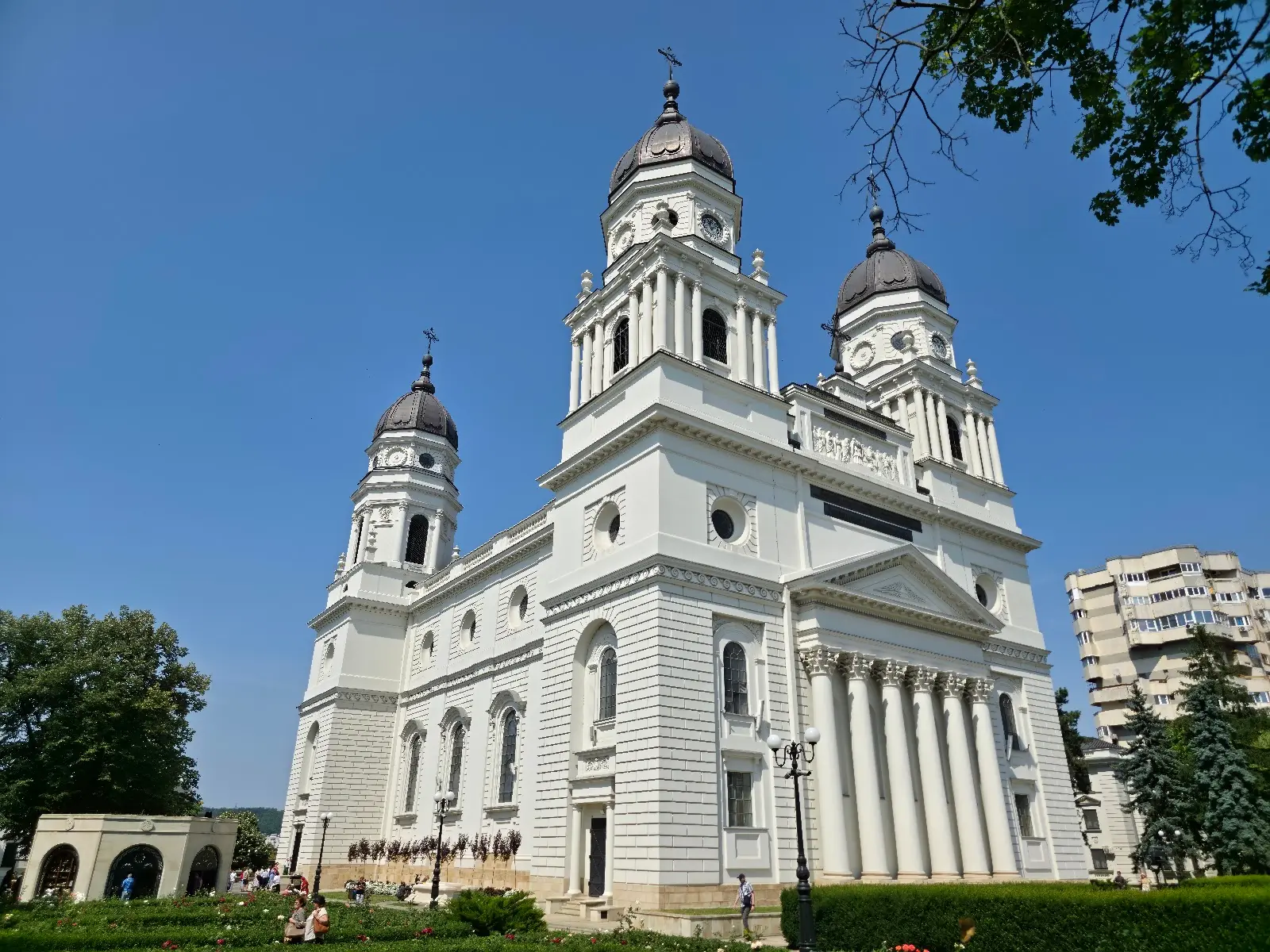
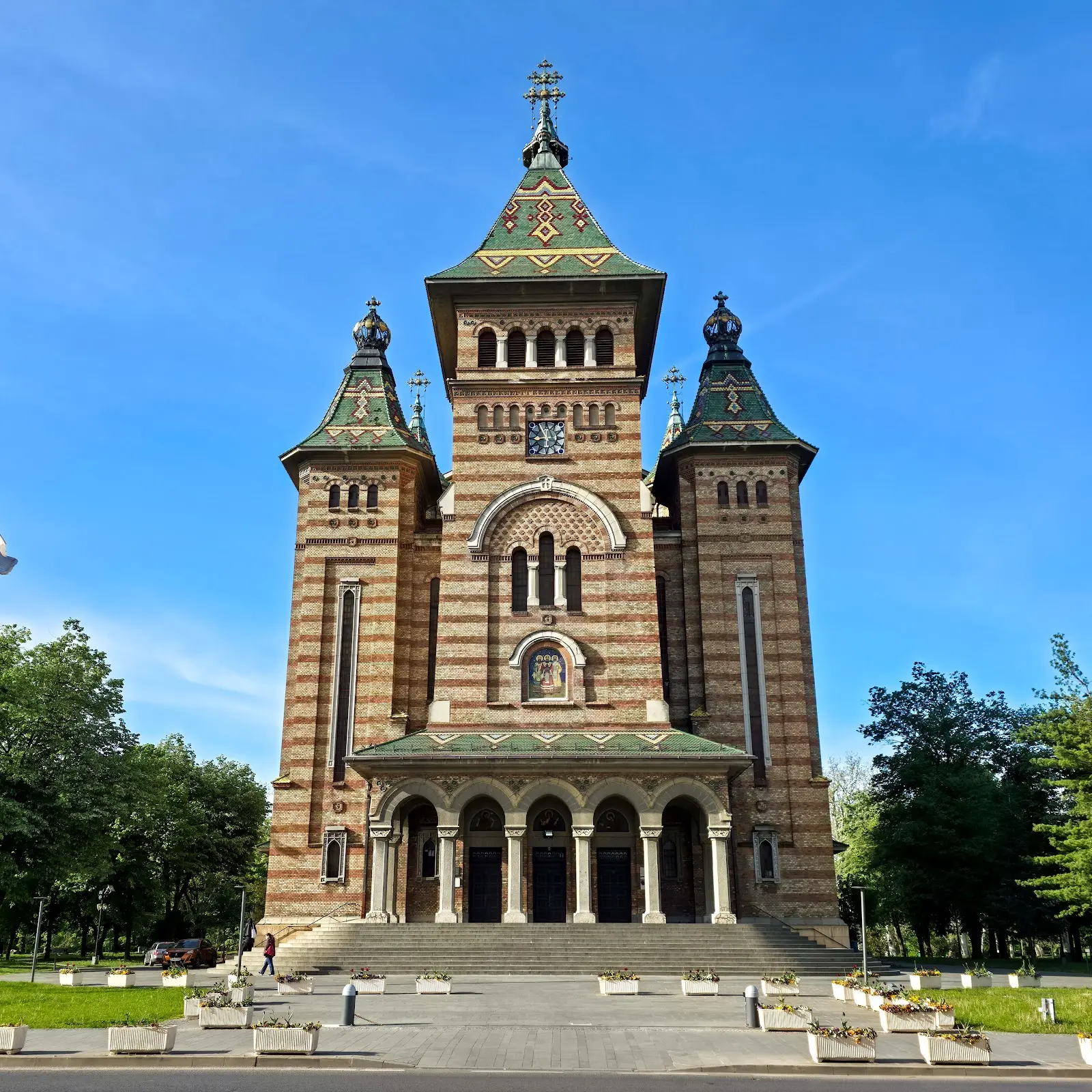
- At the other end rises the Metropolitan Cathedral, with its slender spires and vividly coloured roof, one of the most spectacular Orthodox churches in Romania.
- Between them, the promenade is framed by fountains, statues and restored façades; this is where the city comes to walk in the evening.
Piața Unirii
If Piața Victoriei is the civic heart, Piața Unirii is the baroque soul of Timișoara – perhaps the finest baroque square in Romania.
- Façades in pastel yellow, pink and green enclose a wide courtyard dominated by the Roman Catholic Cathedral (the Dome), a baroque jewel of the Banat Swabians.
- Facing it stands the Serbian Cathedral, a mark of the old and important Serbian community – the two churches, Catholic and Serbian Orthodox, have looked at each other across the square for centuries.
- At the centre rise the Holy Trinity Monument and a fountain of mineral water; the surrounding terraces are among the most pleasant in the city.
Piața Libertății and the Old Town
Between the two great squares slips Piața Libertății, smaller and more intimate, where the city's old town hall once stood. From here, pedestrian lanes fan out, full of cafés, bookshops and workshops.
A walk through the centre reveals Timișoara's greatest treasure: its architecture. The city has one of the most important collections of Secession (Art Nouveau) architecture in Central Europe, alongside baroque, eclectic and interwar buildings. Many façades were restored for 2023 and shine once more, with their floral ornaments, wrought-iron balconies and plasterwork in shades of ochre and green.
It is worth looking up at every step: the details hide in the pediments, the mosaics and the heavy wooden gates of the merchants' houses. This is a city that rewards curiosity.
Fabric, Iosefin and the Bega Canal
Beyond the centre, Timișoara unfolds through its historic quarters, each with its own character.
- Fabric was the industrial and artisan quarter, with its own squares and some of the loveliest Secession façades in Timișoara – a district worth exploring at leisure.
- Iosefin, near the railway station, is an elegant, bohemian quarter with a lively market and 19th-century buildings now in full revival.
- The Bega Canal, which crosses the city, is lined with parks, cycle paths and landscaped banks. Timișoara is a city of parks: the Rose Park, the Central Park and the green stretches along the Bega invite long walks, and in summer you can sail the canal.
Food and Coffee
Banat cuisine is rich and gentle, with strong Swabian, Hungarian and Serbian influences – hearty soups, stews, potatoes, goulash and desserts of Central European inspiration. But what defines the city today is its café culture.
- Timișoara has a mature, refined specialty-coffee scene; the cafés of the centre and of Fabric are places where locals spend whole hours.
- The markets, especially the one in Iosefin, are the place for cheeses, cured meats and seasonal Banat produce.
- The restaurant scene has broadened a great deal since 2023, from traditional Banat cooking to contemporary tables.
Around Timișoara
The Banat spreads generously around the city, and a few day trips round out any stay.
- Recaș, east of the city, is the heart of the Banat wine country – one of Romania's best-known winemaking regions, where you can visit cellars and taste the wines.
- Further east, beyond the plain, the mountains of the Banat begin, with gorges, waterfalls and trails – the Nera Gorges and the Semenic area are much-loved hiking destinations.
- Banat towns and villages such as Lugoj, and the region's fortified churches and monasteries, complete the picture of a land with a layered history.
Practical Information
- When to go: late spring and summer for terraces, parks and the Bega; autumn for the harvest and the wines of Recaș. Winters are milder than in much of the country.
- How many days: two days are enough for the three squares and the old town; three or four if you want to explore Fabric, Iosefin and take a trip to Recaș or the mountains.
- Getting there: Timișoara has an international airport (Traian Vuia), one of the most important in western Romania, with links to several European cities. It is well connected by road and rail to Arad, Deva and the rest of Romania, as well as to Hungary and Serbia.
- Tip: the city is best discovered on foot and over a coffee – give yourself time to get lost among the Secession façades and baroque squares.
Timișoara does not boast about its past; it lives it quietly, over a coffee, beneath freshly restored façades. It is the city that reminds you just how Central European Romania really is.
Plan your trip
Stays nearby
Stays in Romania
Experiences
Tours & activities
Guided tours, day trips and hand-picked experiences via GetYourGuide — free cancellation on most.
See all experiencesGetting to Romania
Flights, transfer & car
Fly into Romania
Compare fares to Bucharest Otopeni (OTP) and regional airports — Cluj, Sibiu, Iași, Timișoara.
Airport transfer
Private, fixed-price door-to-door transfer — driver waiting from the moment you land.
Rent a car — see the real Romania
A rental car is the key to Romania: the Transfăgărășan, the painted monasteries of Bucovina, mountain roads and the villages of Maramureș that no train reaches.
Find a car