The Complete Guide to Maramureș
UNESCO wooden churches, the Merry Cemetery at Săpânța, Bârsana Monastery, the Vaser Valley steam train and the Prislop Pass — a living, authentic, unchanged rural world.
Maramureș is one of the last regions in Europe where rural tradition is not a show for tourists but daily life. Massive carved wooden gates, churches with sharp spires raised without nails, haystacks on the hills, carts on the roads, and people who still wear traditional dress on feast days — all of it is real, not reconstructed. It is a land of wood and patient time, hidden among the mountains in Romania's far north, where crafts and faith weave naturally into the rhythm of the seasons. This guide helps you discover it with respect and without haste, as it deserves.
When to go
The season changes the atmosphere, but Maramureș stays authentic at any time of year.
- Summer (June–September) is the best time: settled weather, green hills, freshly mown hay and the steam train in full season. Summer festivities bring dances, fairs and living customs, and the long days allow unhurried visits.
- Autumn colours the forests and orchards, is superb for photography and quieter.
- Winter turns the villages into storybook scenes, with wooden houses under snow and carols, but mountain roads (especially the Prislop Pass) can be difficult.
- Spring is green and quiet, ideal for those seeking authenticity without crowds.
Getting there and getting around
The nearest airports are Baia Mare (small) and Cluj-Napoca (large, about 3 hours away). From Cluj or Satu Mare you reach it by car over scenic mountain passes. Sighetu Marmației and Vișeu de Sus are the key starting points for most sights.
A car is indispensable: the villages are scattered along the Iza, Mara and Vișeu valleys, and public transport is limited and slow. Roads are narrow and wind between the hills — drive calmly and watch for carts, cyclists and animals on the road. A local driver-guide is a good alternative if you don't want to drive, offering context about the traditions too.
What to see
The UNESCO wooden churches
Eight wooden churches in Maramureș are inscribed on the UNESCO World Heritage list. They are tall structures with slender spires that seem to pierce the sky, raised without nails by local craftsmen, with expressive, colourful naive interior paintings. The best known:
- Ieud — the oldest, in the Iza Valley, with a deeply archaic atmosphere.
- Bârsana (the old church, distinct from the new monastery).
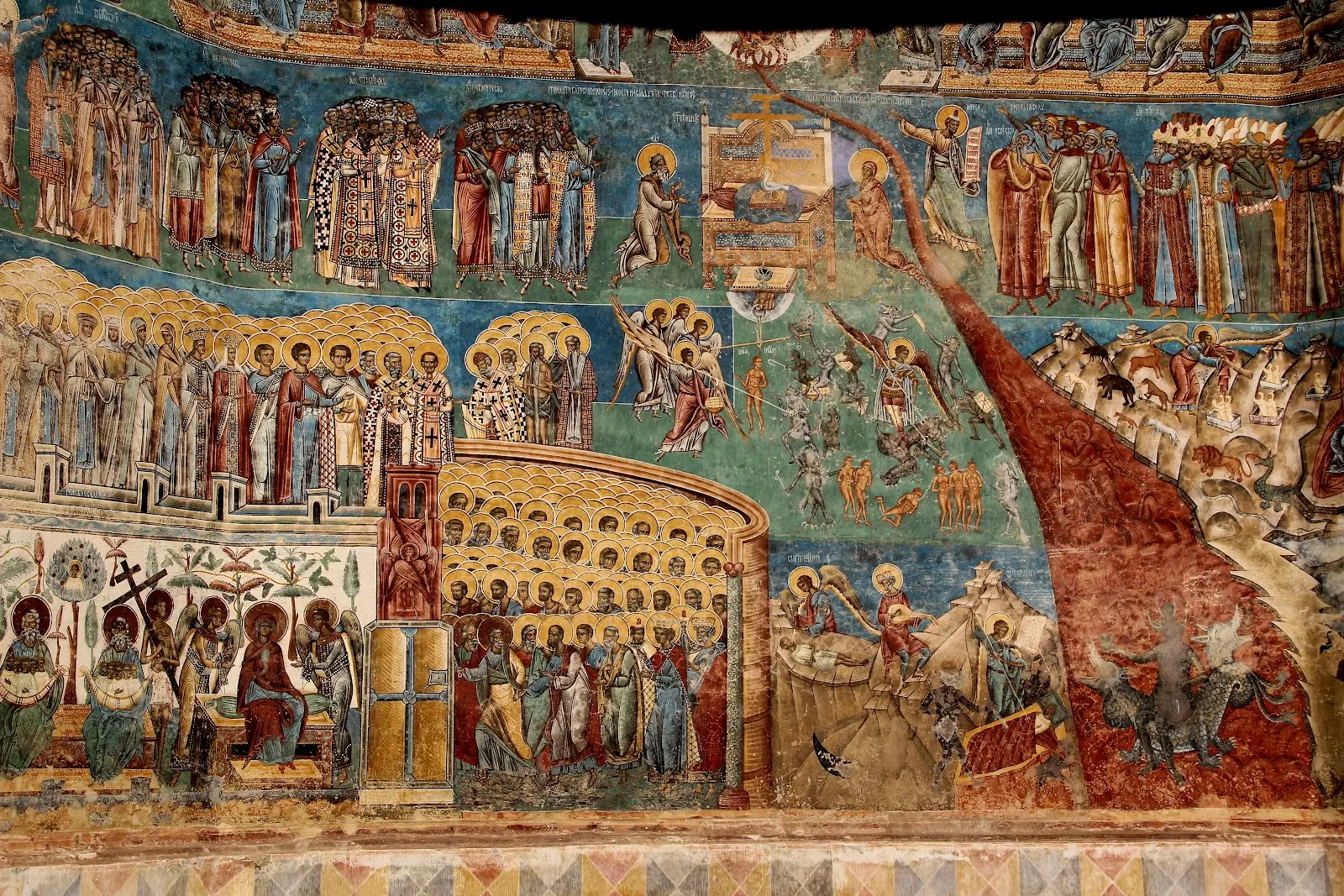
- Budești and Poienile Izei — with remarkable murals, including Last Judgement scenes.
- Șurdești — with one of the tallest wooden church towers in the world.
Bârsana Monastery
Bârsana is the most-photographed new monastery in Maramureș — a wooden ensemble built in the traditional style, with tended gardens, flower-lined paths and spires that rise elegantly to the sky. It is not medieval, but it convincingly shows that the Maramureș woodworking craft is alive today.
The Merry Cemetery at Săpânța
At Săpânța, the Merry Cemetery is unique in the world: brightly painted wooden crosses, each with a naive portrait of the deceased and a rhyming, often humorous epitaph about the life and character of the person buried there. It is a serene, ironic approach to death, begun by the craftsman Stan Ioan Pătraș and continued by his apprentices to this day. A small museum presents the story of the place.
The Vaser Valley steam train
From Vișeu de Sus departs the mocănița, a narrow-gauge steam forestry train that climbs the Vaser Valley through wild scenery of forests, rocks and a mountain river. It is one of the last steam forestry railways in Europe still running for passengers, and the journey is an experience in itself, with picturesque stops. Check the schedule and book ahead in season — seats fill quickly.
The Sighet Memorial and tradition
At Sighetu Marmației stands the Memorial to the Victims of Communism and to the Resistance, set in a former political prison — a profound and moving visit, essential for understanding Romania's recent history. Also in Sighet, the village museum and ethnographic museum round out the picture of Maramureș culture.
The Prislop Pass
The Prislop Pass (over 1,400 m) links Maramureș to Bucovina through open mountain scenery of meadows and fir forest. In summer it hosts the pastoral festival Hora la Prislop, a celebration of shepherding tradition. The road is spectacular, but check its condition in winter, when it may be closed.
Where to sleep and eat
Stay in a traditional guesthouse in a village along the Iza Valley — you'll sleep in wooden houses with carved gates and eat at your hosts' table. Sighetu Marmației and Vișeu de Sus also have more conventional hotels, convenient as a base.
Maramureș cooking is rustic and generous: sheep's cheeses, balmoș (polenta cooked in sour cream and cheese), stuffed cabbage rolls, pies, smoked meats and horincă (the strong local plum brandy, drunk on special occasions). Many guesthouses cook from their own produce, and meals are an occasion for genuine hospitality. Check ahead whether dinner is by reservation.
Suggested itinerary (3 days)
- Day 1 — Săpânța (the Merry Cemetery), then Sighet (the Memorial and village museum); lodging in the Iza Valley.
- Day 2 — the wooden churches (Ieud, Poienile Izei, Budești) and Bârsana Monastery.
- Day 3 — the Vaser Valley steam train from Vișeu de Sus; optionally, the Prislop Pass towards Bucovina.
Practical tips
- Respect the rhythm of the place: enter churches in modest dress and ask before photographing people.
- Cash — cards aren't always accepted in villages or on the steam train.
- Book the steam train ahead; it's the most popular attraction and fills quickly in season.
- On Sundays, the villages go to church — an authentic, moving moment, but respect the community's privacy.
- Don't rush the visit: Maramureș reveals itself to those who stay and watch. Give yourself at least two days, ideally three.
- Taste the local produce straight from the farmers — cheese, honey, horincă, jams — and buy authentic crafts to support the artisans.
Plan your trip
Stays nearby
Stays in Romania
Getting to Romania
Flights, transfer & car
Fly into Romania
Compare fares to Bucharest Otopeni (OTP) and regional airports — Cluj, Sibiu, Iași, Timișoara.
Airport transfer
Private, fixed-price door-to-door transfer — driver waiting from the moment you land.
Rent a car — see the real Romania
A rental car is the key to Romania: the Transfăgărășan, the painted monasteries of Bucovina, mountain roads and the villages of Maramureș that no train reaches.
Find a car