The Carpathian Mountains and Hiking in Romania
Făgăraș, Bucegi, Retezat, Piatra Craiului, Ceahlău and the alpine roads Transfăgărășan and Transalpina — the complete guide to the country's finest mountains, with routes, safety and logistics.
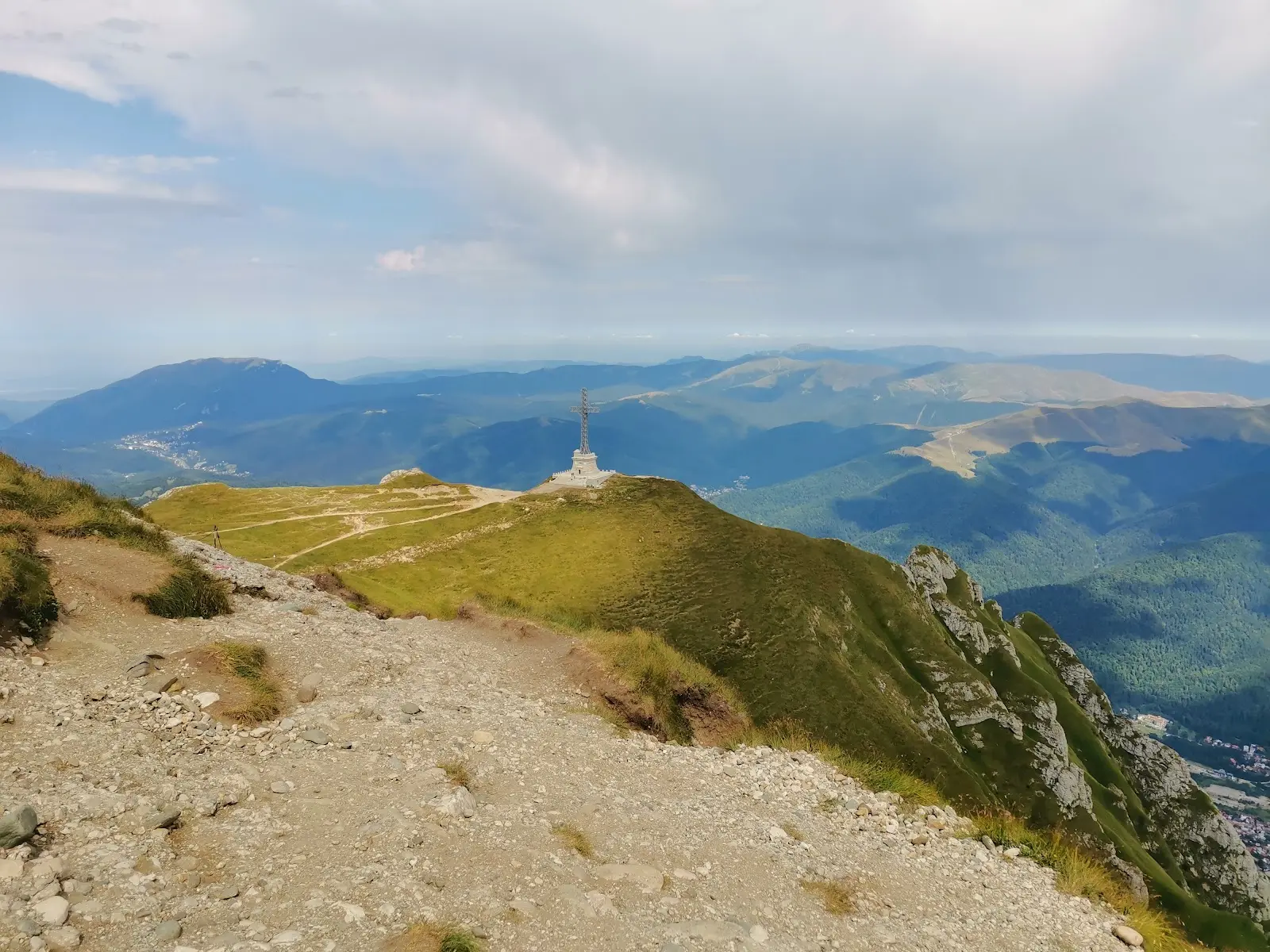
The Carpathians cross Romania like a great arc, covering almost a third of the country and sheltering Europe's largest population of brown bears. They are mountains of medium altitude — the highest peak, Moldoveanu, reaches 2,544 m — yet surprisingly wild, with alpine ridges, glacial lakes, old-growth forests, flower-strewn meadows and trails that lead far from any paved road. Unlike the Alps, you won't find a cable car at every corner or overcrowded resorts: much of the range stays quiet, and encounters with shepherds, horses and flocks are still a natural part of the scenery. For hikers, the Romanian Carpathians are an accessible and still uncrowded paradise. This guide introduces the main massifs, the two famous alpine roads and — most importantly — how to explore them safely.
When to go
The season completely changes what you can do in the mountains, and choosing the right month is the first step of any successful plan.
- Summer (June–September) is the hiking season par excellence: the ridges are free of snow (though patches may linger into June above 2,000 m), the days are long, the huts open and the alpine roads passable. July and August are the busiest but also the safest weather-wise.
- Autumn (September–October) offers spectacular forest colours, clear air and often stable weather, but the days shorten fast and the nights turn cold at altitude.
- Winter (December–March) turns the ridges into serious alpine terrain, reserved solely for the equipped and experienced — ski touring, mountaineering, with real avalanche risk.
- Spring (April–May) is capricious: lingering snow up high, avalanche risk on north-facing slopes and wet or muddy trails.
For high ridge hikes without winter alpine experience, the safest window remains July–September.
Getting there and getting around
The Carpathians are accessible from many towns, and your choice of base depends on the target massif: Brașov (for the Bucegi and Piatra Craiului), Sibiu (for the Făgăraș), Deva, Petroșani or Hațeg (for the Retezat), Piatra Neamț (for the Ceahlău), Cluj-Napoca (for the Apuseni). All have railway stations or airports nearby.
A car is most useful for reaching trailheads, especially the isolated ones, but it isn't strictly necessary: many routes start from resorts or villages reachable by train or bus (Bușteni, Sinaia, Zărnești). Once you reach the trail, the car becomes irrelevant — the rest is on foot. Note that access roads to isolated huts are often forestry tracks, gravelled and potholed; check whether you need high clearance.
The alpine roads — the Transfăgărășan and Transalpina — are attractions in their own right (detailed below) and give spectacular vehicle access to high altitude, but only in summer, when the high sections are cleared of snow.
The main massifs
The Făgăraș Mountains
Romania's highest mountains, the Făgăraș hold the peaks of Moldoveanu (2,544 m) and Negoiu (2,535 m), plus dozens of glacial lakes of rare beauty: Bâlea, Capra, Podragu, Călțun. The main ridge, over 70 km long, is a demanding multi-day alpine route reserved for experienced, well-equipped hikers, with sections of easy scrambling and serious exposure. For the less trained, Bâlea Lake — reached by cable car from Bâlea Cascadă or directly along the Transfăgărășan — is a far easier gateway to the alpine landscape, with short outings to the surrounding lakes.
The Bucegi Mountains
The country's most accessible alpine mountains, the Bucegi offer a broad plateau dotted with the famous Babele and Sphinx rock formations, comfortably reached by cable car from Bușteni or Sinaia. From here, routes fan out for all levels: gentle plateau walks, serious ascents up the Cerbului Valley, or ridges with views over the Prahova. Being so close to Bucharest and Brașov, the Bucegi are ideal for a first taste of the high mountains.
The Retezat Mountains
Romania's first national park (1935), the Retezat is the wildest massif, nicknamed the "land of 80 glacial lakes", among them Bucura, the largest glacial lake in the country, and Zănoaga, the deepest. It is a reserve of bears, chamois, marmots and old-growth forest, with a strictly protected core (Gemenele) where access is restricted. The hikes are more remote and longer, with few huts — ideal for those seeking genuine wilderness and deep quiet.
Piatra Craiului
A long, narrow limestone ridge over 25 km, Piatra Craiului is spectacular and more technical than it looks: traversing the crest demands experience, a clear head, good equipment and stable weather, with sections secured by cables. At its foot, the villages of Măgura and Peștera offer rustic lodging and superb views of the wall. The massif is famous for rare flowers, including the Piatra Craiului pink, which is endemic here.
The Ceahlău Mountains
The "holy mountain" of Moldavia, the Ceahlău dominates the surrounding landscape with its imposing silhouette and the Toaca and Panaghia rock formations. Accessible trails climb to the plateau and the Dochia hut, offering wide views over the hills of Moldavia and Lake Bicaz. It is a good choice for intermediate hikers who want an alpine experience without major technical difficulty.
The alpine roads
Transfăgărășan (DN7C)
Climbs to about 2,042 m at Bâlea Lake, through dramatic switchbacks, a summit tunnel and past the Bâlea waterfall. The northern view, with the loops unspooling down the slope, is iconic and has made the road famous worldwide. It usually opens from the second half of June into autumn, depending on snow — check road conditions before you set off, as the high section closes with the first serious snowfall.
Transalpina (DN67C)
Romania's highest road, reaching about 2,145 m at Urdele Pass. Less technical than the Transfăgărășan, with open alpine plateaus, sheep flocks and the unique feeling of driving across the "roof of the country". It is open in the warm season, roughly May/June to October, and its scenery is gentler and more pastoral than the drama of the Transfăgărășan.
What to see and do beyond the ridges
- Glacial lakes — Bâlea, Bucura, Capra, Lala; many are reached on a day hike.
- Caves and gorges — in the Apuseni and Bucegi, a fascinating underground world.
- Wildlife watching — chamois, marmots, lynx and, with luck and caution, bears.
- Historic huts — for their atmosphere and a hot tea after a long day.
Where to sleep and eat
In the mountains, lodging ranges from huts (some isolated, reached only on foot, others by the road) to comfortable guesthouses in resorts and foothill villages such as Măgura, Zărnești, Gura Zlata or Bâlea Cascadă. Book places at popular huts ahead in season, as the number of beds is limited. Mountain food is simple and filling: bulz (baked polenta with cheese), stew, soups, sheepfold cheeses and hot tea — ideal fuel after a day on the trail. In the foothill villages, guesthouses often cook from their own produce.
Suggested itinerary (a week of hiking)
- Days 1–2 — Bucegi from Bușteni/Sinaia: the plateau, Babele, the Sphinx, one serious ascent for acclimatisation.
- Day 3 — Piatra Craiului from Zărnești or Măgura, on a route matched to your level.
- Days 4–5 — Făgăraș: Bâlea Lake as a base, with outings to the surrounding glacial lakes (Capra, Podragu).
- Days 6–7 — Retezat: lodging at Gura Zlata, a hike to Lake Bucura, the heart of the park.
Practical tips and safety
- The right gear: hiking boots, layered clothing, a rain shell, enough water and food, a map and GPS. Weather at altitude changes suddenly, even in summer.
- Check the forecast before every outing; afternoon storms, with lightning on the ridges, are common in summer — set out early and descend by midday.
- Tell someone your route and estimated return time; don't set off alone on isolated trails without experience.
- Bears: the Carpathians have Europe's largest brown bear population. Make noise on the trail, don't leave food out, never approach a bear, especially a cub, and don't feed animals — a bear used to people becomes dangerous.
- Mountain rescue: the mountain emergency service operates throughout the country. Memorise the emergency number and your local mountain-rescue team's number before your hike.
- Don't overestimate yourself: the Făgăraș and Piatra Craiului ridges demand real experience. Start with easy routes and build up gradually.
- Check the opening of the alpine roads and road conditions — the high sections close in winter and may close temporarily in summer in bad weather.
Plan your trip
Stays nearby
Stays in Romania
Experiences
Tours & activities
Guided tours, day trips and hand-picked experiences via GetYourGuide — free cancellation on most.
See all experiencesGetting to Romania
Flights, transfer & car
Fly into Romania
Compare fares to Bucharest Otopeni (OTP) and regional airports — Cluj, Sibiu, Iași, Timișoara.
Airport transfer
Private, fixed-price door-to-door transfer — driver waiting from the moment you land.
Rent a car — see the real Romania
A rental car is the key to Romania: the Transfăgărășan, the painted monasteries of Bucovina, mountain roads and the villages of Maramureș that no train reaches.
Find a car