The Complete Guide to Bucharest
The Palace of Parliament, the Old Town, the museums, the Belle Époque architecture, the parks and the food scene — how to discover the city of contrasts, layer by layer.
Bucharest is a city of contrasts: broad boulevards and Belle Époque palaces beside communist blocks, a lively Old Town next to one of the largest administrative buildings in the world, old churches hidden among glass high-rises. Once nicknamed "Little Paris", Romania's capital rewards curiosity and asks for a little patience. It is not a city that reveals itself at first glance, but those who explore it carefully uncover layers of history, a vibrant cultural life, generous parks and a surprisingly dynamic food scene. Here is the complete guide to understanding it and getting around it wisely.
When to go
- Spring (April–June) and autumn (September–October) are the most pleasant: mild weather, parks in blossom or copper-coloured, open terraces and a relaxed atmosphere.
- Summer (July–August) can be very hot and many locals leave for the sea or mountains; the city is emptier, but the terraces stay lively in the evening and you'll find good lodging deals.
- Winter brings the Christmas market in Constitution Square and a special atmosphere, though the days are short and cold.
Getting there and getting around
Henri Coandă (Otopeni) International Airport is the country's main air gateway, linked to the centre by train and express bus. Bucharest is also Romania's main rail hub (Gara de Nord), with connections across the country.
In the city, the metro is fast, cheap and covers the key points well, avoiding the surface traffic. Ride-hailing apps work very well and are affordable — the most convenient solution for short distances. The historic centre is best explored on foot. Avoid driving yourself in the centre — traffic is dense, and parking difficult and expensive.
What to see
The Palace of Parliament
Begin with the Palace of Parliament (the former "House of the People"), one of the largest and heaviest buildings in the world, raised in the Ceaușescu era by demolishing an entire historic quarter. The scale is overwhelming, and the interiors — marble, huge chandeliers, hand-woven carpets — tell the story of an era's megalomania. Visits are by guided tour, with booking and ID required — check the schedule and reserve ahead, as places are limited.
The Old Town (Lipscani)
Head down to the Old Town, a maze of cobbled streets with cafés, restaurants, terraces and clubs. Don't miss Manuc's Inn (a restored Ottoman caravanserai with a superb inner courtyard), the Old Princely Court (the ruins of the princely court, linked to Vlad the Impaler), Stavropoleos Church (a jewel of Brâncovenesc architecture) and the splendid Cărturești Carusel bookshop. In the evening, the quarter comes intensely alive and becomes the heart of the nightlife.
Calea Victoriei
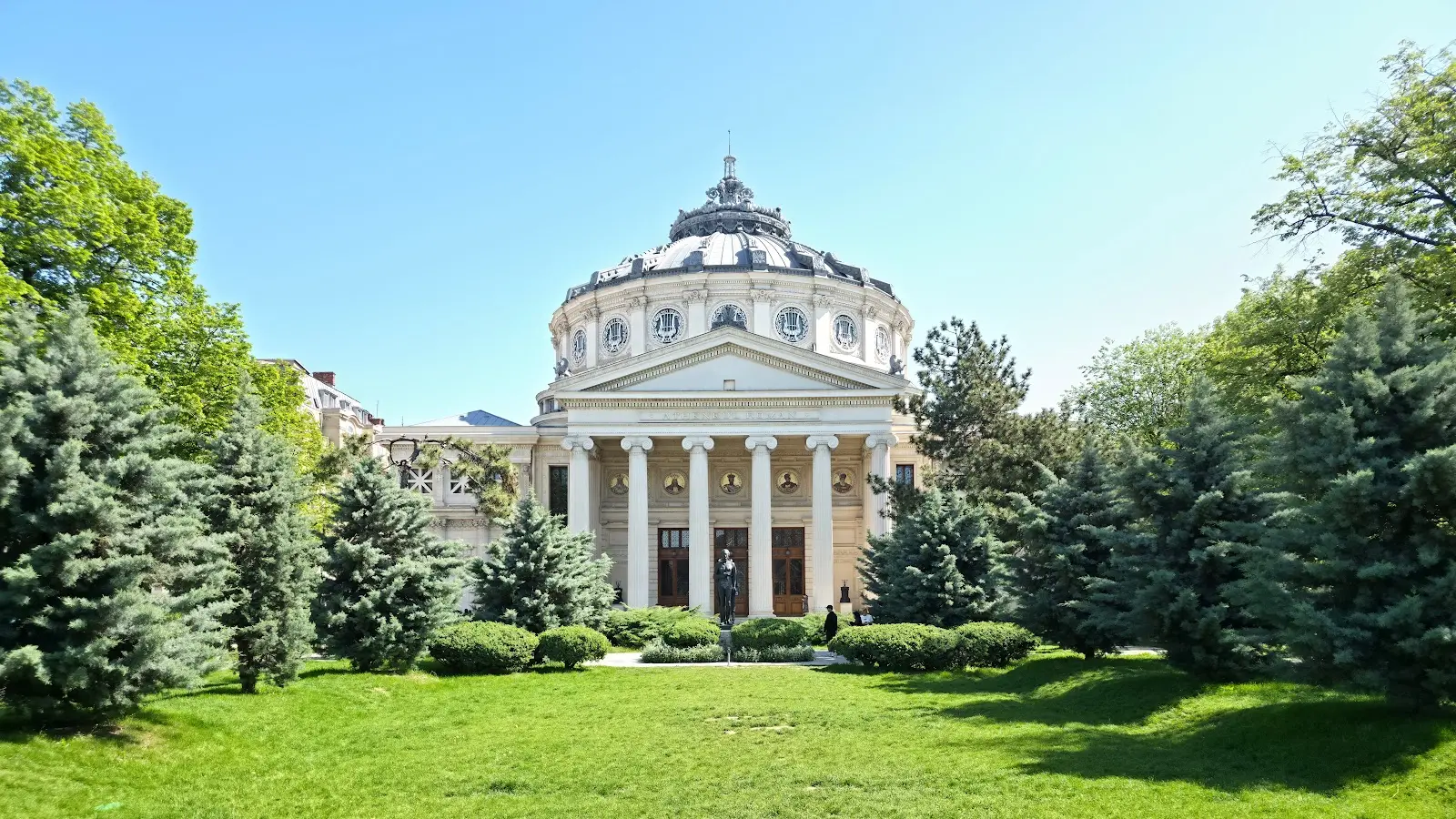
Stroll along Calea Victoriei, the city's elegant, historic artery, with the Romanian Athenaeum (the emblematic concert hall, with its neoclassical façade), the National Museum of Art (the former royal palace), the CEC Palace, the nearby Armenian Quarter and historic hotels. It is the best introduction to Belle Époque Bucharest and its interwar golden age.
The museums
- National History Museum — for the country's treasure and history, from the Dacians to the modern age.
- "Dimitrie Gusti" National Village Museum — an open-air museum in Herăstrău Park, with traditional homesteads brought from across the country; an excellent, quick introduction to rural Romania.
- Museum of the Romanian Peasant — one of the most acclaimed ethnographic museums in Europe, awarded for its concept.
- "Grigore Antipa" Museum (natural history) — modern and interactive, excellent for families with children.
The parks and Belle Époque
Herăstrău Park (King Michael I), with its lake, and Cișmigiu, the city's oldest public park, are green oases perfect for a break. The Cotroceni and Dorobanți/Primăverii neighbourhoods preserve Belle Époque and Art Nouveau villas, remnants of "Little Paris", ideal for a gentle walk away from the bustle.
Where to sleep and eat
For visitors, the most practical lodging areas are the Old Town (lively but noisy at night), the Universitate–Romană area (central, walkable, well connected by metro) and Dorobanți (elegant, quiet, with good restaurants). The choice ranges from luxury hotels to boutiques, apartments and hostels for every budget.
Bucharest's food scene is one of the liveliest in the region: from modern Romanian cooking that creatively reinterprets traditional recipes to international restaurants, bistros and specialty cafés. Taste mici (grilled minced-meat rolls), stuffed cabbage, soups, papanași, but also local fine dining and market cuisine. Book a table at the good restaurants, especially at weekends, when demand is high.
Suggested itinerary (2 days)
- Day 1 — morning at the Palace of Parliament (booked ahead); lunch in the Old Town; afternoon on Calea Victoriei (the Athenaeum, the Art Museum); evening in Lipscani.
- Day 2 — morning at the Village Museum and Herăstrău Park; lunch in Dorobanți or Cotroceni; afternoon a museum of your choice (Antipa, the Romanian Peasant); dinner by reservation at a signature restaurant.
Practical tips
- Book the Palace of Parliament tour ahead and bring your ID or passport — without identification you won't be admitted.
- Many museums are closed on Mondays — check the schedule before planning your day.
- The metro and ride-hailing make getting around easy and cheap; avoid your own car in the centre.
- The Old Town is perfect for a night out, but crowded and noisy at weekends — choose your lodging accordingly.
- Bucharest is safe for tourists, but, as in any capital, watch for pickpockets in crowded areas and on public transport.
- Pair the grand buildings with the quiet streets of Cotroceni and with the parks — there you feel the real "Little Paris".
Plan your trip
Stays nearby
Stays in Romania
Experiences
Tours & activities
Guided tours, day trips and hand-picked experiences via GetYourGuide — free cancellation on most.
See all experiencesGetting to Romania
Flights, transfer & car
Fly into Romania
Compare fares to Bucharest Otopeni (OTP) and regional airports — Cluj, Sibiu, Iași, Timișoara.
Airport transfer
Private, fixed-price door-to-door transfer — driver waiting from the moment you land.
Rent a car — see the real Romania
A rental car is the key to Romania: the Transfăgărășan, the painted monasteries of Bucovina, mountain roads and the villages of Maramureș that no train reaches.
Find a car