
Complete guide to Vatra Dornei
Vatra Dornei is a spa and mountain resort in Bucovina, where the Dorna meets the Bistrița: carbonated mineral waters and mofettes with a Habsburg pedigree, the Baths Casino, a park full of springs, and a ski slope with a chairlift right above town, ringed by the Călimani, Rarău and Giumalău mountains.
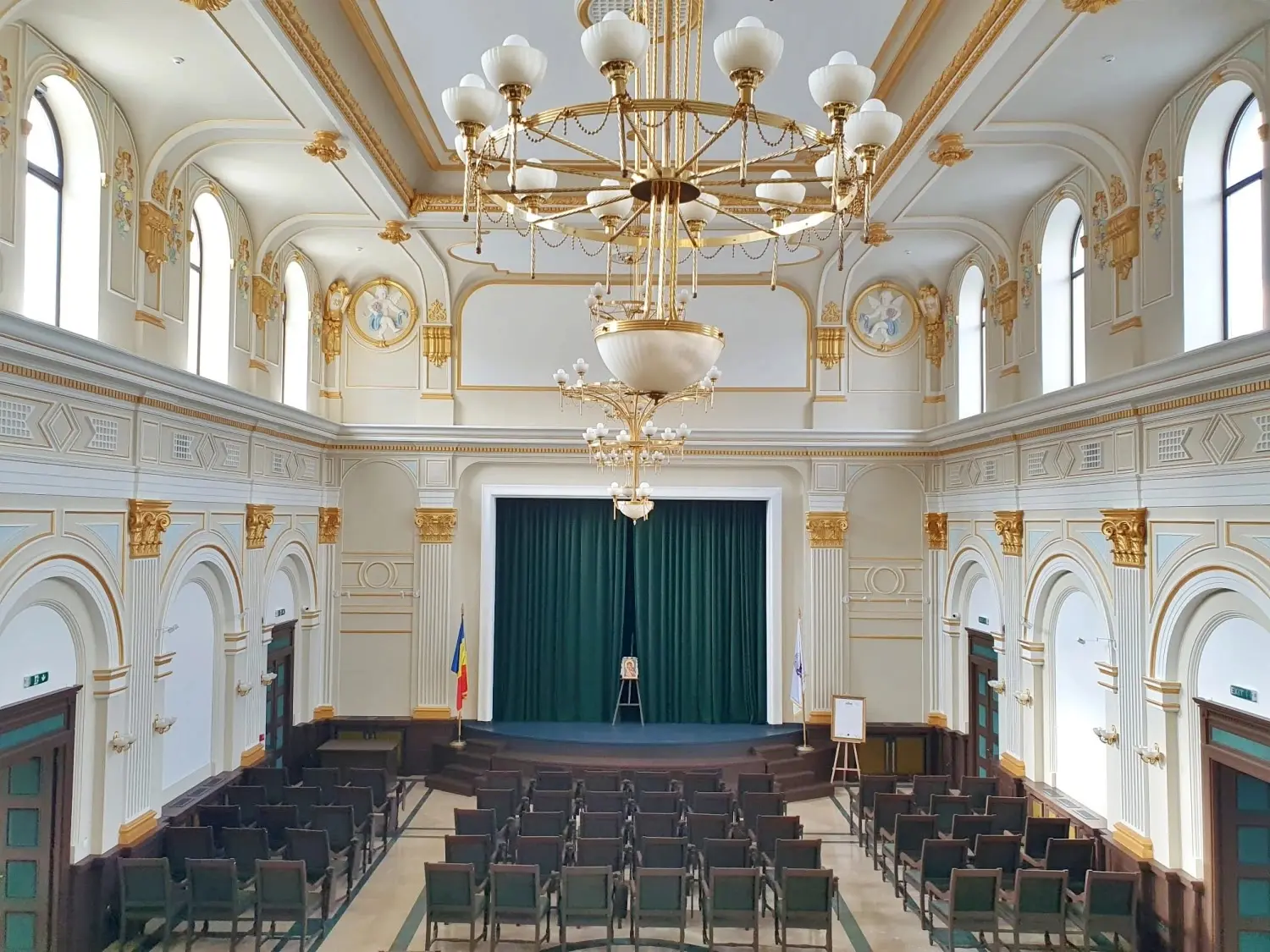
Vatra Dornei offers something few Romanian resorts can: mineral water that rises on its own from the ground, therapeutic gas seeping up from the depths, and a mountain with a chairlift minutes from the centre. It is a spa town with Habsburg-era pedigree and a mountain base for the Călimani, Rarău and Giumalău ranges at the same time. This guide covers what you will find, when to come, and how to plan your days.
Why Vatra Dornei
Vatra Dornei is a spa and mountain resort in Bucovina, set where the Dorna meets the Bistrița, in a basin enclosed by four ranges: the Călimani, Bârgău, Rarău and Giumalău mountains. That geography explains almost everything about the town — the mineral waters come from the volcanic bedrock of the Călimani, the air stays cool and clean even in high summer, and hikes begin practically at the edge of the resort.
Four reasons to stop here:
- Carbonated mineral waters and mofettes — the backbone of local treatments, with a tradition going back to Habsburg times.
- The Baths Casino — the town's emblematic building, one of the most photographed period façades in northern Romania.
- The Dealu Negru slope and its chairlift — one of the Romanian ski runs with a large vertical drop, right above town.
- The location — Vatra Dornei is the gateway from Transylvania into Bucovina, which makes it a logical base for a longer circuit.
The mineral waters and the mofettes: why the resort exists
The ground around Dorna releases carbonated mineral waters and mofettes — natural emanations of carbon dioxide, captured and used therapeutically. A mofette looks like nothing much: you sit in a purpose-built room, the gas, heavier than air, pools around your legs, and the intended effect is on peripheral circulation. That discretion is precisely what makes it memorable — this is not a spa with background music, it is a medical procedure in a mountain town.
Alongside the mofettes, the resort uses its mineral springs for drinking cures and baths, a practice that dates to the Habsburg administration, when Dorna began to be laid out as a bathing resort on the central European model.
Two practical notes, with no promises attached:
- Spa procedures require a medical recommendation and an on-site consultation; not all of them suit everyone.
- What treatment centres offer, and when, changes over time — ask where you are staying, or at the treatment centre itself, before building your plan around it.
For the wider national picture, see our overview of Romania's spa and balneo resorts.
The Baths Casino, the silhouette that defines the town
The Baths Casino is a monumental building raised in the early twentieth century in an eclectic style with secession accents, designed for the crowd that came to take the waters: ballrooms, reading rooms, a performance hall. Even seen from the park, its proportions and façade detailing tell you immediately when this town was at its most confident.
The building is undergoing restoration, and the stage of that work has shifted from one season to the next. So the only honest advice is this: treat the Casino as an exterior sight — photography, context, a walk around it — and ask locally, at your accommodation or the tourist information point, whether the interior or part of it can be visited while you are there.
The Baths Park, the resort's centre of gravity
The resort park is where everything converges: the springs, the alleys shaded by mature trees, the benches, the evening promenade and the best vantage point on the Casino. This is the historic park of the baths, and its slow rhythm is exactly what most visitors come here for.
A local tip: the park looks completely different at first light, when mist climbs off the river, and again in the evening, when the period buildings catch warm light. It is worth seeing twice.
Winter: Dealu Negru and the chairlift
Above the town rises the Dealu Negru slope, one of the Romanian pistes with a large vertical drop — the reason Vatra Dornei keeps coming up in any serious conversation about Romanian ski terrain. The chairlift climbs straight out of the resort, which means you can sleep downtown and ski without a car, a rare luxury here.
The chairlift is not a winter-only machine: in the warm season it is the cheapest way to gain altitude for a wide panorama over the Dorna basin and the ridges around it. For comparison with the rest of the country, see Romania's ski resorts.
The surrounding mountains, one by one
- Rarău — the mountain of Pietrele Doamnei, limestone towers that rise abruptly out of the forest, probably Bucovina's best-known mountain image.
- Giumalău — a massif cloaked in old spruce forest, with long, quiet trails often linked to Rarău in a single ridge traverse.
- Călimani — the country's largest volcanic massif, all plateau landscapes and spectacular rock formations, protected as a national park.
- Bârgău — the gentler chain on the Transylvanian side, with pastures, scattered villages and pass roads.
For trails, walking times and mountain conditions, the best resource in our network is munte.online — Rarău, the Călimani and the ski slopes are squarely its territory.
The Poiana Stampei peat bog
A short distance from the resort lies the Poiana Stampei peat bog, the largest peat bog in Romania and a nature reserve. It is a landscape unlike anything else nearby: dwarf pines, sphagnum moss, plants adapted to poor acidic ground, an ecosystem left over from glacial times.
You visit it on the marked path, and the rule is simple and non-negotiable: do not step off the trail. Peat regenerates on the scale of centuries, and every sideways step damages exactly what you came to see.
When to come
- Winter — for skiing at Dealu Negru combined with spa treatments. The busiest season, so book early.
- Spring — a quiet resort, good for cures and walks; the high mountains may still hold snow.
- Summer — the best window for hiking, Rarău, the Călimani and the bog; the air stays cool while the rest of the country bakes.
- Autumn — the beech and spruce forests around town give the best colour, and the resort empties out.
Getting there and getting around
Vatra Dornei sits on the main road between Transylvania and Bucovina, linking the Bistrița area with Suceava, and it has a railway station — which makes it one of the few Romanian mountain resorts you can reach comfortably without a car. Inside the resort, the Casino, the park, the springs and the chairlift are all walkable.
For the peat bog, Rarău, the Călimani and the painted monasteries, a car makes the difference; otherwise you depend on local transport with limited timetables. To see how Vatra Dornei fits into the wider region, start with our Bucovina guide.
How to split your days
- Two days: the resort centre, the Casino and the park, one chairlift ride, an evening on the promenade.
- Three to four days: add Rarău with Pietrele Doamnei, and the Poiana Stampei bog.
- A week: treatments in the morning, hikes or day trips in the afternoon, with one day set aside for Bucovina's monasteries.
The full list of sights is in what to see in Vatra Dornei, and for picking your neighbourhood there is where to stay in Vatra Dornei.
Plan your trip
Stays nearby
Stays in Romania
Experiences
Tours & activities
Guided tours, day trips and hand-picked experiences via GetYourGuide — free cancellation on most.
See all experiencesGetting to Romania
Flights, transfer & car
Fly into Romania
Compare fares to Bucharest Otopeni (OTP) and regional airports — Cluj, Sibiu, Iași, Timișoara.
Airport transfer
Private, fixed-price door-to-door transfer — driver waiting from the moment you land.
Rent a car — see the real Romania
A rental car is the key to Romania: the Transfăgărășan, the painted monasteries of Bucovina, mountain roads and the villages of Maramureș that no train reaches.
Find a car












