Bucovina and the Painted Monasteries
Voroneț, Sucevița, Moldovița, Humor, Putna, Suceava and Mount Rarău — a complete guide to the UNESCO frescoes, the living traditions and historic Bucovina.
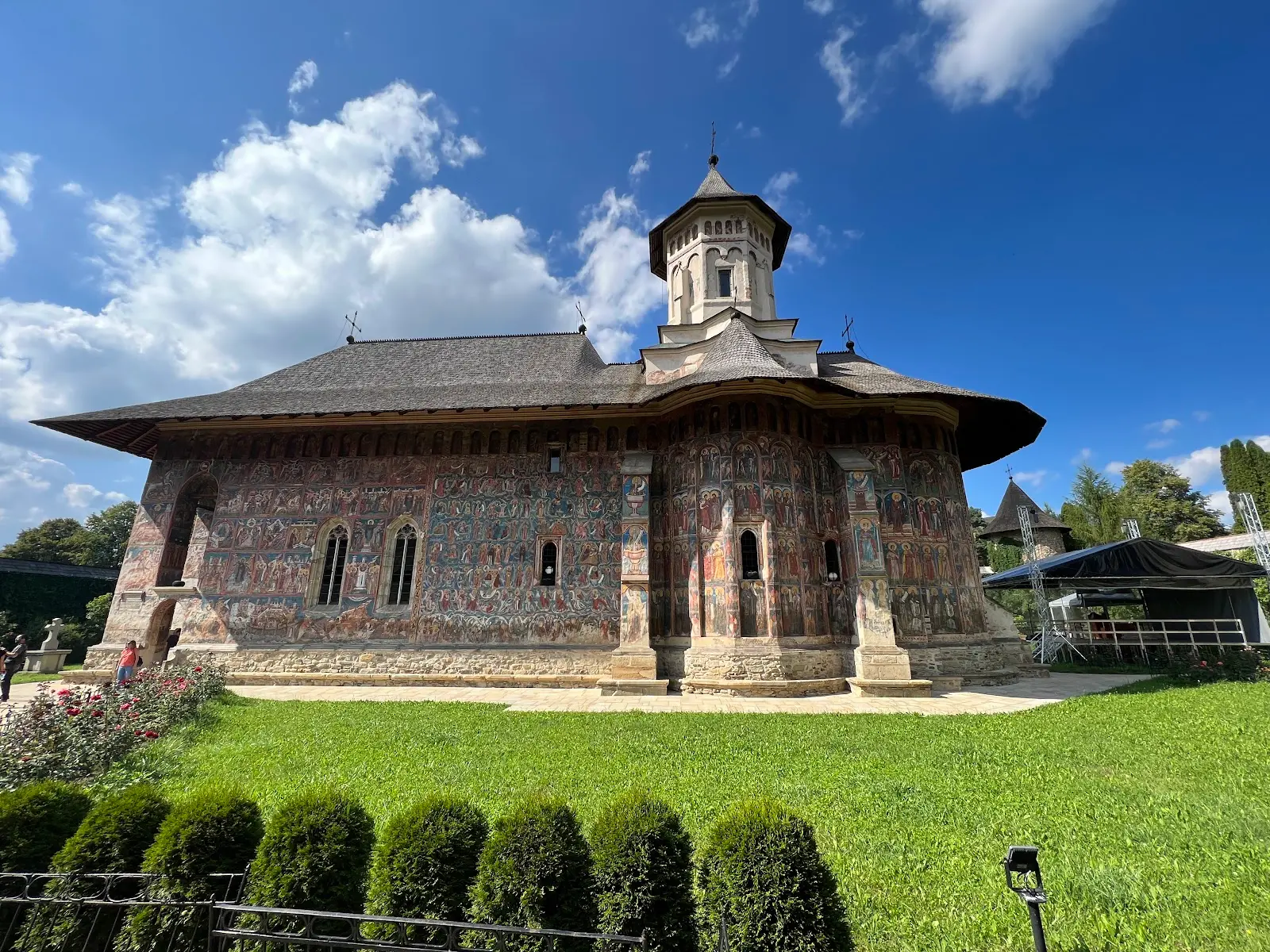
In the north of Moldavia, the historic region of Bucovina holds one of Europe's most extraordinary artistic treasures: a group of Orthodox monasteries whose exterior walls are entirely covered in frescoes more than five centuries old. Painted in the time of Stephen the Great and his successors, they have survived rain, frost and the ages, and their colours — above all the famous Voroneț blue — still glow. Beyond the monasteries, Bucovina is a land of gentle hills, orchards, villages with living traditions and quiet mountains, where hospitality is an everyday virtue. It is a region that asks for patience and respect, but rewards you generously. Here is everything you need to know to discover it properly.
When to go
Each season offers a different Bucovina, and your choice depends on what you seek.
- Summer (June–August) has the most settled weather and long days — ideal for photographing the frescoes in good light and for hiking on Rarău. It is also the busiest season, especially at weekends.
- Spring and autumn offer spectacular scenery (orchards in blossom or copper-coloured forests on the slopes) and fewer tourists. Autumn in particular is superb for the forest colours and the quiet.
- Winter has a charm of its own, with snow-covered monasteries, carols and deep silence, but mountain roads can be difficult and some hours are reduced.
The best compromise of weather, light and calm: June or September.
Getting there and getting around
The gateway is Suceava, with an airport (domestic and a few European routes) and a railway station. From Bucharest it is roughly 6–7 hours by car or an overnight train; from Cluj or Iași the drive is shorter. Gura Humorului is the most practical base for the monasteries, being centrally placed relative to Voroneț, Humor, Moldovița and Sucevița, with good lodging and restaurants.
A car is essential for exploring at your own pace: the monasteries are spread across different valleys, and public transport between them is limited and slow. Alternatively, you can hire a local driver-guide for a full day — a convenient solution that also gives you historical context. Roads are generally good but narrow and winding through the forests, so don't rush the stages.
What to see
The four essential painted monasteries
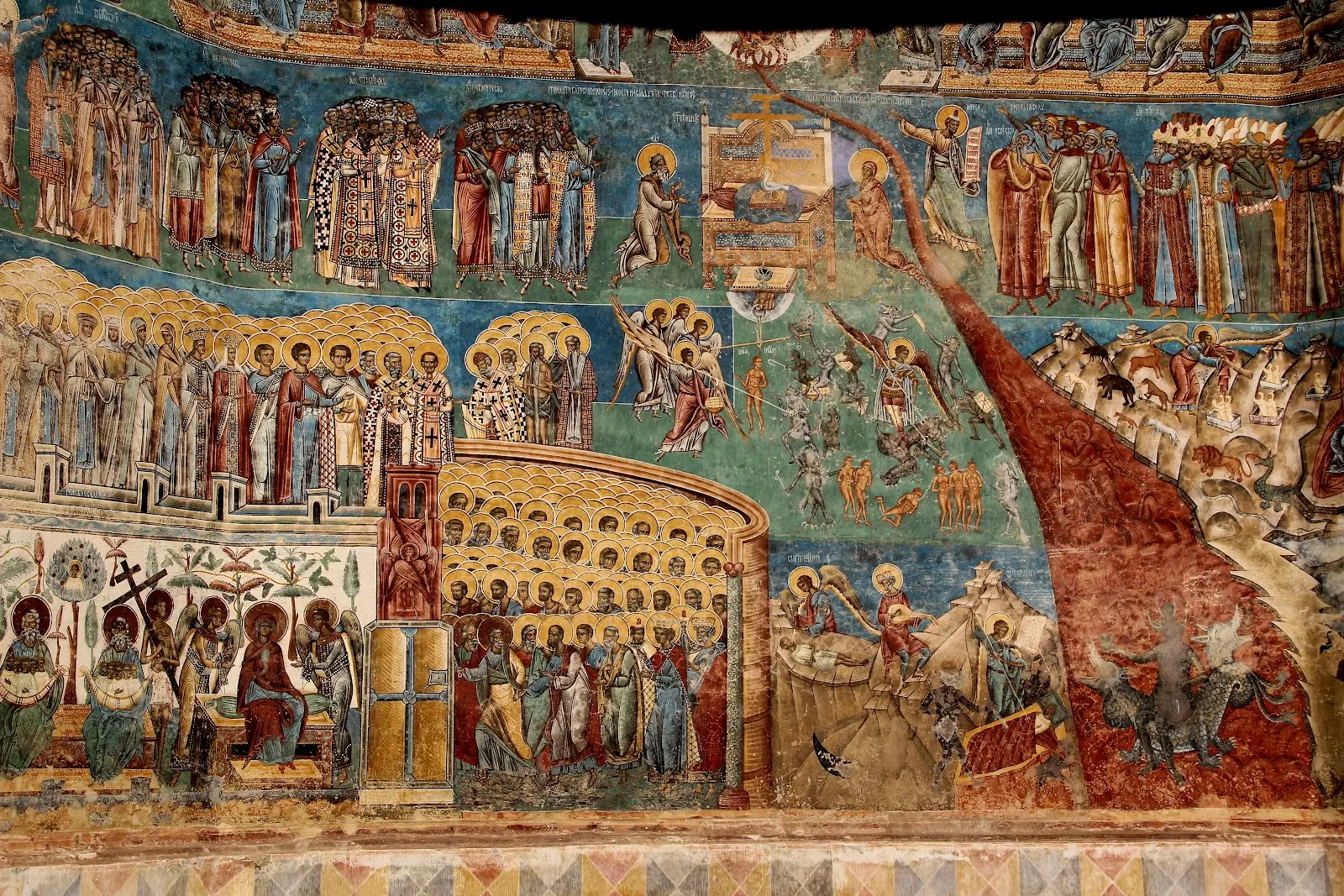
Voroneț — nicknamed the "Sistine Chapel of the East", it is the most famous, known for the Voroneț blue, an intense, durable shade whose exact recipe is still studied. The Last Judgement fresco on the west wall, with its river of fire and ranks of angels, is the masterpiece of the ensemble and one of the most striking mural scenes in European art.
Sucevița — fortified like a small citadel, with towers and thick walls, it has the richest and best-preserved exterior frescoes, including the famous Ladder of Virtues, in which angels and devils battle for the souls of those climbing. It is the largest of the painted monasteries and deserves unhurried time.
Moldovița — impresses with the Siege of Constantinople scene and its warm, golden-yellow tone. It has a small museum with a princely throne and manuscripts, and the fortified enclosure creates a solemn atmosphere.
Humor (Humor Monastery) — smaller and more intimate, with frescoes in brick-red tones and expressive scenes. The nearby bell tower offers a fine view over the village and hills.
Eight churches with mural paintings in northern Moldavia are inscribed on the UNESCO World Heritage list.
Putna and Suceava
Putna Monastery, the foundation and burial place of Stephen the Great, is a major spiritual centre for Romanians, though it has no exterior frescoes. It is worth visiting for its historical weight, for the ruler's tomb and for its museum of medieval art, with embroideries, manuscripts and liturgical objects of great value.
Suceava is home to the Princely Citadel, the former royal seat of Moldavia, handsomely restored, from whose walls you have a wide view over the town. The history museum, with dioramas recreating the medieval past, is an excellent introduction to the age of Stephen the Great.
Mount Rarău and the Lady's Stones
For nature, the Rarău massif offers accessible hikes and views towards the Pietrele Doamnei (Lady's Stones), imposing limestone formations that rise out of the forest. Marked trails start from Câmpulung Moldovenesc or Chiril; the scenery is among the finest in the Eastern Carpathians, with meadows, fir forest and white crags.
Crafts and living traditions
At Marginea is a renowned black-pottery workshop, an old, rare technique in which the clay turns black through oxygen-free firing. In the surrounding villages you can still find weaving, meticulously painted eggs and folk-art workshops. Bucovina is also a land of winter customs (carols, masked processions), and the feast-day tables are a spectacle in themselves.
Where to sleep and eat
Gura Humorului and Vatra Dornei have the most guesthouses and hotels, and Vatra Dornei adds spa options. For authenticity, choose an agritourism guesthouse in a Bucovina village, where you'll eat at your hosts' table and feel the rhythm of the place. Many monasteries also offer simple lodging for pilgrims.
Bucovina cooking is hearty and traditional: Rădăuți-style soup (with chicken, finished with egg and sour cream), tochitură (a pork stew), wild mushrooms, smoked meats, pies and homemade jams. Check the hours of small restaurants; in villages, dinner is often taken by reservation at your guesthouse, and the produce is frequently from the household's own farm.
Suggested itinerary (3–4 days)
- Day 1 — arrive in Suceava; the Princely Citadel and history museum, then lodging in Gura Humorului.
- Day 2 — Voroneț early in the morning (for the quiet), then Humor; in the afternoon Moldovița and Sucevița.
- Day 3 — Putna and, optionally, the black-pottery workshop at Marginea; a relaxed evening.
- Day 4 (optional) — a hike on Rarău to the Lady's Stones, or spa relaxation at Vatra Dornei.
Practical tips
- Modest dress is required: shoulders and knees covered; some monasteries provide skirts or shawls at the entrance.
- Photographing interiors is often forbidden or subject to a fee — respect the posted rules and the quiet of the place.
- Check visiting hours, especially out of season and during services, when access may be restricted.
- Go early in the morning to Voroneț and Sucevița to avoid the large coach groups.
- Carry cash for donations, entry fees, photography fees and village purchases.
- Respect the silence and the prayer — these are active places of worship, not just tourist sites, and discreet behaviour is valued.
Plan your trip
Stays nearby
Stays in Romania
Getting to Romania
Flights, transfer & car
Fly into Romania
Compare fares to Bucharest Otopeni (OTP) and regional airports — Cluj, Sibiu, Iași, Timișoara.
Airport transfer
Private, fixed-price door-to-door transfer — driver waiting from the moment you land.
Rent a car — see the real Romania
A rental car is the key to Romania: the Transfăgărășan, the painted monasteries of Bucovina, mountain roads and the villages of Maramureș that no train reaches.
Find a car