
What to see in Vișeu de Sus and the Vaser Valley
A steam railway, a valley with no access road, the Maramureș Mountains and a wooden church still serving its village. The sights worth the trip, in the order you would do them, with a two-day itinerary.
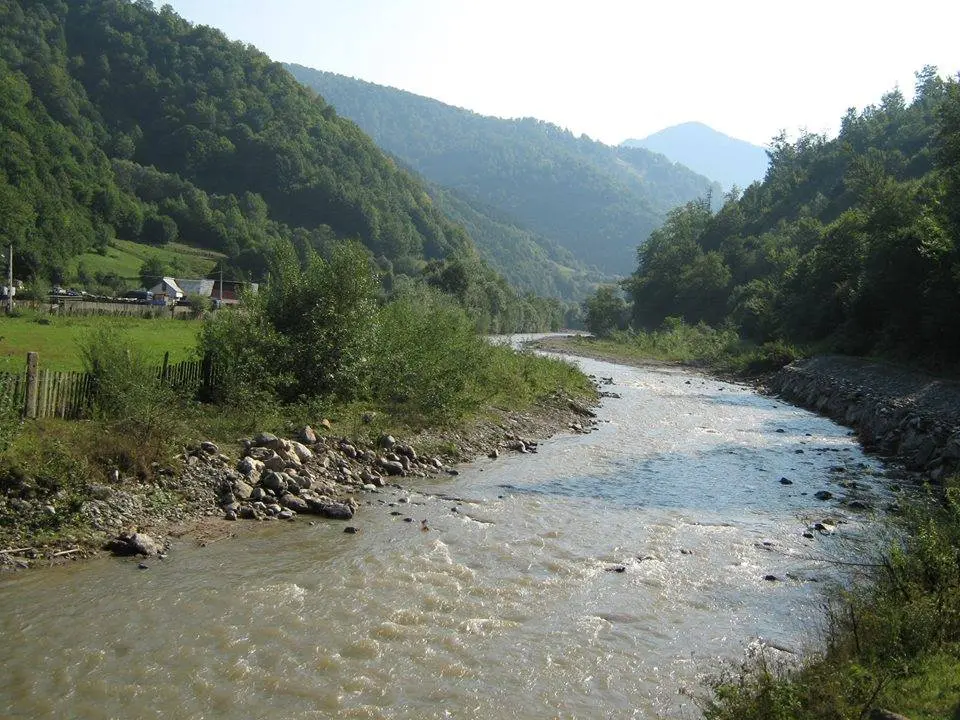
Vișeu de Sus is visited horizontally: a little in town, a great deal up the valley. Almost everyone who comes here comes for a single journey — the steam train up the Vaser — but around it fit a wooden church, a nature-park forest and a story of German colonisation that nobody arrives looking for and everybody remembers.
The list below is ordered by how much each thing repays the effort, not by distance.
1. The Vaser Valley steam train
The Vaser Valley forestry railway is the town's reason number one and one of the last steam-hauled forestry lines still working in Europe. The narrow gauge was built for timber, not for tourists, and the locomotives stayed on the rails because the valley has no access road.
What you see from the carriage: a gorge that tightens as you climb, the Vaser always on one side or the other, bridges, keepers' cabins, halts with no village attached. What you hear: steam, iron and water.
Plan this part properly:
- The timetable is seasonal and changes from year to year — check the official source before building your day around it.
- Tickets sell out on busy weekends. Book before you book your room, not after.
- Set aside well over half a day and do not attach another distant sight to the same day.
- Layers, water, something to eat. The valley is colder and the phone signal disappears quickly.
If you have the choice, take a morning departure: the light in the valley is better, the steam shows up more clearly in cold air, and you come back with time left for a proper meal and a walk through town.
2. The Vaser Valley, on foot or by bike
The Vaser Valley does not end at the last halt. Anyone who wants a different pace can walk or cycle up the service road, and then the valley becomes another place: no locomotive noise, trout in the water, forest on both slopes.
Two rules stand. Do not set off without telling someone where you are going and when you will be back, and do not improvise your way down in the dark. The valley is long, and help arrives slowly.
On a bike, plan the return as the climb it is — going up is gradual, coming back from the far end is another matter. And remember that working trains use the line too, not only passenger ones: on a bridge or a tight curve, the rails always have priority.
3. The Maramureș Mountains
The Maramureș Mountains are a nature park and, by Romanian standards, almost an anomaly: broad forests largely left alone, rich wildlife, a healthy bear population. That means rules as well as scenery — food is never left in the open, the trail is not abandoned, animals are not photographed up close.
For day hikes, ask locally: a shepherd or a guesthouse host knows better than any map what is sensible on the day.
4. The wooden church of Vișeu de Mijloc
A few kilometres out of town, the wooden church of Vișeu de Mijloc is the quiet example of the architecture that made Maramureș famous: beams, shingles, a tall narrow spire, a graveyard around it. It is not on the UNESCO list and has no tour group at the gate — it has a congregation.
If it is locked, ask in the village for the key. Go in slowly, and leave the drone switched off.
5. The town and the Zipser trace
The centre of Vișeu de Sus is walkable in under an hour, but it rewards open eyes. The Zipsers, German colonists brought in to work the forests, left a town built on a different logic from the villages around it: low houses with steep roofs, a Catholic church and cemetery, a kind of forestry-colony order.
Look for the bakeries and smokehouses, ask about bread made to old recipes and, if you meet someone willing to talk, listen. The community has shrunk a great deal since the departures of the later twentieth century, but the family names, the Catholic cemetery and the way the houses are set out still say plainly that this was a forestry colony rather than a village that simply grew.
The region's wider context is in the Maramureș guide, and the world of the surrounding villages — gates, churches, crafts — in the guide to the Maramureș villages.
6. The surroundings, if you have a spare day
Vișeu de Sus sits on the road climbing towards Borșa and the Prislop pass, so an extra day fills itself. East of here you enter the high mountain country, with pastures, sheepfolds and long views across the ridges. West, the road drops down the Vișeu valley towards Sighet and on to the villages of the Iza, Mara and Cosău — another Maramureș, gentler, richer in carved gates and wooden churches.
Pick one direction, not both. The distances look short on the map, but roads here are covered slowly, and hurrying ruins everything that is good about the area.
When to come
- Summer — the safest window for the train and for hiking, and also the greatest pressure on tickets and beds.
- Autumn — the valley forests turn colour and the valley looks its best of the whole year. Book early.
- Winter — a quiet town, serious mountains, reduced train services. Only with good kit and flexible plans.
- Spring — high water and soft tracks in the valley; good for the town and the church, less so for long walks.
A two-day itinerary
Day 1 — the steam train, starting in the morning. Back by mid-afternoon, a late meal at the guesthouse, then a short walk through town for the Zipser houses.
Day 2 — the wooden church at Vișeu de Mijloc, then an easy walk up the Vaser or an outing into the Maramureș Mountains. If you are leaving the same day, the road west runs through Sighet: a few hours there fit neatly, with the Sighetu Marmației guide to hand.
What not to do
- Do not arrive without a booked train ticket and a plan B for the day.
- Do not build your day on the assumption that the train is running — check the seasonal timetable.
- Do not leave food in an open car or outside the guesthouse: this is bear country.
- Do not rush the valley. This place has nothing to offer anyone watching the clock.
For context, history and the practical side of beds and transport, read the complete guide to Vișeu de Sus.
Plan your trip
Stays nearby
Stays in Romania
Experiences
Tours & activities
Guided tours, day trips and hand-picked experiences via GetYourGuide — free cancellation on most.
See all experiencesGetting to Romania
Flights, transfer & car
Fly into Romania
Compare fares to Bucharest Otopeni (OTP) and regional airports — Cluj, Sibiu, Iași, Timișoara.
Airport transfer
Private, fixed-price door-to-door transfer — driver waiting from the moment you land.
Rent a car — see the real Romania
A rental car is the key to Romania: the Transfăgărășan, the painted monasteries of Bucovina, mountain roads and the villages of Maramureș that no train reaches.
Find a car











