
The Authentic Villages of Maramureș
In Romania's far north, beyond the Prislop pass, Maramureș keeps its rural rhythm intact: carved wooden gates, UNESCO wooden churches, a steam train and a cemetery that laughs at death. A guide to the living villages where time flows differently.
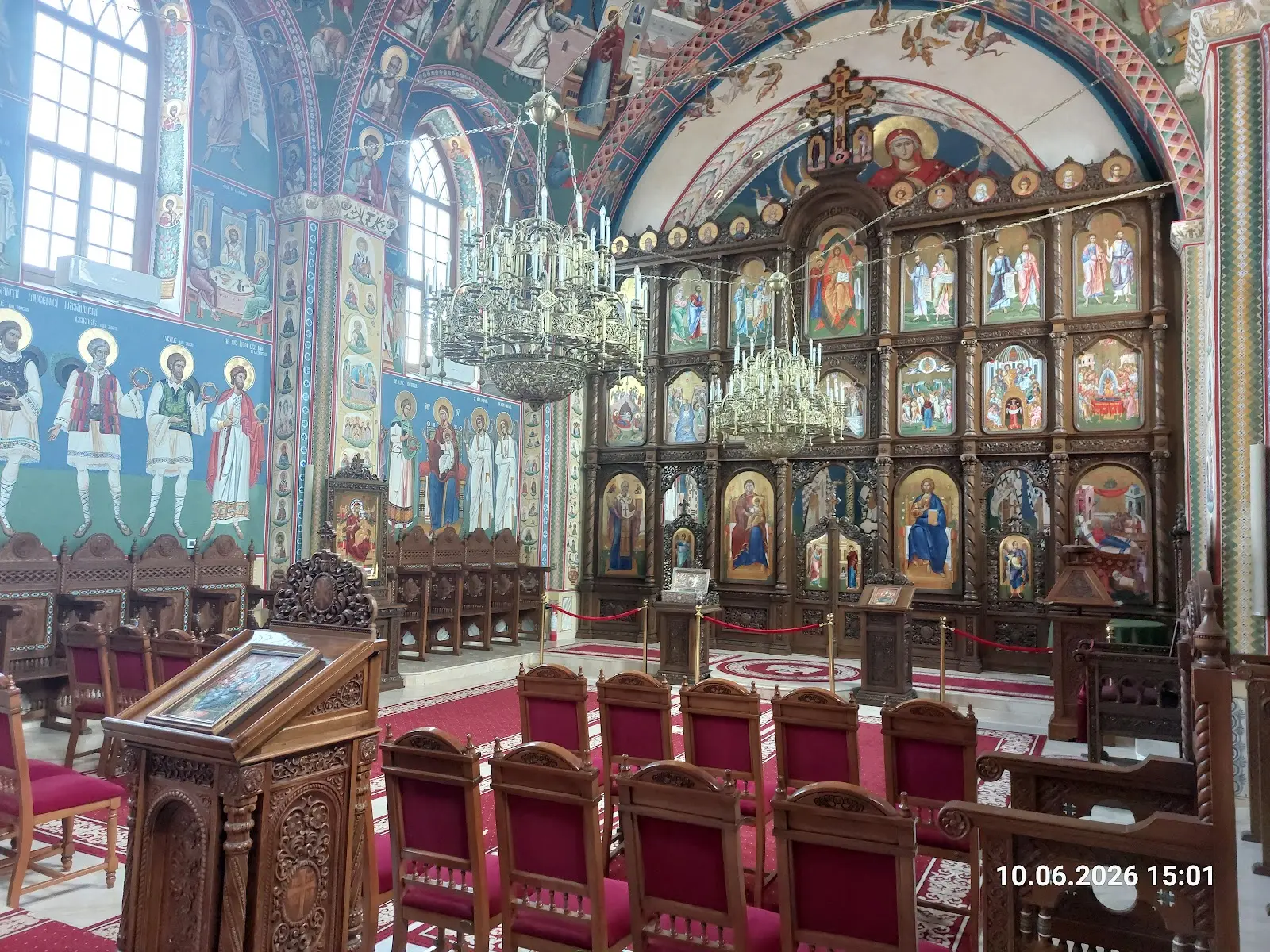
Few places in Europe still live so close to the rhythm of the land as Maramureș. Here, in the villages beneath the Rodna Mountains and along the Iza river, farmsteads still smell of mown hay and woodsmoke, and on Sundays people walk to church in full folk costume. This is not an open-air museum but a world that still breathes.
The land of wood
Maramureș is, above all, a civilization of wood. Local craftsmen raised monumental gates from oak and fir beams, carved with the twisted rope, the rosette of the sun and the tree of life — symbols that watch over the entrance to every household.
Above the houses rise the sharp spires of the wooden churches, some tens of metres tall, clad in shingle. Eight of them are inscribed on the UNESCO World Heritage list. Worth seeking out in particular:
- Bârsana — the monastery and wooden complex, among the most photographed in the country.
- Ieud — the Church on the Hill, considered one of the oldest wooden churches in Maramureș.
- Poienile Izei — with remarkable interior murals, including scenes of the Last Judgement.
- Rogoz — with its asymmetric roof and carved eave brackets.
- Șurdești — whose spire makes it one of the tallest wooden structures in Europe.
These churches are living places of worship, not lifeless monuments. Often you must find the villager who holds the key — part of the charm of the place. Inside, low and wrapped in half-light, they keep naive paintings and wooden icons blackened by candle smoke, witnesses to a faith lived without pomp.
Beyond the churches, wood shapes the whole homestead: the barn, the sweep well, the porch and the tools. It is a craft handed down from father to son, one that few places in Europe still practise on this scale.
The Merry Cemetery of Săpânța
At the edge of the village of Săpânța, near the Ukrainian border, lies one of the most unusual cemeteries in the world. The Merry Cemetery grew from the hand of the craftsman Stan Ioan Pătraș, who began carving oak crosses painted in a vivid blue now known as "Săpânța blue".
Each cross carries a naive portrait of the departed and a poem written in the first person, often full of humour and gentle irony. One person recounts their trade, another admits their weaknesses, a third mourns their own death with wit. It is the Maramureș way of facing death not with dread but with acceptance and a smile.
Today the cemetery holds hundreds of such crosses, and the craft has been carried on by Pătraș's apprentices, so the tradition stays alive. Beside the cemetery stands the craftsman's house-museum, where his tools and earliest works can be seen.
The Vaser Valley steam train
From Vișeu de Sus departs one of the last forestry steam railways in Europe. The Mocănița climbs on a narrow-gauge line along the Vaser Valley, through a wild ravine no road reaches, following the water through coniferous forest.
The steam locomotives, some over a century old, hauled timber cut from the mountain for decades. Today they carry mostly travellers, yet they remain a working railway rather than a mere attraction. The trip lasts a few hours there and back, with stops to take on water and to eat in a forest clearing. It is one of the finest rail journeys in Romania.
Village life and where to stay
Authentic lodging in Maramureș means the family guesthouse, not the hotel. In villages such as Breb, Botiza, Ieud, Vadu Izei and Desești, hosts open their own homes to you.
- Breb — perhaps the best-preserved village, with traditional houses and hayfields still mown by scythe.
- Botiza — famous for its hand-woven rugs, dyed with plants.
- Ieud — a hillside village with its church tradition and old farmsteads.
- Vadu Izei — at the meeting of the Iza and Mara rivers, a good base for the rest of the valley.
- Desești — with its UNESCO-listed wooden church.
Here the morning begins with a cart loaded with hay, hens in the yard and the smell of fresh bread. At the table come home-cooked dishes — stuffed cabbage rolls, stew, sheep's cheese, savoury pies — and almost always a small glass of plum țuică, strong and clear, offered as a sign of welcome. Many hosts take you along to the fields or up to the sheepfold, and the village children show you the cart tracks. You pay not just for a room but receive a day in the life of the place.
Traditions still worn
Maramureș wears its folk costume naturally, not as stage dress. Women weave and embroider shirts and aprons; on feast days the men wear the small hat, the "clop", and the woollen coat.
Weddings here can last for days, with sung shouts, dancing and brass bands. On Sundays and holidays the village gathers at church and then at the round dance. Song, the doina lament and the hora dance remain living languages of the community, passed from one generation to the next. Over it all hangs a sense of slowed time: here the clock is measured in seasons and field labours, not in minutes.
Getting there and when to go
Maramureș is shielded from the rest of the country by a ring of mountains, which has preserved its isolation and authenticity. The most spectacular way in comes from Bukovina, over the Prislop pass — the highest road pass in the Eastern Carpathians — which links the two regions through an alpine landscape.
The nearest gateway towns are Baia Mare, Sighetu Marmației and Vișeu de Sus. A car remains the most convenient way to roam the villages scattered along the valleys.
- Spring and summer — mown hay, green villages, the steam train in full swing.
- Autumn — the colours of the forests and the quiet after the harvest.
- Winter — snow, carols and feasts, but mountain roads that demand care.
Whenever you come, Maramureș asks one thing of you: to slow down. Only then do you begin to truly see it.
Plan your trip
Stays nearby
Stays in Romania
Getting to Romania
Flights, transfer & car
Fly into Romania
Compare fares to Bucharest Otopeni (OTP) and regional airports — Cluj, Sibiu, Iași, Timișoara.
Airport transfer
Private, fixed-price door-to-door transfer — driver waiting from the moment you land.
Rent a car — see the real Romania
A rental car is the key to Romania: the Transfăgărășan, the painted monasteries of Bucovina, mountain roads and the villages of Maramureș that no train reaches.
Find a car