
Complete guide to Biertan
A Saxon village in Sibiu county with three rings of walls around its church, a sacristy door famous across Europe and centuries of Evangelical bishopric history. Everything you need for a short, well-made visit.
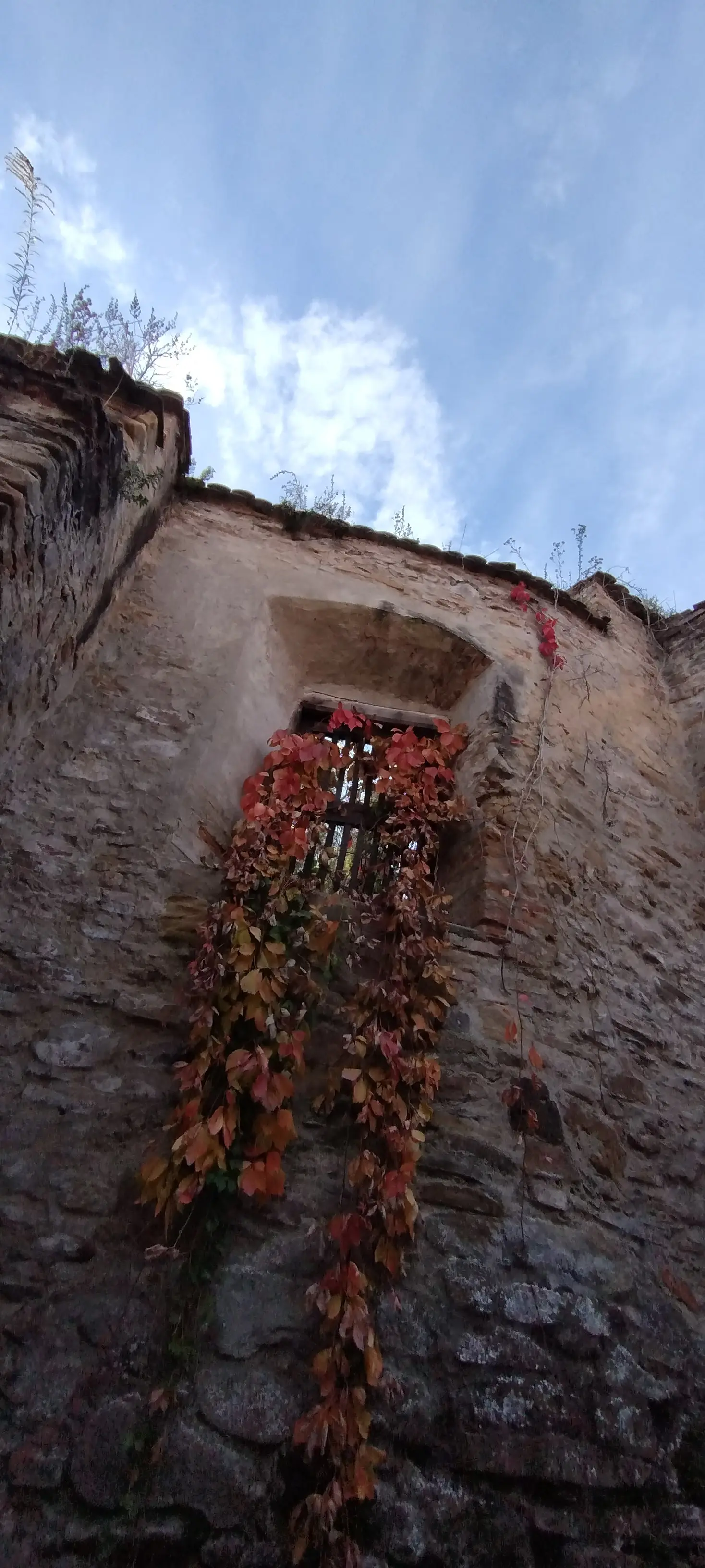
On a hill in the middle of the village, a church is ringed by three sets of walls, by towers and by a covered stairway climbing to the gate. Biertan is not a large village, but it holds one of the most impressive fortified churches in Transylvania and, inside it, a door that became famous across Europe. Here is what is worth knowing before you go.
Where Biertan is
Biertan is a Saxon village in Sibiu county, set in a valley between hills on the plateau between Mediaș and Sighișoara. The village itself is small and can be walked in minutes: one main street, Saxon houses with wide gates and coloured facades, and above everything else — the church-citadel.
Its position makes it easy to combine with other stops. Mediaș is the nearest sizeable town, with a railway station and services (see our Mediaș guide), and Sighișoara is a short drive away, which makes Biertan a natural halt between the two.
The church-citadel and its three rings of walls
The Biertan church-citadel is inscribed on the UNESCO World Heritage list as part of the group of Transylvanian villages with fortified churches — context we set out in our article on Romania's UNESCO sites.
What sets it apart from the others:
- Three concentric rings of walls, rare even in Transylvania, where most villages made do with one or two enclosures.
- Defensive towers placed around the rings, each with its own role and story.
- A covered stairway climbing from the village up to the gate — the detail everybody remembers.
- The Gothic hall church inside, with high vaults and a polyptych altarpiece of remarkable size.
If you want to understand why entire villages turned their church into a fortress, we wrote about it in the Saxon fortified churches: it was not a matter of pride but of repeated raids, and of the church being the only solid building in the middle of the village.
The sacristy door
The object many people come to Biertan for is a wooden door. The sacristy held the community's valuables and documents, and its door was built with a locking mechanism of numerous bolts driven from a single point. It is considered a masterpiece of medieval joinery and was shown at international exhibitions in the past.
Do not expect something spectacular at first glance: it is a heavy door, darkened by time. What is spectacular is the back of it — the web of levers, bolts and catches that all move at once. If you are lucky enough to get a guide who demonstrates the mechanism, the visit doubles in value.
Seat of the Saxon Evangelical bishopric
For centuries Biertan was the seat of the Saxon Evangelical bishopric in Transylvania. That explains why such a small village has a church on this scale: the church leadership of the Saxons gathered here, and the building had to match.
Traces of that history are still visible in the upper courtyard, where the bishops' funerary slabs are preserved — a row of stones telling, in Latin and German, the story of a community that ran its own religious life.
The marital prison tower
One story circulates widely about Biertan: the citadel is said to have held a marital prison tower, where couples wanting to divorce were locked in together for a period, with one bed, one plate and one set of cutlery, until they made peace.
This is a local tradition, retold by guides and leaflets, not a fact documented in detail. It is worth hearing as such: it says something true about a tight-knit community where divorce was the whole village's problem, not just two people's. But do not take it for verified history.
The village, outside the citadel
Once you come down from the hill, give yourself ten minutes on the main street. The Saxon houses follow the same pattern: a front onto the street, a wide gate for the cart, a long yard behind and outbuildings in a row. Many are restored, others show their age — and that contrast is in fact the village's story after 1990, when much of the Saxon community emigrated to Germany and the houses passed to new families.
The village also has a few small workshops and local producers, and Sundays feel different here: quieter, with people at church and few tourists about.
Getting there and how long to allow
- By car is the simplest option, off the road between Mediaș and Sighișoara, turning onto a side road into the village.
- By public transport there are bus connections from Mediaș, but infrequent ones — check the timetable first, or you risk being stranded in the village.
Two or three hours comfortably cover the citadel, the church, the upper courtyard and a walk along the main street. Half a day makes sense if you also want lunch in the village or a climb onto the surrounding hills for the view.
Practical tips
- Church opening times vary by season and shorten considerably off-season. Check before you go, especially in winter.
- The climb to the gate is over steps and uneven stone — comfortable shoes, not city sandals.
- The church is cool even in August. Bring a layer.
- The village has a few guesthouses and places to eat, but not many. If you want to sleep here in high season, book ahead.
Plan your trip
Stays nearby
Stays in Romania
Experiences
Tours & activities
Guided tours, day trips and hand-picked experiences via GetYourGuide — free cancellation on most.
See all experiencesGetting to Romania
Flights, transfer & car
Fly into Romania
Compare fares to Bucharest Otopeni (OTP) and regional airports — Cluj, Sibiu, Iași, Timișoara.
Airport transfer
Private, fixed-price door-to-door transfer — driver waiting from the moment you land.
Rent a car — see the real Romania
A rental car is the key to Romania: the Transfăgărășan, the painted monasteries of Bucovina, mountain roads and the villages of Maramureș that no train reaches.
Find a car











