The Saxon Villages and Fortified Churches of Transylvania
Church-citadels raised by German settlers, with bacon stored in the towers and doors of legendary ingenuity. A tour of the Saxon villages of Transylvania, several inscribed on the UNESCO list.
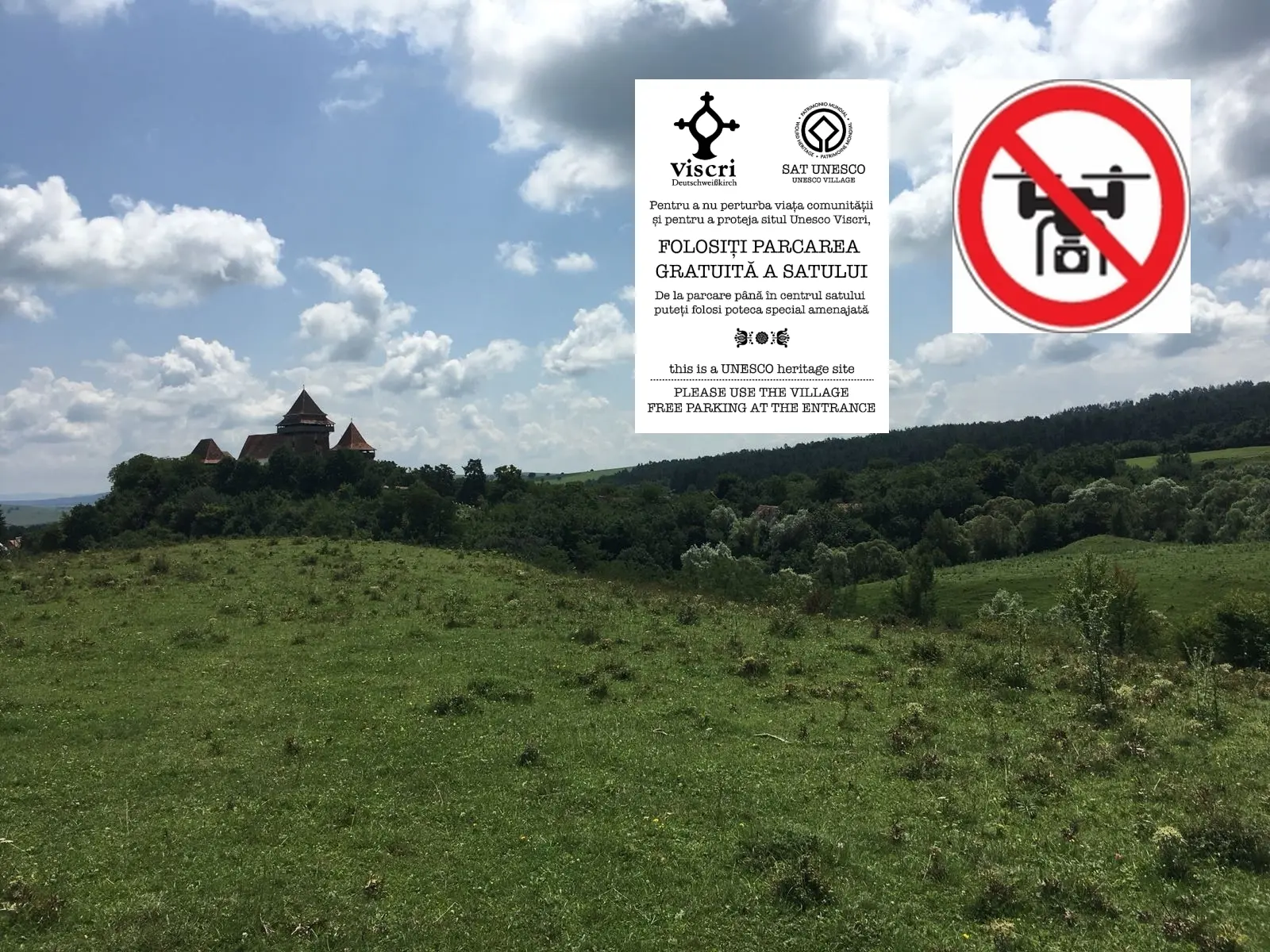
Across the gentle hills of central Transylvania, between Sibiu, Sighișoara and Brașov, more than a hundred and fifty villages hold something you will not find anywhere else in Europe: churches that are, in fact, fortresses. Thick walls, defensive towers, covered passages and double gates gather eight centuries of memory around the place of worship. These are the Saxon fortified churches, and several of them are inscribed on the UNESCO World Heritage list.
Who the Saxons were
The Saxons, or Transylvanian Saxons, were German-speaking settlers invited into Transylvania by the kings of Hungary from the 12th century onward. Their task was to populate and defend the southeastern frontier of the kingdom, and in return they received privileges guaranteeing autonomy, the right to elect their own priests and judges, and their own markets and crafts. From this mix of a tight-knit community and constant danger grew a remarkably disciplined rural civilization.
The threat was real. From the 15th and 16th centuries, Ottoman and Tatar raids swept the plateau periodically. The village had neither a castle nor a garrison, so the people fortified the only solid building at its heart: the church. They raised curtain walls, sometimes two or three rings of them, with towers, sentry walkways and sliding gates. In peacetime it was a house of prayer; at the first sign of danger, the whole village shut itself inside with its cattle and provisions.
The detail that most delights visitors: the bacon larders. In the towers, each family had a numbered niche where it kept its bacon and hams. The cold air and the draught through the tower did the work of a refrigerator, and the warden cut each family its share, so the food would last through an entire siege.
The UNESCO ensemble: seven villages
UNESCO inscribed the "Villages with Fortified Churches in Transylvania" as a World Heritage site. The ensemble brings together seven representative settlements: Biertan, Viscri, Prejmer, Câlnic, Dârjiu, Saschiz and Valea Viilor. Each illustrates a type of fortification and a stage in the history of the Saxon communities, but around them lie dozens of villages just as beautiful, only less known.
Biertan
Biertan is perhaps the most spectacular church-citadel in Transylvania. Set on a hill in the middle of the village, it is ringed by three lines of walls linked by towers, with a covered stairway threading up from the square to the gate. For nearly three centuries Biertan was the seat of the Saxon Evangelical bishopric, which explains the grandeur of the place.
Its treasure is the sacristy door, a piece of 16th-century joinery whose mechanism throws more than a dozen bolts at once with a single key. It won awards in its day for ingenuity and remains one of the most photographed doors in Romania.
Viscri
If Biertan impresses through sheer force, Viscri wins you over through quiet. It is a village of humble beauty, with houses painted white and blue, lanes still crossed by carts and by the village herd at dusk. The whitewashed fortified church has watched over the hill for more than eight hundred years.
Viscri became famous thanks to King Charles III, who bought a house here and supported the conservation of the village and its traditional crafts. Buffalo cheese is still made here, along with lime slaked on the spot and handmade goods. It is the ideal place for anyone seeking slow, authentic travel, without artifice.
Prejmer
Near Brașov, Prejmer holds the largest and best-preserved fortified church in the region, counted among the strongest peasant fortifications in Eastern Europe. The curtain wall, thick and more than twelve metres high, conceals on its inner face hundreds of rooms stacked over several levels, connected by galleries and wooden stairs: these were the shelters of the village families during a siege.
The Gothic church at the centre holds a winged altarpiece centuries old. Prejmer makes you understand best the idea of a village turned entirely inward, complete, ready to hold out for weeks.
Saschiz, Câlnic and the others
Saschiz, on the road between Sighișoara and Brașov, is easy to recognize by its clock tower, which recalls the famous Clock Tower of Sighișoara, and by the ruins of the peasant citadel on the hill. Câlnic, near Sebeș, is a fortress that grew around a noble keep, the oldest type of fortification in the ensemble. Valea Viilor, close to Mediaș, hides a compact and elegant hall church with well-preserved gate towers. Dârjiu, the only one of the seven inhabited by Hungarian Székelys rather than Saxons, preserves precious medieval frescoes and the tradition, alive to this day, of storing the community's provisions in the citadel towers.
How to visit
They are best explored by car, on a loop starting from Sighișoara, Brașov or Sibiu. The distances are short, but the back roads ask for patience, so do not cram more than three or four villages into a day.
- The villages are quiet, with little tourist infrastructure; the charm lies precisely in that authenticity.
- The church key is sometimes held by a warden or caretaker in the village. At Viscri and Biertan there are regular opening hours, but in the smaller villages you look for the person with the key, often a neighbour of the church.
- Stay at least one night in a restored Saxon house, to catch the village early in the morning and in the evening, once the day visitors have gone.
- The best season runs from late spring to early autumn, when the hills are green and the days are long. Autumn adds colour and stillness.
The fortified churches are not monuments to be ticked off in a hurry. They are invitations to a gentler pace: a walk down a lane, a slice of cheese from the locals, the climb up to the sentry walk and the view over the plateau that they guarded for eight centuries.
Plan your trip
Stays nearby
Stays in Romania
Experiences
Tours & activities
Guided tours, day trips and hand-picked experiences via GetYourGuide — free cancellation on most.
See all experiencesGetting to Romania
Flights, transfer & car
Fly into Romania
Compare fares to Bucharest Otopeni (OTP) and regional airports — Cluj, Sibiu, Iași, Timișoara.
Airport transfer
Private, fixed-price door-to-door transfer — driver waiting from the moment you land.
Rent a car — see the real Romania
A rental car is the key to Romania: the Transfăgărășan, the painted monasteries of Bucovina, mountain roads and the villages of Maramureș that no train reaches.
Find a car