On Dracula's Trail: the Complete Route Through Transylvania
There are two Draculas: the vampire count invented by Bram Stoker, and Vlad the Impaler, the real ruler of Wallachia. This trail follows both — from Bran Castle, marketed as "Dracula's Castle," to Vlad's genuine fortress at Poenari — and tells you honestly where the myth ends and the history begins.
The name Dracula pulls hundreds of thousands of travelers into Transylvania every year, yet almost none arrive knowing that there are, in fact, two different Draculas. One is pure fiction; the other was a very real ruler. The best way to meet them both is a trail that links myth to history honestly — without lying to you at a single stop.
The two Draculas: myth versus history
Count Dracula, the vampire of Bram Stoker's 1897 novel, is a literary invention. The Irish writer never set foot in Romania — he built the atmosphere from library books and maps.
Vlad the Impaler (Vlad III, c. 1431–1476) was a ruler of Wallachia, remembered for the brutality of his punishments and for his resistance to the Ottoman Empire. The nickname "Dracula" came from his father, Vlad Dracul, a member of the Order of the Dragon (dracul meaning both "dragon" and "devil"). Stoker borrowed the name — and little else. The coffins and fangs belong to the novelist alone.
Keep that distinction in mind at every stop, because the tourism industry blends the two relentlessly.
Bran: the star castle (and the truth behind it)
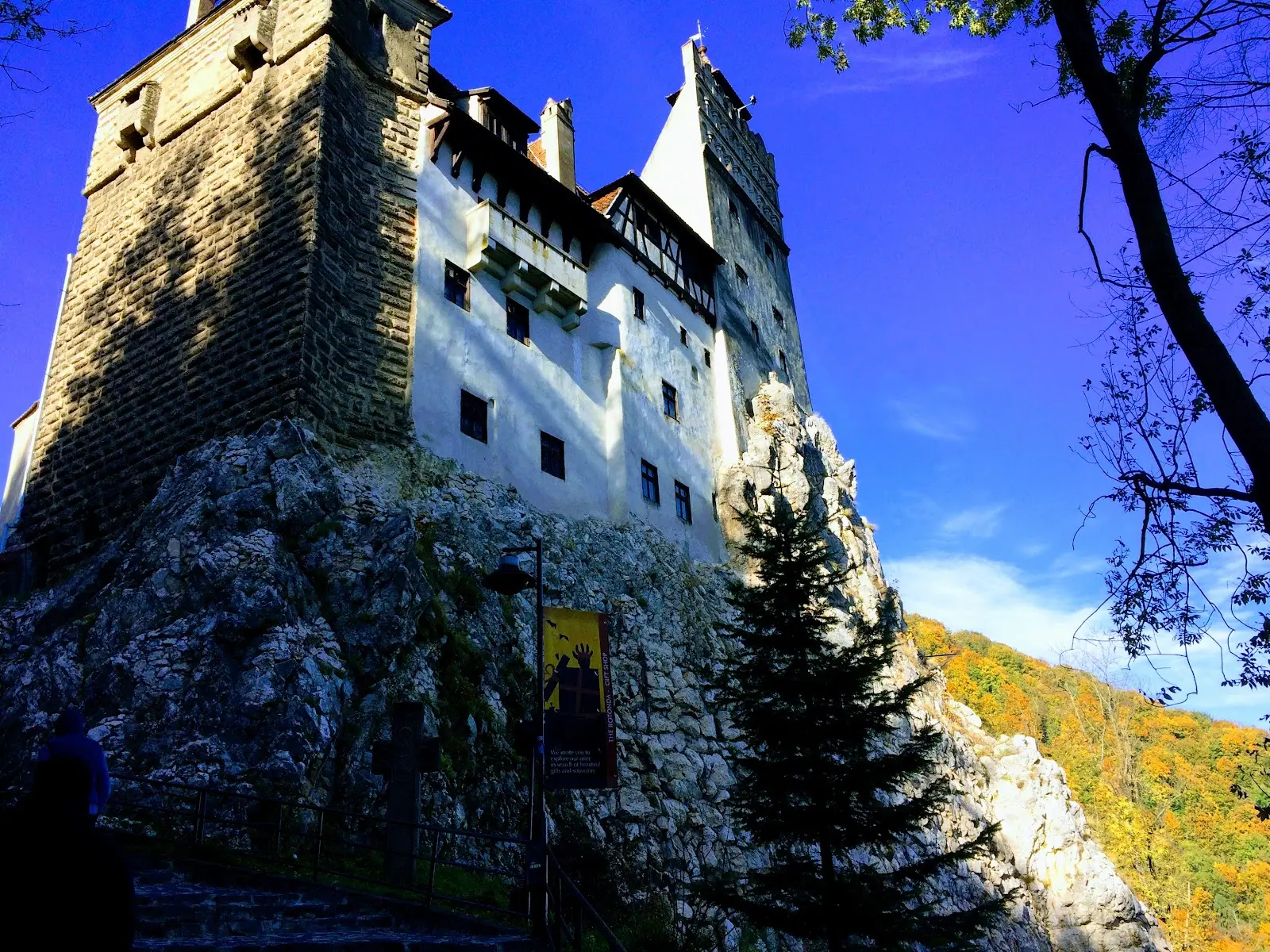
Bran Castle, perched on a crag at the edge of Brașov, is the image everyone pictures when they hear "Dracula's castle." It is genuinely spectacular — well kept, with towers and passageways exactly winding enough for memorable photos.
The historical truth, though, is thin: Vlad the Impaler's link to Bran is indirect at best. The stronghold served as a customs and border fortress, and its match to the castle Stoker described is largely a 20th-century marketing construction.
- What you get: a beautiful visit, a museum, sweeping views, and all the "Dracula" folklore staged with good humor.
- What to know: you come for the atmosphere and the castle itself, not for the real Vlad.
Arrive with the right expectations and Bran becomes one of the most enjoyable stops in Transylvania.
Sighișoara: where Vlad is said to have been born
The medieval citadel of Sighișoara — the only inhabited citadel in Europe with UNESCO World Heritage status — is where tradition says Vlad the Impaler was born, in his father's house. The house still stands in the citadel square, a few steps from the Clock Tower.
Cobbled lanes, guild towers, and painted roofs make Sighișoara the most authentic period setting on the whole trail — far closer to the 15th century than any film-ready castle. Even if the birthplace remains a tradition rather than documented fact, the atmosphere richly rewards the visit.
Poenari: Vlad's genuine fortress
If you want Vlad the Impaler's real stronghold, it is at Poenari, high above the Argeș valley on the road toward the Transfăgărășan. There is no marketing here: Vlad refortified the citadel using the labor of prisoners, and the ruins command the valley from their ridge.
Access is by a staircase of roughly 1,480 steps — a serious climb that keeps the tour buses away and leaves the ruins almost entirely to you.
- Who it's for: lovers of real history, with good legs and a taste for quiet.
- Note: check opening times in advance, as access can close temporarily for works or wildlife.
For many travelers, Poenari is the moment "Dracula" stops being a character and finally becomes a man.
Curtea de Argeș and Târgoviște: the heart of Wallachia
Dracula ruled Wallachia, not Transylvania — and the centers of that rule lie south of the Carpathians. At Târgoviște, the Princely Court and the Chindia Tower preserve traces of the royal residence from which Vlad ran his campaigns. Curtea de Argeș adds the dynastic layer, with its royal necropolis.
These stops have no fangs and no bats, but they supply the real context without which the myth stays nothing more than a bedtime story.
Brașov and the Bârgău (Borgo) Pass: the novel's setting
For fans of the book, Brașov is the perfect gateway — a superb Saxon city with the Black Church and the Council Square, an hour from Bran. Further north, toward Bistrița, lies the Bârgău (Borgo) Pass, the very road along which Stoker sent his character Jonathan Harker toward the castle.
There, at Tihuța, stands the Hotel Castel Dracula — a modern building deliberately raised in the footsteps of the novel. It is pure literary set dressing, which is exactly why it delights travelers who come for the mood of the book rather than for history.
How to do the trail
The simplest approach is a self-drive tour shaped as a loop through Transylvania and northern Wallachia.
- Classic loop: Brașov → Bran → Poenari (via Argeș) → Curtea de Argeș / Târgoviște → back.
- Northern option: add Sighișoara and, if time allows, the Bârgău Pass toward Bistrița.
- Combined: it pairs seamlessly with the classic route of Transylvania's castles and citadels.
Many operators also run guided day tours from Brașov or Bucharest, but your own car gives you the freedom to climb Poenari at your own pace.
When to go
Late spring and early autumn are ideal: good weather, greenery, and fewer crowds than the peak of summer. For travelers who want the full theater, Halloween night brings themed events to Bran — spectacular, but busy.
The honest verdict
The Dracula trail is one of the most enjoyable journeys you can make in Romania — provided you know what you are buying. Bran gives you the atmosphere, Sighișoara gives you the era, and Poenari gives you the truth. Remember that the vampire is fiction and the man behind it was complicated, and Transylvania will hand you exactly what you came for: a great myth and an even better history.
Plan your trip
Stays nearby
Stays in Romania
Experiences
Tours & activities
Guided tours, day trips and hand-picked experiences via GetYourGuide — free cancellation on most.
See all experiencesGetting to Romania
Flights, transfer & car
Fly into Romania
Compare fares to Bucharest Otopeni (OTP) and regional airports — Cluj, Sibiu, Iași, Timișoara.
Airport transfer
Private, fixed-price door-to-door transfer — driver waiting from the moment you land.
Rent a car — see the real Romania
A rental car is the key to Romania: the Transfăgărășan, the painted monasteries of Bucovina, mountain roads and the villages of Maramureș that no train reaches.
Find a car