Painted Churches of Moldavia (Bukovina)
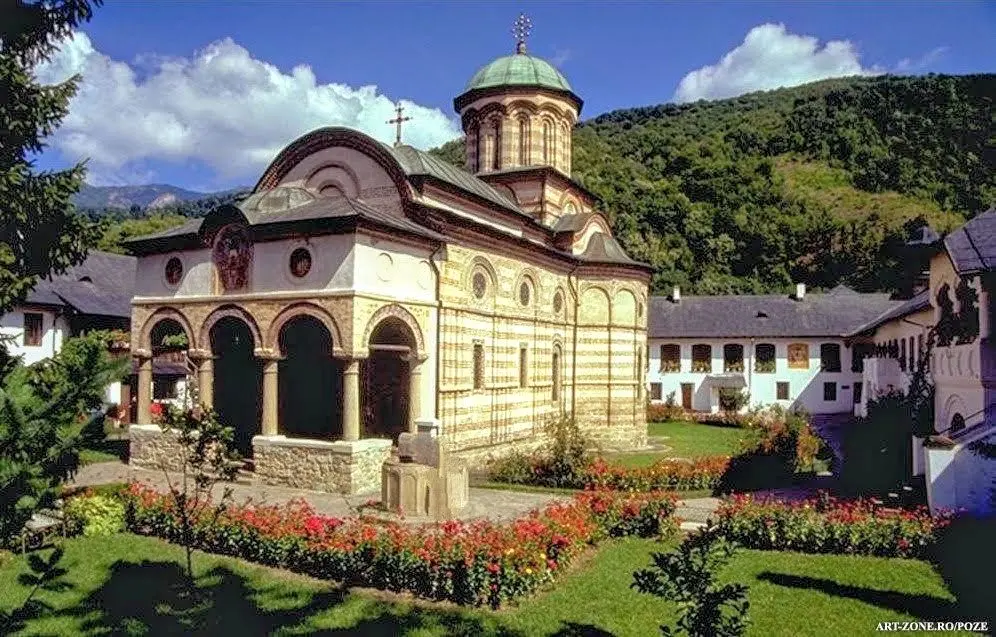
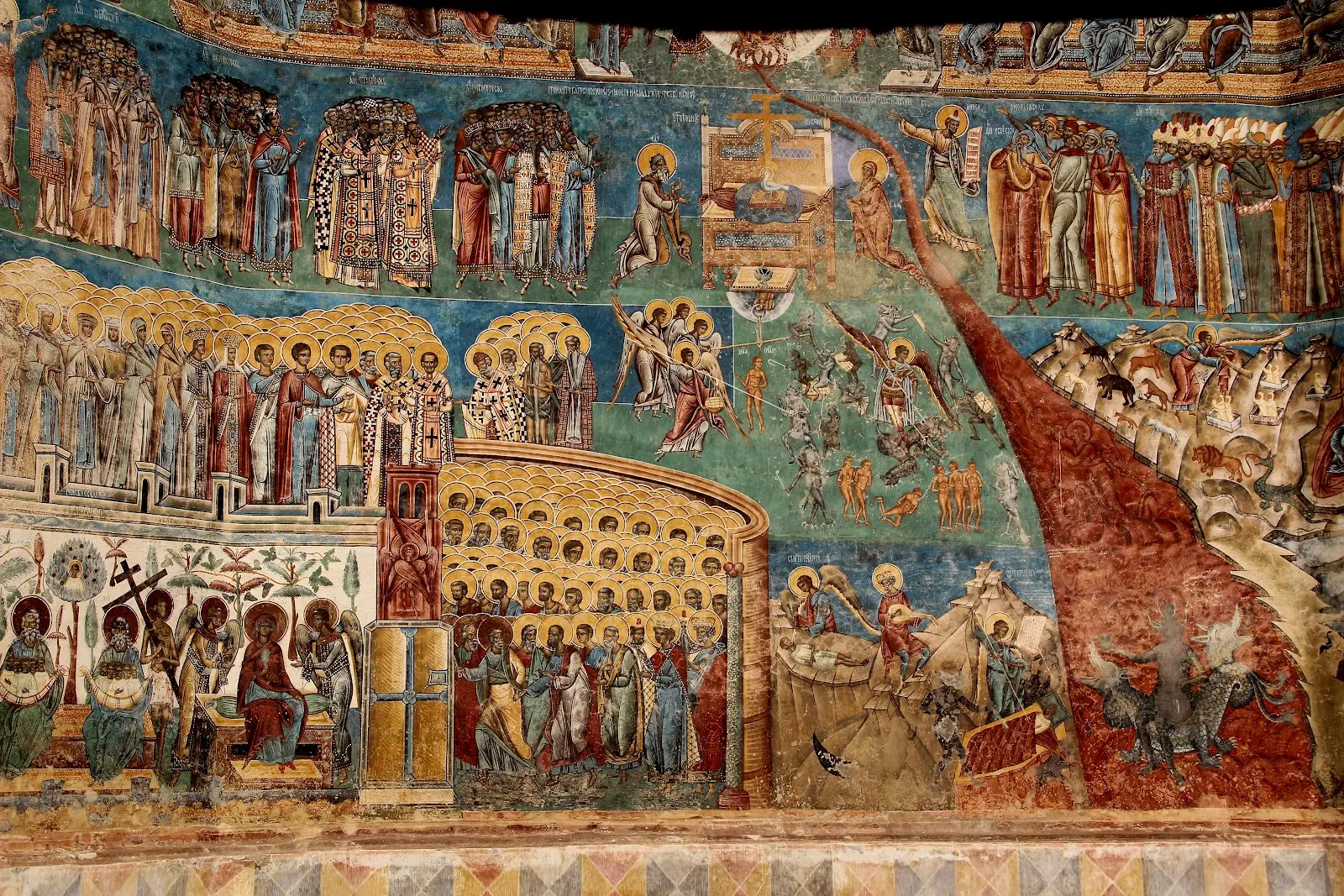
Eight churches with 15th–16th-century exterior frescoes, unique in the world for the painting that covers the outer walls — Voroneț, Sucevița, Moldovița, Humor, Arbore and the rest. The 'Voroneț blue' remains an unreproduced pigment.
 Church
Biserica de lemn Voroneț
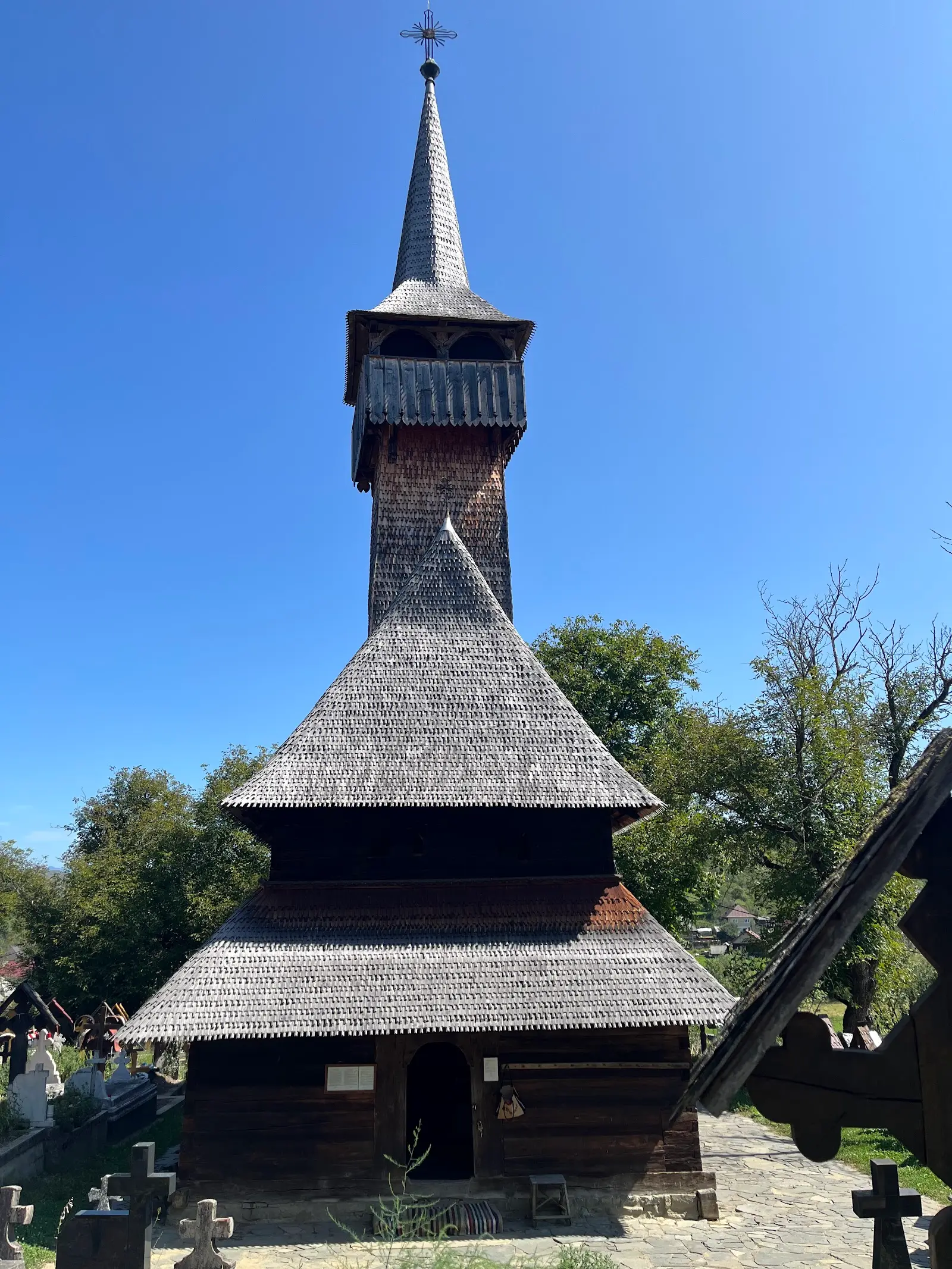
The wooden church of Voroneț, near Gura Humorului, is a small traditional shrine in Bucovina that shares its name with the famous nearby monastery but represents another facet of local spirituality: the village's wooden architecture. Built in the Bucovina carpentry tradition, with skilfully joined beams, a tall shingle roof and a slender spire, the church bears the mark of the faith of the community that raised it. Around it, the hilly landscape of Bucovina, with meadows, forests and farmsteads, completes the atmosphere of reflection. A visit connects naturally with the great Voroneț Monastery, famous for the "Voroneț blue" and its exterior frescoes inscribed on the UNESCO heritage list, just steps away. It is a quiet, authentic stop, away from the crowds. Modest dress and respect for the place of worship are advised; check the local visiting schedule.
 Monastery
Mănăstirea Sucevița
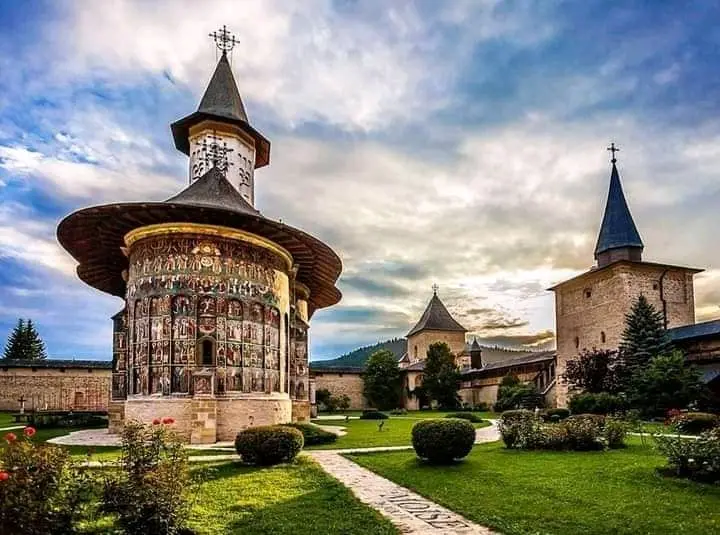
Sucevița Monastery is the most imposing of Bukovina's painted monasteries and the last built in this style, at the end of the 16th century, by the Movilă family. Unlike its sisters, it is surrounded by massive fortress walls with corner towers, giving it the look of a citadel rather than a place of prayer. The exterior frescoes, dominated by an intense green rarely seen elsewhere, cover almost the entire walls and include the famous ‘Ladder of Virtues', a vast and dramatic composition. The northern wall is said to have been left unpainted because the artist fell from the scaffolding — a legend that adds to the site's charm. A UNESCO World Heritage site, Sucevița is an essential stop on the monastery trail, set in a landscape of hills and quiet villages. Respect the dress code and the calm of the place, and check visiting hours, especially during services.
 Monastery
Mănăstirea Moldovița
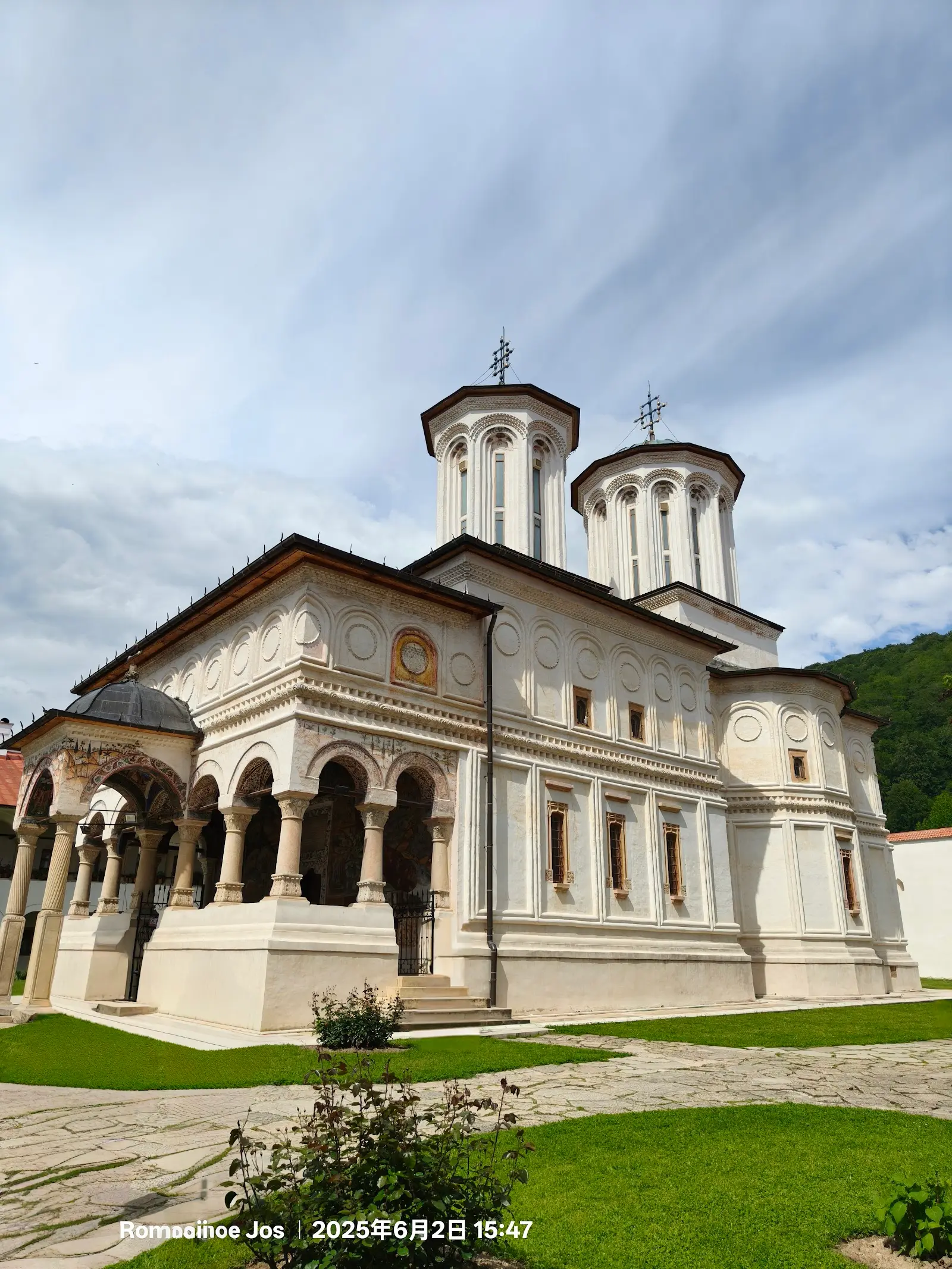
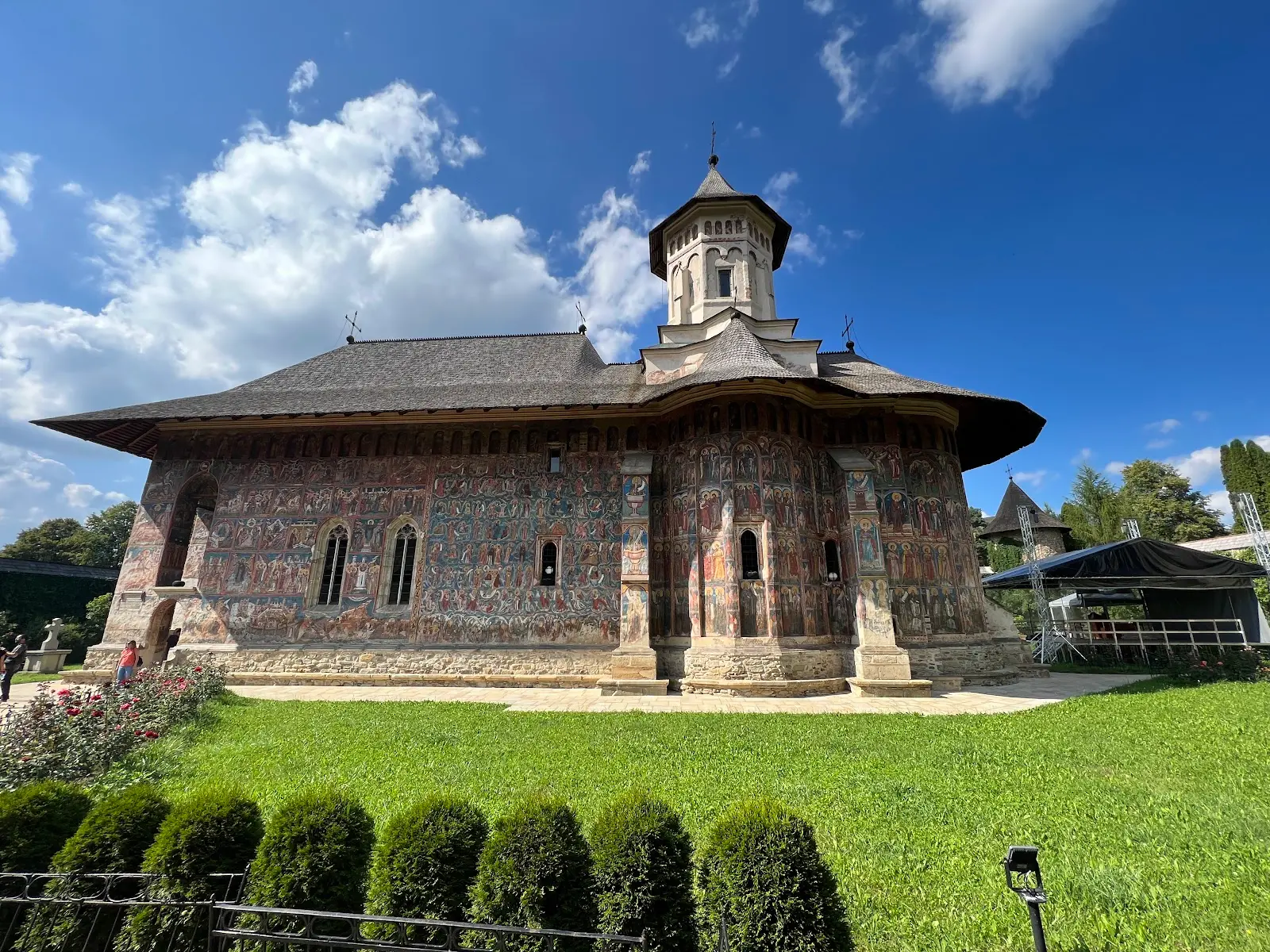
Moldovița Monastery is one of the most beautiful painted monasteries of Bukovina, founded in 1532 by prince Petru Rareș, son of Stephen the Great. The stone churches, surrounded by walls and defensive towers, keep on their outer façades 16th-century frescoes of remarkable vividness, dominated by a warm golden yellow. The most famous scene is the Siege of Constantinople, a vast, dynamic composition, alongside the Tree of Jesse and the Akathist Hymn. Within the precinct a small museum preserves heritage objects, including valuable documents and embroideries. Set in a quiet valley, among hills and villages where tradition is still alive, Moldovița belongs to the group of monasteries inscribed on the UNESCO list. It is an essential stop on the painted-monastery trail, alongside Voroneț, Sucevița and Humor. Respect the dress code and the calm of the place, and check visiting hours, especially during services.
 Monastery
Mănăstirea Humor
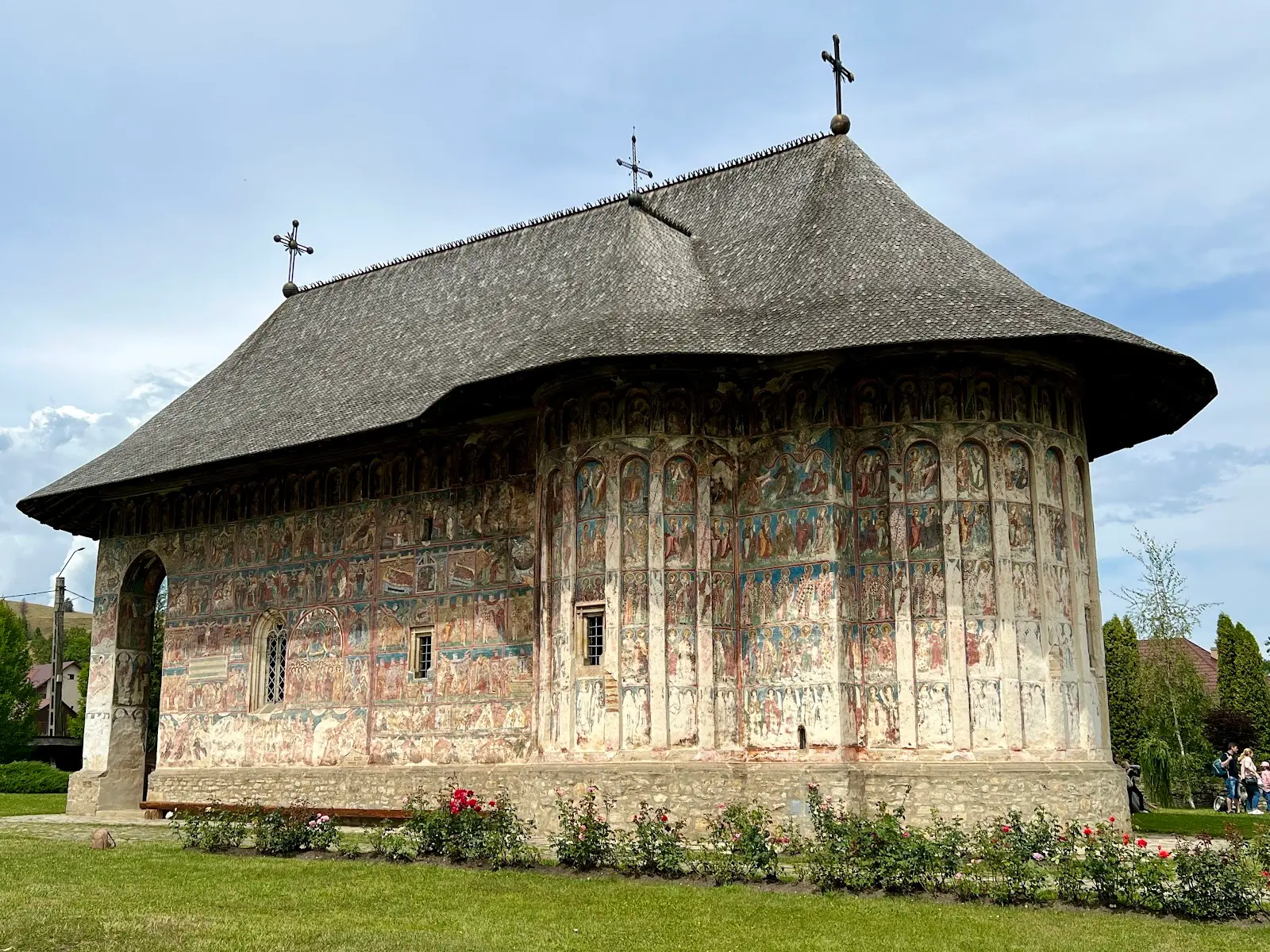
Humor Monastery is one of the oldest and most treasured painted monasteries of Bukovina, built in 1530 during the reign of Petru Rareș. The small, harmonious church, without a tower, keeps on its outer façades 16th-century frescoes dominated by a warm brick-red, with famous scenes such as the Akathist Hymn, the Siege of Constantinople and the Last Judgement. Beside the church rises a defensive tower offering a fine view over the complex and the surrounding village. Though more modest in size than its sisters, Humor impresses through its balance, the freshness of its colours and its intimate atmosphere. It belongs to the group of Moldavian monasteries inscribed on the UNESCO list and is a natural stop on the painted-monastery trail, close to Gura Humorului. Respect the dress code and the calm of the place, and check visiting hours, especially during services and off-season.