
Complete guide to Băile Tușnad
Romania's smallest town, a Harghita spa resort set in the Olt gorge: carbonated waters, mofettes, Saint Ana Lake an hour away, and the common-sense rules for bear country.
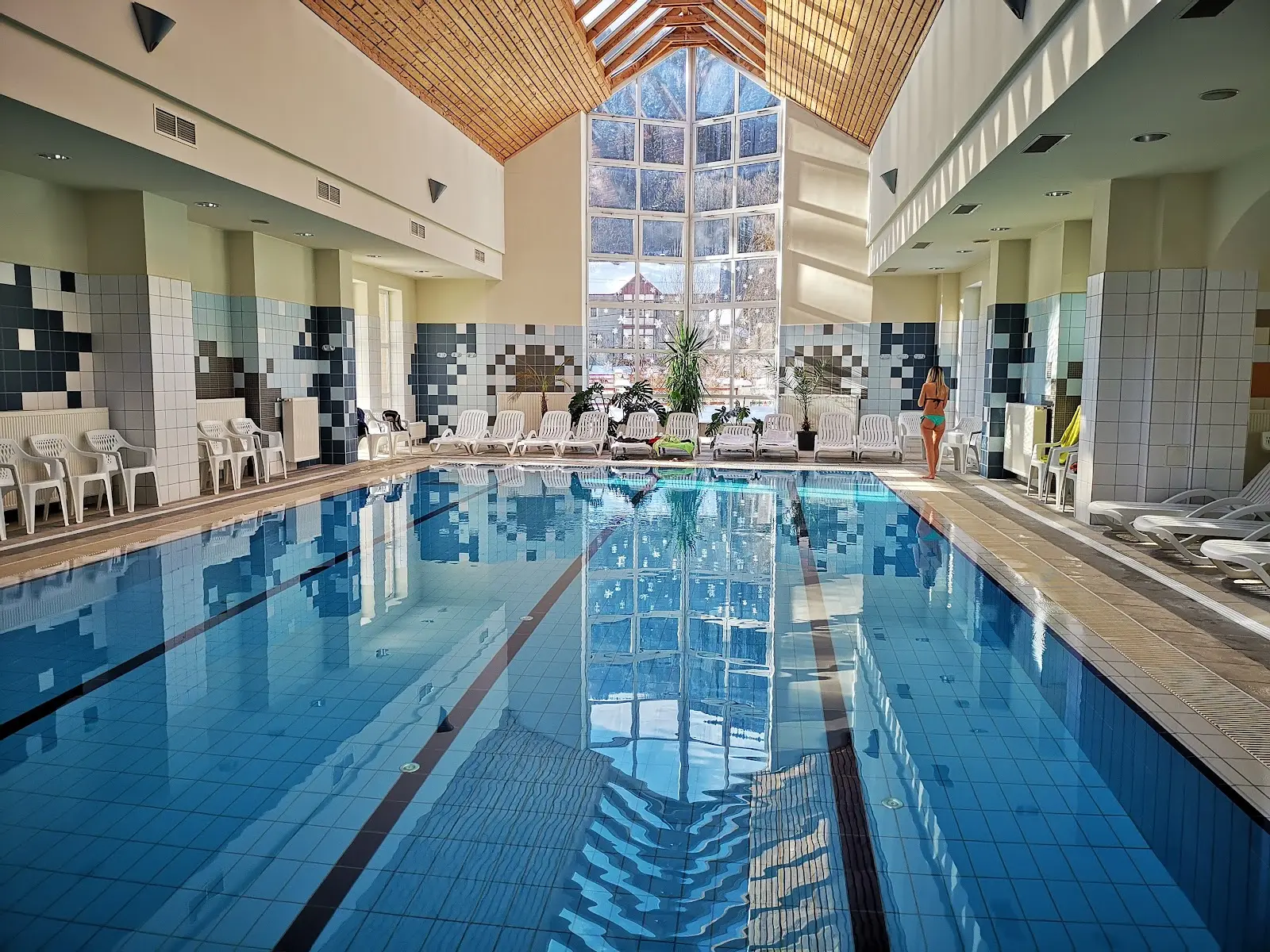
Băile Tușnad is Romania's smallest town and probably its easiest to cover on foot: a few streets squeezed into the Olt gorge, with beech forest climbing steeply on both sides. It is an old spa town with carbonated mineral springs and mofettes, and around it lie some of the most interesting volcanic sites in the country. Here, too, the forest comes right up to the houses — bears included.
What Băile Tușnad actually is
Băile Tușnad is a town in Harghita county, set in the Olt gorge between the Harghita and Bodoc mountains. With its very small population, it is Romania's smallest town — something you notice immediately: you can walk its full length in a few minutes.
Its purpose was and remains balneal. Carbonated mineral waters, forest air and mofettes — natural carbon dioxide emanations used in treating circulatory conditions — built the resort's reputation back in the Austro-Hungarian period. Treatment hotels, the park, the promenade and the developed springs form the core of the resort.
What it is not: a monuments destination. You won't find a historic centre, large museums or city life here. You come for treatment, for quiet, and for what lies around it.
The waters, the mofettes and the resort's rhythm
Treatment is the main reason people stay more than one night. The resort's classic profile covers cardiovascular and nervous-system conditions, with treatment bases in the hotels and mofettes arranged for short sessions.
Even if you aren't following a treatment, the pace of the place is an argument in itself. An ordinary day in Băile Tușnad looks roughly like this:
- morning at a treatment base or a spring;
- a walk along the promenade and through the resort park;
- a climb on one of the short trails on the surrounding slopes, for a view over the gorge;
- a very quiet evening — that is part of the offer, not a flaw.
If you want to compare it with other Romanian resorts, we line them up in our guide to Romania's spa and balneal resorts.
Saint Ana Lake and the volcanic area
The strongest reason to come without needing treatment is Saint Ana Lake (Lacul Sfânta Ana), nearby and high in the Ciomatu massif. It is the only volcanic lake in Romania, held in a neatly rounded crater and ringed by forest. Beside it stretches Mohoș peat bog, a protected wetland with rare vegetation, accessible only on a marked trail and with a guide.
You drive as far as the access area and continue on foot; in season the area is busy and car access may be regulated. Check the arrangements on the spot before heading up.
For longer hikes in the Harghita and Bodoc ranges, our mountain network carries the detailed trail guides at munte.online.
Bears: what you need to know, without the drama
The Băile Tușnad area has a significant brown bear population, and the forest begins immediately beside the houses. Bears sometimes come into town, mostly in the evening and at night, drawn by food scraps and accessible rubbish. That doesn't make the resort dangerous, but it does ask for common sense:
- Don't feed bears and don't approach them, not even for a photo. Feeding is what creates the problem.
- Don't leave food, rubbish or bags of supplies visible in the car, on terraces or on balconies.
- In the evening, stick to lit streets and avoid the forest edge and unlit paths.
- If you see a bear, don't run, and never get between a female and her cubs. Back away calmly, without sudden movements, towards a building or a car.
- Follow local signs and warnings — including the rules at the car parks and access points for Saint Ana.
With those rules respected, the visit is a calm one — locals have lived this way for generations.
Getting there and what to combine it with
Băile Tușnad sits on the road and rail corridor that follows the Olt, with a station in town — one of the few Romanian resorts you can genuinely reach comfortably by train.
For a stay of a few days, it pairs naturally with:
- Miercurea Ciuc to the north, for the Mikó fortress and the urban life of the Ciuc basin;
- Sfântu Gheorghe to the south, for its museum and architecture;
- the surrounding villages, for fortified churches and Székely cooking.
When to go
The resort is open all year and, for treatment, the season matters less. For everything else, the differences are clear:
- Summer is the best time for Saint Ana Lake and the surrounding trails, and also the busiest. Bears are active, so the rules above matter most now.
- Autumn is probably the loveliest moment: the beech forest in the gorge turns colour and the resort empties out.
- Winter is very quiet, good for treatment and short walks, with access roads generally fine.
- Spring is changeable, with late snow higher up around the crater.
Who it suits, and who it doesn't
It suits you if you want spa treatment, clean air, short walks and very quiet evenings, with Saint Ana Lake an hour away. It doesn't suit you if you want city life, museums or a historic centre to explore. The town's smallness is its main quality here — but you have to want it.
Plan your trip
Stays nearby
Stays in Romania
Experiences
Tours & activities
Guided tours, day trips and hand-picked experiences via GetYourGuide — free cancellation on most.
See all experiencesGetting to Romania
Flights, transfer & car
Fly into Romania
Compare fares to Bucharest Otopeni (OTP) and regional airports — Cluj, Sibiu, Iași, Timișoara.
Airport transfer
Private, fixed-price door-to-door transfer — driver waiting from the moment you land.
Rent a car — see the real Romania
A rental car is the key to Romania: the Transfăgărășan, the painted monasteries of Bucovina, mountain roads and the villages of Maramureș that no train reaches.
Find a car











