
Complete guide to Miercurea Ciuc
The seat of Harghita county, in the heart of the Székely Land: Cetatea Mikó and the Székely Museum of Ciuc, the Șumuleu Ciuc pilgrimage, the road to Romania's only volcanic lake, record-cold winters, Ciuc beer and ice hockey. Everything to know before you go.
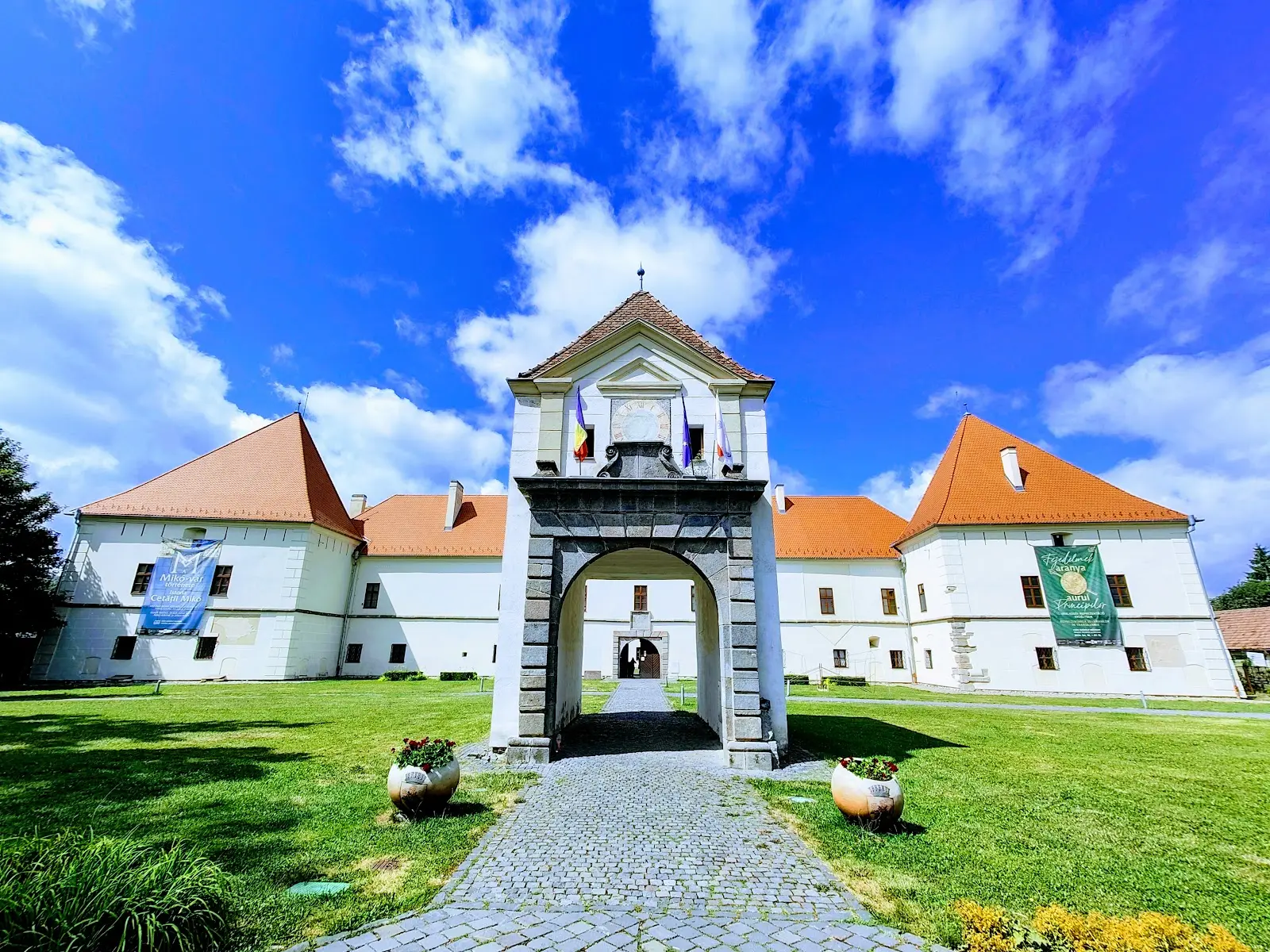
Miercurea Ciuc does not try to win you over at first glance. It is a town set in a basin ringed by mountains, with long winters and a rhythm of its own, where Hungarian is heard more often than Romanian. And its finest things sit a few kilometres from the centre: a Renaissance fortress, a pilgrimage monastery, and the road to the only volcanic lake in Romania.
Why Miercurea Ciuc is worth it
Miercurea Ciuc, or „Csíkszereda” as locals call it, is the county seat of Harghita and the main town of the Ciuc basin. Its population is mostly Hungarian, and the town is one of the centres of the Székely Land — something you notice in the architecture, the food, the calendar of feast days and the way people speak to each other in the street.
Geography explains the rest. The town sits in an intramontane basin, between the Harghita Mountains to the west and the Ciuc Mountains to the east, and cold air gathers here with nowhere to drain away. That is why Miercurea Ciuc is known across Romania for its very cold winters — a fact that belongs to the identity of the place, not just to the weather forecast.
For a visitor this translates into something simple: Miercurea Ciuc is not a museum-town to tick off in three hours, but a very good base for two or three days spent alternating between the town, the mountains and the Székely villages around it.
What to see in town
The fixed point of the town is Cetatea Mikó, a Renaissance fortification raised in the 17th century, with bastions at its corners and a surprisingly quiet inner courtyard. This is not a romantic medieval castle perched on a crag — it is a square, military building standing right in town, and that is exactly why it fits into any plan, however short.
Inside it works the Székely Museum of Ciuc, the best introduction you can get to the material culture of the region: crafts, painted furniture, textiles, old printed books, Székely ethnography. If you only have one hour in Miercurea Ciuc, spend it here.
The third stop downtown is the Roman Catholic church, which tells you in a few minutes just how deeply Catholic this corner of Transylvania is — an interesting contrast for anyone arriving from the Orthodox or Protestant parts of the country.
The rest of the centre is walked without a map. It has none of the grandeur of Sibiu or Cluj, but it does have small shops with Hungarian signs, neighbourhood patisseries and the feel of a provincial town living at its own pace rather than for tourists.
Șumuleu Ciuc, the place that defines the town
On a hill at the north-eastern edge stands Șumuleu Ciuc — a Franciscan monastery and the most important Hungarian Catholic pilgrimage site in Transylvania. The Pentecost pilgrimage draws an immense crowd here, arriving from all over Transylvania, from Hungary and from the Hungarian diaspora. It is one of the largest annual religious gatherings in Romania, and if your trip falls on those days the whole town changes: full trains, flags, singing, and accommodation booked out well in advance.
For the rest of the year Șumuleu is the exact opposite: quiet, an avenue of old trees, a Baroque church and a wide view across the basin. It is worth the climb even when nothing is being celebrated. Perhaps especially then.
The surroundings, briefly
South of town, above the spa resort of Băile Tușnad, lies Lacul Sfânta Ana — the only volcanic crater lake in Romania. It is round, enclosed by forest, and looks exactly like what it is: the floor of an extinct volcano filled with rainwater.
In the neighbouring crater sits the Mohoș peat bog, a protected peatland with carnivorous plants and sphagnum moss, visited only along the boardwalk trail. And west of town rises Harghita-Mădăraș Peak, the most approachable high-mountain objective in the area.
All of these, plus the villages and Székely bathing spots around them, are covered in the separate guide: what to see in Miercurea Ciuc and Harghita.
When to go
- Summer — the best season for hiking, for the lake and for the surrounding villages. It is also when the Pentecost pilgrimage falls, so check accommodation early.
- Autumn — the beech forests around the lake turn spectacular and the crowds thin out.
- Winter — deep snow, serious cold and ice hockey season in full swing. The most authentic version of the town, and the one that demands proper clothing.
- Spring — the most unpredictable; mountain roads clear late.
Food, beer and local habits
The cooking here is Székely rather than generically Romanian: sour soups, cabbage with meat, smoked meats, mountain cheeses, sweet pies and cakes baked over embers, such as „kürtőskalács”, the Székely chimney cake. Fruit pálinka tends to appear at the end of a meal almost automatically.
The town also has an industrial tradition the whole country knows: Ciuc beer was born here, and the town's name has been on the label for generations. The second local pride is ice hockey — Miercurea Ciuc is without question the capital of the sport in Romania, and an evening at a match is a cultural experience as much as a sporting one.
Language and good manners
In town and in the villages around it you will mostly hear Hungarian. Romanian is understood and spoken, English turns up in hotels, guesthouses and tourist spots. A „jó napot” offered with a smile opens doors. Steer clear of political arguments about identity and treat the region the way you would treat any place with a complicated history: with curiosity rather than ready-made opinions.
A weekend, step by step
- Day 1 — the town centre: the fortress, the museum, the Roman Catholic church, then a late-afternoon climb to Șumuleu Ciuc.
- Day 2 — Lacul Sfânta Ana and the Mohoș bog, with a stop in Băile Tușnad for mineral water and a coffee.
- Day 3 — the mountains: Harghita-Mădăraș, or a Székely bath in a nearby village.
Getting there and getting around
The town lies on the road and rail axis that climbs from Brașov along the Olt valley towards Gheorgheni and Toplița, so it is easy to reach by train from Brașov and by car from anywhere in Transylvania. The useful airports are Târgu Mureș, Brașov, Sibiu and Bacău.
A car is all but essential if you want the surroundings. The lake, the bog, the peaks and the Székely baths do not connect well by public transport, and the most beautiful roads in Harghita are precisely the ones with no bus on them.
In winter, fit good winter tyres and treat mountain roads with respect. In summer, carry water, a rain shell and shoes with real grip even for short walks.
Where to sleep
The centre is the most practical, Șumuleu the quietest, and the guesthouses on the roads towards the mountains the most beautiful. All the options, area by area, are in the dedicated guide: where to stay in Miercurea Ciuc and Harghita.
Plan your trip
Stays nearby
Stays in Romania
Experiences
Tours & activities
Guided tours, day trips and hand-picked experiences via GetYourGuide — free cancellation on most.
See all experiencesGetting to Romania
Flights, transfer & car
Fly into Romania
Compare fares to Bucharest Otopeni (OTP) and regional airports — Cluj, Sibiu, Iași, Timișoara.
Airport transfer
Private, fixed-price door-to-door transfer — driver waiting from the moment you land.
Rent a car — see the real Romania
A rental car is the key to Romania: the Transfăgărășan, the painted monasteries of Bucovina, mountain roads and the villages of Maramureș that no train reaches.
Find a car











