
Complete guide to Slobozia
The seat of Ialomița county, in the middle of the Bărăgan plain. A 17th-century monastery, an agriculture museum and Lake Amara with its sapropelic mud — an honest guide to a stop, not a destination.
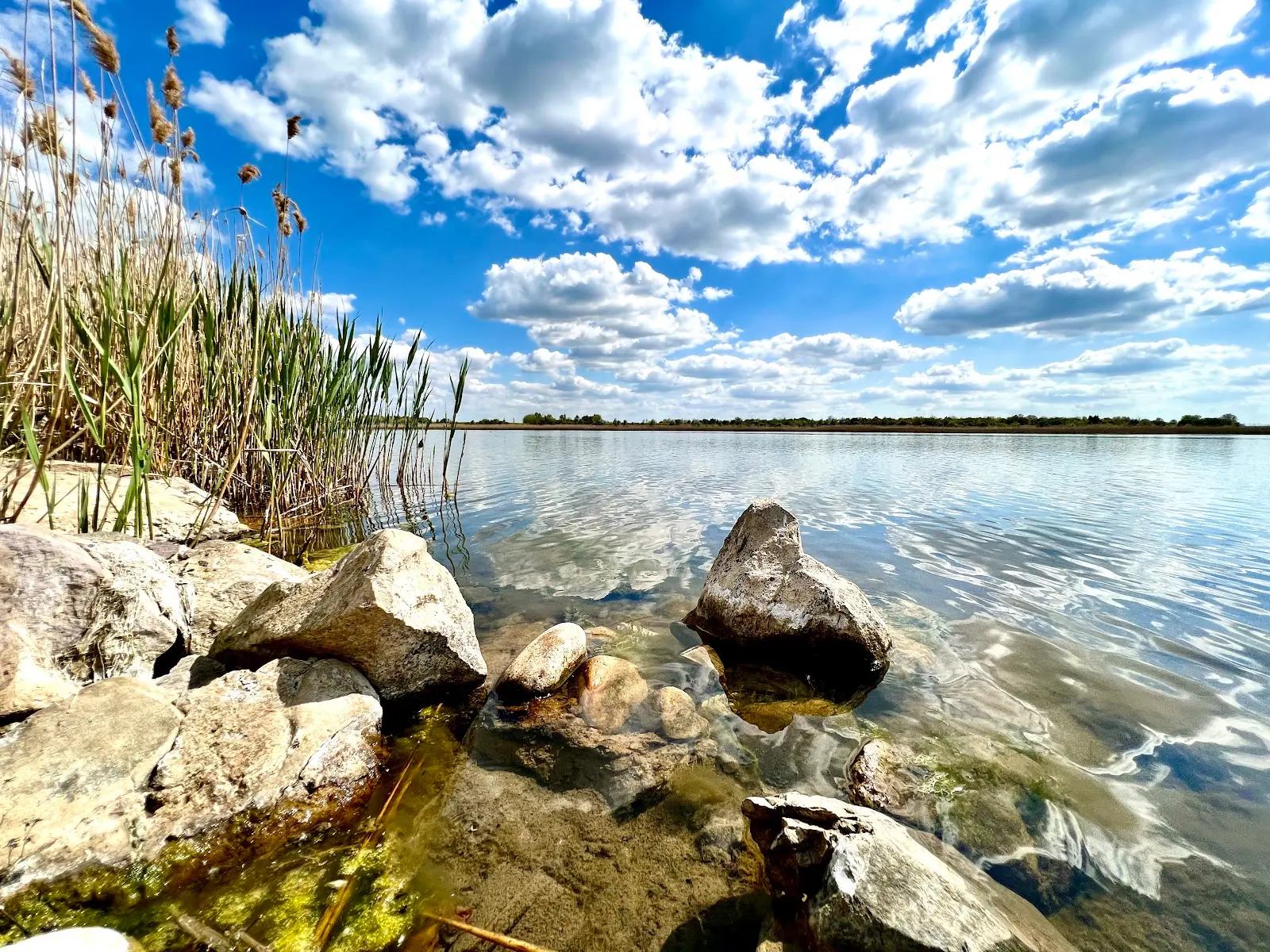
Slobozia is the county seat of Ialomița, in the middle of the Bărăgan — Romania's grain plain, flat all the way to the horizon. It is not a tourist destination and does not pretend to be. What it does have is a genuinely worthwhile 17th-century monastery and, a few kilometres away, a spa resort whose mud has been used for generations.
What the Bărăgan is
To understand Slobozia, you have to understand the plain it sits in. The Bărăgan is a nearly perfectly flat expanse of deep black soil that produces a significant share of Romania's wheat and maize. The landscape is austere: crops to the skyline, acacia windbreaks, villages strung along the road, very hot summers and winters with a cutting wind. It has its own beauty, but it is a beauty you have to want to see.
Slobozia is the town that administers this plain: a county centre with wide boulevards, apartment blocks and an economy built on farming and food processing. We will say it plainly, so you can plan your time well: it is a stop, not a destination in its own right.
Sfinții Voievozi Monastery
The town's principal monument, and the one serious cultural reason to turn off the main road here.
Sfinții Voievozi Monastery is a 17th-century ensemble around which the settlement itself actually grew. The church, the precinct wall and the outbuildings form a complex that stands in sharp contrast to the rest of the town, which is modern and functional. For anyone traveling between Bucharest and the coast or the Danube Delta, it is the best half-hour available in Slobozia.
The second site in town worth mentioning is the National Museum of Agriculture, devoted to exactly the world outside — tools, farm machinery, crafts and peasant life on the plain. If you are curious about how a region like the Bărăgan actually works, the museum supplies the context the landscape does not explain on its own.
Lake Amara
A few kilometres from town lies Lake Amara, a salt lake around which a spa resort developed.
The therapeutic resource here is sapropelic mud — a rich organic sediment formed on the lake bed, used in treatments for rheumatic and musculoskeletal conditions. Together with the lake's salt water, it is the reason Amara has appeared on the list of Romanian spa resorts for decades.
Do not expect a luxury resort. Amara is a treatment resort, with facilities largely built in the communist period, some renovated and some not. Its real clientele are people who come for two- or three-week courses of treatment, not weekend tourists. If that segment interests you, we put it in context in our guide to Romania's spa and balneary resorts.
For a short stop, the lake itself is pleasant: a walk along the shore, a terrace, plain air. Half a day, no more.
The harsh history of the Bărăgan
This plain is not only farmland. In 1951, the communist regime deported thousands of families from the Banat and the Yugoslav border zone into the Bărăgan, leaving them in open fields where they had to build shelters out of earth and reeds. A few of those villages still exist, and the memory of the episode is part of the region's identity.
It is not an attraction with a ticket and interpretive panels, but a layer of context. Still, it helps you read the place: in recent history, the Bărăgan was a space of exile as well as a granary. Driving through the plain villages around Slobozia with that in mind gives the journey a different weight.
What else is in the county
Ialomița has no major monuments beyond the monastery in Slobozia, but it has plenty of water. The lakes in the north of the county are good for fishing and for quiet, with pontoons and small guesthouses along the banks. To the south, the county reaches the Danube, and the floodplain roads there are among the quietest in southern Romania — good for anyone driving slowly who wants real villages rather than arranged stops.
Getting there and getting around
- By car — the only comfortable option. Slobozia is on the national road linking Bucharest with the Danube and the routes to the coast, about two hours from the capital. See also the Bucharest guide for the starting point.
- By train — the town has a station, useful if you are not driving, but the connections are slow.
- In town — everything is done on foot or with a few minutes' drive. Amara is a short distance from the centre.
Practical notes
- How long to stay — two or three hours for the town and the monastery; half a day if you include Amara and the museum. An overnight stay only makes sense if you are coming for treatment.
- When to come — spring and autumn. In summer the Bărăgan is very hot and offers no shade; in winter the wind is harsh.
- Where to eat — in central Slobozia or in the resort. Local cooking, simple and well made.
- Who it suits — anyone passing through toward the coast, the Danube or the Delta who wants a stop with some meaning; anyone interested in spa treatment; and anyone who wants to see the Romanian plain as it is, rather than in brochures.
Slobozia is not a place you make a special trip for. But it is exactly the kind of stop that turns a long drive across the plain into a day with something to recount: a monastery four centuries old, a museum that explains the land around it, and a lake of black mud used for generations.
Plan your trip
Stays nearby
Stays in Romania
Experiences
Tours & activities
Guided tours, day trips and hand-picked experiences via GetYourGuide — free cancellation on most.
See all experiencesGetting to Romania
Flights, transfer & car
Fly into Romania
Compare fares to Bucharest Otopeni (OTP) and regional airports — Cluj, Sibiu, Iași, Timișoara.
Airport transfer
Private, fixed-price door-to-door transfer — driver waiting from the moment you land.
Rent a car — see the real Romania
A rental car is the key to Romania: the Transfăgărășan, the painted monasteries of Bucovina, mountain roads and the villages of Maramureș that no train reaches.
Find a car











