
Complete guide to Slatina
Slatina is the capital of Olt county, an industrial town on the Olt river with a modest tourist profile. Ionașcu Cathedral and the story of the merchant who left his fortune for schools earn the stop, on the road to Craiova or the Vâlcea monasteries.
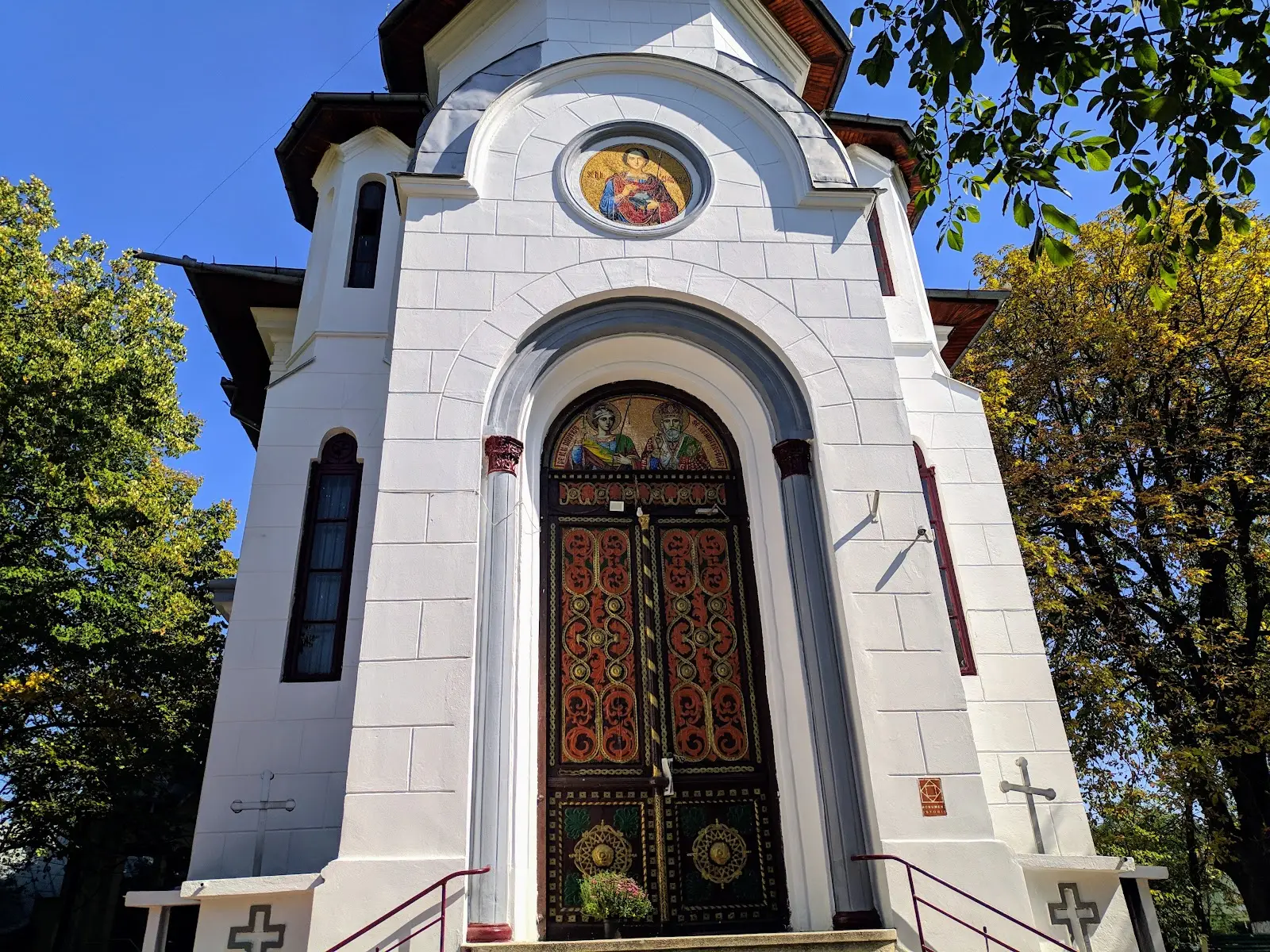
Nobody writes guidebooks about Slatina, and that tells you something. It is an Oltenian county seat, industrial, with a modest tourist profile and no pretensions. But it sits exactly on the road between the southern plain and the sub-Carpathian hills, and an hour's stop here makes more sense than another petrol station.
Where you actually are
Slatina is the capital of Olt county, on the Olt river, in Oltenia. Its position is the point: the town stands where the Olt valley leaves the hills for the plain, on the axis linking southern Romania to the monasteries and spa towns of Vâlcea.
The town's economy is industrial — Slatina is known in Romania above all for its aluminium industry, one of the country's largest. That shaped the place in the second half of the 20th century: housing estates, industrial platforms, a population drawn in from the surrounding villages.
The consequence for a visitor is simple and worth stating plainly: Slatina has no picture-postcard historic centre and does not pretend otherwise. It has a few good things, clearly bounded, and it takes a few hours.
Ionașcu Cathedral and the story behind it
The town's most interesting sight is interesting less for its architecture than for its story. Ionașcu Cathedral is a 19th-century foundation tied to the name of the merchant Ionașcu, a local businessman who did something rare for his time: he left his fortune for schools and churches.
That makes the building more than a handsome church. It is a monument to local philanthropy, from the period when Romanian provincial towns were built with merchants' money rather than the state's. Ionașcu's name survives in Slatina attached both to the cathedral and to local education — the kind of legacy that is easier to see in small towns than in capitals.
What to expect from the visit:
- A 19th-century cathedral, the anchor of the centre, not a medieval foundation with ancient frescoes.
- Context rather than spectacle — the interest is historical and local, and a short visit is enough.
- Variable opening hours — as with most churches in small towns, aim for the morning or mid-afternoon rather than lunchtime.
Tineretului Park
For whatever time is left, Tineretului Park is where Slatina looks its best. It is the town's main green space, used daily by locals, good for a walk, a break with children, or simply stretching your legs after an hour behind the wheel.
It is not a tourist attraction and should not be sold as one. But it is exactly what a road stop needs, and the fact that it is used by residents rather than visitors makes it more pleasant than it sounds.
Slatina as a stop, not a destination
This is the town's real role in any route through southern Romania.
- Towards Craiova — Slatina is on the natural road to the Oltenian capital, less than an hour away. If that is where you are heading, the complete guide to Craiova has what you need.
- Towards the Vâlcea monasteries — follow the Olt valley upstream and you reach the monasteries and spa towns below the mountains; the gateway is covered in the complete guide to Râmnicu Vâlcea.
- Towards the Danube and the south — the town works as the last civilised stop before the open plain.
If the choice is between stopping in Slatina and stopping at a lay-by on the expressway, Slatina wins: you get a cathedral with a good story, a park, cafés and fuel. If the choice is between a weekend in Slatina and a weekend in Vâlcea, there is no contest.
What is realistic in half a day
With four or five hours to spare, the order that works is simple: the cathedral first, while the light is good and the church open, then a slow walk through the centre, then the park and a meal.
For context, it is worth knowing that Slatina is a town of people who work rather than of visitors: the cafés fill up at break time, the markets are busy in the morning, and the centre empties quickly in the evening. If you like towns that tourism has not altered, that is part of the appeal. If you want urban buzz, head for Craiova.
Getting there, and when
Slatina is easy to reach by car from every direction and has a station on the line crossing Oltenia, but real mobility in the area needs a car — the roads to the surrounding monasteries and villages are poorly served by public transport.
Spring and autumn are the best seasons, as across southern Romania: lowland summers are very hot, and the town has neither relief nor forest to soften them.
An honest verdict
Slatina is not a tourist destination and does not need to be. It is a working town with a cathedral that earns the twenty minutes you give it and a decent park for stretching your legs.
Its value to a traveller is geographic: it is the hinge between the Oltenian plain and the Vâlcea hills. Stop, see what there is to see without forcing it, and carry on to the places you actually came to the region for.
Plan your trip
Stays nearby
Stays in Romania
Experiences
Tours & activities
Guided tours, day trips and hand-picked experiences via GetYourGuide — free cancellation on most.
See all experiencesGetting to Romania
Flights, transfer & car
Fly into Romania
Compare fares to Bucharest Otopeni (OTP) and regional airports — Cluj, Sibiu, Iași, Timișoara.
Airport transfer
Private, fixed-price door-to-door transfer — driver waiting from the moment you land.
Rent a car — see the real Romania
A rental car is the key to Romania: the Transfăgărășan, the painted monasteries of Bucovina, mountain roads and the villages of Maramureș that no train reaches.
Find a car











