
Complete guide to Satu Mare
Satu Mare is the border town of north-western Romania, on the Someș, a few kilometres from Hungary and Ukraine. A multi-ethnic town with a handsome central square and a neoclassical cathedral — best used as the gateway to Maramureș.
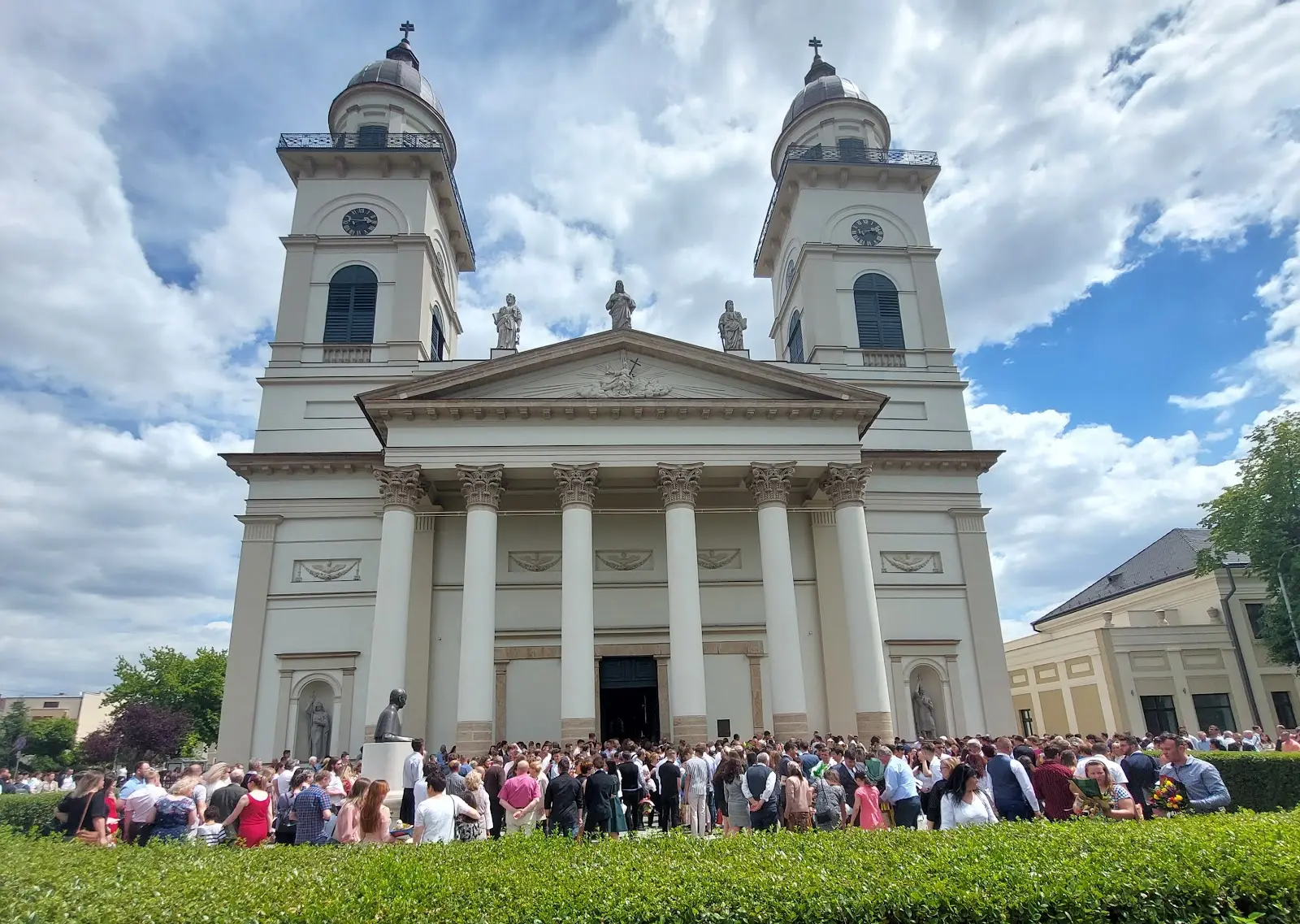
Satu Mare is the town you drive through rather than to — better to say so up front. It is the main road gateway from Hungary towards Maramureș, and most travellers cross it without stopping. It does earn a few hours, though, for a handsome central square and an atmosphere you will not find further east.
Where you are, and why it matters
Satu Mare is the capital of the county of the same name, in north-western Romania, on the Someș river, close to the borders with Hungary and Ukraine. That border triangle explains almost everything about the place: the traffic, the languages you hear on the street, the architecture, the food.
It is a multi-ethnic town, Romanian and Hungarian, with a large Hungarian community and a history that passed through several states during the 20th century. That is not a brochure detail: you see it on shop signs, hear it in the market, taste it in the restaurants.
For a visitor, the upshot is that Satu Mare resembles the mid-sized towns of the Pannonian Plain more than it does the rest of Romania — flat, orderly, with a centre built in the 19th and early 20th centuries.
Piața Libertății and the historic centre
The heart of the town is Piața Libertății (Liberty Square), a broad rectangular space lined with 19th and 20th-century buildings. Everything worth seeing on foot is concentrated here: eclectic and early-modern facades, public institutions, cafés, and at either end the town's vertical landmarks.
The walk works best done slowly, as a single loop. A few things to look for:
- The facades around the square — not at Oradea's level, but coherent and, in places, elegant.
- The Firemen's Tower, a classic landmark and the most recognisable element of the skyline.
- The banks of the Someș, good for a stroll if you have time to spare.
Be realistic: the centre takes two hours. This is not a three-day town, and it lacks the density of monuments its western neighbours have.
The Roman Catholic Cathedral
The square's principal landmark is the Roman Catholic Cathedral, a neoclassical monument and the town's most important religious building. Its neoclassical restraint gives it the air of a 19th-century Central European city, and its facade defines the side of the square it stands on.
It is also the best place to grasp the town's confessional structure: a major Roman Catholic cathedral, in a town with a large Hungarian community, a few streets from Orthodox and Reformed churches. The region's history reads faster off the buildings than out of textbooks.
As with all working churches, respect service times and check visiting hours.
Satu Mare as a point of entry
This is where the town genuinely earns its place in a route. Satu Mare is the first serious stop after crossing the border from Hungary and the best logistical base before heading into the mountains.
How it connects:
- Towards Maramureș — the classic road climbs east, and everything that follows, from the wooden churches to the villages of the Maramureș basin, is covered in the guide to the Maramureș region.
- Towards Baia Mare — the neighbouring county seat is roughly an hour and a half away and has more urban substance; the details are in the complete guide to Baia Mare.
- South along the border — heading down through Crișana brings you to the finest city in the west, covered in the complete guide to Oradea.
If the choice is between a night in Satu Mare and a night in Maramureș, choose Maramureș. If you reach the border in the evening, Satu Mare is the rational option: it has hotels, restaurants and fuel, and mountain roads are not for the dark.
Food and atmosphere
The cooking here is the best argument for a long meal: the Hungarian influence runs strong, and the town has solid restaurants and patisseries in the Central European tradition. After a few days on the road, or before the Maramureș villages where the options are simpler, Satu Mare is the place to eat well without hurrying.
In the evening the centre keeps the quiet rhythm of a prosperous provincial town. Do not look for nightlife; look for a terrace on the square and an hour with no plans.
Practicalities: when, how, how long
The town has an airport with limited flights, a railway station and good road links to Hungary. For Maramureș, a car remains essential.
May to June and September are the best months: pleasant temperatures, dry roads, villages busy either side of peak season. Winter here is cold and damp, and the routes into the mountains can be difficult.
Two hours for the centre, a good meal, a night if evening catches you — that is the right dose.
An honest verdict
Satu Mare is not a destination in its own right and there is no point selling it as one. It is a pleasant border town with a handsome square, a neoclassical cathedral worth a short visit and a genuinely multicultural identity.
Its value is as a gateway and a stopover: the place where you enter Romania from the west, catch your breath, eat well and set off for Maramureș, where the reason for the journey actually lies.
Plan your trip
Stays nearby
Stays in Romania
Experiences
Tours & activities
Guided tours, day trips and hand-picked experiences via GetYourGuide — free cancellation on most.
See all experiencesGetting to Romania
Flights, transfer & car
Fly into Romania
Compare fares to Bucharest Otopeni (OTP) and regional airports — Cluj, Sibiu, Iași, Timișoara.
Airport transfer
Private, fixed-price door-to-door transfer — driver waiting from the moment you land.
Rent a car — see the real Romania
A rental car is the key to Romania: the Transfăgărășan, the painted monasteries of Bucovina, mountain roads and the villages of Maramureș that no train reaches.
Find a car











