
Complete guide to Baia Mare
The county seat of Maramureș is an old mining town with a medieval core preserved around Liberty Square, watched over by Stephen's Tower and rich in mineral and painting collections. A complete guide: what to see, how long to stay, and how to use the city as a gateway to the villages of wooden churches.
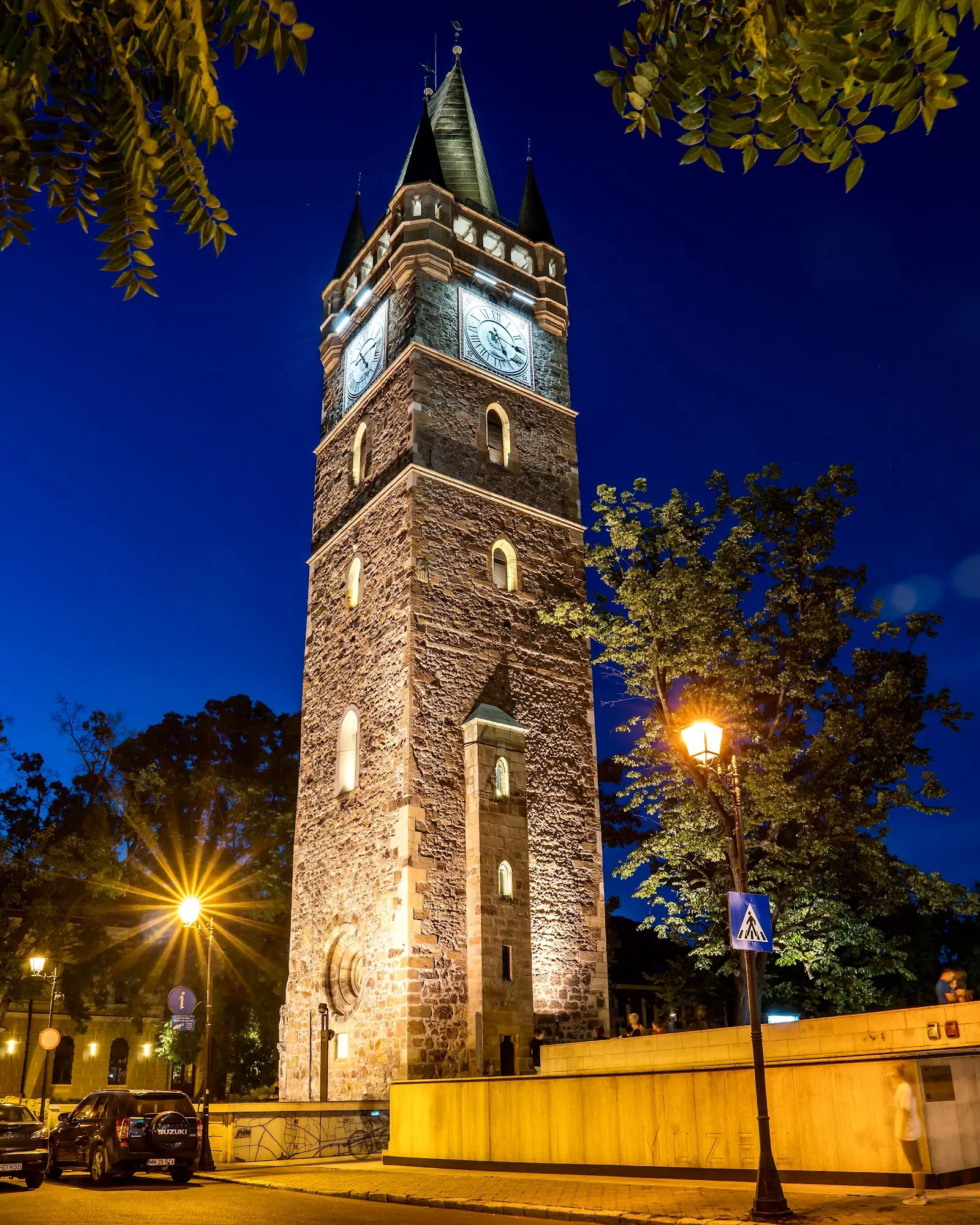
Baia Mare offers something few Romanian cities still can: a compact medieval core gathered around a single square, a Gothic tower that has watched over it for five centuries, and a mining legacy that gave the town money, painters and a museum full of stone flowers. It is the county seat of Maramureș and, for most travellers, the last urban stop before the villages of wooden churches. The usual mistake is to treat it as nothing more than a waypoint.
Why Baia Mare
The city was born of gold and silver. The mines around it worked for centuries, and their wealth explains almost everything you see today: the patrician houses in the centre, the fortress walls, the mineral collections and, later, an artists' colony that put Baia Mare on the map of European art.
A few reasons it deserves a proper stop:
- A compact medieval centre — everything is walkable, gathered around Piața Libertății (Liberty Square).
- Stephen's Tower, a 15th-century Gothic bell tower and the city's undisputed symbol.
- The Painters' Colony — from 1896, one of Central Europe's most important schools of painting.
- Mine flowers — crystal collections unlike anything else in Romania.
- The location — the gateway to the Maramureș of villages, wooden churches and monasteries.
Piața Libertății, the heart of the old town
Everything that matters in historic Baia Mare begins in Piața Libertății, a long square lined with 15th- to 18th-century burgher houses, many restored, some still waiting. Fairs were held here; merchants and craftsmen who lived off the surrounding mines had their homes here, and the facades still keep their stone portals and old ground-floor vaults.
The square takes minutes to cross and hours to read. Summer terraces give it the unhurried air of a Central European town, and it looks its best lit up in the evening. Use it as your base: from here, every landmark in what to see in Baia Mare is within walking distance.
Stephen's Tower and traces of the citadel
A few steps from the square stands Stephen's Tower, a Gothic bell tower raised in the 15th century and traditionally linked to John Hunyadi (Iancu de Hunedoara). It served the church of Saint Stephen, of which the tower is now the main surviving witness. Its silhouette appears on every emblem of the city and remains the best orientation point downtown.
The second witness of the fortified town is the Butchers' Bastion, a surviving piece of the medieval defensive walls. The name comes from the guild that maintained it — a detail that says a great deal about how a wealthy mining town worked: each trade defended its own stretch of wall.
Nearby, the Jesuit Holy Trinity Church brings a Baroque register into the centre, with a spacious interior and a monumental presence that contrasts pleasantly with the small scale of the square.
The mining town and its mine flowers
The mining tradition left behind something unexpectedly beautiful. At the County Museum of Mineralogy you will find collections of mine flowers — crystal formations grown in the cavities of the ore deposits, in colours and geometries you would never associate with the underground. These are pieces gathered across decades of mining, and for many visitors they are the city's biggest surprise.
The museum also explains the other side of the story: how an entire city lived off mining, and what remained once the mines closed. It is the context you need for the rest of your visit.
The Painters' Colony
In 1896 an artists' colony was founded in Baia Mare that would become one of the most important schools of painting in Central Europe. The quality of the local light, the surrounding hills and the atmosphere of the town drew generations of painters, and their influence still shapes the cultural identity of the place.
That legacy lives today at the Art Museum — the Painters' Colony, which gathers works tied to the tradition. It is one of the finest introductions to modern Romanian painting, in a city few people suspect of carrying such artistic weight.
The city's green side
Baia Mare sits in a basin ringed by wooded hills, so greenery here is structural rather than decorative. Queen Marie Municipal Park is where the city takes its break: broad alleys, mature trees and a calm rhythm minutes from the centre.
For a view from above, the hills on the edge of town look out over the whole basin, with the Gutâi and Ignis mountains behind. It is also good mental preparation for the road north.
The gateway to Maramureș
This is the city's real strategic advantage. Baia Mare is the logical base for exploring historic Maramureș: the villages with carved wooden gates and wooden churches, several of them World Heritage monuments, lie an hour or two away.
The natural first stop heading east is Rohia Monastery, set on a wooded hill — the place where the writer N. Steinhardt lived, making it a pilgrimage at once religious and literary, with one of the most beautiful monastic atmospheres in northern Romania.
With more time, continue with the Maramureș guide, which covers the Iza valley, Săpânța and the mountain roads.
Food and local rhythm
Maramureș cooking is direct and generous: home-smoked meats, sheep cheeses from mountain folds, sarmale, savoury pies and a shot of horincă to close the meal. In the centre you will find restaurants working this repertoire in a more modern key, and the cafés around the square keep the relaxed pace of towns in the former Austro-Hungarian sphere.
The city's rhythm is slow in the good sense. Nothing here rewards rushing, and an afternoon lost on a terrace in Piața Libertății is worth as much as a museum ticked off.
Practical: when, how long and getting there
When: late spring and early autumn are ideal — the hills are green or turning, and the roads to the Maramureș villages are comfortable. Winter has its charm, but mountain roads demand caution.
How long: 1–2 days cover the city. Add 2–3 days if you also want the villages, wooden churches and monasteries around it.
Getting there: Baia Mare has its own airport, with domestic flights and seasonal connections. By car it is easily reached from Cluj-Napoca and Satu Mare, and a car remains the best option if your plan includes the villages — public transport to them is limited.
For accommodation, compare the areas in where to stay in Baia Mare and Maramureș.
Baia Mare does not try to impress you at first glance. It shows you a Gothic tower, an old square, a few cases of crystals and a painting museum — and only then do you realise you have stumbled on a city with far more substance than its reputation as a mere gateway to Maramureș suggests.
Plan your trip
Stays nearby
Stays in Romania
Experiences
Tours & activities
Guided tours, day trips and hand-picked experiences via GetYourGuide — free cancellation on most.
See all experiencesGetting to Romania
Flights, transfer & car
Fly into Romania
Compare fares to Bucharest Otopeni (OTP) and regional airports — Cluj, Sibiu, Iași, Timișoara.
Airport transfer
Private, fixed-price door-to-door transfer — driver waiting from the moment you land.
Rent a car — see the real Romania
A rental car is the key to Romania: the Transfăgărășan, the painted monasteries of Bucovina, mountain roads and the villages of Maramureș that no train reaches.
Find a car











