
What to see in Baia Mare: attractions & experiences
Stephen's Tower, Liberty Square, the mine flowers of the Mineralogy Museum, the legacy of the Painters' Colony and the Village Museum — every essential sight in Baia Mare, in the order you would walk them, plus a day trip to Rohia Monastery.
Baia Mare is a walking city, and that is half the pleasure. Almost everything that matters sits inside a few hundred metres of Liberty Square, and what falls outside that circle — the village museum, the park, the hills — is ten minutes on foot or a short drive away. The list below follows the order you would naturally walk it: from the medieval core outwards, then into the surroundings.
Stephen's Tower, the starting point
Stephen's Tower is the city's symbol and the best place to begin. A Gothic bell tower raised in the 15th century and traditionally linked to John Hunyadi (Iancu de Hunedoara), it belonged to the church of Saint Stephen, of which it is now the main surviving witness.
Its silhouette appears on the city's emblems and works as a compass: wherever you lose your bearings downtown, the tower tells you where you are. Look at it from the base, then step back until you catch its full height — it is the one building in the centre that needs distance.
Liberty Square and the merchants' houses
Piața Libertății is the old town's reception hall: a long square lined with 15th- to 18th-century burgher houses built by the merchants and craftsmen who lived off the surrounding mines. Some are fully restored, others show their age — and the mixture is part of the character.
Things worth looking for as you cross it:
- Stone portals and old vaults at street level.
- Elisabeta House, linked to John Hunyadi's family, one of the city's oldest civil traces.
- The terraces along the sides of the square — the best place for a long pause.
- The square in the evening, lit up, when it looks visibly better than at midday.
The Butchers' Bastion
On the edge of the historic centre stands the Butchers' Bastion, a surviving piece of the medieval walls that once enclosed the town. The name comes from the guild responsible for this stretch of fortification — in wealthy mining towns each trade defended its own section of wall, and the bastion is the physical proof of that arrangement.
It is not a long visit, but it closes the story of the citadel that begins at Stephen's Tower. Together, the two give you the whole map of the medieval town.
The Jesuit Holy Trinity Church
The Jesuit Holy Trinity Church brings a Baroque register into the centre. Its monumental scale deliberately contrasts with the small, commercial scale of the square, and the spacious interior is worth the five minutes of quiet any city visit should include.
For anyone who reads a city through its architecture, the move from Gothic (the tower) to Baroque (the church) to burgher facades (the square) is the shortest possible course in local history.
The Mineralogy Museum and its mine flowers
If you visit a single museum in Baia Mare, make it this one. The County Museum of Mineralogy holds collections of mine flowers — crystal formations grown in the cavities of the surrounding ore deposits, in shapes and colours that look nothing like something pulled from underground.
The collection is a direct result of the area's mining tradition: decades of extraction brought to light pieces the miners kept. For most visitors it is the surprise of the city — and the only place in Romania where the underground looks like a garden.
The Art Museum and the Painters' Colony
From 1896, Baia Mare hosted one of the most important schools of painting in Central Europe. The Painters' Colony drew generations of artists, and their legacy lives today at the Art Museum — the Painters' Colony.
It is a visit that shifts your sense of the place: not an industrial town with an old tower, but somewhere that produced art of genuine European relevance. If you are arriving from Cluj or Sibiu, the context is useful — many of the great names of modern Romanian painting passed through here.
The Village Museum
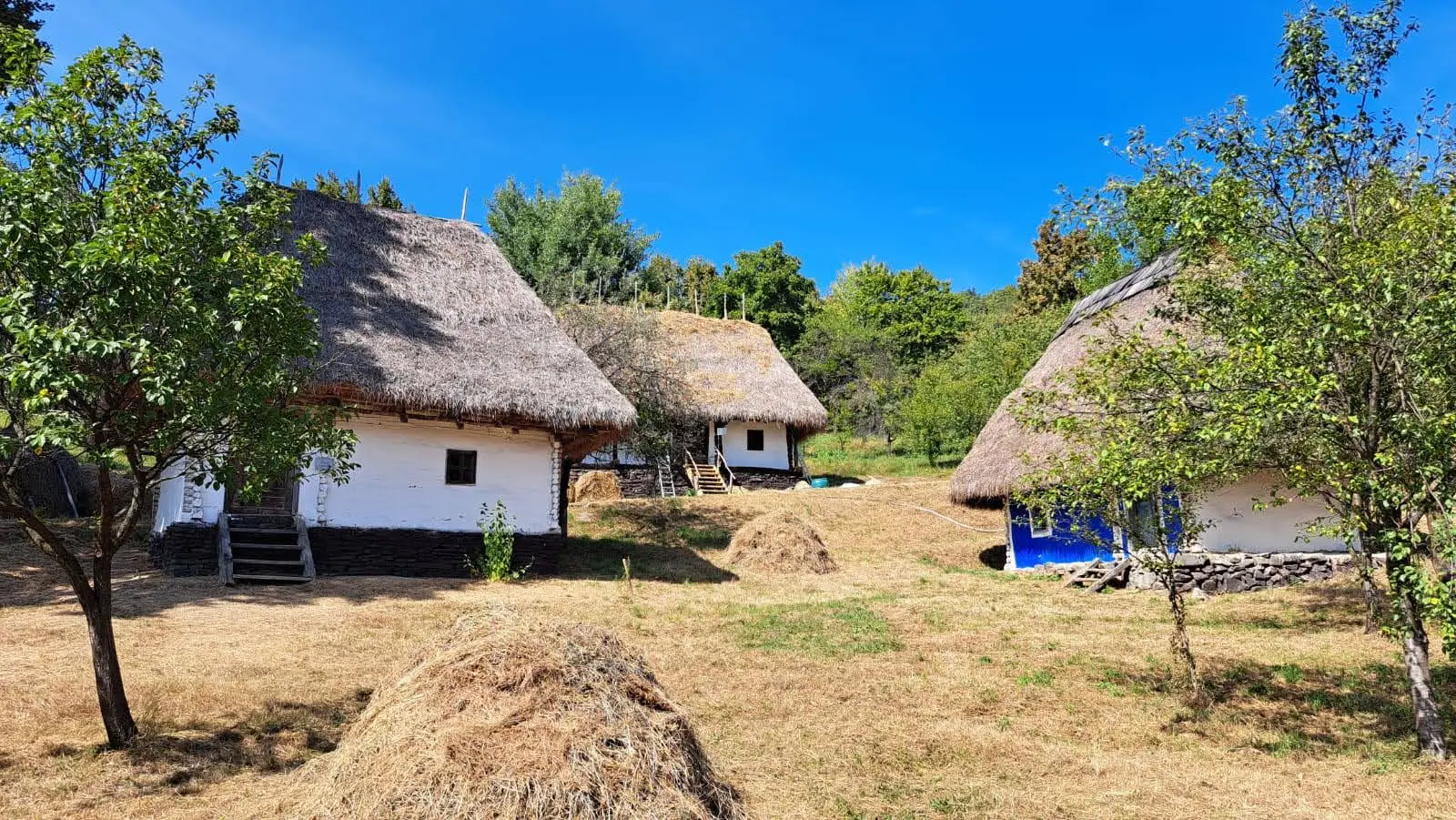
On the hill at the edge of town, the Village Museum gathers houses, carved gates, outbuildings and wooden structures brought in from the villages of the region. It is the best preparation for rural Maramureș: you grasp the logic of the Maramureș gate, the timber house and the farmstead before meeting them in the villages themselves.
Visit on a clear morning, when the old wood and the green of the hill work together. If you have no time for the villages, the museum is the most honest substitute going.
Queen Marie Park and the city's hills
Queen Marie Municipal Park is the city's green pause: broad alleys, mature trees, benches and a calm rhythm minutes from the centre. It works perfectly as an interval between two museums.
For views, the hills on the edge of town open onto the whole basin, with the Gutâi and Ignis mountains behind. It is also the best urban sunset around.
A day trip: Rohia Monastery
Heading east, Rohia Monastery sits on a wooded hill in one of the quietest monastic settings in northern Romania. The writer N. Steinhardt lived here, which makes the visit a pilgrimage at once religious and literary.
The drive is part of the experience: you climb through wooded hills, pass villages of low houses and arrive at a monastery that feels deliberately hidden. Go in the morning, when light filters through the forest, and leave time to sit on a bench rather than only photograph the church.
If you want to push further north, the villages of Maramureș and their wooden churches are the natural next step — with Baia Mare as your base.
Experiences, not just sights
The city feels best when you are ticking nothing off. A few things that never make the classic lists but stay with you:
- An evening walk across Liberty Square, when the lighting picks out the facades and the terraces fill up.
- A long coffee in one of the cafés downtown — the rhythm is Central European and nobody hurries you.
- The farmers' market in the morning, for sheep cheeses, home-smoked meats and seasonal fruit from the surrounding hills.
- Woodcraft — the carved gates at the Village Museum teach you the vocabulary, and workshops in the nearby villages still speak it.
- Sunset from the hills on the edge of town, with the whole basin below and the Gutâi and Ignis mountains behind.
If you have a free afternoon and decent weather, pairing one museum with one hill is more memorable than two museums back to back.
A two-day itinerary
Day 1 — the historic centre: Stephen's Tower, Liberty Square, the Butchers' Bastion, the Jesuit church, then the Mineralogy Museum. Dinner downtown.
Day 2 — art and air: the Art Museum in the morning, the Village Museum around midday, Queen Marie Park in the afternoon. With a car, swap the afternoon for Rohia Monastery.
For context and practicalities, see the complete guide to Baia Mare, and for the areas worth sleeping in, where to stay in Baia Mare and Maramureș.
Plan your trip
Stays nearby
Stays in Romania
Experiences
Tours & activities
Guided tours, day trips and hand-picked experiences via GetYourGuide — free cancellation on most.
See all experiencesGetting to Romania
Flights, transfer & car
Fly into Romania
Compare fares to Bucharest Otopeni (OTP) and regional airports — Cluj, Sibiu, Iași, Timișoara.
Airport transfer
Private, fixed-price door-to-door transfer — driver waiting from the moment you land.
Rent a car — see the real Romania
A rental car is the key to Romania: the Transfăgărășan, the painted monasteries of Bucovina, mountain roads and the villages of Maramureș that no train reaches.
Find a car











