
Complete guide to Odorheiu Secuiesc
Harghita's second city and one of the cultural centres of the Székely Land: a Renaissance fortress, a town museum with real ethnography, the mineral springs at Szejke and, nearby, the UNESCO-listed fortified church of Dârjiu. A practical guide for two or three days.
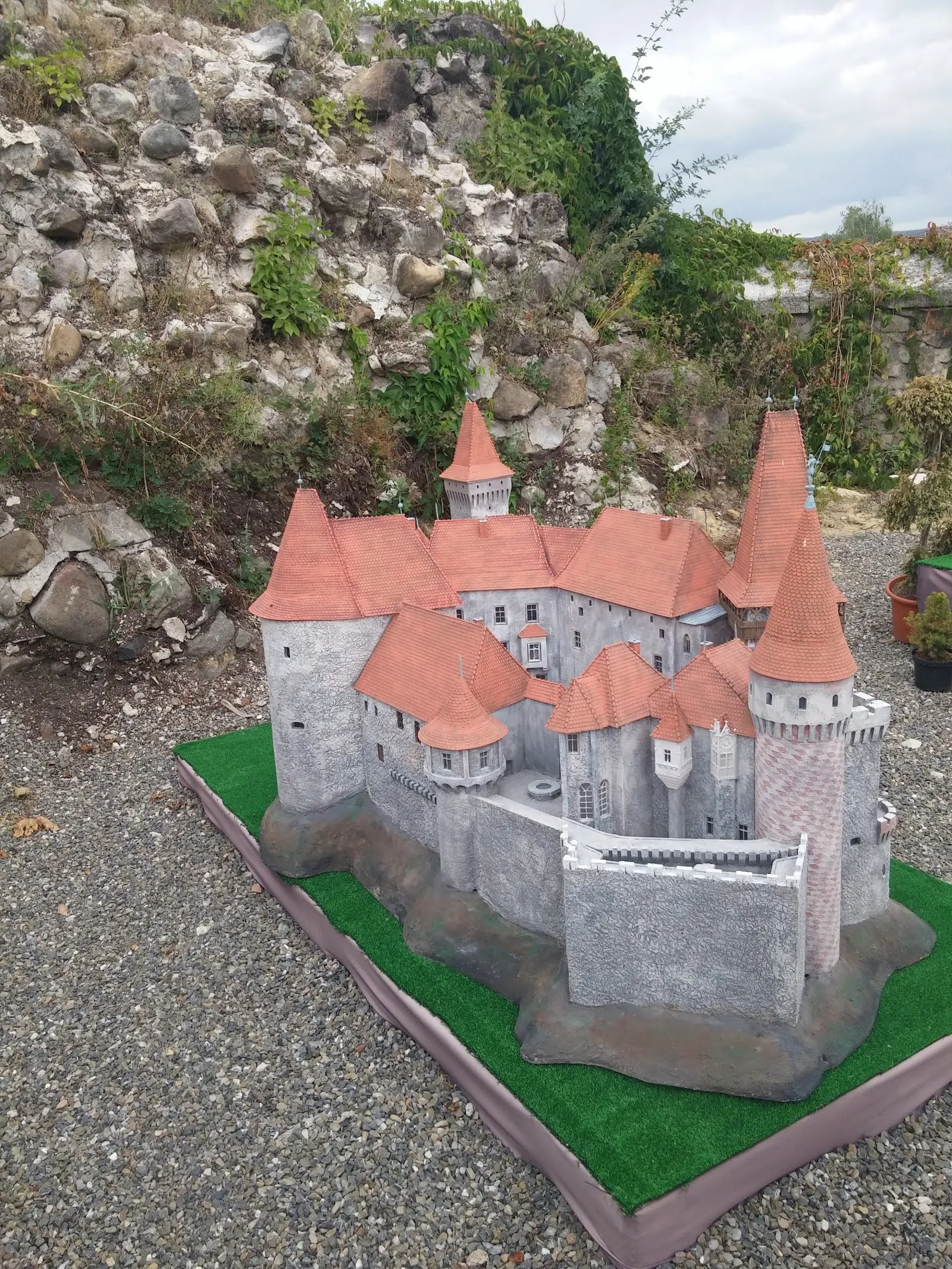
Odorheiu Secuiesc doesn't try to impress you in the first ten minutes. Harghita's second city keeps its best things in plain sight but without fanfare: a Renaissance fortification at the edge of the centre, a town museum with real ethnography, mineral springs at the foot of the hills and, nearby, one of the most precious fortified churches in Transylvania. This guide shows you how it all connects and how much time each piece deserves.
Where you actually are
Odorheiu Secuiesc — Székelyudvarhely in Hungarian — is the second largest town in Harghita county and one of the cultural centres of the Székely Land. The population is predominantly Hungarian, and you see and hear that everywhere: on shopfronts, in menus, in the music on the terraces, in the language spoken at the next table.
For a visitor from elsewhere in Romania, the town feels familiar and different at once. You get the same Transylvanian provincial square, the same terraced houses with gates onto inner courtyards — but a different cultural memory has settled over them, with other holidays, other family names and another repertoire of stories. This is not a museum town and it doesn't behave like an attraction. It is a town that works, which is exactly why it is pleasant.
The geography helps. A compact centre you cover on foot, a river, wooded hills all around, and villages that begin the moment you leave town. Nothing is far. That is what makes it a good base for two or three days rather than a one-hour stop on the way to something else.
The Székely Fortress, the historic core
Every visit starts at the Székely Fortress, known locally in Romanian as Cetatea Șișului. It is a sixteenth-century Renaissance fortification, built in an age when Transylvania was assembling its defences in layers and every centre of power needed walls of its own.
Do not expect a fairy-tale castle with pointed towers and banners. The Székely Fortress is a low, pragmatic military structure with thick walls and bastion corners — the logic of artillery, not of knights. That is precisely its charm: you look at it and immediately understand what it was for. Walk the full circuit of the exterior, not just the entrance; the proportions read differently from the sides, and the good photographs are at the corners rather than head-on.
Allow a relaxed hour, more if you catch an exhibition or an event inside. It is the kind of place that rewards early morning light, when it is quiet.
The Haáz Rezső Museum
If you have time for one interior in town, make it the Haáz Rezső Museum. This is the town museum, with collections of ethnography and local history — exactly the sort of institution that explains a place better than any interpretive panel.
Its value to a visitor is context. After a visit here, the carved gates in the villages, the household objects, the textiles and the social structure of the Székely Land begin to make sense; without it they stay scenery. The museum that carries Haáz Rezső's name is also a lesson in how good local museum work is done: out of collections patiently assembled, not out of large budgets.
Schedule it early rather than last. Everything you see afterwards comes out richer.
The Reformed Church and the town's places of worship
The Reformed Church is one of the landmark buildings of the centre and, like most Reformed churches in Transylvania, an exercise in sobriety: clean space, no decorative excess, built for the word and for the congregation.
In a town where denominations have sat side by side for centuries — Reformed, Catholic, Unitarian, Orthodox — walking from one church to the next is in fact the shortest possible introduction to local history. It takes under an hour on foot and says more than it looks like it should.
Szejke Baths and the man who wrote the Székely Land
On the edge of town you will find Szejke Baths, an area of mineral waters with the atmosphere of a small, modest, very local spa resort. It is not a luxury spa and makes no claim to be; it is a place people have come to for generations for the springs and the hill air.
Szejke, though, is bound up with a name that carries enormous weight here: Orbán Balázs, called the greatest Székely. A nineteenth-century ethnographer, he described the Székely Land in detail, village by village, at a time when nobody else had — and he is buried at Szejke. If you want to understand why this region has such a clear, well-articulated identity, the walk to his grave says more than a chapter of history.
It makes a good half day: springs, a walk, then a stop at a terrace. Details on staying out here are in the piece on where to stay in Odorheiu Secuiesc.
Székely gates
The region is known for its carved Székely gates — large wooden gateways with a roof of their own and a separate pedestrian arch, covered in carved motifs. They are not ticketed attractions and they do not sit in a museum: they are living architecture, on people's houses, in the villages around town.
It is worth driving slowly on the back roads and stopping when you see a fine one. Photograph from the road rather than from the yard — it is someone's home. If you have no car, the town museum gives you the context and the examples anyway.
Dârjiu: medieval frescoes on the UNESCO list
The most important day trip in the area goes to Dârjiu, home to a fortified Unitarian church inscribed on the UNESCO World Heritage list as part of the group of villages with fortified churches in Transylvania. It is remarkable for its medieval frescoes, preserved in a small village far from the crowded circuits.
The combination — peasant fortification, Unitarian congregation, medieval painting — does not repeat anywhere else in quite this form. See the details on its own page: the fortified Unitarian church of Dârjiu.
Getting there and getting around
- A car is what opens everything up. The town is walkable, but the gate villages, Dârjiu and the hill roads need wheels.
- Train or coach brings you into town without trouble, and the centre, the fortress, the museum and the churches are all within strolling distance.
- Without a car, budget a taxi, a transfer or an organised trip for Dârjiu; connections to the small villages are sparse.
- Around the county, the administrative capital is a comfortable drive away and deserves a separate day — see the guide to Miercurea Ciuc.
When to come
- Late spring and early summer are the best window: green hills, villages at their most photogenic, evenings that still cool down pleasantly.
- Summer is festival season and terrace season, and the liveliest time in the region.
- Autumn gives the best colour on the hills and the best light for photographs.
- Winter is serious in Harghita. The town functions normally, but the secondary roads to the villages call for caution and decent tyres.
Language, money, etiquette
Hungarian is spoken everywhere and Romanian almost everywhere; in tourist-facing places and among younger people English works too. A greeting in Romanian is perfectly welcome, and a well-meant Jó napot opens many doors. The currency is the leu, cards work in town, but carry cash for the villages and for local producers.
One substantive tip: treat local identity as a subject of curiosity rather than debate. People are generous with their stories if you ask out of genuine interest.
Two days, a simple plan
- Day 1 — the town. Morning at the Székely Fortress, then the Haáz Rezső Museum, lunch in the centre, an afternoon walk between the churches including the Reformed Church.
- Day 2 — the surroundings. Morning at Szejke Baths and Orbán Balázs's grave, afternoon at Dârjiu, with stops at Székely gates along the way.
With a third day, use it for the villages, for the baths in the wider area, or for a trip north-east. The full list of sights is in what to see in Odorheiu Secuiesc and around, and the accommodation areas are compared in where to stay in Odorheiu Secuiesc.
Plan your trip
Stays nearby
Stays in Romania
Experiences
Tours & activities
Guided tours, day trips and hand-picked experiences via GetYourGuide — free cancellation on most.
See all experiencesGetting to Romania
Flights, transfer & car
Fly into Romania
Compare fares to Bucharest Otopeni (OTP) and regional airports — Cluj, Sibiu, Iași, Timișoara.
Airport transfer
Private, fixed-price door-to-door transfer — driver waiting from the moment you land.
Rent a car — see the real Romania
A rental car is the key to Romania: the Transfăgărășan, the painted monasteries of Bucovina, mountain roads and the villages of Maramureș that no train reaches.
Find a car











