
Complete guide to Drobeta-Turnu Severin
Drobeta-Turnu Severin is the city where the Roman Empire crossed the Danube. A complete guide to the ruins of Trajan's Bridge, the Iron Gates Region Museum, the Water Castle and the medieval fortress — plus everything around it, at the Iron Gates.
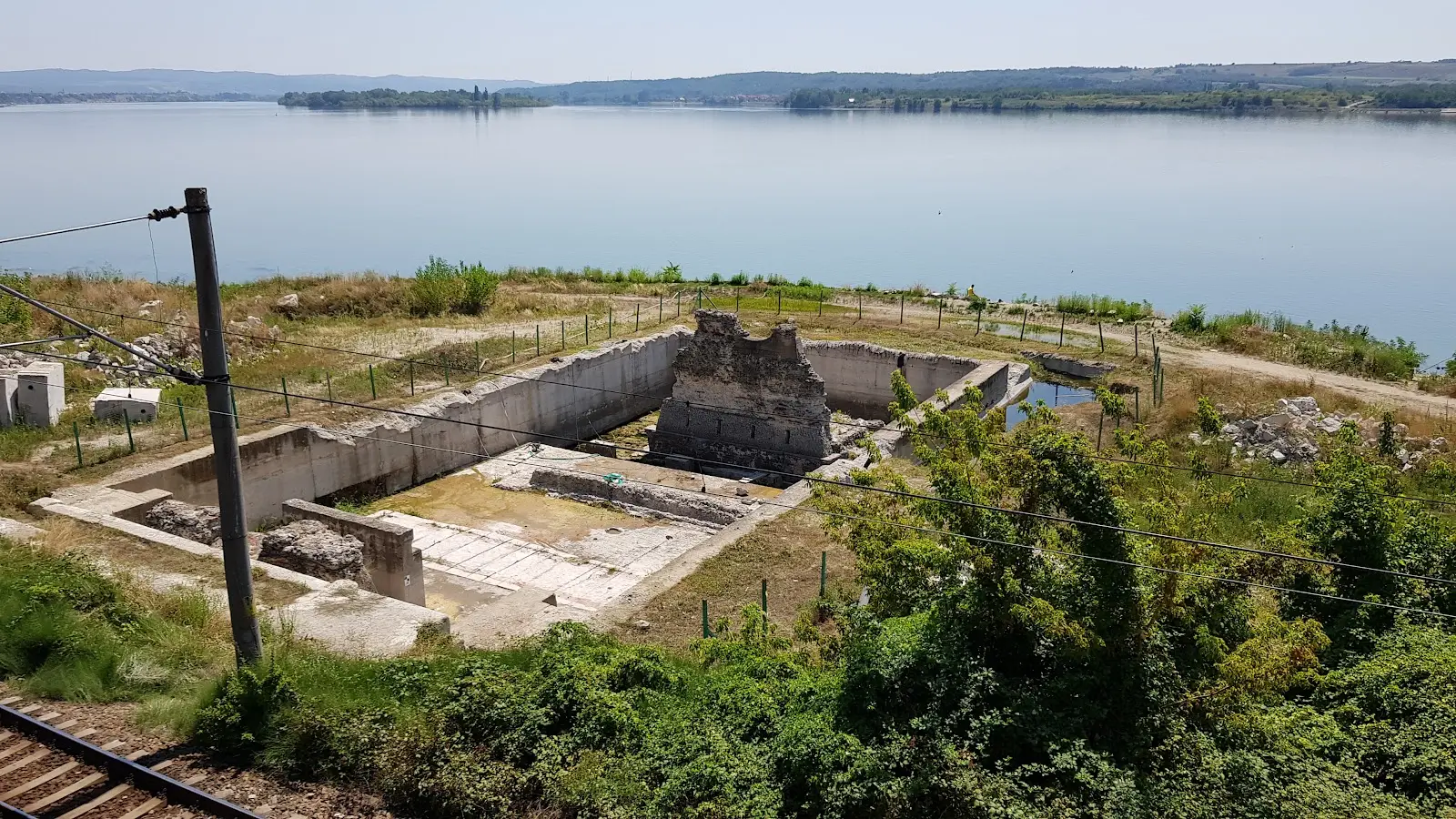
Drobeta-Turnu Severin is the city where the Roman Empire crossed the Danube. On the bank at the edge of the centre you can still see the stone piers of the most ambitious bridge of antiquity, and a few kilometres upstream the river enters the gorge of the Iron Gates. Few small Romanian towns pack this much history into a single riverside walk.
Why Drobeta-Turnu Severin
The city is the capital of Mehedinți county, set on the left bank of the Danube, exactly where the river emerges from the Iron Gates gorge. Its position explains everything that followed: here the water calms down after cutting through the Carpathians, and the bank becomes gentle enough for a port, a bridge and a city.
Drobeta really has two overlapping ages. The Roman one — the fort, the baths and the ancient name Drobeta — and the modern one, a port city laid out in the second half of the 19th century, with wide boulevards, parks and eclectic buildings facing the water. Between them slips a frontier Middle Ages, with a fortress raised precisely on the border between worlds.
For a traveller that translates simply: one full day in the city, and at least one more for the gorge.
Trajan's Bridge, the structure that opened Dacia
Trajan's Bridge is why this town's name appears in every serious book on Roman history. It was built in the early 2nd century AD, ahead of Trajan's decisive campaigns against Dacia, to the design of Apollodorus of Damascus — the architect who would later build Trajan's Forum in Rome.
The idea was close to mad for its time: to cross Europe's widest river permanently, with massive stone piers driven into the water and a timber superstructure above. It was not merely an engineering feat but an instrument of conquest — a fixed bridge meant legions, supplies and administration that could move at will rather than by raft. And once Dacia became a province, that bridge was its umbilical cord.
Today you see the ruins of the two piers that remain visible at either end, one on the Romanian bank, the other across the water in Serbia. Do not expect standing arches: what you are looking at is a piece of Roman masonry that has sat in the Danube for two thousand years. Beside it spreads the site of the Drobeta fort, with its walls, gates and baths exposed — the context that makes the ruin legible.
A tip: come here after the museum, not before. With the bridge model and the fort plan fresh in your mind, the stones on the bank tell a completely different story.
The Iron Gates Region Museum
The Iron Gates Region Museum is, without exaggeration, one of the most complete regional museums in Romania and the logical starting point of a visit. It sits right by the river, next to the Roman site, and holds several departments under one roof.
- History and archaeology — the Roman material found at Drobeta, from inscriptions and weapons to everyday objects, plus a reconstruction of the bridge.
- Ethnography — village life in Mehedinți and along the Danube narrows: costumes, textiles, woodwork, fishing gear.
- Natural sciences — the fauna and geology of the gorge.
- An aquarium of Danube fish — the section children ask to see twice. Here you meet live the species you otherwise only read about: catfish, carp, pike, asp, sturgeon.
The aquarium deserves emphasis, because it is exactly the sort of thing you miss if you judge a museum by its display cases alone. The Danube is an ecosystem, not a backdrop, and here you see it literally.
The Water Castle, the city's emblem
The Water Castle is neither a castle nor a fortification: it is the water tower built in the early 20th century to supply the city, which over time became its emblem. The brick silhouette with its crenellated crown appears on every local postcard and serves as a landmark downtown.
It has been restored and fitted out as a viewpoint, with a terrace looking over the city, the park and the broad band of the Danube. In the evening it is floodlit. If you have a single photograph to take in Severin that says this is the city, you take it here.
The medieval fortress of Severin
The medieval fortress of Severin carries you back to the age when the Danube was a military border rather than a tourist attraction. Raised in the 13th century, the fortress was the centre of the Banate of Severin — a frontier march disputed for centuries between the Hungarian kingdom, Wallachia and, later, the Ottoman Empire.
What survives are walls, tower bases and the outlines of courtyards, in a park open to the river. It is a modest ruin in scale, but with a clear lesson: this city has always been a threshold. The Romans used it to enter Dacia, the medieval kingdoms to hold each other off, and the 20th century to dam the river.
What to see around: the Iron Gates
Severin is the most comfortable base for the most spectacular stretch of the European Danube.
- The Iron Gates I dam, a short way upstream, is the hydroelectric scheme built jointly with the Serbian side and the thing that changed the river for good: it raised the water, drowned rapids, islands and villages, and turned the current into a long lake. The island of Ada Kaleh, with its Turkish community, vanished beneath the water with it, and some of its inhabitants were resettled at Șimian, near the city.
- The Danube Cauldrons are, an hour's drive away, the climax of the gorge: the river squeezed between limestone walls hundreds of metres high, the face of Decebalus carved into the rock, Mraconia Monastery at the waterline, the Tabula Traiana on the far bank.
- Băile Herculane, the Roman thermal spa in the Cerna valley, is half a day away and joins naturally onto the same route.
When to come
Mehedinți is the warmest corner of Romania, with sub-Mediterranean influences: winters are mild, spring arrives early, and summers can be fiercely hot, especially in the river corridor.
- April to June and September to October are the ideal windows — good light, a gorge that is either green or gilded, civilised temperatures on the promenade.
- July and August work for boat trips and gorge cruises, but plan outdoor visits for the morning.
- Winter is surprisingly workable for the museums and the city itself, with snow that is rare and short-lived.
Getting there and how long to stay
The city sits on the national road linking Bucharest to Timișoara and on the parallel main railway line, so it is reachable without a car. The nearest airports are Craiova and Timișoara. Within the city, walking is enough: the ruins, the museum, the fortress and the Water Castle are all close together.
For the gorge, though, a car changes everything. The road along the Danube towards Orșova and the Cauldrons is one of the finest drives in Romania, and public transport will not give you the freedom to stop at every viewpoint.
Two nights is the formula that works: one day for the city and the Roman site, one day for the dam and the Cauldrons. With three nights you can add Herculane or a loop through the Mehedinți Plateau.
If you want a step-by-step route through the city's sights, carry on with our guide to what to see in Drobeta-Turnu Severin.
Plan your trip
Stays nearby
Stays in Romania
Experiences
Tours & activities
Guided tours, day trips and hand-picked experiences via GetYourGuide — free cancellation on most.
See all experiencesGetting to Romania
Flights, transfer & car
Fly into Romania
Compare fares to Bucharest Otopeni (OTP) and regional airports — Cluj, Sibiu, Iași, Timișoara.
Airport transfer
Private, fixed-price door-to-door transfer — driver waiting from the moment you land.
Rent a car — see the real Romania
A rental car is the key to Romania: the Transfăgărășan, the painted monasteries of Bucovina, mountain roads and the villages of Maramureș that no train reaches.
Find a car











