The Danube Gorges and the Clisura: Mountain Banat
Where the Danube squeezes between mountains — the spectacular Cazane gorge, Decebal's face carved in rock, Mraconia monastery and the villages along the river.
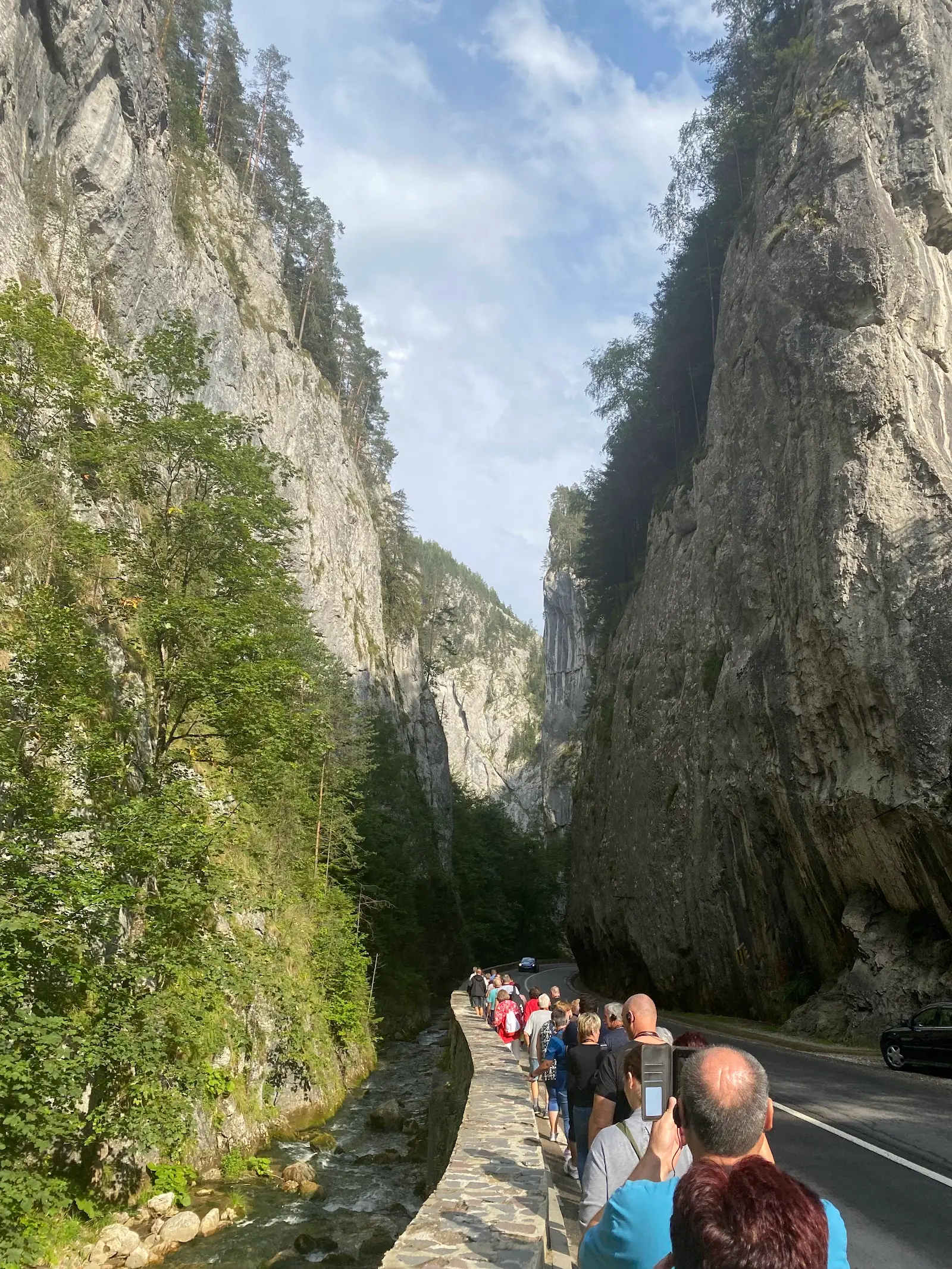
In south-western Romania, on the border with Serbia, the Danube changes character completely. From a broad lowland river, it squeezes dramatically between mountains, carving its way through a spectacular gorge. This is the area of the Danube Gorges (Cazane) and the Clisura, perhaps the country's most beautiful river landscape — and one of Romania's least-known treasures.
What the Cazane are
The Cazane are the stretch where the Danube cuts through the Carpathian Mountains, narrowing between steep rock walls hundreds of metres high. The name comes from the sense that the water "boils" in this tight corridor, as in a cauldron. There are the Great Cazane and the Small Cazane, both impressive. This is where the usually lazy river takes on force and mystery.
Decebal's face
Above the water, carved directly into the rock, watches the face of Decebal, the last king of the Dacians. It is the tallest rock sculpture in Europe, made in the 1990s–2000s, a modern landmark that has become the symbol of the area. It is seen best from the water or the opposite bank.
Mraconia Monastery
Right at the foot of the cliffs, on the riverbank, stands Mraconia Monastery, with a troubled history — the old settlement was flooded when the reservoir was created, and the present monastery was rebuilt. Its reflection in the waters of the Danube is one of the emblematic images of the place.
The Danube Clisura and the villages
The Danube Clisura is the name for the stretch of gorge with its picturesque villages, strung along the road that follows the bank. Places such as Dubova, Eșelnița and Orșova offer guesthouses, views and departure points for boat trips. The road winding along the water, with tunnels and bends above the river, is an experience in itself.
What else you can see
- Beușnița Waterfall and the Nera Gorges, in the Nera Gorges–Beușnița National Park, to the north — a landscape of gorges, waterfalls and intensely turquoise lakes (such as Ochiul Beiului).
- Ponicova Cave and Veterani Cave, reachable from the Cazane area.
- Baziaș, the place where the Danube enters Romania.
- Ada Kaleh island, now vanished beneath the waters — a fascinating local story of a flooded Ottoman island.
How to visit
- Best by car: the road along the Danube bank links all the landmarks but is slow and winding.
- A boat trip is essential to see the Cazane and Decebal's face from the right angle; leave from Dubova or Orșova.
- Good base: Orșova, Dubova or Eșelnița.
- Season: spring and autumn for colours and quiet; summer for hikes and lakeside beaches.
- Combine with mountain Banat and Herculane, both nearby.
The Iron Gates Nature Park
The whole area is part of the Iron Gates Nature Park (Porțile de Fier), one of the country's largest protected areas, stretching along the Danube. The name "Iron Gates" comes from the stretch where the river forces its way through the mountains, and the dam and hydroelectric plant built here, jointly with Serbia, changed the water level forever. The park holds a remarkable biodiversity — water birds, rare Mediterranean plant species growing on the sunny slopes, and abundant fauna. It is a place where nature, history and engineering are tightly interwoven.
A region with many layers
Mountain Banat is an area with a character of its own, marked by a mix of communities — Romanians, Serbs, Czechs (in the villages of mountain Banat), Germans and others — who left their traces in architecture, cuisine and customs. The Czech villages in the mountains, founded in the 19th century, are among the most unusual in Romania. This cultural diversity adds a fascinating human dimension to the spectacular natural landscape of the Cazane.
The Danube Gorges remain one of Romania's underrated destinations — a monumental landscape that fully reveals itself only to those who take the time to explore it from the water.
Plan your trip
Stays nearby
Stays in Romania
Experiences
Tours & activities
Guided tours, day trips and hand-picked experiences via GetYourGuide — free cancellation on most.
See all experiencesGetting to Romania
Flights, transfer & car
Fly into Romania
Compare fares to Bucharest Otopeni (OTP) and regional airports — Cluj, Sibiu, Iași, Timișoara.
Airport transfer
Private, fixed-price door-to-door transfer — driver waiting from the moment you land.
Rent a car — see the real Romania
A rental car is the key to Romania: the Transfăgărășan, the painted monasteries of Bucovina, mountain roads and the villages of Maramureș that no train reaches.
Find a car