Romania's Spectacular Salt Mines
Turda, Praid, Slănic Prahova — centuries-old salt mines turned into underground attractions, with lakes, Ferris wheels and a microclimate good for breathing.
For centuries, salt was one of the fundamental riches of Romanian soil. Today, several of the old salt mines have been turned into spectacular underground attractions — a mix of industrial history, surreal views and health benefits. Descending deep, into vast chambers carved out of salt, is one of the most unusual experiences you can have in Romania.
Turda Salt Mine — the underground star
Near Cluj, Turda Salt Mine is the country's best-known and most-photographed salt mine. Salt has been extracted here for centuries, but the modern development has turned it into a genuinely futuristic underground park. Visitors find:
- A Ferris wheel inside a gigantic salt chamber.
- An underground lake you can row across by boat.
- Sports courts, a mini-arena and dramatically lit walkways.
The contrast between the ancient salt walls and the modern, illuminated installations makes it unmistakable.
Praid Salt Mine — the immensity
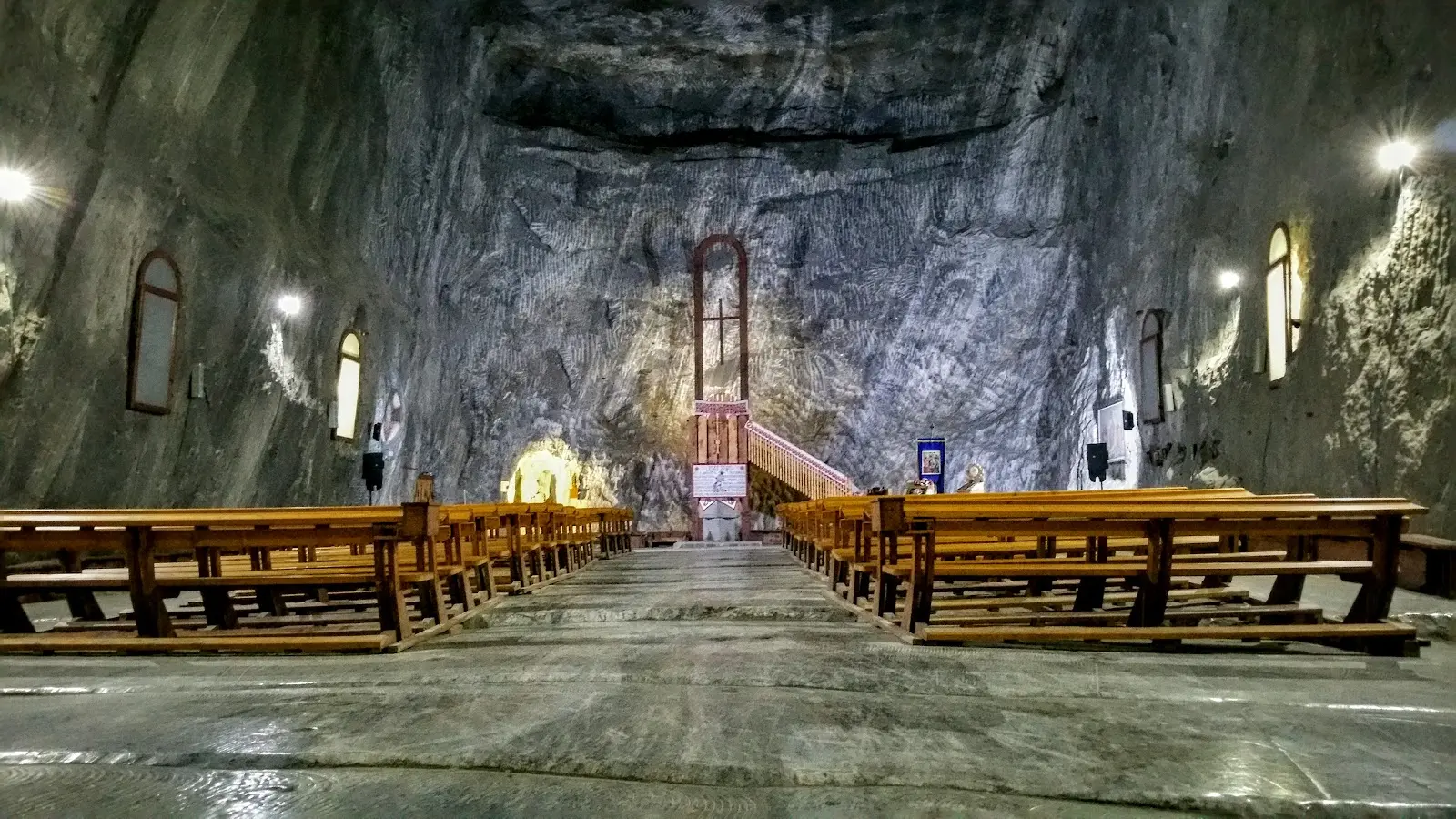
In Transylvania, in the Székely Land, Praid Salt Mine impresses with the enormous scale of its galleries. It is also renowned for its therapeutic role: the stable microclimate, with salty, allergen-free air, draws visitors with respiratory conditions. The descent is made by special buses, and the visiting area includes playgrounds, chapels and relaxation zones.
Slănic Prahova Salt Mine — the high chambers
Close to the Prahova Valley, Slănic Prahova Salt Mine is known for its very high chambers, with impressive salt walls, and for its long mining history. It is a logical stop for those travelling through the south of the country or towards the mountains.
Why they are good for health
The microclimate of the salt mines — constant temperature, stable humidity, clean air rich in salt particles and low in allergens — is the basis of speleotherapy, traditionally used for respiratory conditions such as asthma. Many mines have set up areas dedicated to this purpose, with benches and rest spaces.
Practical tips
- Bring warm clothes: underground the temperature is constant and cool, around 12–14 °C, even in high summer.
- Comfortable shoes: some mines require descending stairs or walking distances.
- Check the schedule and access: some mines are visited by special transport; tickets can be bought online in season.
- Good for families: children love the huge spaces, the Ferris wheels and the underground lakes. Salt mines are among the safest attractions for bad weather.
- Combine the visit: Turda with Cluj and the Apuseni; Praid with the Székely Land; Slănic with the Prahova Valley.
A history as old as the country
Salt has been, since ancient times, a good of enormous value — used to preserve food, in trade and even as currency. On the territory of Romania, salt extraction dates back to prehistory and continued unbroken through the Roman era, the Middle Ages and modern industrialisation. Many of the galleries you visit today were dug by hand, with the pick, by generations of miners, and the geometric shapes of the walls bear the mark of that labour. To descend into a salt mine is, in its way, to descend into the country's economic history.
Other salt mines to discover
Besides the three great ones, Romania has other developed or partly visitable salt mines, such as those in the Ocna Mureș, Ocna Sibiului or Cacica areas, each with its own charm and story. Some are linked to spa resorts with salt lakes at the surface, where treatment with water and mud complements the effect of the underground air.
The salt mines show an unusual face of the country — an underground world, silent and glittering, where mining history meets modern tourism.
Plan your trip
Stays nearby
Stays in Romania
Experiences
Tours & activities
Guided tours, day trips and hand-picked experiences via GetYourGuide — free cancellation on most.
See all experiencesGetting to Romania
Flights, transfer & car
Fly into Romania
Compare fares to Bucharest Otopeni (OTP) and regional airports — Cluj, Sibiu, Iași, Timișoara.
Airport transfer
Private, fixed-price door-to-door transfer — driver waiting from the moment you land.
Rent a car — see the real Romania
A rental car is the key to Romania: the Transfăgărășan, the painted monasteries of Bucovina, mountain roads and the villages of Maramureș that no train reaches.
Find a car