
Complete guide to Deva
Deva is the capital of Hunedoara county and the city of a medieval fortress perched on a volcanic cone, reached by funicular or on foot. Down in the centre, the Magna Curia Palace houses one of Romania's most important archaeology museums — and within an hour's drive lie Corvin Castle and the capital of Dacia.
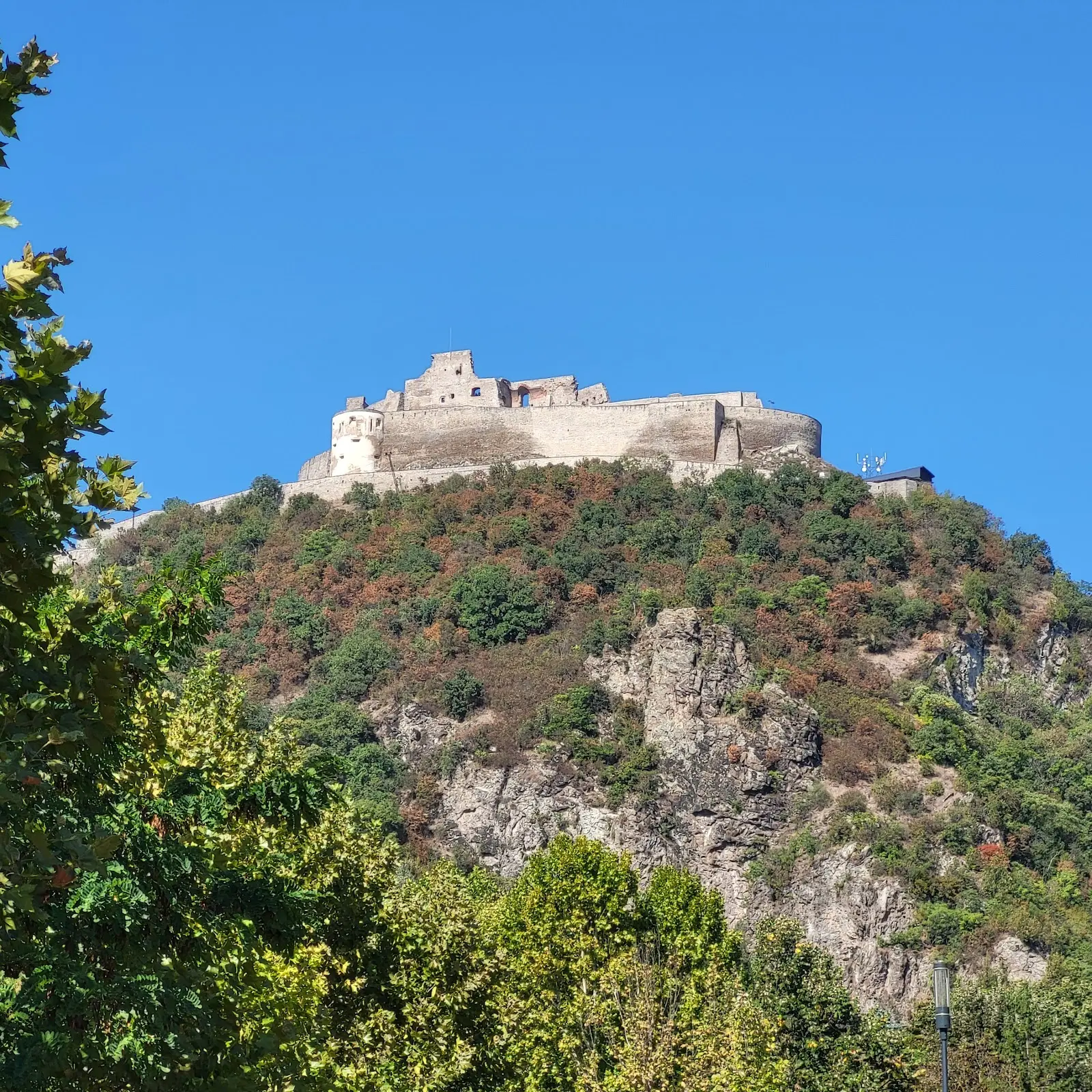
Deva doesn't try to win you over on the first street. The city keeps its trump card high above itself, on a grass-and-scrub volcanic cone where the walls of a medieval fortress stand watch over the Mureș valley. Climb up there once and you understand instantly why a town was built on exactly this spot.
Why Deva
Deva is the capital of Hunedoara county and, for a traveller, the gateway to the densest concentration of history in south-western Transylvania: the capital of pre-Roman Dacia, stone castles on crags, thermal water and mountains visible from the fortress hill. The city itself is built to a human scale — a compact centre, generous parks, wide boulevards — all of it presided over by the silhouette on the hill.
A few reasons to stop here:
- The fortress on the hill — one of the most dramatically sited fortifications in Romania, reached by funicular or on foot.
- The Museum of Dacian and Roman Civilisation — a collection worthy of the region, housed in the oldest building in town.
- The location — Deva sits on the A1 motorway, which makes it one of the easiest bases to reach in Transylvania.
- The surroundings — Corvin Castle, Sarmizegetusa Regia, remote medieval strongholds and a thermal waterfall, all within day-trip range.
Deva Fortress, the landmark that organises everything
Cetatea Devei is a medieval fortress raised on an isolated volcanic hill, exactly the kind of relief that separates an ordinary fortress from a memorable one. The walls step down the slope, and from the top the view opens across the Mureș valley to the ridges closing the horizon.
This is not an inhabited castle but a defensive fortification: ruined walls, bastions, gates and terraces, consolidated and opened up over recent years. It served as a frontier stronghold, passed through successive rulers and was badly damaged by an explosion in the 19th century. A ruin ever since — but a spectacular one, and well worth the climb.
There are two ways up. The funicular — in fact an inclined lift running up the flank of the hill — is the quick option and the one families prefer. Walking up the switchback paths that start from the park at the base takes longer, demands comfortable shoes and rewards you with a view that changes at every bend. Many visitors settle on the wisest combination: up by lift, down on foot.
The fortress hill is a nature reserve
Few visitors know this before they climb: the fortress hill is a protected nature reserve, set aside for the southern-character flora growing on its sun-baked rocks and for its wildlife. The site is best known for the horned viper, a rare species that lives on the sunny scree.
This is not a reason for alarm, just for common sense:
- Stay on the marked paths and alleys, especially on hot days.
- Wear closed shoes if you walk up.
- Don't pick plants or shift stones on the scree — this is a protected area.
- Leave any animal you meet alone; the viper won't strike unless provoked.
Magna Curia and the museum that explains Dacia
In the centre, in a building with the air of a noble residence, sits the Museum of Dacian and Roman Civilisation — one of Romania's most important archaeology museums. Its home is the Magna Curia Palace, the oldest monument in the city and a reason to visit in its own right.
The collections do precisely what you need before or after a trip into the Orăștie Mountains: they put the Dacian world and the Roman one that followed it into order. If you plan to climb to Sarmizegetusa Regia, an hour spent here completely changes the way you read the terraces and sanctuaries up there.
The centre, Fortress Park and Decebalus
Deva is a city for unhurried walking. Parcul Cetății, spread across the foot of the hill, is where the town breathes: shaded alleys, benches and the starting point for the climb to the fortress. It also offers the finest views looking up at the walls.
Nearby stands the statue of Decebalus, the city's tribute to the last Dacian king — a photo landmark and a statement of local identity, in a county that fully claims its Dacian inheritance. The rest of the centre takes a couple of hours: the main boulevard, the small square with its terraces, the interwar civic buildings, all at an easy pace.
Deva as a base
This is where the city proves its real worth. From Deva you leave in the morning and return in the evening from:
- Hunedoara and Corvin Castle — about 20 minutes away, the most spectacular Gothic castle in Romania. The details are in the guide to Hunedoara.
- Sarmizegetusa Regia and the Orăștie Mountains — the Dacian capital, on a mountain road that asks for a full day and some patience; the hiking in this range, the Retezat included, is the territory of our colleagues at munte.online.
- Colț Fortress — a stone tower perched on a crag in the Hațeg Country, one of the inspirations for Jules Verne's novel The Castle in the Carpathians.
- Clocota Waterfall — the thermal waterfall at Geoagiu-Băi, a short and memorable stop, best on cold days when the steam rises off the pools.
Food, coffee and evenings in Deva
Deva makes no claim to being a culinary capital, which is exactly why it surprises you: the food is Transylvanian, substantial and free of staging. You will find traditional cooking built around meat, soups and stews, a handful of modern bistros opened in recent years, terraces in the centre that fill up as evening falls, and patisseries where home-made cake is still an institution.
- Lunch is best taken downtown, on your way back from the fortress.
- Dinner is worth booking at weekends, because the good places in town are few and well known.
- The farmers' market is the best stop for cheeses and seasonal fruit from the Hațeg area.
- Evenings are short and calm — Deva goes to bed early, which is an advantage if you are leaving for the mountains at dawn.
When to go
Late spring and autumn are the best windows: the fortress hill is exposed and shadeless, and in high summer the midday walk up becomes a chore. Summer still works beautifully if you climb early or towards evening, when the light on the walls is at its best anyway. In winter the city is quiet and the visit moves indoors to the museum and out to the county's thermal water.
Practical: getting there and how long to stay
By car is simplest: Deva sits directly on the A1 motorway, which makes it a natural stop between western Romania and Sibiu or Brașov. By train, the city is on the main line linking the west to central Romania, with the region's rail junction at Simeria, right next door.
How long: one full day covers the fortress, the museum and the centre. Two or three days turn Deva into a genuine base, with time for Corvin Castle, the Hațeg Country and Geoagiu-Băi.
For the full list of sights see what to see in Deva, and for choosing a neighbourhood, where to stay in Deva.
Deva is a city that never boasts but always delivers: a fortress on an extinct volcano, a museum that explains a civilisation, and a location that puts half of south-western Transylvania within reach.
Plan your trip
Stays nearby
Stays in Romania
Experiences
Tours & activities
Guided tours, day trips and hand-picked experiences via GetYourGuide — free cancellation on most.
See all experiencesGetting to Romania
Flights, transfer & car
Fly into Romania
Compare fares to Bucharest Otopeni (OTP) and regional airports — Cluj, Sibiu, Iași, Timișoara.
Airport transfer
Private, fixed-price door-to-door transfer — driver waiting from the moment you land.
Rent a car — see the real Romania
A rental car is the key to Romania: the Transfăgărășan, the painted monasteries of Bucovina, mountain roads and the villages of Maramureș that no train reaches.
Find a car











