
What to see in Deva: attractions & experiences
The fortress on its volcanic hill, the archaeology museum in the Magna Curia Palace, Fortress Park and the statue of Decebalus — Deva's sights fit into one good day. The second day belongs to the county: Corvin Castle, the Hațeg Country and the thermal waterfall at Geoagiu-Băi.
Deva's list of sights is short but unusually well chosen: a medieval fortress on an extinct volcano, an archaeology museum inside a 17th-century palace, and a park that ties it all together at the foot of the hill. Around the city, within day-trip range, sit some of the most important historical sites in Romania.
Deva Fortress, the one you don't skip
Cetatea Devei is why most travellers stop here at all. The medieval fortification sits on a volcanic hill that rises alone out of the Mureș valley, and the climb is half the experience: the walls appear in stages as the slope opens up.
At the top you find ramparts, bastions and terraces from which the view takes in the city below, the valley and the distant ridges. Give yourself time. This is not a twenty-minute tick-box — you sit on the walls, walk the circuit, wait for the good light.
Funicular or on foot
The funicular — in fact an inclined lift climbing the flank of the hill — is the fast, comfortable choice, and the right one with children or grandparents. Walking up means switchback paths starting from the park at the base; bring comfortable shoes and water, especially in summer, because the hill is exposed and almost shadeless.
The winning solution for most visitors: up by lift, down on foot. You get the view without the effort of the climb, and on the way down you discover the side perspectives the lift skips.
One detail that matters: the hill is a nature reserve, known for its horned viper. Stay on the paths, wear closed shoes and keep off the scree.
Fortress Park and the walk at the base
Parcul Cetății is the natural starting point of any visit: shaded alleys, benches, room to breathe, and the best photo angles looking up, with the walls suspended above the treetops. It is also where you return after the descent, when your legs ask for a pause.
The Museum of Dacian and Roman Civilisation
The Museum of Dacian and Roman Civilisation is the city's second essential sight, and not only for the collections. The museum occupies the Magna Curia Palace, the oldest monument in Deva — a building with the air of a noble residence, with stone stairs and vaulted ceilings.
Inside is the full story of the region: the Dacian world, the Roman conquest, provincial life. There are archaeology rooms of pottery, weapons, coins and inscribed stones, alongside local-history and natural-science sections — including the nature reserve on the fortress hill and its southern flora. The building itself deserves attention: the inner courtyard, the stone stairs and the vaults tell the story of a Transylvanian noble residence. If Sarmizegetusa Regia or the county's Roman sites are on your plan, come here first. An hour in the museum changes the way you later read the stones in the field.
The statue of Decebalus
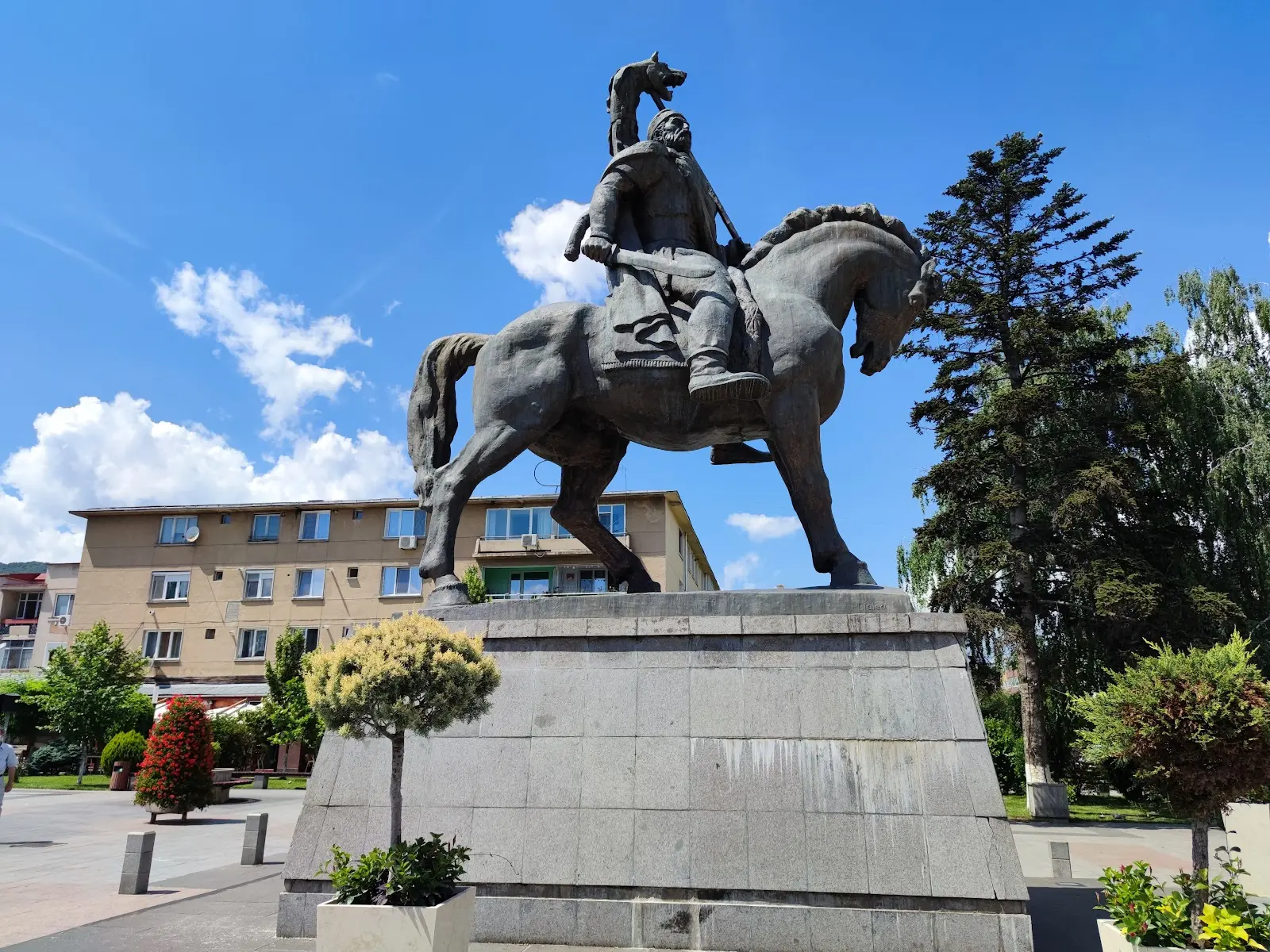
The statue of Decebalus is the city's tribute to the last king of Dacia and one of the most photographed stops in the centre. It doesn't take long, but it says a great deal: you are in the county that claims its Dacian inheritance without hesitation, a few hours' drive from Decebalus's own capital in the Orăștie Mountains.
St Nicholas Cathedral and the centre
Catedrala Sfântul Nicolae is a landmark of the city's religious life and a natural stop on a walk through the centre. Around it, Deva reveals itself as a calm county town: the main boulevard, small squares with terraces, interwar civic buildings, socialist blocks against which the fortress silhouette reads all the more clearly. It is a two- or three-hour stroll, best towards evening, when the light settles on the hill and the terraces downtown fill up.
Deva with children
The city works surprisingly well for a family day, largely thanks to the inclined lift: the ride up becomes the attraction itself, and at the top there is room to run on the terraces, with walls to explore. Beyond that:
- Fortress Park — alleys, benches and shade for the break after the descent.
- The museum at Magna Curia — rooms of Dacian and Roman objects that hold the attention of older children.
- The statue of Decebalus — a short stop and a starting point for the story of Dacia.
- Clocota Waterfall at Geoagiu-Băi — combined with an afternoon at the thermal pools, the safest day-trip option with small children.
Tips that make the visit better
- Go up to the fortress in the morning. The hill has no shade, and walking up at midday in July is a chore.
- Check that the lift is running before you set out with children or grandparents; if it isn't, the only way up is on foot.
- Allow at least an hour at the top. Most visitors rush and miss the best part: the circuit of the walls and the view from the outer terraces.
- Visit the museum before your county day trips, not after — the historical context completely changes how you read the sites.
- Sunset is the best moment for photographs from below, in the park, with the walls catching the last light.
Day trips from Deva
This is where the city becomes more than a stop:
- Corvin Castle in Hunedoara — the most spectacular Gothic castle in Romania, about 20 minutes from Deva. The full programme is in what to see in Hunedoara.
- Sarmizegetusa Regia — the capital of Dacia, in the Orăștie Mountains; a full day, on mountain roads, with a walk up at the end.
- Colț Fortress — a stone tower on a crag in the Hațeg Country, one of the inspirations for Jules Verne's The Castle in the Carpathians. You reach it on foot, across pastures.
- Clocota Waterfall at Geoagiu-Băi — a thermal waterfall, spectacular on cold days when steam rises between the rocks.
A weekend in Deva, hour by hour
Day 1 — the city. Morning: up to the fortress by lift, an hour on the walls, down on foot through the park. Afternoon: Magna Curia and the museum, then the centre, the statue of Decebalus and the cathedral. Evening: a terrace downtown.
Day 2 — the county. Pick a direction: Corvin Castle plus the Hațeg Country and Colț Fortress, or Geoagiu-Băi with Clocota Waterfall and the thermal water. Back in Deva by evening.
With three days, give the third entirely to Sarmizegetusa Regia: mountain roads, a walk up through beech forest and, at the end, the terraces and sanctuaries of the Dacian capital. It is the most demanding programme in the region and the hardest to forget — especially if you have already been through the museum in Deva and know what you are looking at.
For the full context of the city, read the complete guide to Deva; for neighbourhoods and logistics, where to stay in Deva.
Plan your trip
Stays nearby
Stays in Romania
Experiences
Tours & activities
Guided tours, day trips and hand-picked experiences via GetYourGuide — free cancellation on most.
See all experiencesGetting to Romania
Flights, transfer & car
Fly into Romania
Compare fares to Bucharest Otopeni (OTP) and regional airports — Cluj, Sibiu, Iași, Timișoara.
Airport transfer
Private, fixed-price door-to-door transfer — driver waiting from the moment you land.
Rent a car — see the real Romania
A rental car is the key to Romania: the Transfăgărășan, the painted monasteries of Bucovina, mountain roads and the villages of Maramureș that no train reaches.
Find a car











