
Complete guide to Câmpulung Muscel
The oldest town of Wallachia and its first capital: the Negru Vodă princely complex, the legend of Master Manole, the rock-carved church at Nămăești, and the Iezer-Păpușa mountains above the town.
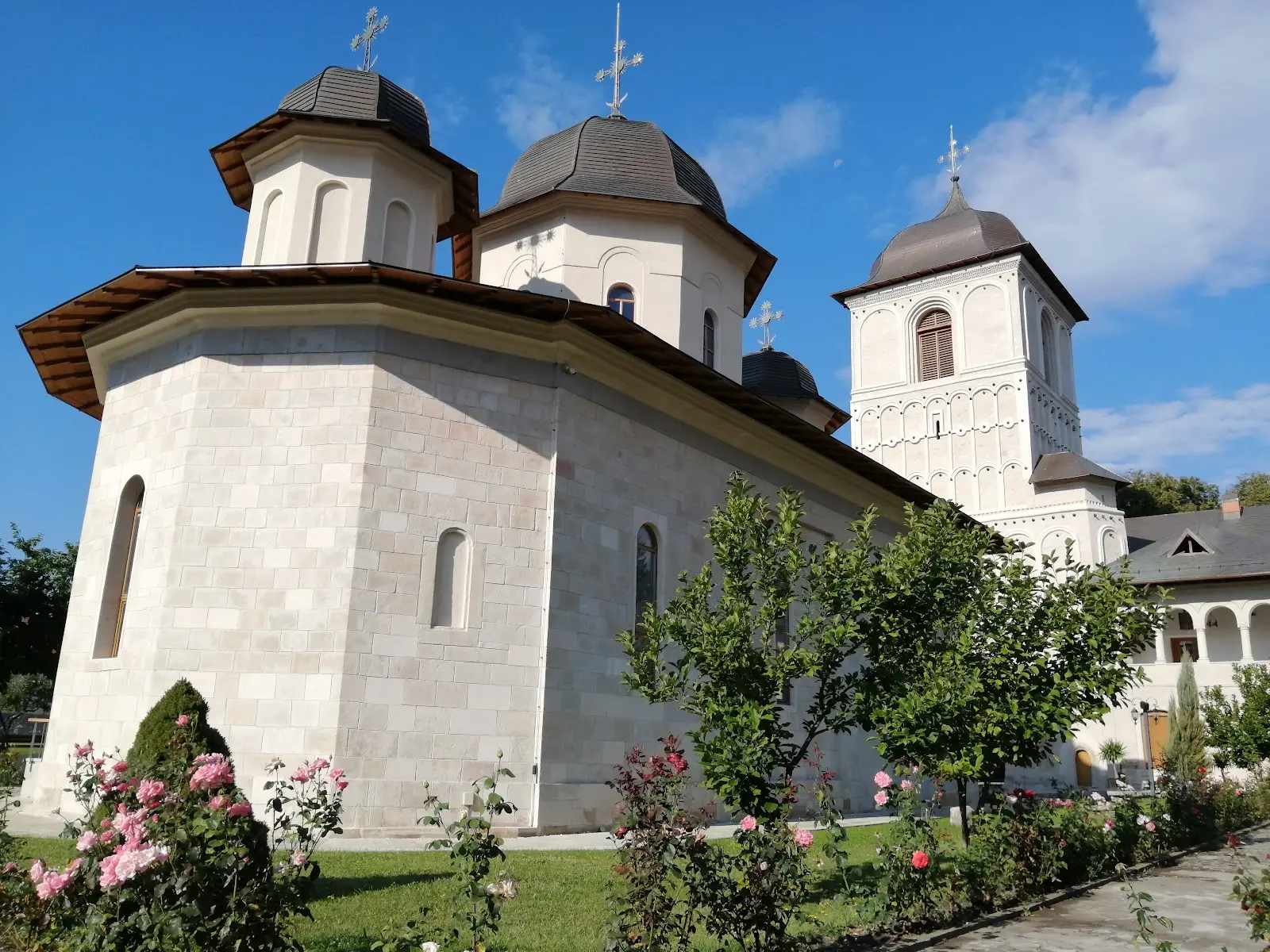
Câmpulung is considered the oldest town of Wallachia and its first capital, back in the fourteenth century — and that is not a brochure line, it is the key to the whole visit. The town stretches along a long valley at the foot of the Iezer-Păpușa Mountains, on the old trade road to Brașov. The centre is walkable; for everything else you need a few hours with a car.
Why Câmpulung Muscel is worth it
Câmpulung does not sell itself on spectacular views, although it has them. It sells beginnings. Here, in the fourteenth century, the first capital of Wallachia was established, and the princely complex in the centre still holds the place where that happened. For a visitor with any curiosity about Romanian history, the town offers something few places still can: the ground zero of a state, still visible, still working as a place of prayer.
The second reason is variety within a small radius. In one day you can be inside a medieval princely complex, a church carved into rock, an honest municipal museum, and a mausoleum raised in memory of the soldiers who fell in the First World War. And above all of it stands the mountain: Iezer-Păpușa, less walked than the Bucegi, just quiet enough that you queue for nothing.
A short history: the first capital of Wallachia
Câmpulung — Câmpulung Muscel, as the records and the locals call it, after the Muscel region — is considered the oldest town of Wallachia. In the fourteenth century it was the country's first capital, at a time when the state itself was only taking shape and its borders and institutions were being settled on the move.
The position explains everything. The town sits on the old trade road to Brașov, on the corridor that links the Wallachian plain to Transylvania through the Rucăr-Bran pass. A trade road brings money, craftsmen, churches and, in those days, administration. The capital moved on later, but the town kept what the status had given it: the princely complex, the stone houses, the craft tradition of Muscel.
Negru Vodă Monastery, the complex of the beginnings
The heart of the visit is Negru Vodă Monastery, the princely complex tied to the name of Basarab I and to the beginnings of the Wallachian state. Take it slowly: the church, the walls, the courtyard, the bell tower. This is not a ruin, it is a living place with its services and its community, and that changes the tone of the visit — you are a guest, not a ticket holder.
If you only have time for one thing in Câmpulung, this is it. The rest of the town reads better once you have spent half an hour here.
Manole's Well and the legend of Master Manole
On the way out towards the mountains you will find Manole's Well, tied to the legend of Master Manole — the story of the builder who, once the church was finished, was left on the roof and tried to come down on wings made of shingles. The site is modest, takes a few minutes, and needs no grand explanation: it matters as a point in a story that entered Romanian literature.
The legend also circulates at Curtea de Argeș, and that is no guidebook coincidence. The two former capitals of Wallachia are naturally visited together, over a weekend, along the same historical thread — see the Curtea de Argeș guide if you want to join them up.
Nămăești Monastery, carved into the rock
A few kilometres out of town, Nămăești Monastery has a feature that lifts it out of any ordinary list: the church is carved into the rock. You step in and the walls are not built, they are cut. The effect is immediate and hard to forget, especially in the morning, when it is quiet.
You get there by car, on a road that climbs, and the visit combines well with a stop for the view over the Muscel hills.
The Mateiaș Mausoleum
The Mateiaș Mausoleum is not a sight in the usual sense of the word. It is a monument raised in memory of the Romanian soldiers who fell in the First World War battles on this front, and inside it rest the remains of those who died here. Visit it as a place of remembrance: no noise, no hurried photographs, and enough time to read what is written on the walls.
For many visitors it is the hardest moment of the day, and it is better planned as such — not at the tail end of a crowded schedule, but with a pause afterwards.
The Municipal Museum
The Municipal Museum is what ties all the threads above together: the age of the town, its status as first capital, the crafts of Muscel, life on the trade road. It is a short, useful visit, and if you do it at the start of the day, the rest of the programme makes far more sense.
The mountain above the town
Câmpulung sits at the foot of the Iezer-Păpușa Mountains, a quieter massif than its famous neighbours. For a visitor without serious kit, the mountain counts as scenery and as air: ridgelines seen from below, half-day paths, hill villages with stone houses. For hikers it is a range that asks for preparation, a map and good weather — not a Sunday stroll.
When to come
- Spring and autumn are the best: good light on the princely complex, reasonable temperatures for the hill roads, colour on the slopes.
- Summer is the easiest for the mountains and for the road to Brașov, but also the busiest on the weekend highways.
- Winter leaves the town quiet and photogenic, but the climbing roads — to Nămăești, to the villages — ask for care and good tyres.
Getting there and getting around
The town sits on the road climbing from Wallachia towards Brașov, so it is easy to reach by car from Pitești, from Bucharest or from Transylvania. The centre is entirely walkable: the monastery, the museum, the market square, the old houses.
For Nămăești, Mateiaș and the hill villages you need a car. Without one, plan them as a separate block with a local taxi rather than mixed in with the centre.
Câmpulung also works as an eastern base for the Transfăgărășan: the road up to the ridge starts in the Curtea de Argeș area, roughly an hour's drive away, so a stay here lets you drive the alpine route in a day and come back to your room. Always check whether the alpine section is open, though — it is drivable only in the warm months.
How long you need
- Half a day: Negru Vodă Monastery, the Municipal Museum, the centre on foot.
- A full day: all of the above, plus Manole's Well and Nămăești.
- Two days: add Mateiaș, a drive out into Muscel, and a mountain day or the Transfăgărășan.
Where to go next
If you want the full list of sights in the order they are best visited, read What to see in Câmpulung Muscel and around. If you are staying the night or using the town as a base for the mountains and the roads around it, read Where to stay in Câmpulung Muscel.
Plan your trip
Stays nearby
Stays in Romania
Experiences
Tours & activities
Guided tours, day trips and hand-picked experiences via GetYourGuide — free cancellation on most.
See all experiencesGetting to Romania
Flights, transfer & car
Fly into Romania
Compare fares to Bucharest Otopeni (OTP) and regional airports — Cluj, Sibiu, Iași, Timișoara.
Airport transfer
Private, fixed-price door-to-door transfer — driver waiting from the moment you land.
Rent a car — see the real Romania
A rental car is the key to Romania: the Transfăgărășan, the painted monasteries of Bucovina, mountain roads and the villages of Maramureș that no train reaches.
Find a car











