Romania's Most Beautiful Hiking Trails
From the glacial lakes of Retezat to the limestone ridge of Piatra Craiului, the Romanian Carpathians hold some of the most spectacular mountain trails in Europe. A guide for the hiker who wants to climb well and safely.
The Carpathians trace an arc of almost a thousand kilometres through the middle of Romania, and inside it hide alpine ridges, glacial lakes and karst plateaus that rival the Alps yet remain, for the most part, wild. You don't need rope and ice axe for the most beautiful trails, only a good pair of boots, respect for the weather and a little fitness. Here are the mountains worth climbing and what makes each one memorable.
Retezat National Park: the land of glacial lakes
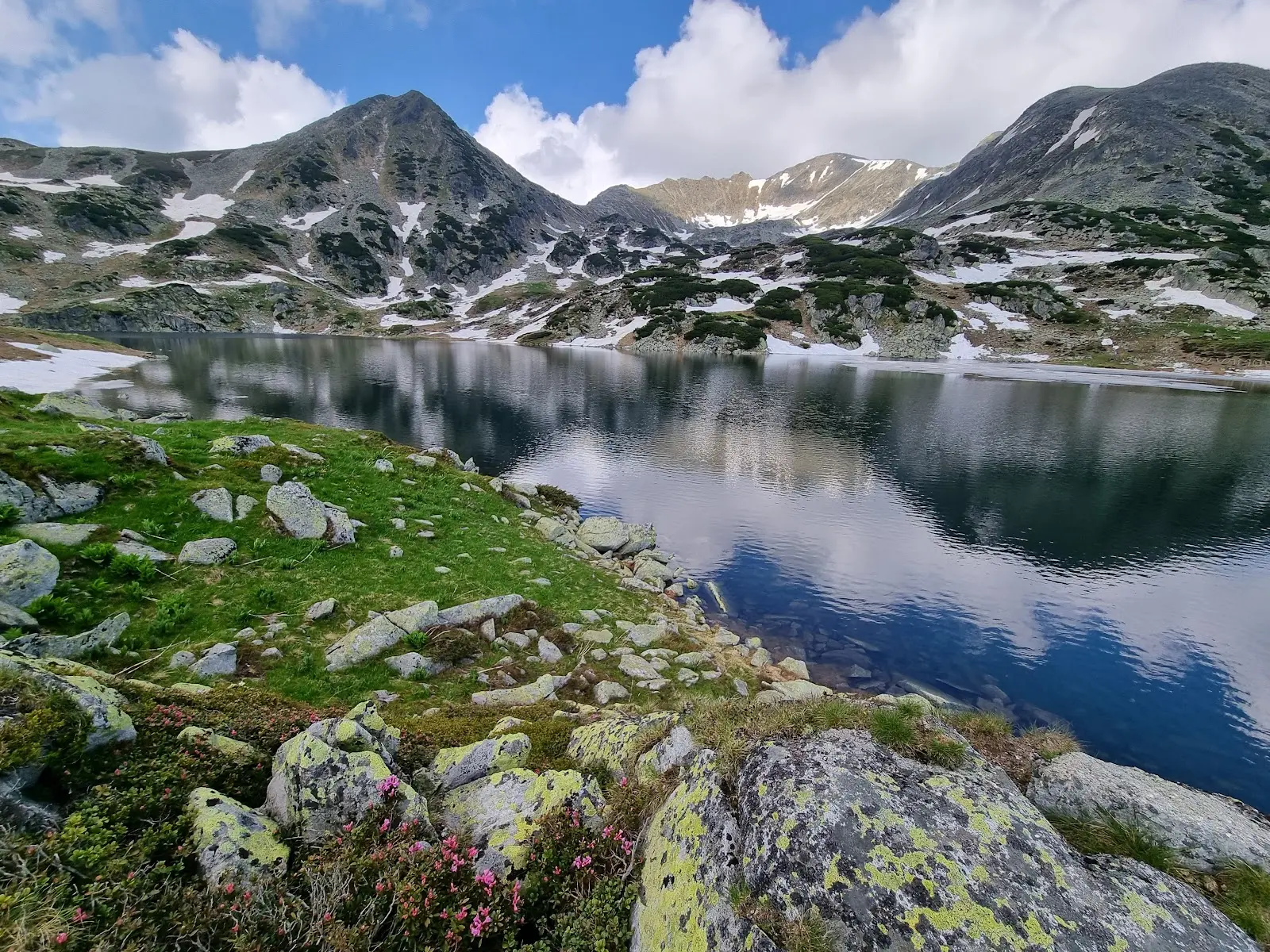
For many hikers, Retezat is the country's most beautiful massif. The old ice cap left behind more than eighty lakes, and at their heart lies Bucura, Romania's largest glacial lake, spread across nearly ten hectares at over 2000 metres. Most ridge routes begin from its shore, and the view carries the same serene grandeur you seek in the southern Făgăraș, only without the crowds.
From Bucura, the natural ascent is Peleaga, the highest peak in the massif at around 2509 metres. The climb requires no scrambling, but the terrain is rocky and exposed, so save it for settled weather.
- Access: usually via Pietrele cabin or the Nucșoara valley, a day's walk to the lake plateau.
- Difficulty: moderate to hard, mostly because of the distances and the lack of shelter at altitude.
- Highlight: the amphitheatre of glacial lakes, unique in the Carpathians.
The Făgăraș Mountains: Romania's highest range
Făgăraș is the country's alpine backbone. Here stands Moldoveanu, Romania's highest peak at around 2544 metres, and its neighbour Negoiu at roughly 2535 metres, two giants divided by a long, jagged ridge.
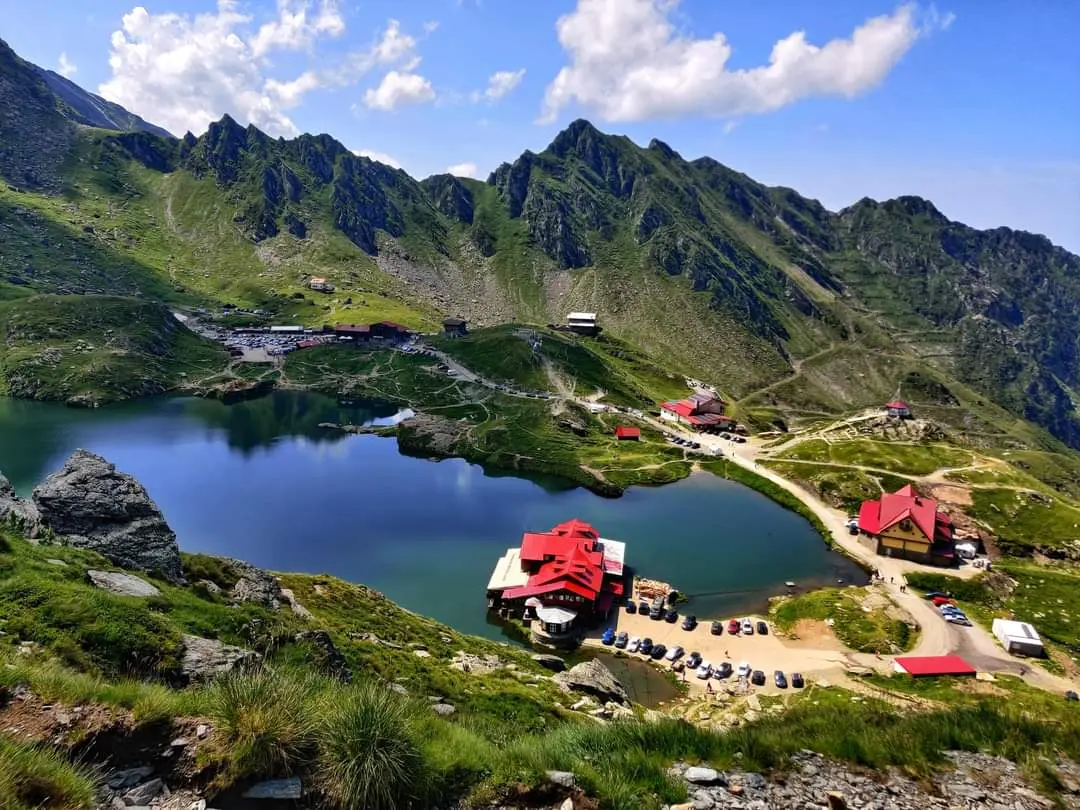
The signature route remains the main ridge, but for those with less time the Bâlea–Podragu section offers the essence of the massif: glacial lakes, high saddles and sheer walls, with cabins at each end. This is serious alpine terrain, with exposed sections and sudden shifts in weather.
- Access: easiest via the Transfăgărășan road to Bâlea Lake, reachable by cable car too.
- Difficulty: hard; the full ridge takes several days and real experience.
- Highlight: the country's two highest peaks and its longest alpine ridge.
Piatra Craiului: the narrow limestone ridge
If Făgăraș impresses through height, Piatra Craiului impresses through shape. It is a long blade of limestone, dramatically narrow, rising abruptly above the surrounding villages. The ridge is walked along its very spine, with drops on either side, and the main summit, La Om, reaches around 2238 metres.
The best-known passages are the La Lanțuri sections, where the route is secured with cables and chains fixed into the rock to cross the vertical steps. It isn't technical climbing, but it demands a clear head for heights and sure footing.
- Access: from Zărnești, via the Prăpăstii gorges and Curmătura.
- Difficulty: hard on the ridge; gentler variants run below the wall.
- Highlight: one of the most spectacular limestone ridges in the Carpathians.
The Bucegi Mountains: the most accessible
Bucegi is the starter mountain for many Romanian hikers, precisely because you reach the top without great effort. From Bușteni and Sinaia a cable car lifts you straight onto the plateau, from where the trails become long high-altitude walks.
Here stand the rock formations that became symbols: the Sphinx and Babele, carved by wind and frost. Not far away, on Caraiman, rises the great Heroes' Cross, visible from the valley on clear days. The highest point is Omu peak, at around 2514 metres, home to the oldest mountain refuge in the country.
- Access: cable car from Bușteni or Sinaia; from the plateau, marked trails.
- Difficulty: easy to moderate, depending on the route.
- Highlight: the quick access and the emblematic formations on the plateau.
Ceahlău: the holy mountain of Moldavia
Rising in isolation above the hills of Moldavia, Ceahlău has an almost mythical presence; it has been called the holy mountain and appears in legend since ancient times. Its silhouette is recognisable from tens of kilometres away, above all the twin peaks of Toaca and Panaghia.
The climb to Toaca, at over 1900 metres, uses wooden stairs on the final stretch, and the view from the top opens over all of Moldavia. Another goal is the Duruitoarea waterfall, one of the finest in the country, hidden in the forest on the northern slope.
- Access: from Durău or Izvoru Muntelui, a day's climb.
- Difficulty: moderate; well-marked and maintained trails.
- Highlight: the spectacular relief and the sacred air of the mountain.
The Apuseni Mountains: the Padiș plateau and the world of karst
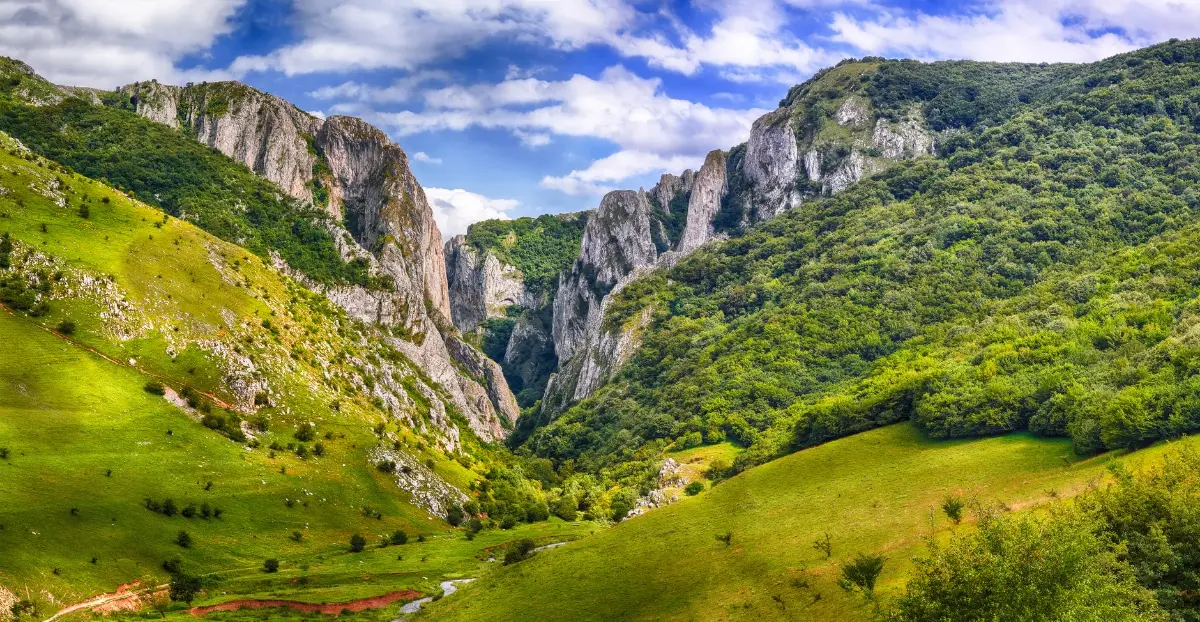
Apuseni is another world compared with the alpine ridges: here you climb not for altitude but for caves, gorges and wooded plateaus. The heart of the area is the Padiș plateau, a maze of clearings, sinkholes and springs, ideal for relaxed day hikes.
The local treasure is Cetățile Ponorului, a system of limestone portals and shafts of rare wildness, considered one of the most impressive karst phenomena in Europe. The terrain is gentler, but the wet, slippery paths still call for care.
- Access: by car almost to Padiș, then on foot.
- Difficulty: easy to moderate; suitable for families too.
- Highlight: the karst landscape and the deep-forest atmosphere.
What to know before you go
Romania's high mountains are safely walked within a fairly short season. A few rules keep the hike pleasant and bring you back whole.
- Season: for the high alpine routes, roughly June to October; outside it you can meet snow and ice on northern slopes even in late summer.
- Trail markers: follow the coloured signs (stripe, triangle, cross, dot) and don't improvise shortcuts; the marked path is always the safest.
- Weather: check the forecast beforehand and start early, since storms typically build in the afternoon; descend if the weather turns, and never linger on a ridge during lightning.
- Bears: the Carpathians hold Europe's largest brown bear population. Don't leave food in sight, don't feed animals, make noise on forest paths, and keep your distance if you see one; retreat calmly, without running.
- Gear: boots with good soles, layered clothing, enough water, a headlamp and an offline map; up high you can't rely on signal.
Choose the mountain by your experience, not by the photograph. Bucegi and Apuseni forgive the beginner, Retezat and Ceahlău demand fitness, and Făgăraș and Piatra Craiului command respect. Started right, each of them gives back more than you climbed.
Plan your trip
Stays nearby
Stays in Romania
Experiences
Tours & activities
Guided tours, day trips and hand-picked experiences via GetYourGuide — free cancellation on most.
See all experiencesGetting to Romania
Flights, transfer & car
Fly into Romania
Compare fares to Bucharest Otopeni (OTP) and regional airports — Cluj, Sibiu, Iași, Timișoara.
Airport transfer
Private, fixed-price door-to-door transfer — driver waiting from the moment you land.
Rent a car — see the real Romania
A rental car is the key to Romania: the Transfăgărășan, the painted monasteries of Bucovina, mountain roads and the villages of Maramureș that no train reaches.
Find a car