The Apuseni and the Moți Country: Caves, Gorges and Villages
Gentle mountains, yet full of surprises — underground glaciers, wild gorges and hamlets scattered on the ridges, where the Moți keep a way of life apart.
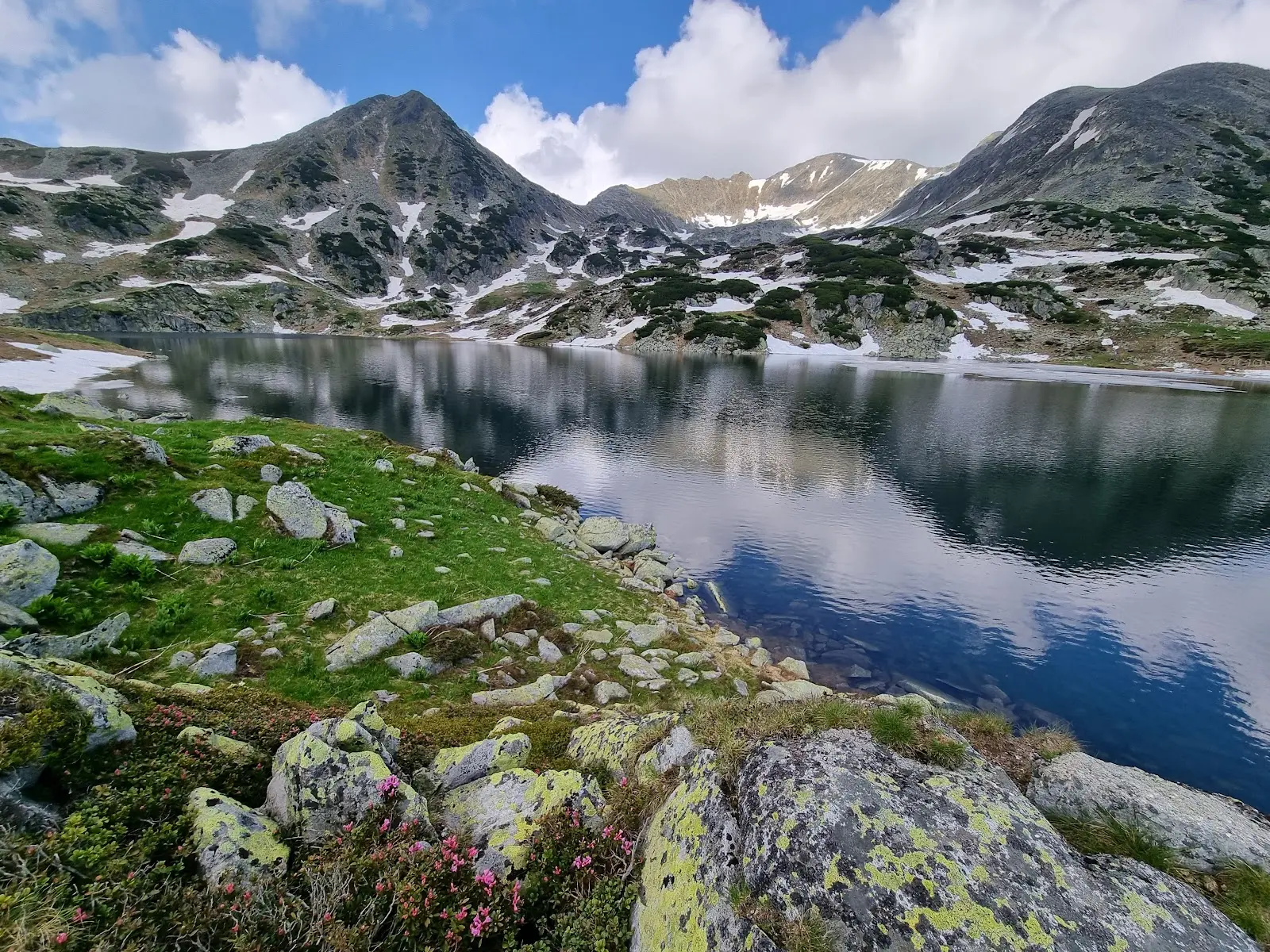
The Apuseni Mountains, in western Transylvania, are a range apart within the Carpathian landscape. They lack the alpine ridges of the Făgăraș, but they have something few mountain areas in Europe still preserve: a combination of spectacular karst phenomena — caves, gorges, underground glaciers — and an isolated rural world, the Moți Country, where villages climb surprisingly high onto the ridges.
A karst world
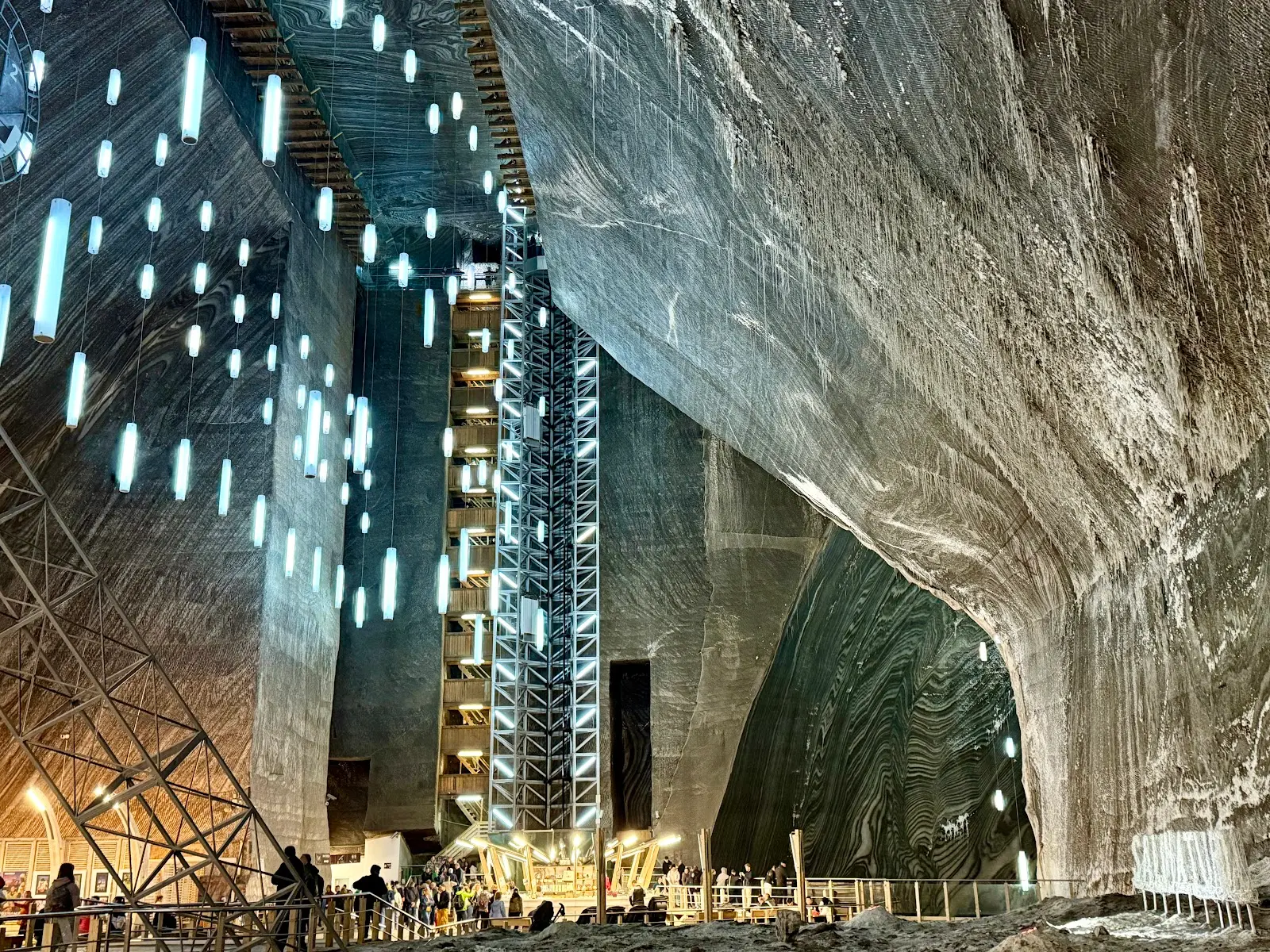
The Apuseni are known for their karst relief: limestone shaped by water into caves, sinkholes, gorges and springs, creating an underground landscape of rare richness.
- Scărișoara Cave holds one of the largest underground glaciers in Europe — a mass of ice that lasts all year, deep inside the mountain.
- The Bears' Cave (Peștera Urșilor), near Chișcău, is renowned for its formations and for the cave-bear fossils discovered here; it is one of the most accessible developed caves.
- Other caves and sinkholes, some reachable only with a guide and equipment, draw cavers from around the world.
Gorges and waterfalls
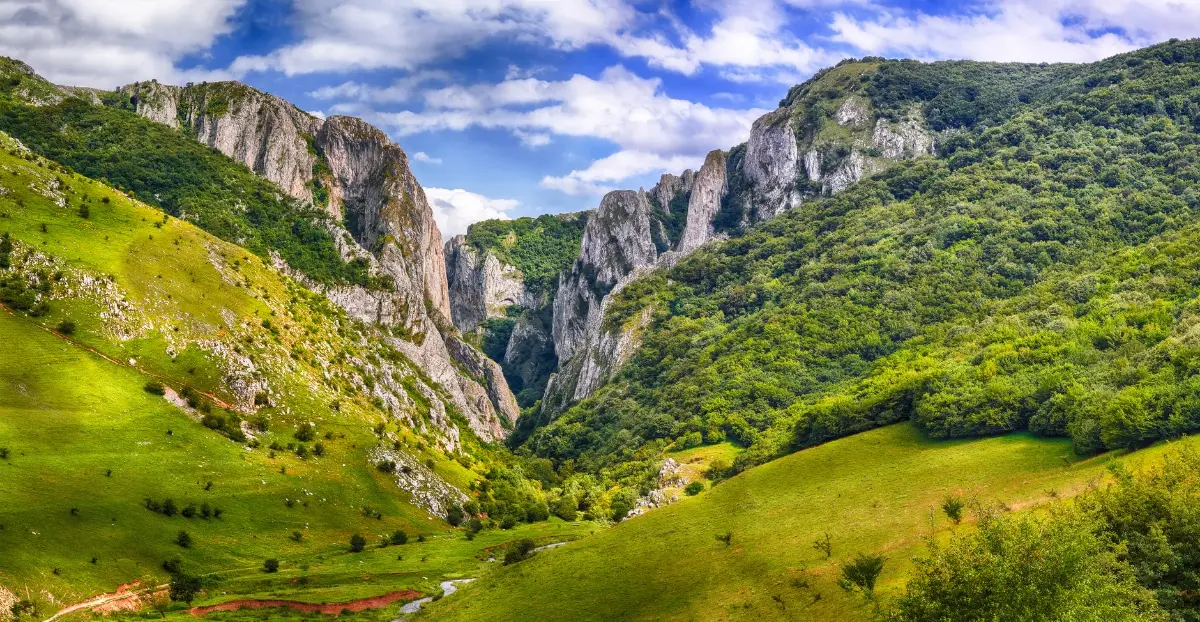
- Turda Gorge (Cheile Turzii), near Cluj, is a narrow, wild valley with vertical walls and spectacular paths — a classic day hike.
- Râmeț Gorge and other lesser-known defiles offer routes for those seeking quiet.
- Waterfalls and springs (water bursting from the rock) punctuate the landscape.
The Moți Country
The human heart of the Apuseni is the Moți Country, an ethnographic area where the community of the Moți has lived for centuries in villages scattered across slopes and ridges, at high altitudes. The Moți were traditionally tied to woodworking — the famous tulnic (the long horn used to communicate across valleys) and the craft of tubs and buckets. Here a harsh but dignified way of life has survived, marked by isolation and a strong local pride, linked also to the historical figure of Avram Iancu.
Villages and traditions
The Moți villages are among the most dispersed in Romania — houses and farmsteads set far apart, each with its own land. Traditional fairs, such as the one on Găina Mountain (the famous "Maidens' Fair"), gather the community and preserve old customs. It is a cultural landscape that rewards patient, respectful discovery.
How to visit
- By car: the roads are narrow and winding, but the scenery is the reward. Plan extra time.
- Good base: the Gârda de Sus area, Arieșeni, or from Cluj for the Turda Gorge.
- The developed caves (Bears' Cave, Scărișoara) are visited with a guide; check the schedule and bring warm clothes — it is cold underground.
- In winter: Arieșeni is a small ski resort, and the landscape of snow-covered villages is superb.
- Respect the community: many farmsteads are homes, not tourist sights.
The Apuseni impress not through altitude but through diversity and authenticity. They are mountains for those who prefer quiet exploration to spectacular high-altitude discoveries — a deep, hidden Romania tucked between gentle ridges.
Plan your trip
Stays nearby
Stays in Romania
Experiences
Tours & activities
Guided tours, day trips and hand-picked experiences via GetYourGuide — free cancellation on most.
See all experiencesGetting to Romania
Flights, transfer & car
Fly into Romania
Compare fares to Bucharest Otopeni (OTP) and regional airports — Cluj, Sibiu, Iași, Timișoara.
Airport transfer
Private, fixed-price door-to-door transfer — driver waiting from the moment you land.
Rent a car — see the real Romania
A rental car is the key to Romania: the Transfăgărășan, the painted monasteries of Bucovina, mountain roads and the villages of Maramureș that no train reaches.
Find a car