
Complete guide to Târgoviște
Capital of Wallachia for more than two centuries: the Princely Court, the Chindia Tower, the printing museum and the monasteries nearby, in a city you can see on foot.
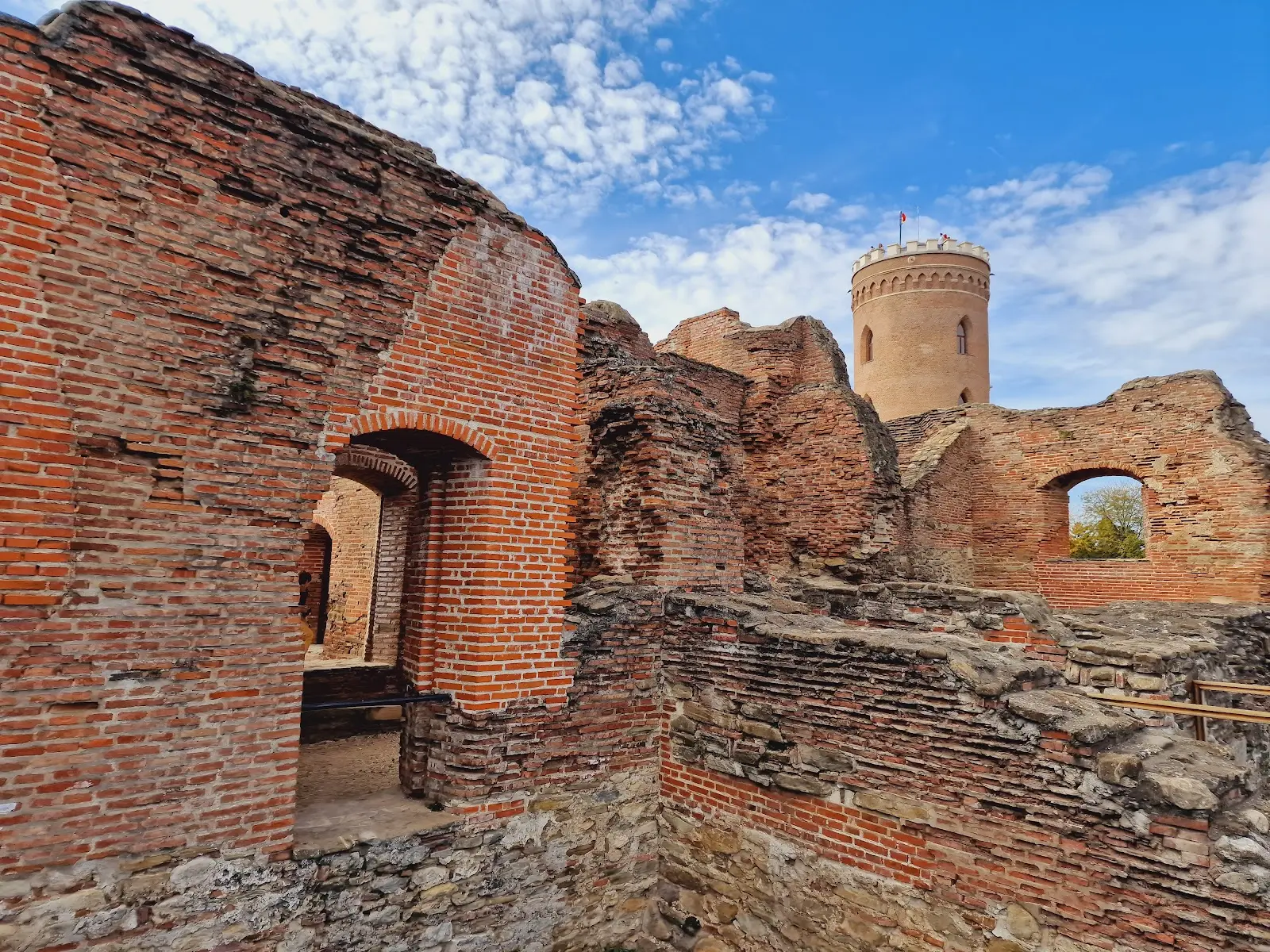
Few Romanian cities can say they were, for more than two centuries, the centre of power of an entire country. Târgoviște can: it was the capital of Wallachia from the fifteenth century onwards, and the evidence of that era now sits within a few minutes' walk of itself. The rest of the city is quiet and provincial — exactly the contrast that makes the visit memorable.
Why Târgoviște is worth it
Târgoviște is not a spectacle city. It is a document city. For generations the fate of Wallachia was decided here, and the old centre still holds the princely complex where it happened. For a visitor arriving from Bucharest or Brașov, the town has a rare advantage: everything that matters can be seen on foot, in a single day, with no transport, no long queues and no improvising.
The second reason is density. Within a few hundred metres you have the princely court, the tower that became the city's emblem, the metropolitan cathedral and a museum dedicated to printing. On the edge of town, two monasteries with real historical weight. Few small Romanian cities offer this much substance in so small a perimeter.
The third reason is how it is visited. Târgoviște imposes no strict schedule and makes you queue for nothing. You can enter the voivodal ensemble in the morning, step out for coffee, come back an hour later and pick up the thread. It is a city that allows a human pace — rare in places carrying this much history.
A short history: the capital of Wallachia
From the fifteenth century, Târgoviște became the capital of Wallachia and remained so for well over two hundred years. Capital status brought everything a princely residence requires: a court, churches, workshops, a printing press, trade routes, foreign envoys. This was where power was exercised, not just a dot on a map.
The name most tied to the city remains that of Vlad Țepeș, who held his princely residence here and in whose time the tower beside the court was raised. If this historical thread is why you came, continue it in On the trail of Dracula — Târgoviște is the logical starting point, not a stopover.
One thing is worth holding on to, because it changes how you read the city: nothing you see here was built for visitors. The walls, churches and cellars had concrete functions, and the complex was lived in, not displayed. That is why the visit asks for a little patience and a little imagination — and why it repays more than a restored castle does.
The Princely Court and the Chindia Tower
The heart of the visit is the Princely Court Museum Complex, the voivodal ensemble that served as the residence of the rulers of Wallachia. You walk it as an open-air site: walls, foundations, churches, cellars, with panels explaining what stood where. It is not a palace polished back into shape — it is an authentic ensemble you read.
At its centre rises the Chindia Tower, the emblem of the city, built in the time of Vlad Țepeș. You can climb it, and from the top the whole ensemble opens up: only then do you grasp how the court was laid out, what stood next to what, and how compact this centre of power actually was. If you have time for one thing only in Târgoviște, this is it.
The city of the printed book
The city's second great theme is printing. Some of the earliest books of the Romanian lands were printed in Târgoviște, and the story is told at the Museum of Printing and Old Romanian Books. It is a short and surprisingly good visit: it explains why a capital needed a press, and what producing a book meant at the time.
Also in the centre stands the Metropolitan Cathedral, which completes the picture of a city that was an ecclesiastical centre as well as a political one.
The monasteries nearby
On the hill at the edge of town is Dealu Monastery, where the head of Michael the Brave is kept. For many visitors it is the most powerful moment of the day, and it is worth the drive even without a religious agenda.
Further on, Viforâta Monastery is the opposite: quiet, withdrawn, set among wooded hills. The two pair well into a half-day by car or taxi, once you are done with the centre.
Both are working monasteries, not museum sites. Modest dress is expected, photography inside only with permission, and the service schedule takes priority over visitors. Go in the morning and you get silence; go on a Sunday and you get something else entirely — a place full of people, with a different atmosphere.
December 1989
Târgoviște is also the place where the Ceaușescus were executed, in December 1989. The site appears on the city's visiting routes and is noted here factually, with nothing added: it is part of Romania's recent history, and many visitors arrive already aware of it.
The city today
Beyond the historic ensemble, Târgoviște is an ordinary county town: wide boulevards, districts from the industrial decades, a pedestrian centre with terraces. That is not a drawback, it is the context. A visitor expecting a sprawling Transylvanian-style old town will be disappointed; one who comes for the voivodal ensemble and two monasteries will leave satisfied.
In practice it means food, lodging and shopping are straightforward and free of surprises, and the evenings are quiet. This is a good base city, not a nightlife one.
When to come
- Spring and autumn are best: good light over the princely court, reasonable temperatures for climbing the tower, and the surrounding hills at their best.
- Summer is hot on the plain, but the city has shade and greenery, and Chindia Park, right beside the voivodal complex, rescues the midday hours.
- Winter leaves the centre empty and photogenic, but check tower access before you set out.
Getting there and getting around
Târgoviște sits close to Bucharest and is well connected by national roads, which makes it a very comfortable day trip from the capital, by car or by train. Once you arrive, the centre is done entirely on foot — distances between sights are measured in minutes, not stops.
For the monasteries and the surrounding hills you need a car or a taxi. If you come without a car, plan the monasteries as a separate block rather than interleaving them with the centre.
How much time you need
- Half a day: the Princely Court, the Chindia Tower, the printing museum.
- A full day: all of the above, plus the cathedral, the park and one monastery.
- Two days: an unhurried centre, both monasteries and a trip into the hills and the valley north of the city.
Next steps
For the complete list of sights, in the order that works best, go to What to see in Târgoviște. If you are staying overnight or using the city as a base for the region, read Where to stay in Târgoviște.
Plan your trip
Stays nearby
Stays in Romania
Experiences
Tours & activities
Guided tours, day trips and hand-picked experiences via GetYourGuide — free cancellation on most.
See all experiencesGetting to Romania
Flights, transfer & car
Fly into Romania
Compare fares to Bucharest Otopeni (OTP) and regional airports — Cluj, Sibiu, Iași, Timișoara.
Airport transfer
Private, fixed-price door-to-door transfer — driver waiting from the moment you land.
Rent a car — see the real Romania
A rental car is the key to Romania: the Transfăgărășan, the painted monasteries of Bucovina, mountain roads and the villages of Maramureș that no train reaches.
Find a car











