
Complete guide to Câmpina
The Prahova Valley town where a father's grief became a castle, where Nicolae Grigorescu died, and where oil wrote Romania's industrial history — plus the cheapest base for the mountains.
Câmpina is the town thousands of people drive past every day on the road between Bucharest and Brașov. Almost nobody stops, and that is a mistake: this is where you find one of the strangest buildings in Romania, the house where the father of modern Romanian painting lived and died, and an industrial history that put the area on the world map. This guide covers what the town holds, in what order to see it, and why it deserves more than a fuel stop.
Why Câmpina is worth it
Câmpina does not compete with the resorts of the Prahova Valley, and it does not try to. Its strength lies elsewhere: a rare mix of culture and industrial history, in a small, settled town you can cover on foot and without booking anything.
The first reason is the Bogdan Petriceicu Hasdeu Memorial Museum — the Iulia Hasdeu Castle, a building with no equivalent in the country, raised out of grief and on a principle no other Romanian structure claims.
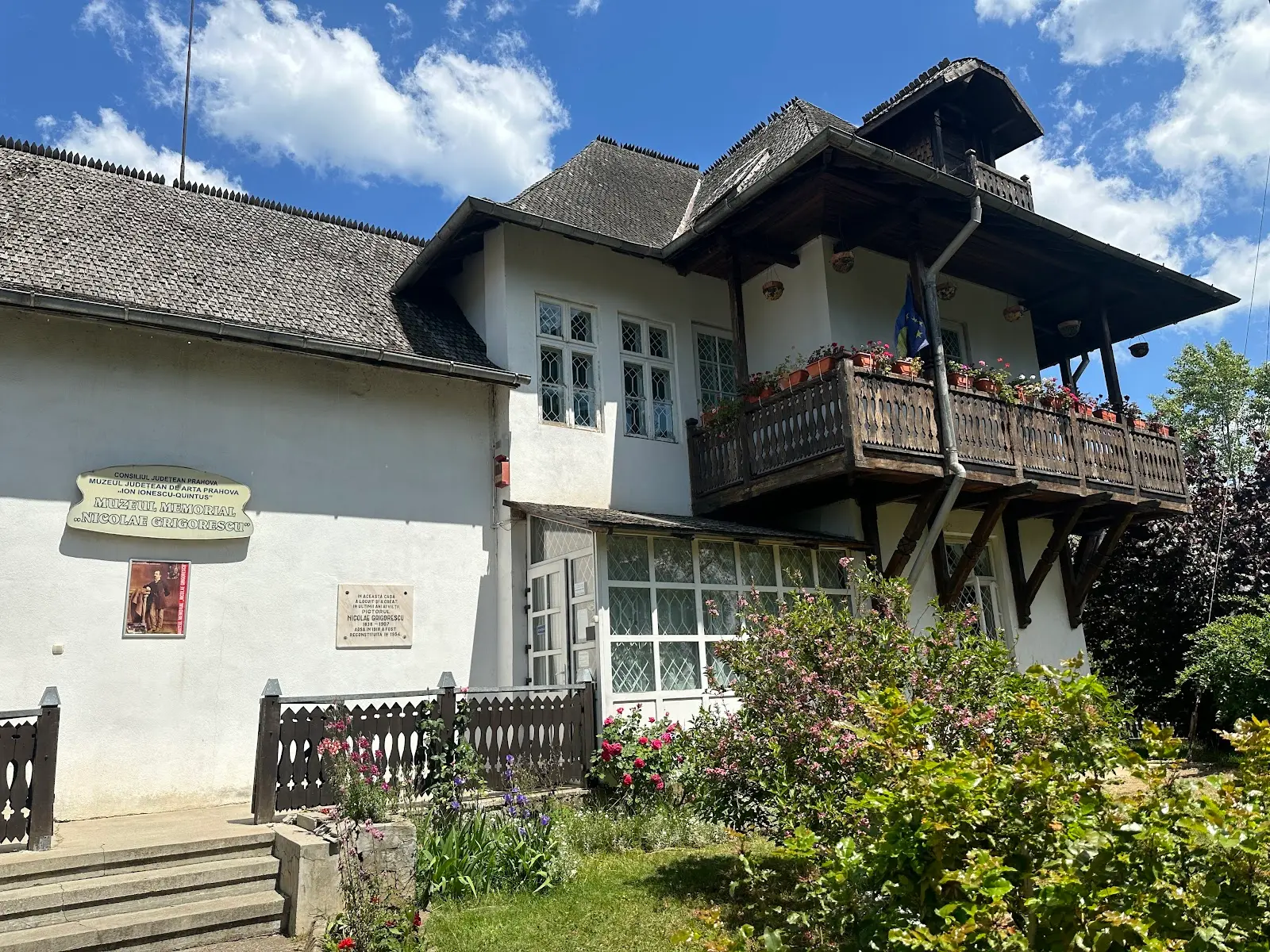
The second is the Nicolae Grigorescu Museum, set in the house where the painter lived and died. It is not a gallery like any other: this is where the man worked, and the difference shows.
The third is position. The town sits halfway between Bucharest and Brașov, on the Prahova Valley, which makes it a cheaper and far quieter base than the mountain resorts further up — a practical advantage few visitors ever use.
The oil town
To understand Câmpina you have to understand that you are standing in one of the oldest oil regions in the world. Oil is not a footnote here; it is the reason the town grew. It brought engineers and workers, schools and money, shaped entire neighbourhoods, and tied a provincial town to international markets long before Romania was a travel destination.
For a visitor that translates into two things. First, Câmpina has none of the atmosphere of a farming market town; it feels technical, with an identity distinct from the villages and resorts around it. Second, oil is the thread running through almost any local conversation about the past, so it is worth keeping in mind as you read the plaques on buildings and look out at the surrounding hills.
The Iulia Hasdeu Castle
The building that alone justifies the trip to Câmpina was built by the scholar Bogdan Petriceicu Hasdeu in memory of his daughter Iulia, who died very young. What lifts it out of the category of memorial houses is the method: Hasdeu maintained that he received the instructions for the building through séances, directly from his daughter.
The result is one of the most unusual buildings in Romania, today a memorial museum. You do not go for beautiful architecture in the classical sense; you go for the way an immense grief was turned into stone by a man who was, at the same time, one of the great scholars of his age. It is a visit that stays with you for days afterwards, even if you believe nothing about spiritualism.
Nicolae Grigorescu's house
The second essential visit is the house of Nicolae Grigorescu, the father of modern Romanian painting, now a museum. The painter lived and died here, and the museum keeps the connection with the man rather than only the work: the rooms, the objects, the atmosphere of a house at the edge of a town where a celebrated artist had withdrawn in order to paint.
If you have already done the art museums in Bucharest, the Câmpina visit works differently — it is intimate, short, and it explains where his way of looking at light and at people came from. All the practical detail and the rest of the sights are in What to see in Câmpina.
The centre on foot
The rest of the town fits comfortably into an unhurried afternoon:
- St Nicholas Church — a landmark in the centre and a short stop between the two museums.
- Central Park — where the life of the town is visible: benches, paths, children, pensioners, shade at midday.
- Peștera Lake — the locals' open-air outing, good for an evening walk or a break after the museums.
You need no public transport for any of them. The centre of Câmpina is measured in minutes of walking, not in stops.
Gateway to the Prahova Valley
This is where the town's real strategic value sits. From Câmpina the Prahova Valley climbs towards the mountain resorts, and every major sight in the region becomes a day trip. The most obvious is Sinaia, with everything it offers — if you head up there, start from the Complete guide to Sinaia, which covers the resort in detail.
The logic is simple: sleep cheaper and quieter down in Câmpina and drive up in the morning. On busy weekends it also shortens your fight with parking and resort traffic.
When to come
- Spring and autumn are best: museums without the heat, the surrounding hills at their finest, and the valley off its peak.
- Summer makes the town a useful refuge: shade in the park, cooler air than on the plain, and quick access to the mountains.
- Winter turns Câmpina into a logical base for snow on the Prahova Valley, but always check museum opening before you set out.
Getting there and getting around
The town lies on the Bucharest–Brașov axis, so it is easy to reach by car or by train, and a day trip from Bucharest is entirely doable. Once you are there, the centre and both museums are done on foot.
For the surroundings — the hills, the nearby villages, the roads towards Breaza or Telega — you need a car. Without one, treat Câmpina as a walking town and use the train to go up the valley.
How much time you need
- Half a day: the Iulia Hasdeu Castle and the Nicolae Grigorescu Museum.
- A full day: both museums, the church, Central Park and Peștera Lake, at an easy pace.
- Two or three days: the town as a base, plus one or two trips up the Prahova Valley.
Next steps
For the full list of sights and the order that works best, go to What to see in Câmpina. If you are staying overnight or want to use the town as a base for the valley, read Where to stay in Câmpina and the Prahova Valley.
Plan your trip
Stays nearby
Stays in Romania
Experiences
Tours & activities
Guided tours, day trips and hand-picked experiences via GetYourGuide — free cancellation on most.
See all experiencesGetting to Romania
Flights, transfer & car
Fly into Romania
Compare fares to Bucharest Otopeni (OTP) and regional airports — Cluj, Sibiu, Iași, Timișoara.
Airport transfer
Private, fixed-price door-to-door transfer — driver waiting from the moment you land.
Rent a car — see the real Romania
A rental car is the key to Romania: the Transfăgărășan, the painted monasteries of Bucovina, mountain roads and the villages of Maramureș that no train reaches.
Find a car











