
Complete guide to Călărași
A Danube town in the south-eastern plain: St Nicholas Cathedral, the Central Park, the Borcea branch and its fishing, the Iezer-Călărași reserve and the ferry to Silistra. An honest guide to a pass-through town.
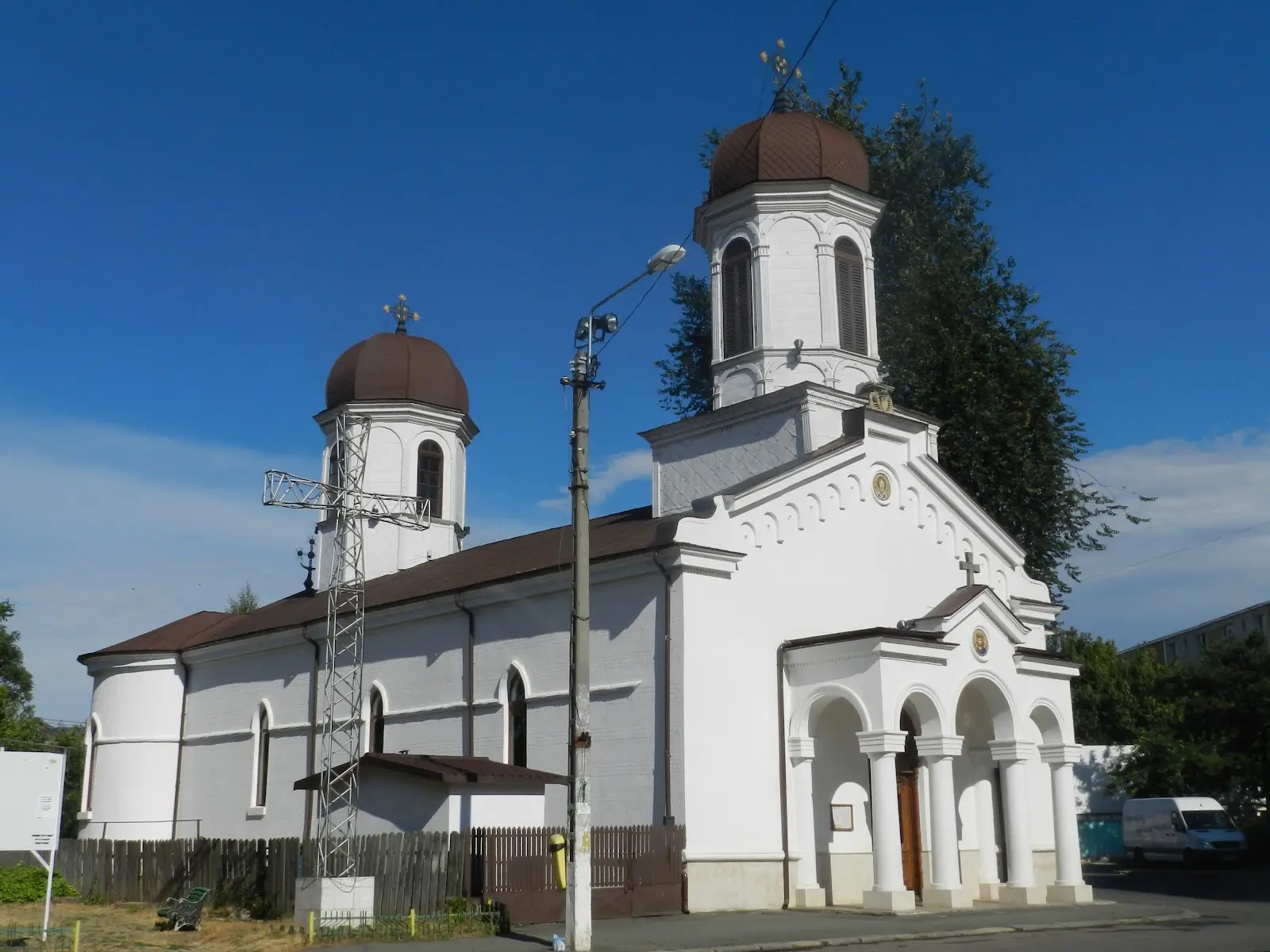
Călărași is a town on the Danube, the seat of the county that shares its name, in the south-east of the Romanian plain. It is a town you pass through — and we will say so without hedging. Its real interest is not architectural but tied to the river: the Borcea branch, the fishing, the backwaters and the ferry that takes you into Bulgaria.
What Călărași is, briefly
A plain town set close to the Danube, on the Borcea branch — the northern arm of the river, which separates from the main channel and, together with it, encloses the Great Island of Brăila and the belt of backwaters downstream. The town was largely rebuilt in the 20th century, with heavy industry and apartment blocks, and its centre is functional rather than picturesque.
What Călărași does have is its position: at the end of the road from Bucharest, on the water, with a crossing point into Bulgaria and with floodplain and marsh country that draws anglers from across Romania. If you come here, you come for that.
What to see in town
Two clear landmarks, both central, plus a museum that deserves some time.
- St Nicholas Cathedral — the town's main church and its most representative monument. It is the natural place for any short visit to begin.
- The Central Park — the green space at the heart of town, and where Călărași looks its best: shaded paths, benches, everyday town life in plain view. For a break on a long drive, it is exactly right.
- The Lower Danube Museum — the county museum, with archaeology collections from the Danube area. The region has a rich prehistory, and the museum is the best place to make sense of it.
Half a day covers everything the town has to offer. Do not schedule more.
The Danube, Borcea and the fishing
This is where the area's real interest lies.
The Borcea branch runs right past the town, and its banks, with willows, islets and backwaters, form a stretch of Danube floodplain you will not find elsewhere on the plain. The area is known across Romania for fishing — catfish, carp, crucian carp, pike — and along the water you will find pontoons, camping spots and small guesthouses built precisely for anglers.
Nearby is the Iezer-Călărași reserve, a wetland of lake and reedbed that matters for birdlife. It is not the Danube Delta and does not compare, but it is a quiet place to watch and a good early-morning alternative.
For anyone who wants water, quiet and birds without the long drive to the Delta, the Călărași area is a reasonable option.
Crossing into Bulgaria
From Călărași you cross the Danube by ferry to Silistra, in Bulgaria. The crossing has for years been one of the routes used by travelers heading into north-eastern Bulgaria, or down to the Bulgarian coast on quieter roads.
On the far side, in the Ostrov–Silistra area, stands Dervent Monastery, a well-known place of pilgrimage a few kilometres from the border post. If you are crossing the water anyway, it is worth adding.
Check the ferry timetable and conditions before you set out — both depend on the season and the water level.
What else is in the county
Beyond the county seat, Călărași county holds a few things that deserve more than they look.
- Oltenița, on the Danube in the west of the county, has an archaeology museum devoted to the Gumelnița culture — one of the great prehistoric cultures of south-eastern Europe, whose pottery and figurines made the area known among specialists. For anyone interested in prehistory, it is the best stop in the county.
- The Danube villages — a string of settlements along the river, with gardens, fishing and a slow rhythm. They are not touristy, and that is exactly what makes them interesting.
- The inland lakes — good for fishing, quiet, with small guesthouses on the banks.
Together, these shift the arithmetic a little: Călărași on its own is half a day, but the county can honestly fill a full day of unhurried driving beside water.
Getting there and getting around
- By car — the natural option. Călărași is around an hour and a half from the capital; see the Bucharest guide for context on the starting point.
- By train or coach — connections exist, but a car remains necessary for the riverbanks, the backwaters and the reserve.
- In town — the centre is easily walkable.
Practical notes
- How long to stay — half a day for the town; a full day or an overnight if you are coming to fish or to cross into Bulgaria.
- When to come — spring and autumn, for the birds, the fishing and reasonable temperatures. In summer, the plain here gets very hot.
- Where to eat — in the centre, or at the guesthouses along the Borcea bank, where fish is the strong point.
- Who it suits — anglers, travelers heading into Bulgaria by ferry, and anyone who likes the Danube without the crowds. Not anyone looking for a town with a historic centre.
Călărași is a pass-through town that earns its stop for the right reasons: the river, the water and the nature around it. Come with the right expectations and it cannot disappoint you.
Plan your trip
Stays nearby
Stays in Romania
Experiences
Tours & activities
Guided tours, day trips and hand-picked experiences via GetYourGuide — free cancellation on most.
See all experiencesGetting to Romania
Flights, transfer & car
Fly into Romania
Compare fares to Bucharest Otopeni (OTP) and regional airports — Cluj, Sibiu, Iași, Timișoara.
Airport transfer
Private, fixed-price door-to-door transfer — driver waiting from the moment you land.
Rent a car — see the real Romania
A rental car is the key to Romania: the Transfăgărășan, the painted monasteries of Bucovina, mountain roads and the villages of Maramureș that no train reaches.
Find a car











