
Complete guide to Arad
Everything you need for Arad: the eclectic and Secession architecture of Bulevardul Revoluției, the city's landmarks, the Mureș and Ceala Forest, the Miniș vineyards, food, transport and a 1–2 day plan.
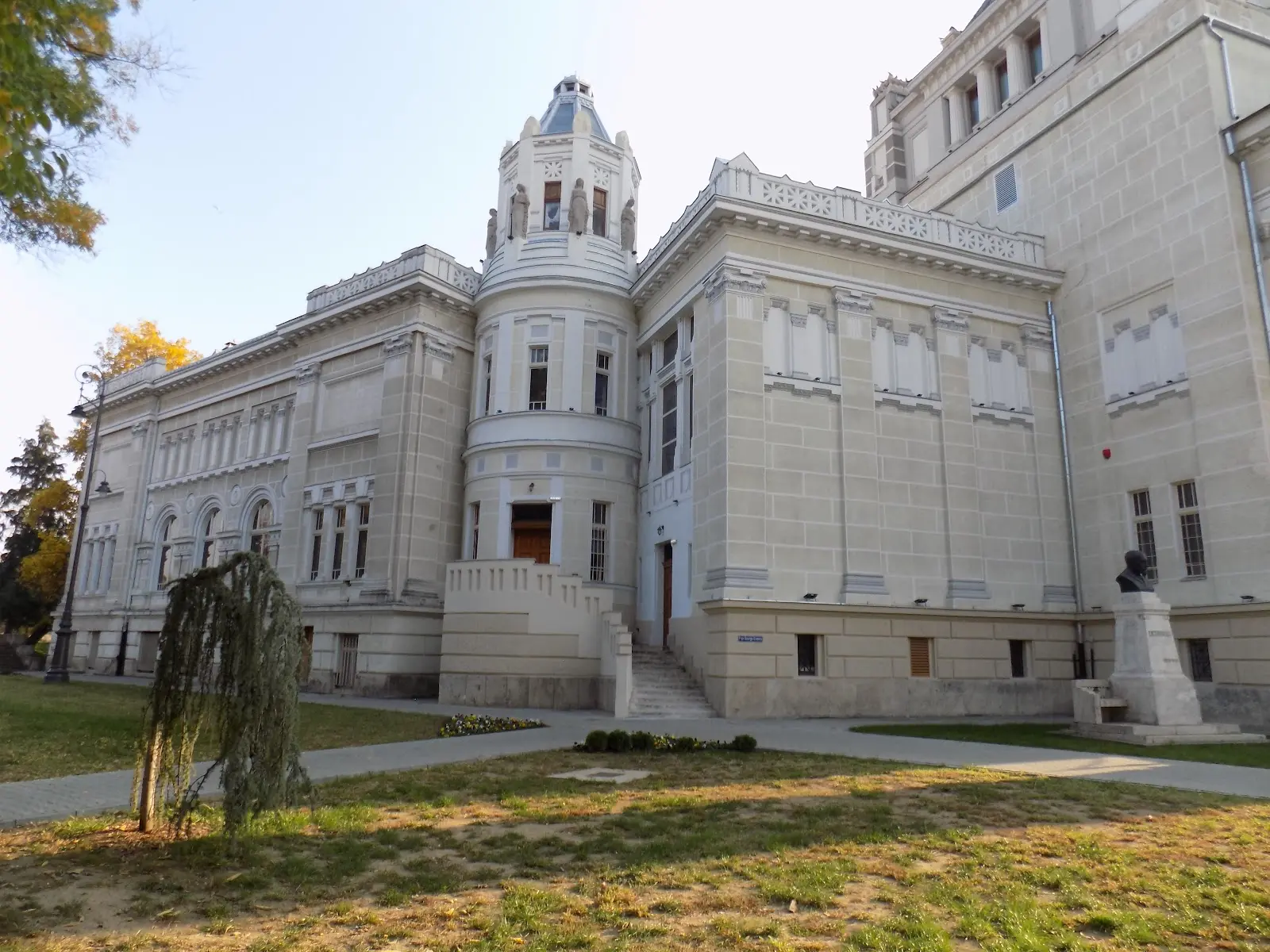
Arad is the first big city to greet you if you enter Romania from the west, and quite possibly the country's most underrated urban walk. A single boulevard gathers eclectic palaces, Secession facades and stern neoclassical fronts, while minutes from the centre the Mureș river slides past with its lazy side-channels and floodplain forest. Add one of Romania's oldest wine regions on the doorstep and you have a city that delivers far more than it promises.
Why go to Arad
Arad doesn't sell itself on a single headline sight. Its appeal is cumulative: a coherent centre built when cities in this part of Europe competed through their facades, a river cutting the town in two, and vineyards at the gates.
- Big-city architecture — eclecticism, Secession and neoclassical, all within walking distance.
- Romania's western gateway — close to the Hungarian border, a natural stop on a route from Budapest towards Transylvania.
- The Mureș — the banks, the side-channels and the floodplain forest give the city a green plan B minutes from the centre.
- The Arad wine region — one of the oldest winegrowing areas in Romania, with wineries that welcome visitors.
- An unhurried pace — Arad isn't crowded with tourists, and you feel it on the terraces, in the museums and on the street.
How the city is laid out
Arad's geography is simple, which helps enormously on a first visit. The city sits on the Mureș, where Banat meets Crișana and the plain starts rising towards hills. The historic centre unfolds along one main axis — Bulevardul Revoluției — linking the station area with the landmark public buildings and the pedestrian streets around them. Towards the water stands the Arad Fortress, a Vauban-style bastion fortification. Across the Mureș the green belt begins, with the river's branches and the Ceala Forest.
In practice, remember the boulevard and the river and you won't get lost. Almost everything you want to see in a day lies within a twenty-minute walk of the Cultural Palace.
Bulevardul Revoluției: an open-air museum
If you have only one hour in Arad, spend it on the boulevard. It is one of the widest and most elegant urban avenues in Romania, and the facades on either side read like a summary of Central European architecture around the turn of the twentieth century: eclectic window surrounds, floral Secession ornament, severe neoclassical fronts, wrought-iron balconies and, here and there, a detail you'll miss unless you look up.
The trick is to take your time and walk each side once. Morning light favours one front, late afternoon the other, and the difference genuinely shows in photographs. Along the way you'll pass the Administrative Palace, the city hall, whose tower doubles as the landmark for the whole centre.
The landmarks you shouldn't miss
- Cultural Palace — the city's signature building, home to the philharmonic and the museum, its blend of styles visible from the street.
- Administrative Palace — the city hall and its tower, the easiest orientation point downtown.
- Ioan Slavici Classic Theatre — a stage with real tradition, in a building worth studying from outside too.
- Water Tower — industrial architecture from another era, today an unexpectedly photogenic landmark.
- Holy Trinity Orthodox Cathedral — the modern city's major religious landmark, easy to catch on the way to the river.
- Arad Fortress — a Vauban bastion fortification, one of the most interesting military structures in the country.
- Reconciliation Park — the public space that shelters the Statue of Liberty.
The full list, with context and a sensible visiting order, is in What to see in Arad.
Wine: the Arad region and Miniș
Few visitors know this before arriving: a short drive from the city begins the Arad wine region, with its historic heart at Miniș — one of the oldest winegrowing areas in Romania. These hills have a long tradition of winemaking, and several cellars receive visitors for tastings and tours.
If you stay two days in Arad, half a day in the vineyards is the best possible use of day two. Two well-known options for visits are Balla Géza Winery and Wine Princess. Book ahead and, obviously, plan for a driver who doesn't taste.
What to eat
Cooking around Arad sits at the meeting point of several traditions — Banat, Transylvanian and Hungarian — and the result is generous and unfussy.
- Hearty soups, with homemade noodles or finished with sour cream.
- Hungarian-influenced dishes — goulash, paprikash, langoși fried flatbread.
- Pan-fried meats with simple sides, in the traditional restaurants.
- Patisserie cakes and tortes, an inheritance of Central European café culture.
- Local wines, best drunk at source in the vineyards.
Morning coffee on a boulevard terrace is, here, an institution.
Getting there and getting around
Getting there. Arad is one of the main entry points into Romania from the west, close to the Hungarian border, so it is easy to reach by car on the motorway and by train: the city sits on the main line connecting western Romania with Budapest and the rest of Europe. Arad has its own airport, but most commercial flights land in Timișoara, less than an hour away by car.
Getting around. The centre is walked, full stop — that is the city's great advantage. For longer distances Arad has a tram and bus network, and taxis and ride-hailing apps work without trouble. A car is useful only for the vineyards and the river zone; downtown it mostly becomes a parking problem.
When to go
- Late spring (May–June) — greenery, terraces open, good light on the facades.
- Early autumn (September–October) — the best window if you also want the vineyards: harvest brings the hills alive.
- Summer — hot on the western plain; walk in the morning and late afternoon, and spend midday in the shade of the floodplain forest.
- Winter — a quiet city of museums and cafés; the architecture looks good without leaves too.
A 1–2 day plan
Day 1 — the city. Morning on Bulevardul Revoluției, stopping at the Cultural Palace and the Administrative Palace. Lunch downtown, then the Ioan Slavici Classic Theatre and a loop out to the Water Tower. Afternoon towards the river: the Holy Trinity Orthodox Cathedral, the Arad Fortress seen from outside, and Reconciliation Park. Dinner in the centre.
Day 2 — river or wine. The green option: Ceala Forest and the Mureș channels, on foot or by bike. The wine option: half a day in the Arad vineyards around Miniș, with a tasting and a return to town for one last walk.
Arad in brief
- Where: on the Mureș, at the Banat–Crișana boundary in western Romania.
- How long: one day for the centre, two if you add the vineyards or the river.
- The strong point: the eclectic and Secession architecture of Bulevardul Revoluției.
- Book ahead: winery visits and accommodation on autumn weekends.
- Bring: comfortable shoes for pavement walking, and a water bottle in summer.
- Where to sleep: see the area-by-area comparison in Where to stay in Arad.
Arad rewards travellers who give it a full day instead of a fuel stop on the way somewhere else. Walk the boulevard slowly, go down to the river, then up into the vineyards — in exactly that order.
Plan your trip
Stays nearby
Stays in Romania
Experiences
Tours & activities
Guided tours, day trips and hand-picked experiences via GetYourGuide — free cancellation on most.
See all experiencesGetting to Romania
Flights, transfer & car
Fly into Romania
Compare fares to Bucharest Otopeni (OTP) and regional airports — Cluj, Sibiu, Iași, Timișoara.
Airport transfer
Private, fixed-price door-to-door transfer — driver waiting from the moment you land.
Rent a car — see the real Romania
A rental car is the key to Romania: the Transfăgărășan, the painted monasteries of Bucovina, mountain roads and the villages of Maramureș that no train reaches.
Find a car











