
Complete guide to Alexandria
Alexandria is a young lowland town founded in the 19th century in southern Teleorman. It is not a weekend destination, but its county museum, important for Neolithic archaeology, justifies a stop on the road to the Danube all by itself.
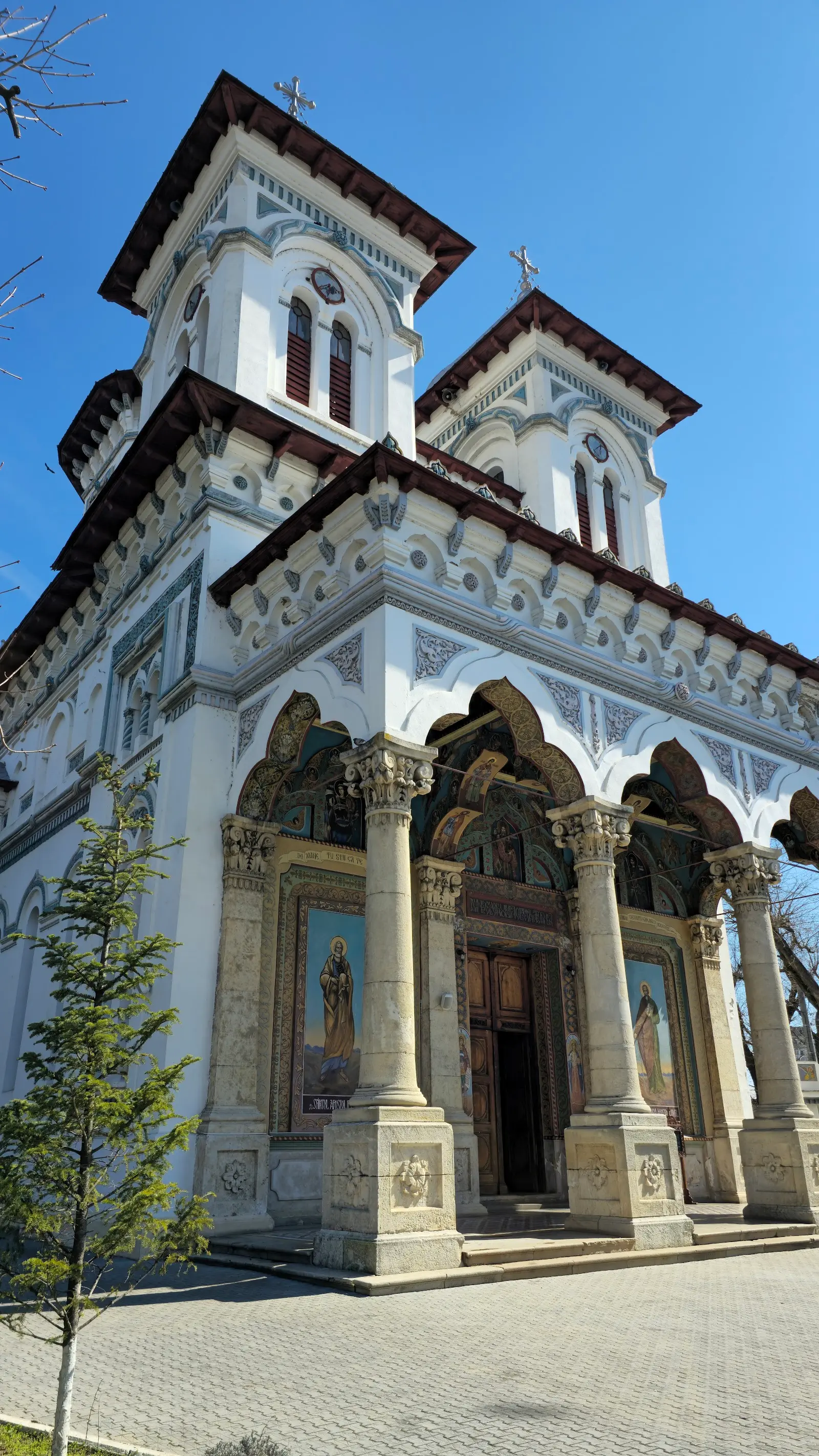
Alexandria appears on no list of must-see places in Romania, and that is fair. It is a young, quiet lowland town with no medieval core and no relief to speak of. What it does have is a museum genuinely worth a detour if European prehistory interests you, and a useful position on the road south to the Danube.
What kind of town Alexandria is
Alexandria is the capital of Teleorman county, in the southern Romanian Plain, on the Vedea river. Unlike most Romanian towns, it did not grow organically around a fortress or a monastery: it is a new town, founded in the 19th century and named after the ruling prince Alexandru Dimitrie Ghica.
That explains how it looks today. The streets are straight, the town is flat, and the architecture mixes 19th and early 20th-century administrative buildings with communist-era housing blocks. You will not find a compact historic nucleus of the Transylvanian kind here, for the simple reason that the town never had time to build one.
What Alexandria has instead is something else: a share of Romania's most important prehistoric archaeology collections, and the calm of a county seat that does not live off tourism.
Teleorman County Museum — the main reason to visit
If you stop only once in town, stop here. The Teleorman County Museum is known above all for its Neolithic archaeology collections, and that is no accident: the Teleorman valley and the surrounding area have yielded significant prehistoric sites, researched in international projects.
For a visitor, the difference shows. Instead of the generalist display typical of a county museum, you get archaeological material gathered from settlements thousands of years old — pottery, tools, household objects, reconstructions of everyday Neolithic life. It is the kind of museum that rewards a slow visit with attention to the captions, not a fifteen-minute sweep.
A few useful things to know:
- Check opening times before you drive — county museums in small towns change their schedules, and some sections operate separately.
- It is not a visually spectacular museum, it is a documentary one. If archaeology holds no interest for you, this probably is not your stop.
- Pair it with a short walk through the centre for context.
St Alexander Cathedral
The town's other landmark is St Alexander Cathedral, Alexandria's principal church and the building that best shows the town's ambitions in its first decades. It anchors the centre, gathers the community on major feast days, and is one of the few buildings here genuinely worth looking at for its architecture.
Keep expectations honest: this is not a medieval foundation and there are no 15th-century frescoes. It is the cathedral of a new town, built for a community still forming, and its interest is historical and local rather than artistic. Twenty minutes is about right.
How to fit Alexandria into a route
This is where the town is genuinely useful. Alexandria sits less than two hours by car from Bucharest, on the road running south, and it works well as a stop rather than a weekend destination.
Combinations that make sense:
- Towards the Danube — Teleorman county reaches the river, and Alexandria is the natural break before you get down to the floodplain. The plain scenery is monotonous, but the Danube makes up for it.
- Towards Bulgaria — the town lies on one of the road corridors heading for the southern border crossings.
- As a themed day trip from the capital — for anyone interested in archaeology, the county museum alone justifies the round trip. If you are setting out from there, see the complete guide to Bucharest for the rest of the route.
Food, lodging, logistics
Alexandria is a county seat, so it has the basics: small hotels, guesthouses, restaurants serving Romanian cooking, terraces. None of that is a reason to travel here, but you will not be left without options if mealtime catches you in town.
Two practical notes. First, in small southern towns many places close on Sunday afternoon, so plan to eat earlier. Second, if you want to sleep nearby in order to reach the Danube in the morning, lodging in Alexandria is a safer bet than in the villages along the way, where the offer is thin and seasonal.
When to go
The Romanian Plain gets very hot in midsummer, with no shade and no breeze. Spring and autumn are clearly better: bearable temperatures, good light for photography, empty roads. In winter the area can be hit by blizzards and strong south-easterly winds, so check road conditions before you leave.
An honest verdict
Alexandria is not a town you make a special journey for, with one exception: if prehistoric archaeology interests you, the county museum is a first-rate stop. For everyone else it is a civilised break on the way to the Danube — a coffee, a church, half an hour on foot, and onward.
Which is not nothing. The network of small towns in southern Romania is rarely spectacular, but it is real, and a drive through Teleorman shows a Romania that the classic tourist routes bypass entirely.
Plan your trip
Stays nearby
Stays in Romania
Experiences
Tours & activities
Guided tours, day trips and hand-picked experiences via GetYourGuide — free cancellation on most.
See all experiencesGetting to Romania
Flights, transfer & car
Fly into Romania
Compare fares to Bucharest Otopeni (OTP) and regional airports — Cluj, Sibiu, Iași, Timișoara.
Airport transfer
Private, fixed-price door-to-door transfer — driver waiting from the moment you land.
Rent a car — see the real Romania
A rental car is the key to Romania: the Transfăgărășan, the painted monasteries of Bucovina, mountain roads and the villages of Maramureș that no train reaches.
Find a car











