
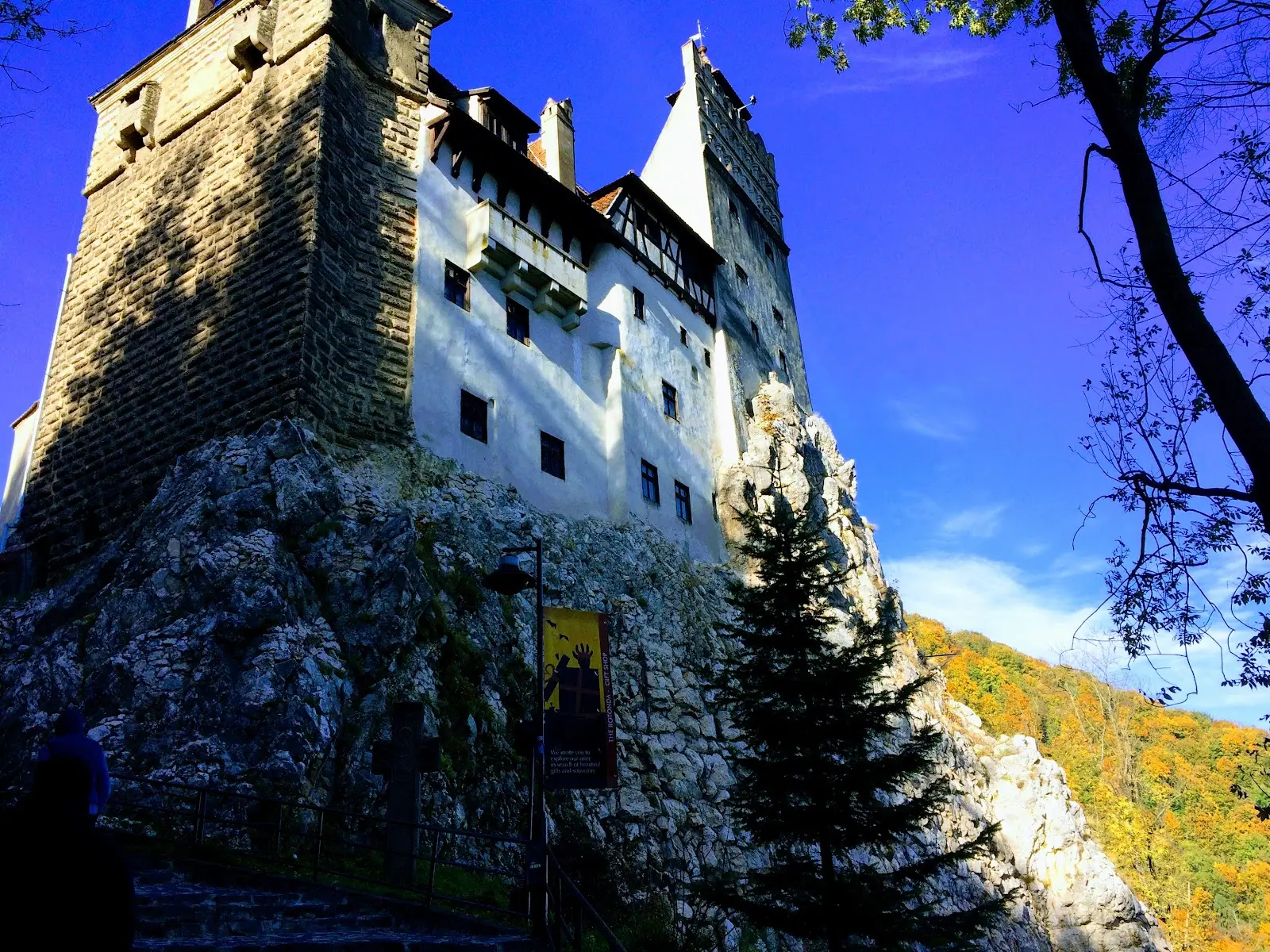
The two Draculas
There are two Draculas, and the confusion between them is the very charm of the story. One is the vampire count of the Irishman Bram Stoker's 1897 novel — a Gothic fiction inspired by Transylvania's wild landscape, which the author never actually visited. The other is real: Vlad III, a 15th-century ruler of Wallachia, known as the Impaler. Stoker borrowed only his name — „Dracula”, “son of the Dragon” — and an air of terror. The rest is legend.
Vlad the Impaler, the real prince
Vlad the Impaler (c. 1431–1476) was a harsh and feared ruler, notorious for his brutal punishments — but also a defender of his land against the Ottoman Empire, respected in Romanian history. He was most likely born in Sighișoara, where his house still stands. His father belonged to the Order of the Dragon — hence “Dracul”, and “Dracula” means “son of Dracul”. His true fortress is not Bran but Poenari, an eagle's nest above the Argeș valley.
Bran Castle — “Dracula's castle”
Bran Castle is the place the world comes looking for. Dramatic, perched on a rock at the pass between Transylvania and Wallachia, it looks exactly how you'd imagine a vampire's castle — even if Vlad's real link to it is thin. No matter: it's the country's most visited sight, with towers, narrow passages and a superb view. The visit pairs perfectly with Râșnov citadel and medieval Brașov, just minutes away.
Following the legend
The finest way to live the story is a small Transylvania loop: Bran for the myth, Sighișoara for the birthplace, Poenari for Vlad's real fortress (a climb of nearly 1,500 steps), and the Tihuța (Borgo) Pass in Bukovina, where Stoker set the castle in his novel. A weekend by car ties it all together — adding castles, citadels and medieval squares along the way.