
What to see at Putna and around
The monastery and Stephen the Great's tomb, the museum of medieval embroideries, Daniil the Hermit's rock-cut cell and the waterfall in the woods — Putna's stops, tied into a two-day plan.
Putna can be seen in half a day and remembered for life. Everything starts at the monastery, but three or four further stops around it fully justify the drive to the northern end of Bukovina. Here is what deserves your time, in the order it naturally links up.
1. Putna Monastery
The first stop, inevitably. The main church, raised by Stephen the Great in the closing decades of the 15th century, holds the prince's tomb in its burial chamber — a marble slab beneath a canopy, with a lamp burning — and beside it the tombs of his wives and several descendants.
Step through the gate unhurried and circle the precinct before going into the church. The ensemble follows the classic Moldavian monastic plan: defensive wall, cells along the sides, the church in the middle of the courtyard. The interior has been through fires, earthquakes and rebuildings, so do not look for medieval painting on the walls — most of what survives from the founder's day is in the museum. What remains untouched is the sequence of spaces: narthex, burial chamber, nave, altar, exactly as Moldavia built in the 15th century.
Inside the walls, also look for:
- the treasury tower, the oldest surviving structure from the founder's day;
- the bell tower and the Buga bell, tied by tradition to Stephen himself;
- the monastery cemetery and the paths around the walls, good for a few quiet minutes afterwards.
If you are there on an ordinary day, with no coach groups, sit in on an evening service. The chanting in that church explains better than any text why the monastery came to be called „the Jerusalem of the Romanian nation”.
2. The monastery museum
The Putna monastery museum is the second essential stop and, for many visitors, the surprise of the day. Do not expect the tired cases of a village museum: here are medieval embroideries worked in gold and silver thread, tomb covers, liturgical stoles, old manuscripts and early printed books, crosses and chalices.
Many pieces come straight from the founder's and his family's donations, which makes the collection one of the most important records of the court workshops of medieval Moldavia. Give it an hour. If you are curious how such things were made by hand, follow the thread into our guide to traditional crafts.
3. The cell of Daniil the Hermit
A few kilometres from the monastery, on the riverbank, the cell of Daniil the Hermit is hand-cut into the rock: a small chapel, a space for prayer, a sleeping niche in stone. Nothing else.
Daniil was Stephen the Great's confessor, and the place draws its force precisely from its poverty — something the monastery cannot offer. The visit is short, about the length of a walk, and slots perfectly between the museum and the drive to the waterfall.
4. Putna waterfall
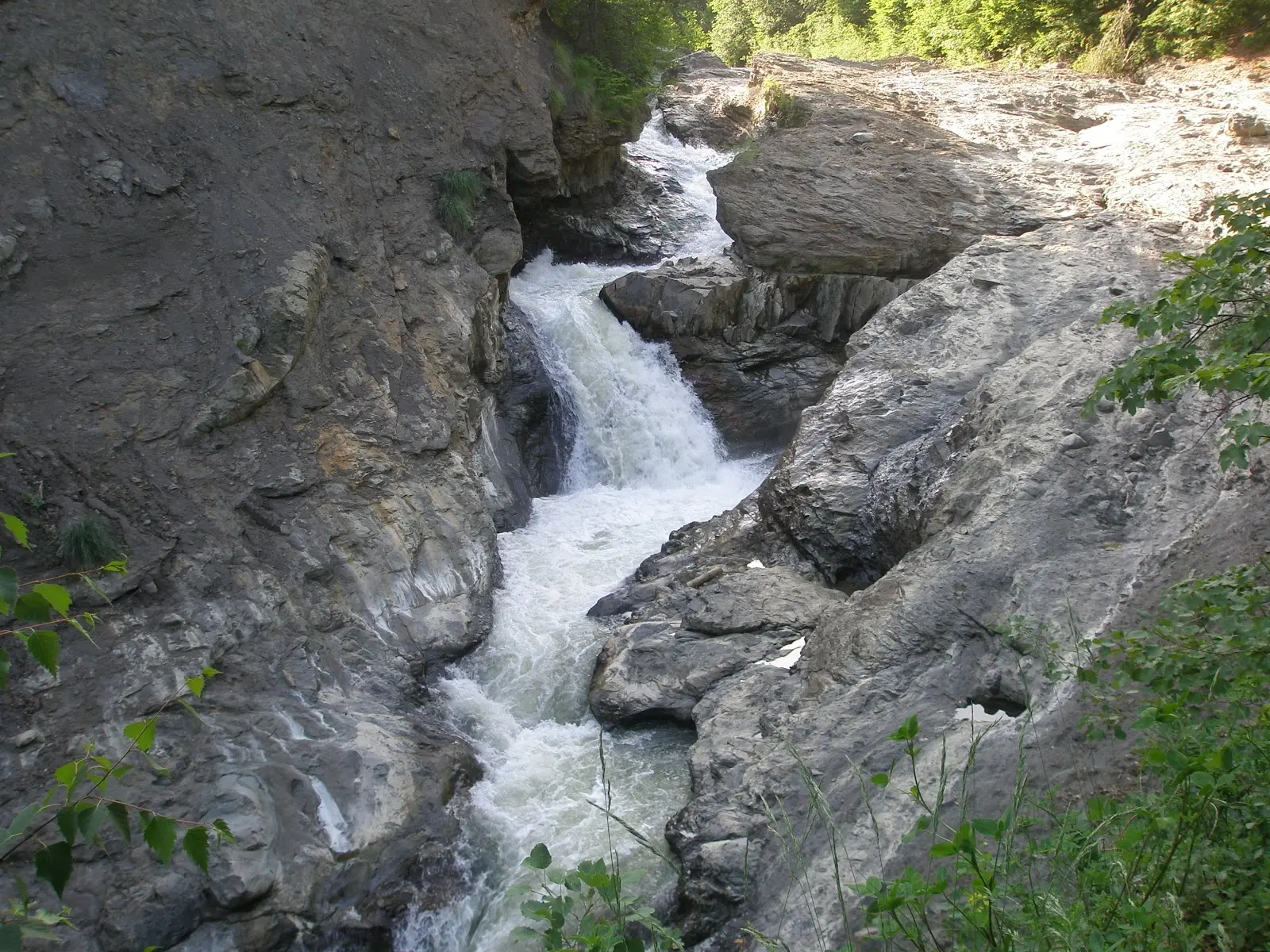
The Putna waterfall is the day's dose of nature. Water drops over rock steps into a beech gorge, reached on a footpath. Spring brings the strongest flow, summer the coolest air in the area, autumn the colour.
Wear boots or decent trainers: the path is earthen and slippery after rain. This is not a hard hike, but it is not a stroll in sandals either.
5. Nearby, if you have another half day
Putna is the end of the road, but it is not alone. Within an hour:
- Sucevița — one of the great churches with exterior frescoes, ringed by fortress walls. The most natural partner for Putna on any route.
- Marginea — the black pottery village, where the wheel is still turned by hand.
- Rădăuți — the nearest town, home to the Bogdana church, the oldest surviving stone church in Moldavia.
- Moldovița — another painted church, if you want the full loop.
All these threads come together in our guide to the Bukovina monasteries, while the wider context of the region — villages, costume, food, customs — is in the Bukovina guide.
The most comfortable order, if you have one extra day, is Putna in the morning, Marginea at midday and Sucevița towards evening: the afternoon light falls well on the exterior frescoes, and at Marginea you will catch the workshops open.
What to eat here
Bukovina eats well and without fuss, and at Putna meals are usually taken at your guesthouse. Worth looking for:
- borș with little dumplings, or borș soured the old way, the cure for any cold morning;
- tochitură bucovineană, a pork stew with polenta and sheep's cheese;
- poale-n brâu pies filled with sweet cheese, the local dessert;
- bilberries, raspberries and forest preserves, sold by the jar at the roadside in season;
- sheepfold cheeses, if you come across a seller with fresh stock.
During the major fasting periods, many guesthouses around the monastery also cook a Lenten menu — say so in advance, because it is prepared to order.
A two-day plan
Day 1. Morning: the monastery and the museum. Lunch in the village. Afternoon: Daniil the Hermit's cell and the walk to the Putna waterfall. Evening: a service, or a quiet terrace.
Day 2. Sucevița in the morning, Marginea for pottery, Rădăuți for the Bogdana church, then back towards Suceava, where most onward routes begin — see our Suceava guide.
Practical tips
- Respect monastery rules. Covered clothing, low voices, photographs only where allowed — in the museum, usually not.
- Come early. Coaches arrive around midday; between eight and ten the monastery is almost yours alone.
- A car helps a great deal. Public transport exists, but it will not leave you time for both the waterfall and the hermitage in one day.
- Eat locally. Guesthouses here cook Bukovinian — borș, stews and savoury pies. It is part of the visit.
- For the monastery's background and Stephen the Great's tomb, read our complete guide to Putna.
Plan your trip
Stays nearby
Stays in Romania
Experiences
Tours & activities
Guided tours, day trips and hand-picked experiences via GetYourGuide — free cancellation on most.
See all experiencesGetting to Romania
Flights, transfer & car
Fly into Romania
Compare fares to Bucharest Otopeni (OTP) and regional airports — Cluj, Sibiu, Iași, Timișoara.
Airport transfer
Private, fixed-price door-to-door transfer — driver waiting from the moment you land.
Rent a car — see the real Romania
A rental car is the key to Romania: the Transfăgărășan, the painted monasteries of Bucovina, mountain roads and the villages of Maramureș that no train reaches.
Find a car











