
The Painted Monasteries of Bucovina: A Complete Guide
Voroneț, Sucevița, Moldovița, Humor — the 15th–16th-century exterior frescoes, the famous Voroneț blue, and why they are UNESCO-listed.
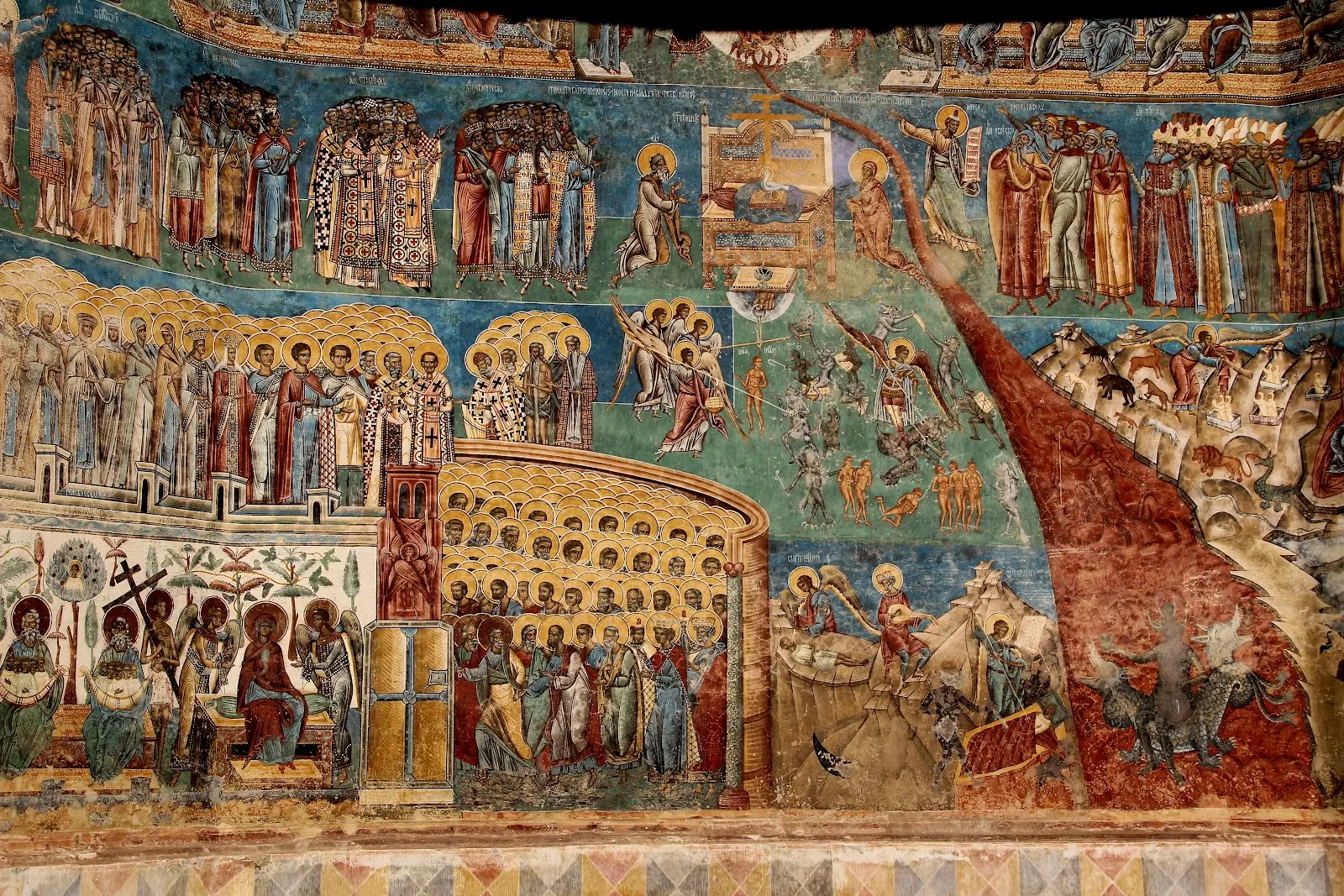
In the north of Moldavia, in the historic region of Bucovina, lies a unique group of Orthodox monasteries whose exterior walls are entirely covered in frescoes. Painted in the 15th and 16th centuries, in the time of Stephen the Great and his successors, they have survived centuries of weather. Eight churches with mural paintings in northern Moldavia are inscribed on the UNESCO World Heritage list.
Voroneț — the "Sistine Chapel of the East"
Voroneț is the most famous, known for the Voroneț blue, an intense, durable shade whose exact recipe remains a subject of study. The Last Judgement fresco on the west wall is the masterpiece of the ensemble. The monastery was founded by Stephen the Great; the exterior paintings were added later.
Sucevița — the best preserved
Sucevița, fortified like a small citadel, has the richest and best-preserved exterior frescoes, including the famous Ladder of Virtues. It is the largest of the painted monasteries.
Moldovița — scenes and colour
Moldovița impresses with the Siege of Constantinople and the golden-yellow tone of its paintings. It has a small museum with a princely throne and manuscripts.
Humor — the intimacy of red
Humor (Humor Monastery) is smaller and more intimate, its frescoes dominated by brick-red tones. The nearby bell tower offers a fine view.
How to visit
- The four can be seen in one long day by car, but two days allow a calmer pace and time for other sites (Putna, where Stephen the Great is buried, or the black-pottery workshop at Marginea).
- Good base: Gura Humorului or Suceava.
- Respect the rules of active places of worship: modest dress and quiet; some interiors do not allow photography.
Why they matter
The combination of Moldavian architecture, a complete iconographic programme on the exterior, and open-air fresco technique is essentially unique in the world. Colours that have endured for over 400 years, fully exposed to the weather, are why these churches are regarded as a high point of post-medieval Byzantine art.
Plan your trip
Stays nearby
Stays in Romania
Getting to Romania
Flights, transfer & car
Fly into Romania
Compare fares to Bucharest Otopeni (OTP) and regional airports — Cluj, Sibiu, Iași, Timișoara.
Airport transfer
Private, fixed-price door-to-door transfer — driver waiting from the moment you land.
Rent a car — see the real Romania
A rental car is the key to Romania: the Transfăgărășan, the painted monasteries of Bucovina, mountain roads and the villages of Maramureș that no train reaches.
Find a car