
What to see in Alba Iulia: attractions & experiences
From the Third Gate and the changing of the guard to John Hunyadi's tomb, the Union Hall and the Roman fort of Apulum — the sights of the Alba Carolina citadel in the right order, plus day trips to the Târnave vineyards, Râpa Roșie and the Apuseni Mountains.
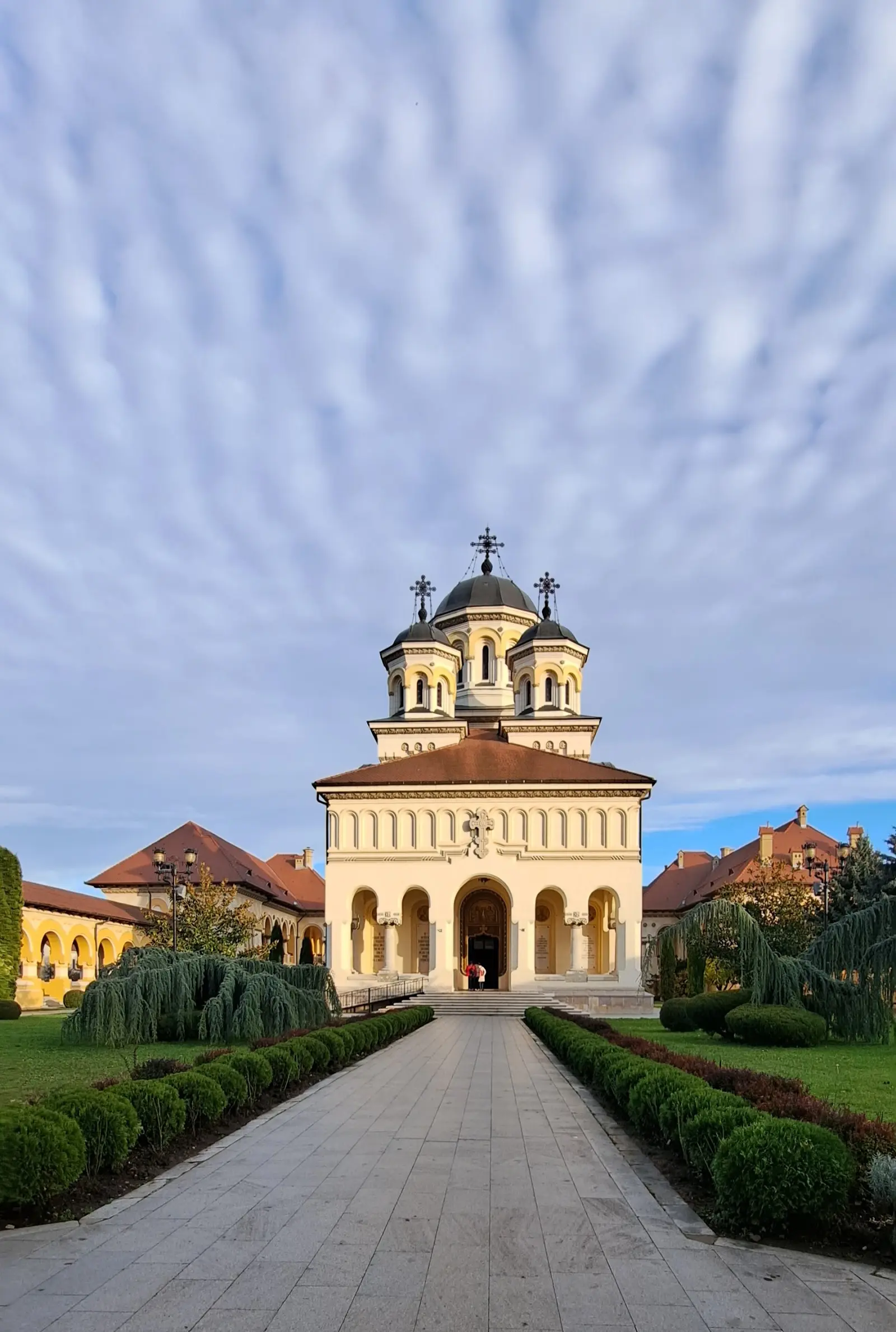
Almost everything worth seeing in Alba Iulia fits inside the walls of a single citadel — which is the good news. Alba Carolina, the largest Vauban-style bastion fortress in Romania, works as an open-air museum you cross on foot, stepping from one century into the next in a couple of hours. Here are the sights that matter, in the order that makes most sense.
The Third Gate and entering the citadel
Start at the bottom, at the Third Gate of the Citadel. It is the most spectacular of the fortress's baroque gates: a triumphal arch crowded with allegorical sculpture, trophies and mythological figures, designed to impress anyone entering the Habsburg stronghold. Walk under it and you are suddenly in a different town.
From there the main axis climbs between double walls and terraces. If you come in season, look out for the changing of the guard — a short ceremony with soldiers in period uniform that children adore. The timetable varies, so check current schedules on the day.
The Three Fortifications Trail
The best way to understand the city is to walk the Three Fortifications Trail, a marked circuit that links, within the same perimeter, the traces of the Roman fort, the medieval citadel and the 18th-century bastion walls. It is a history lesson without text: you simply see how one city was built over another, three times.
The route goes at strolling pace, has interpretive panels and can be broken up with terrace stops whenever you like. With children, it is by far the least boring option.
St Michael's Cathedral
For many visitors, St Michael's Cathedral is the most impressive building in the citadel. Roman Catholic, one of the oldest churches in Transylvania, raised and rebuilt in Romanesque and Gothic layers, with a cool, soaring interior that quiets you down the moment you step in.
Its most important feature is the tomb of John Hunyadi, the voivode who halted Ottoman expansion into Central Europe, alongside other princely and episcopal tombs. It is one of the few places in Romania where you stand a few steps from a figure out of the history books.
The Coronation Cathedral
A few hundred metres away, the Coronation Cathedral shows the city's other face: Orthodox, built in the 1920s specifically for the coronation of Ferdinand and Maria, which took place here in 1922 — hence the name.
Look at the whole ensemble, not just the church: the inner courtyard, the gate-belfry and the interwar decorative scheme form one of the most successful architectural compositions in the country. Entry is free, with the usual respect for services in progress.
The Union Hall and the National Museum of the Union
The Union Hall is the room where, on 1 December 1918, delegates voted for the union of Transylvania with Romania. If you step inside only one building in Alba Iulia, make it this one. The space has been restored and staged with restraint, and its impact comes from that plainness.
Right next door, the National Museum of the Union supplies the context: Roman archaeology, medieval pieces, documents and objects from 1918. The two are visited together, on one outing, and together they give the rest of the town its meaning.
The Principia Museum and Roman Apulum
Beneath the baroque fortress lies a Roman fort. The Principia Museum sits directly over the headquarters building of the 13th Gemina Legion, and the visit literally descends to 2nd-century level: walls, paving, the heating system, garrison objects.
It is a small sight, quickly seen, but it changes how you read the citadel above it. For anyone keen on archaeology, it is the best half hour in town.
The Princely Palace
The Princely Palace was the residence of the princes of Transylvania, in the era when Alba Iulia was the capital of the principality. The building is in a long, phased restoration, so access varies — check current opening times before you count on going inside.
Even from the outside, the facades and courtyards are worth a loop: they are the most direct evidence that this town was, for a century and a half, a European political centre rather than just a garrison.
The Horea, Cloșca and Crișan Obelisk
On the plateau at the edge of the citadel, the Horea, Cloșca and Crișan Obelisk marks the spot where the leaders of the 1784–1785 Romanian peasant uprising in Transylvania were executed in 1785. It is the most sombre monument here, and a short but necessary pause amid so much triumphal baroque.
The walls, the bastions and the citadel at dusk
The most underrated attraction in Alba Iulia has no ticket: walking the top of the walls and the moats between the bastions. The fortress is star-shaped, with bastions covering one another, and from their angles you finally see how the pieces fit — double walls, ramps, casemates, bridges.
Do the outer circuit at least once, ideally towards evening: the low light brings out the relief of the stone, and once it is dark the gates and cathedrals are floodlit. In summer the evenings are the best part of the day, and the pedestrian interior stays lively late without ever getting loud.
The modern centre, for balance
Beyond the walls begins the city people actually live in: wide boulevards, interwar and socialist-era blocks, the covered market, cafés and shops. It is not a sight, but it deserves half an hour — especially the market, if you want cheese, honey or seasonal fruit from the surrounding villages.
It is also where you'll find the widest choice of everyday places to eat, if the terraces inside the citadel feel too tourist-facing.
Day trips from Alba Iulia
With more than a day, the city becomes a very good base. The best directions:
- North, into the Târnave vineyards. Blaj, with its Holy Trinity Cathedral and its historical weight, plus the wine country: Jidvei Winery for the classic visit, Villa Vinea or Liliac Winery for smaller tastings. Book ahead.
- South-west. Râpa Roșie, an amphitheatre of red clay that looks like a miniature American canyon, and the poet Lucian Blaga's memorial house at Lancrăm. Nearby stands Câlnic Citadel, a Saxon peasant fortress on the UNESCO list.
- West, into the Apuseni. The Râmeț Gorges, with their through-the-water route, and Râmeț Monastery, and further on the Scărișoara Ice Cave. For trails, kit and road conditions, see our mountain portal, munte.online.
If you only have one day
- The Third Gate and a walk along the walls
- St Michael's Cathedral and the Coronation Cathedral
- The Union Hall with the National Museum of the Union
- Dinner inside the citadel, at sunset
With children
- The changing of the guard, if the timing works
- The Three Fortifications Trail, with its walls and tunnels
- The moats and green spaces inside the citadel, good for running around
- The Principia Museum, short and tangible
For history lovers
- The Union Hall and the documents in the National Museum of the Union
- John Hunyadi's tomb at St Michael's Cathedral
- The Princely Palace and the layers of the princely capital
- The Horea, Cloșca and Crișan Obelisk
- Câlnic Citadel, half an hour out of town
For context, history and logistics, read the complete guide to Alba Iulia, and for choosing a neighbourhood, where to stay in Alba Iulia.
Plan your trip
Stays nearby
Stays in Romania
Experiences
Tours & activities
Guided tours, day trips and hand-picked experiences via GetYourGuide — free cancellation on most.
See all experiencesGetting to Romania
Flights, transfer & car
Fly into Romania
Compare fares to Bucharest Otopeni (OTP) and regional airports — Cluj, Sibiu, Iași, Timișoara.
Airport transfer
Private, fixed-price door-to-door transfer — driver waiting from the moment you land.
Rent a car — see the real Romania
A rental car is the key to Romania: the Transfăgărășan, the painted monasteries of Bucovina, mountain roads and the villages of Maramureș that no train reaches.
Find a car











