Romania's Most Beautiful Roads for a Road Trip
From the hairpins of the Transfăgărășan to the alpine meadows of the Transalpina and the Saxon villages of Transylvania, Romania reveals itself best from behind the wheel. Here are the country's most spectacular drives, what to expect on each, and when they open.
Few countries in Europe pack so much spectacular driving into so few kilometres. Romania is made for a road trip: alpine ridges laced with hairpins, valleys crowned with castles, medieval villages unchanged for centuries, and a river that carves gorges straight through the mountains. A hire car turns all of it into a single story, driven at your own pace.
Below are the country's most beautiful roads — each with its own character, what to expect, and, crucially for the high-altitude routes, when they are open.
Transfăgărășan (DN7C) — the legendary hairpins
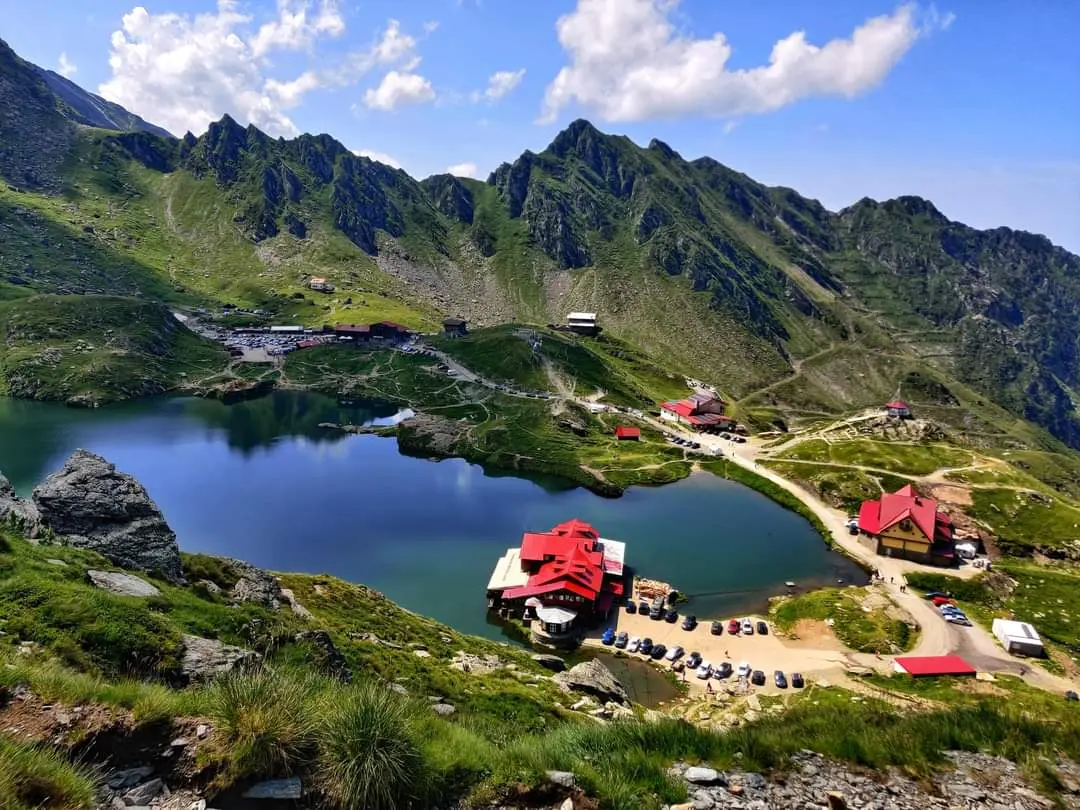
If there is one road worth coming to Romania for, this is it. The Transfăgărășan climbs from the Olt lowlands over the crest of the Făgăraș Mountains, stacking tight hairpin after tight hairpin up to almost 2,000 metres. At the highest point waits Bâlea Lake, a cold, glacier-blue tarn, and lower down the southern slope, Bâlea Waterfall tumbles over the rock beside a cable car.
The road is one continuous run of viewpoints, tunnels and bends that look as if drawn by an over-excited child. Don't rush it — you'll want a good few hours and plenty of stops.
- When it's open: typically from late June to around late October, depending on snow. In winter, the alpine section from Bâlea upward is closed.
- Good to know: an early start beats both the crowds and the afternoon mist.
Transalpina (DN67C) — the highest road
If the Transfăgărășan is theatrical, the Transalpina is majestic. It is Romania's highest road, climbing through the Parâng Mountains over Urdele Pass at roughly 2,145 metres. Here the tight hairpins give way to wide-open alpine meadows that roll to the horizon, dotted with flocks of sheep and endless views.
The feeling is of standing on the roof of the country: the sky feels closer, and the road floats over bare, grassy summits. It's ideal for those who want space, silence and sweeping panoramas rather than pure adrenaline.
- When it's open: roughly late June to October; the alpine stretch closes with the first serious snowfall.
- Good to know: fuel stations are scarce up on the ridge — set off with a full tank.
The Prahova Valley and the castle loop — Sinaia, Bușteni, Bran, Brașov
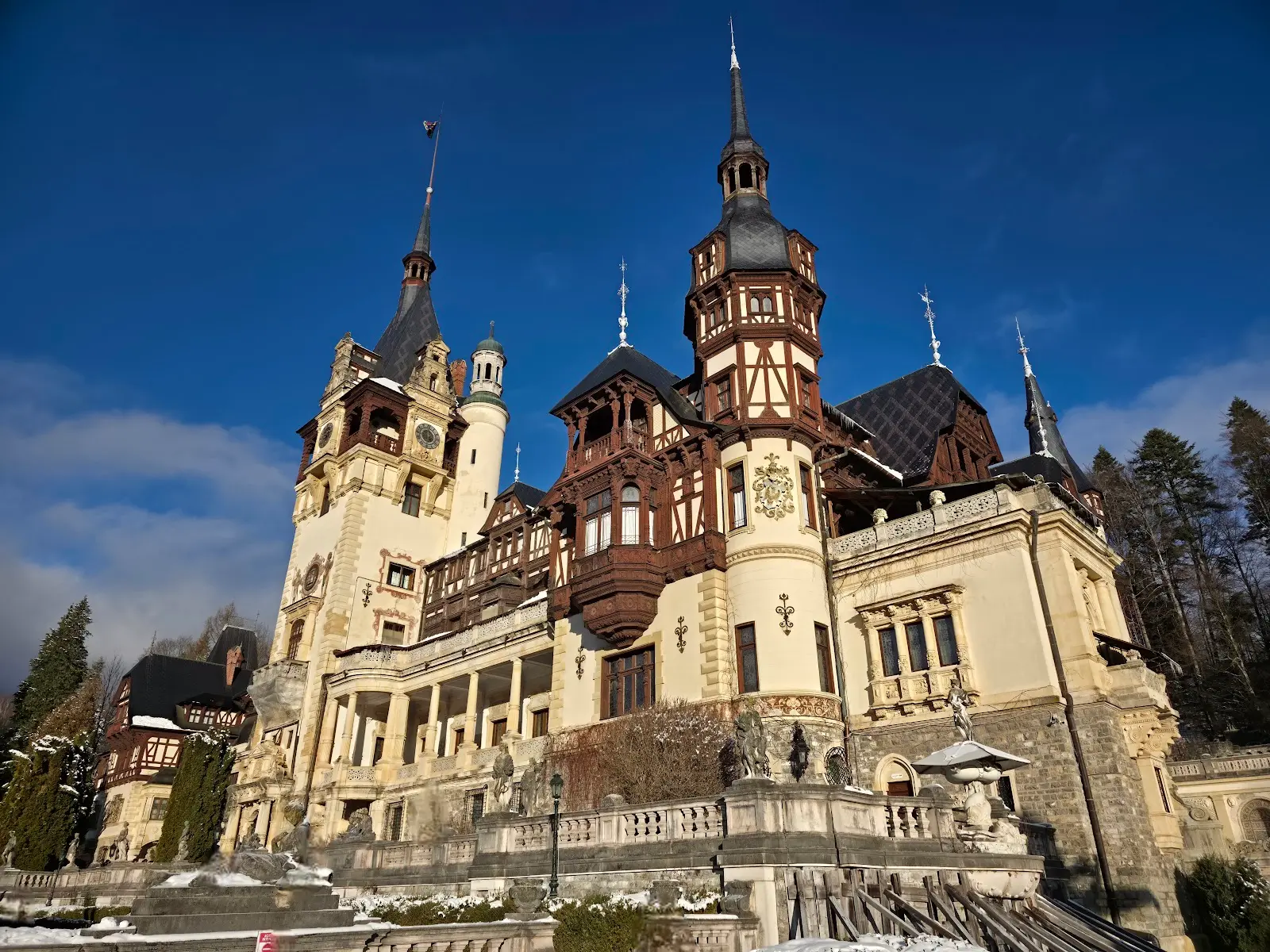
For a route that pairs great driving with headline sights, the Prahova Valley is the classic choice. You start in Sinaia, where the fairy-tale Peleș Castle nestles among the firs, climb to Bușteni beneath the walls of the Bucegi Mountains, then cross to Bran and its famous castle tied to the Dracula legend, closing the loop in Brașov with its medieval square and city walls.
It's the most accessible route on the list, perfect as a first taste of the mountains and of Transylvania, and easily done even over a weekend.
- When it's open: all year; these are main roads, open through winter.
- Good to know: on summer and ski-season weekends traffic can be heavy — plan your stops early.
The Saxon backroads — from Sibiu to Sighișoara
Between Sibiu and Sighișoara lies one of Europe's most moving regions: Saxon Transylvania. Here, minor roads link villages built around fortified churches of stone, some ringed by walls and towers, raised centuries ago by German settlers. Places such as Biertan, Viscri and Mălâncrav feel suspended in time, with painted houses and gentle hills strewn with hay.
This is a road to drive slowly, windows down. Sections are narrow, and now and then a horse-cart or a flock will be ahead of you — it's part of the charm.
- When it's open: all year, though after rain some side lanes turn tricky.
- Good to know: leave time for unplanned detours — the loveliest villages are off the main route.
The Bucovina monastery loop and the Prislop Pass into Maramureș
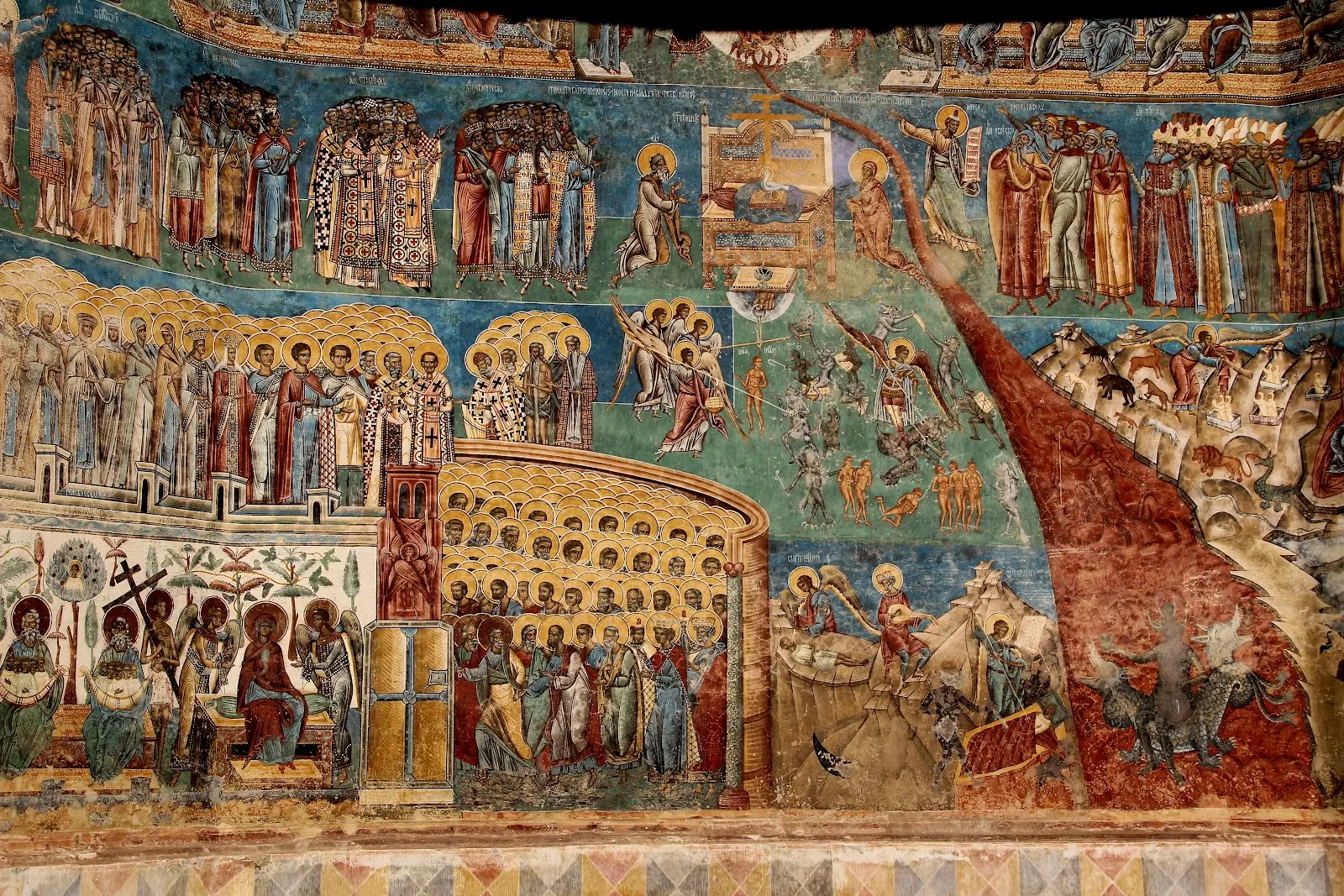
In the north of the country, the road trip becomes a journey into the spirit of a place. Bucovina is the land of the painted monasteries — Voroneț, Sucevița, Moldovița — UNESCO jewels whose exterior frescoes glow an unmistakable blue. An easy loop threads them together through green hills and carefully tended villages.
From here the road climbs over the Prislop Pass, the highest crossing in the Eastern Carpathians, before descending into Maramureș, the realm of tall-spired wooden churches and elaborately carved gates. It's a rare blend of spirituality, craft and landscape.
- When it's open: the Prislop Pass is generally open year-round, but winter snow can make it demanding and calls for caution.
- Good to know: on Sunday mornings the villages come alive around their churches — a special moment to catch.
The Danube's Cazanele Dunării — the Clisura Dunării in the Banat
In the country's south-west, in the Banat, the Danube forces its way between the mountains to create the Cazanele Dunării (the Danube Gorges), a dramatic defile where the river narrows between sheer limestone walls. The road hugs the bank, curving above the water, with views across to Serbia on the far shore and to the face of Decebalus carved into the cliff — the tallest rock sculpture in Europe.
It's a road of quiet beauty, quite unlike the alpine peaks: here water, stone and a sense of the edge of the world take over.
- When it's open: all year; it sits at low altitude, with no seasonal restrictions.
- Good to know: a stop at Orșova or a short boat trip shows you the gorges from the water itself.
Practical road-trip tips
A beautiful drive rewards a little preparation. Here's what's worth knowing before you set off:
- A rovinietă (road vignette) is required. Any car on the national roads needs one — buy it online or at fuel stations. Hire cars usually include it, but check.
- Roads are improving, but are still often single-carriageway. Motorways remain few; most of the beautiful routes are national roads.
- Mountain passes are seasonal. The alpine sections of the Transfăgărășan and Transalpina close in winter — plan for July to September to be safe.
- Drive defensively. Risky overtaking and mixed traffic (carts, cyclists, animals) demand constant attention.
- Allow more time than the map suggests. Hairpins, stops and slow traffic mean low average speeds — don't overload the itinerary.
- A hire car is the way to do it. It gives you the freedom to stop anywhere, reach the remote villages and drive at your own pace — exactly what a Romanian road trip asks for.
With a little patience and a loose plan, Romania's roads deliver one of the richest driving journeys in Europe. Pick a route, pick up a hire car, and let the landscape set the pace.
Plan your trip
Stays nearby
Stays in Romania
Getting to Romania
Flights, transfer & car
Fly into Romania
Compare fares to Bucharest Otopeni (OTP) and regional airports — Cluj, Sibiu, Iași, Timișoara.
Airport transfer
Private, fixed-price door-to-door transfer — driver waiting from the moment you land.
Rent a car — see the real Romania
A rental car is the key to Romania: the Transfăgărășan, the painted monasteries of Bucovina, mountain roads and the villages of Maramureș that no train reaches.
Find a car