A Long Weekend in the Danube Delta
Three days in Europe's largest and best-preserved wetland: silent channels, fishing villages, a labyrinth of reeds and the place where the Danube dissolves into the Black Sea. A practical, step-by-step itinerary.
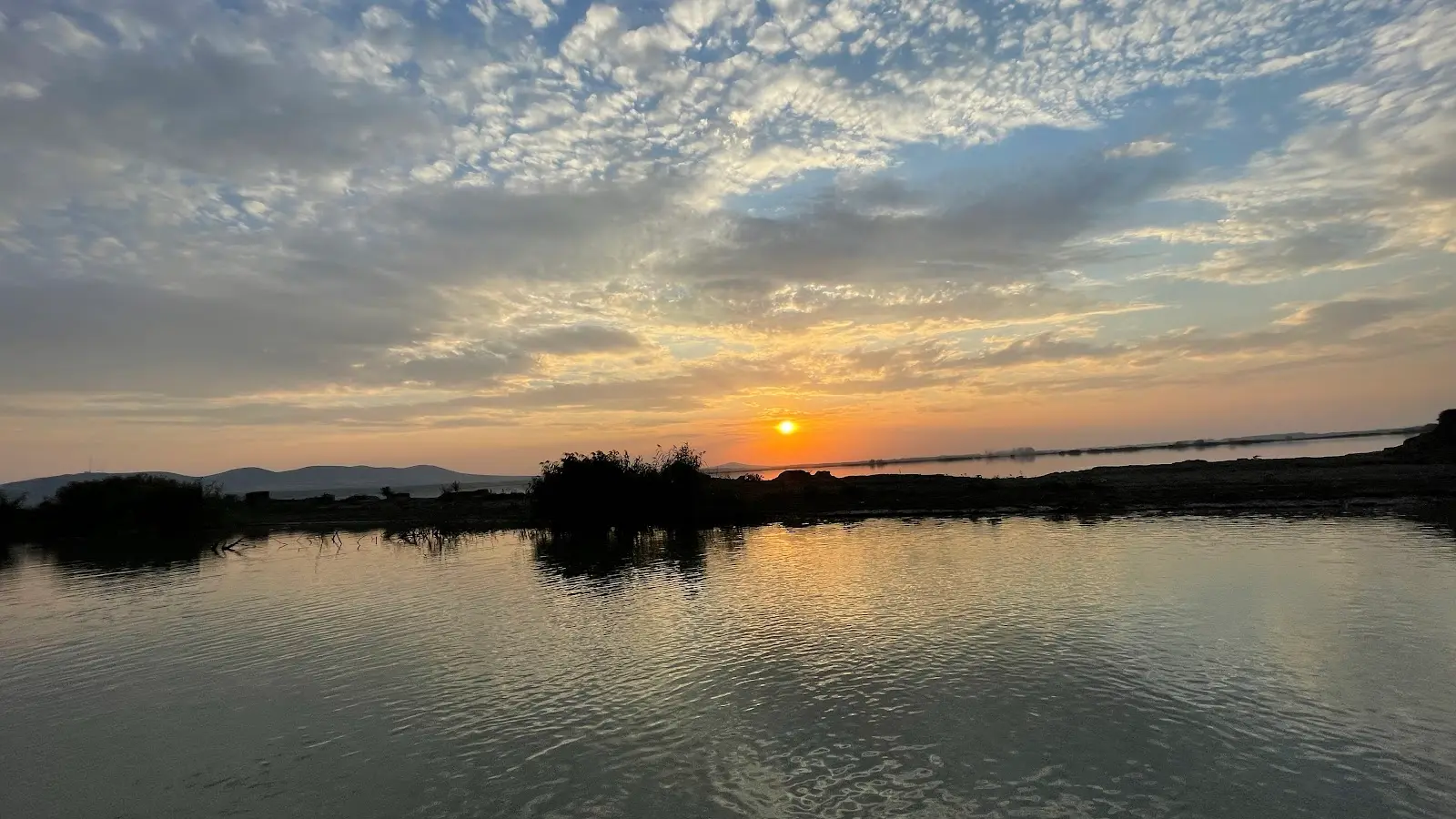
You don't visit the Danube Delta, you listen to it. Here the roads end at Tulcea, and beyond that everything happens by boat, through channels where the reeds grow taller than a person. It is a UNESCO-recognised biosphere reserve, the largest and best-preserved wetland in Europe, and a long weekend is exactly the right amount of time to settle into its rhythm without rushing.
Our full Danube Delta pillar guide goes deep into each branch and channel; here we offer a three-day route, built so you see a great deal but still get to breathe.
Getting into the Delta
The gateway is Tulcea, the port town from which every boat sets out. You reach Tulcea by car or coach from Bucharest or Constanța, then leave the car behind: inside the Delta you don't travel by road, you travel by water.
From Tulcea's harbour you have two ways to move:
- Slow ferries (classic scheduled boats) — cheaper, slower, perfect if you want to watch the banks drift by.
- Speedboats — pricier, but they carry you quickly to the more distant villages such as Sulina or Sfântu Gheorghe.
Our advice: book a guesthouse and a local host-guide well ahead. Someone who knows the channels opens up a Delta you would never find on your own.
Day 1 — Arrive in Tulcea and slip onto the channels
Reach Tulcea by midday. Drop your bags, take a coffee on the waterfront and watch the bustle of the port — everything begins here. In the afternoon you board a boat and enter the channels for the first time, heading for the village where you'll sleep.
That first push onto the water is the moment that changes everything. The noise of the town vanishes within minutes, the banks close in, and the reeds begin to surround you. White and yellow water lilies on the still surface, a heron rising lazily, a fisherman's boat tied to a wooden jetty.
Check into a guesthouse in a fishing village. Dinner is almost always fresh fish, caught that same day. In the evening the silence is total — only frogs, night birds and, alas, mosquitoes (more on them below).
Day 2 — A full day on the water
This is the heart of the weekend: a whole day exploring by boat, ideally with your host-guide aboard.
Start early, at sunrise, when the birds are most active and the light is at its best. The Delta shelters over 300 bird species, and morning is when you see them best:
- Pelicans — the symbol of the Delta, in flocks, gliding over the lakes.
- White egrets, motionless at the edge of the reeds.
- Cormorants, spoonbills, herons, terns and, with a little luck, the white-tailed eagle.
The boat then threads into the reed labyrinth, along narrow channels where you lose all sense of direction. Here a local guide is the difference between a cruise and getting lost.
If the route allows, stop at the Letea forest, a woodland of oaks and vines grown on sand dunes — unique in Europe, strictly protected, an almost subtropical landscape in the middle of the water.
At lunch, pull in at a village or eat right in the boat for the dish that defines the Delta: fish borș (or fish ciorbă), made from the day's catch, with garlic and hot peppers on the side. There is no more authentic meal here.
Head back towards the guesthouse around sunset, when the Delta colours again and the birds return to roost.
Day 3 — Sulina or Sfântu Gheorghe
On the last day, choose the end of the water — the place where the Danube finishes and the sea begins.
Sulina is Romania's easternmost town, the point where the Danube pours into the Black Sea. It has a melancholy, cosmopolitan air, that of a former free port, with a multi-ethnic cemetery and an old lighthouse. From here you can reach the wide, wild beach nearby.
Sfântu Gheorghe is the wilder, more remote alternative: a fishing village on another branch of the Danube, with one of the most beautiful and deserted beaches in Romania — kilometres of sand with no loungers, no hotels, only sea and sky.
Whatever you choose, leave time for the boat journey back to Tulcea — don't underestimate distances on the water.
Practical tips
- When to go: spring (April–May) for birds and migration; summer for warmth, swimming and the beach. Autumn brings quiet and departing flocks.
- Slow or fast boat: take the speedboat when covering long distances (Sulina, Sfântu Gheorghe) and the slow boat for exploring the channels.
- Mosquitoes are real and persistent, especially in summer and at dusk. Spray, long sleeves and a room with a screen are essential.
- Guide and local host: book ahead. A local shows you the good channels, cooks the fish properly and tells you where the pelicans are today.
- Respect the reserve: don't disturb nests, don't leave litter, keep the peace. The Delta is alive precisely because it has been left alone.
A long weekend is never enough to see all of the Delta — and that is exactly its beauty. You leave with the feeling of having touched only the edge of a vast, living place, and with a sure reason to come back.
Plan your trip
Stays nearby
Stays in Romania
Experiences
Tours & activities
Guided tours, day trips and hand-picked experiences via GetYourGuide — free cancellation on most.
See all experiencesGetting to Romania
Flights, transfer & car
Fly into Romania
Compare fares to Bucharest Otopeni (OTP) and regional airports — Cluj, Sibiu, Iași, Timișoara.
Airport transfer
Private, fixed-price door-to-door transfer — driver waiting from the moment you land.
Rent a car — see the real Romania
A rental car is the key to Romania: the Transfăgărășan, the painted monasteries of Bucovina, mountain roads and the villages of Maramureș that no train reaches.
Find a car