Five Days in Bukovina and Maramureș
A self-drive loop through Romania's two great northern regions: Bukovina's painted monasteries, the crossing of the Prislop Pass, and the wooden villages of Maramureș, with the Vaser Valley steam train and the Merry Cemetery of Săpânța.
Northern Romania gathers into a single loop two worlds that seem to belong to different centuries: Bukovina, with its monasteries painted in blue and green, and Maramureș, with its wooden churches and village life left almost untouched. Five days are enough for a relaxed self-drive route, with frequent stops for photographs and long meals at family guesthouses.
This itinerary ties naturally into our detailed Bukovina and Maramureș pillar guides, which you can consult for each individual sight. What follows is the thread that connects them.
Before you set off
A few things to know from the start:
- A car is essential. The sights are scattered across villages and mountain roads; public transport won't move you comfortably from one to the next.
- The best season runs from late spring to late autumn (May–October). The Prislop Pass can see snow and fog outside that window.
- The recommended starting point is Suceava, easily reached by car or by air (Suceava–Salcea airport).
- The most authentic lodging is at family guesthouses, where a homemade breakfast is part of the experience.
Day 1 — Suceava and the first monasteries
Begin the morning in Suceava, the former capital of Moldavia. The restored Princely Citadel (Cetatea de Scaun) offers a good introduction to the region's history and a panorama over the town.
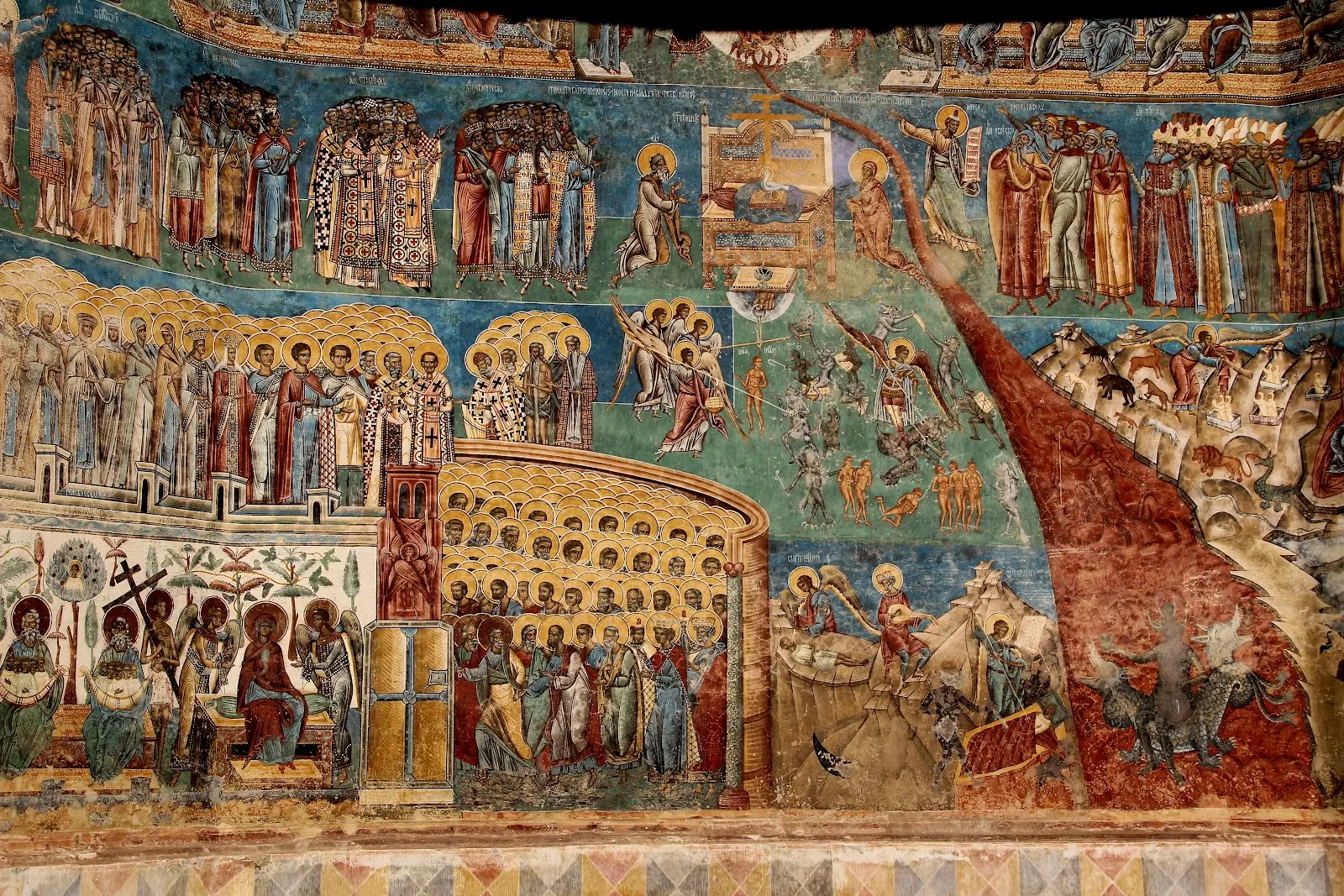
From here you head into the heart of Bukovina. The logical first stop is Humor Monastery, more intimate and less crowded, with frescoes in warm brick-red tones. A few kilometres away stands Voroneț Monastery, famous for its "Voroneț blue" and for the Last Judgment scene on the western wall — probably the best-known exterior fresco in Romania.
In the evening, settle into a guesthouse near Gura Humorului, a small town well placed for the next day's explorations.
Day 2 — Sucevița, Moldovița and painted eggs
The second day is devoted to the most spectacular painted monasteries.
- Moldovița Monastery, with its fortified walls and the vividly rendered scene of the Siege of Constantinople.
- Sucevița Monastery, the best preserved of them all, with the famous "Ladder of Virtues" on the northern wall and a dominant emerald green.
The route between them crosses the Ciumârna Pass (also called "the Palm"), a mountain road with sweeping views. Along the way it's worth stopping at a painted-egg workshop, a living craft in Bukovina's villages, where you can watch wax being drawn onto the shell and buy a painted egg straight from the artisan.
Spend the night in Bukovina again, as the next day brings the long drive west.
Day 3 — Over the Prislop Pass into Maramureș
In the morning you set out for Maramureș, and the road itself is the attraction. The Prislop Pass, at over 1,400 metres, is the highest road pass in the Eastern Carpathians and the natural border between the two regions. The views towards the Rodna and Maramureș mountains are unforgettable.
After the descent, the first important stop can be the Merry Cemetery of Săpânța, unique in the world: wooden crosses painted blue, with humorous epitaphs and naive scenes from each departed villager's life. It is a surprising lesson in how locals view death — with tenderness and irony.
Check into an authentic village such as Breb or Botiza, where carved gates and wooden houses show you from the very first evening why Maramureș is considered a living museum.
Day 4 — Wooden churches and the Vaser Valley
Maramureș is renowned for its wooden churches with sharp, slender spires, several of them inscribed on the UNESCO World Heritage list.
- Bârsana Monastery, an impressive wooden ensemble with tended gardens and soaring towers.
- The church of Ieud, considered one of the oldest wooden churches in the region.
The afternoon (or, ideally, a full day planned in advance) can be given to the Vaser Valley steam train (Mocănița), which departs from Vișeu de Sus and climbs a wild valley on a narrow forestry railway. It is one of the few working steam mocănițe left in Europe, and tickets sell out in season, so booking ahead is essential.
Day 5 — Village life and the road home
The last day is for the slow rhythm of Maramureș. Wander unhurried through Breb, a village where time seems to have stopped, with hay meadows, haystacks and massive oak gates. Stop at a pottery or weaving workshop, taste the homemade cheese and pălincă, and buy a few products straight from the households.
If you have time left, visit a village museum or a memorial house in the area before heading home. The return can follow the same route or descend through Cluj, depending on your final destination.
Practical notes
- Book the Mocănița weeks ahead in the summer months.
- Bear in mind that monasteries have a dress code (shoulders and knees covered).
- Refuel often; petrol stations are rare on mountain roads.
- Leave room in your luggage for painted eggs, ceramics and textiles — the finest souvenirs are bought straight from the artisans.
Plan your trip
Stays nearby
Stays in Romania
Getting to Romania
Flights, transfer & car
Fly into Romania
Compare fares to Bucharest Otopeni (OTP) and regional airports — Cluj, Sibiu, Iași, Timișoara.
Airport transfer
Private, fixed-price door-to-door transfer — driver waiting from the moment you land.
Rent a car — see the real Romania
A rental car is the key to Romania: the Transfăgărășan, the painted monasteries of Bucovina, mountain roads and the villages of Maramureș that no train reaches.
Find a car