Romania in 10 Days: the Grand Loop
A ten-day self-drive loop that strings together Romania's greatest hits — from boho Bucharest to the castles of the Prahova Valley, medieval Transylvania, the legendary Transfăgărășan road, the painted monasteries of Bucovina and the wooden churches of Maramureș. One road, one loop, the whole country.
Romania doesn't reveal itself from a single city. It asks for a long road, the window down, coffee bought at a mountain petrol station. Ten days and a car are the exact formula: a loop that starts and ends in Bucharest and gathers, one by one, castles, Saxon citadels, a legendary road and two lands where time runs differently — Bucovina and Maramureș.
How to do this trip
This is a self-drive route, and the car isn't a luxury — it's the whole premise. Many of the finest stops — villages in Maramureș, monasteries in Bucovina, the switchbacks of the Transfăgărășan — are hard or impossible to reach by public transport.
- Where to start: Bucharest, where most international flights land. Pick the car up at the airport and drop it back there at the end.
- The loop: the route closes on itself, so you avoid a one-way drop-off fee in another city.
- When to come: ideally May–June and September–October, when it's warm but without the peak-summer crowds. The Transfăgărășan only opens fully from July to October (the rest of the year the high section is closed by snow) — if that road is your priority, plan for summer.
- Pace: some days involve 3–4 hours of driving. Don't rush; mountain roads reward patience, and the view is half the story.
Day 1: Bucharest
Start gently, with a day in the capital to shake off the jet lag and catch the country's rhythm.
- Wander the Old Town (Lipscani) and stop at Hanul lui Manuc, the city's oldest working inn.
- See the colossal Palace of the Parliament, the second-largest administrative building in the world, and the graceful Romanian Athenaeum.
- In the evening, a long meal in a hidden Old Town courtyard — Bucharest is a city best lived after dark.
Sleep in Bucharest; tomorrow you head for the mountains.
Day 2: The Prahova Valley and Sinaia
About two hours north of the capital the Prahova Valley begins, the classic gateway into the Carpathians. The essential stop is Sinaia.
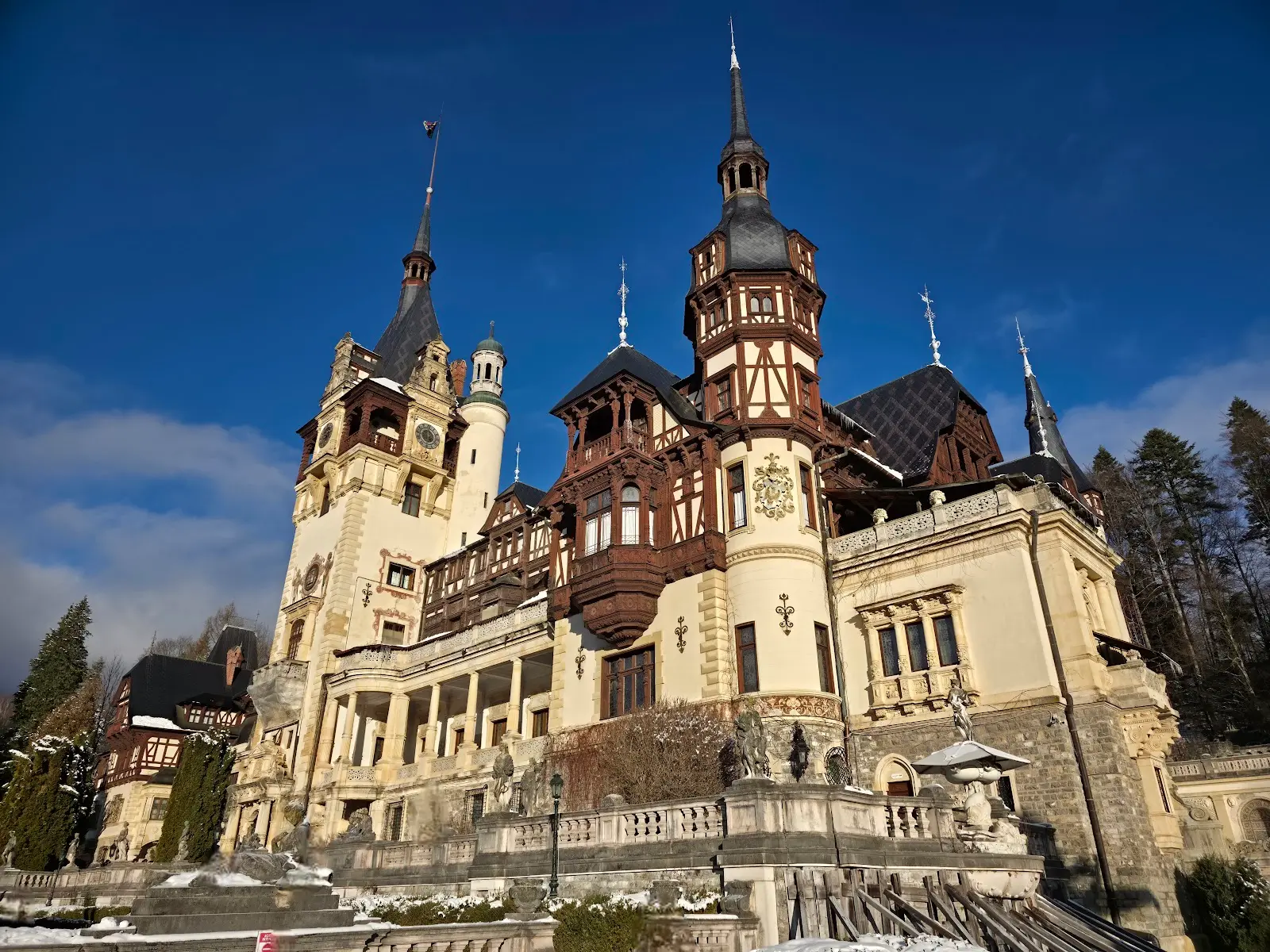
- Peleș Castle, the former summer residence of Romania's kings, is arguably the country's most beautiful — an exercise in German neo-Renaissance set deep in the forest.
- Beside it, more intimate, sit Pelișor Castle and Sinaia Monastery, which gave the resort its name.
- With time and clear weather, ride the cable car up into the Bucegi massif.
Carry on to Brașov (about another hour) and overnight there.
Day 3: Brașov and Bran
Brașov is the best base in Transylvania — see our dedicated regional guide for the wider picture.
- Council Square, the Black Church (the largest Gothic church between Vienna and Istanbul) and Rope Street, one of the narrowest lanes in Europe.
- About 30 minutes away, Bran Castle — marketed as "Dracula's castle" but genuinely striking in its own right, perched on its rock.
- For something more authentic than the legend, stop at Râșnov Citadel, a peasant fortress above the town.
Stay a second night in Brașov.
Day 4: Sighișoara
About two and a half hours from Brașov waits Sighișoara, the only continuously inhabited medieval citadel in Europe.
- Climb the cobbled lanes to the Clock Tower and descend through the Covered Staircase to the church on the hill.
- The house where Vlad the Impaler was supposedly born still stands on the central square.
- Leave time for a fortified Saxon village nearby — Biertan or Viscri (the latter famous for its link to King Charles III).
Sleep in Sighișoara, or push an hour onward toward Sibiu.
Day 5: Sibiu and the Transfăgărășan
Sibiu, a former European Capital of Culture, has one of Romania's most elegant squares and the famous "eyes of the city" — the roof dormers that seem to watch you from above.
- Stroll between the Large Square, the Small Square and the Bridge of Lies.
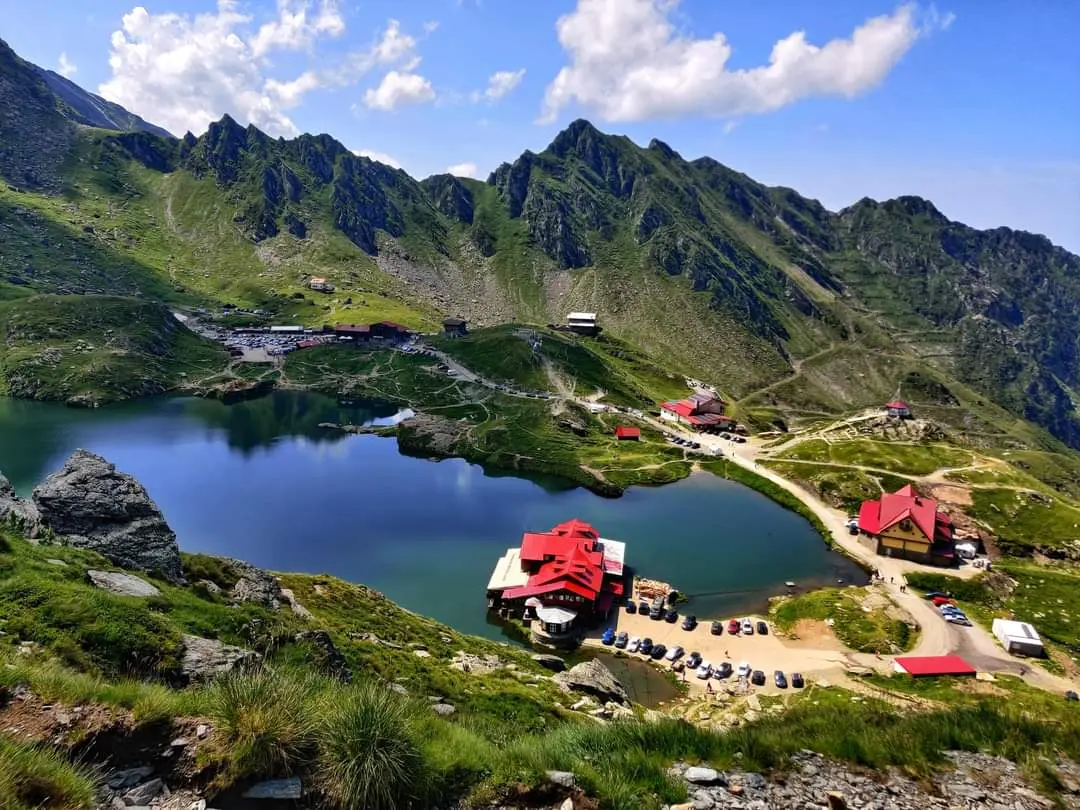
- If it's the season (July–October), make this day your great driving adventure: the Transfăgărășan, the alpine road that climbs in dizzying switchbacks to Bâlea Lake at over 2,000 metres. It is, rightly, among the most spectacular roads on earth.
- If the road is closed, the alternative is the Transalpina or simply a longer day in Sibiu.
Overnight in Sibiu.
Day 6: Cluj-Napoca and Turda Salt Mine
Head north to Cluj-Napoca, the unofficial capital of Transylvania — a young university city full of cafés and energy.
- On the way, stop at the Turda Salt Mine (Salina Turda), a salt mine turned spectacular underground park, with a Ferris wheel and a boating lake dozens of metres below ground.
- In Cluj, see Union Square, St. Michael's Church and the boho quarter around the pedestrian streets.
Sleep in Cluj; tomorrow you cross the mountains eastward.
Days 7–8: Bucovina and the painted monasteries
From Cluj toward Bucovina is a long, lovely drive (about 4 hours) across the Eastern Carpathians. Here you enter one of the country's most moving regions — see our dedicated Bucovina guide.
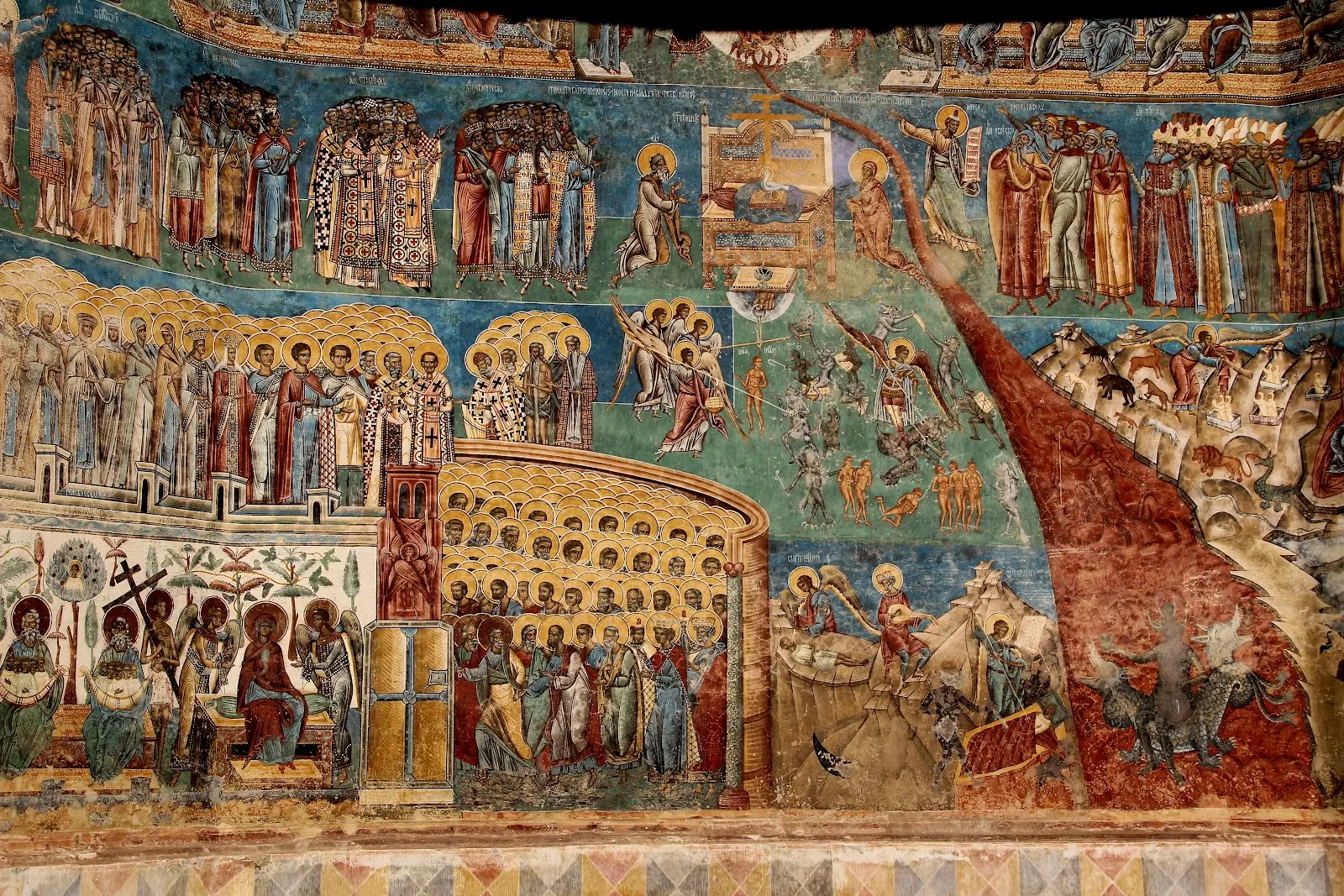
- The painted monasteries — Voroneț, Moldovița, Sucevița, Humor — are UNESCO monuments, their exterior frescoes surviving from the 16th century. "Voroneț blue" is a colour no one manufactures anywhere anymore.
- Stay in a village guesthouse, eat at your host's table, and give a full day to the monasteries alone.
- Optionally, add a stop at the Bicaz Gorge and Red Lake (Lacul Roșu) if you come by the southern route.
Two nights in Bucovina, at an unhurried pace.
Day 9: Maramureș
From Bucovina you cross the Prislop Pass into Maramureș (about 3 hours), the land of wood and living tradition.
- The wooden churches of Maramureș, with their needle-sharp spires, are also UNESCO-listed — Bârsana, Ieud, Șurdești.
- The Merry Cemetery at Săpânța, with its blue crosses and wryly humorous epitaphs, is unlike anywhere else on earth.
- If you love trains, the Mocănița steam railway up the Vaser Valley threads through deep forest.
Sleep in Maramureș, in a traditional homestead.
Day 10: The drive back to Bucharest
The last day is, honestly, a long drive back to the capital (about 8 hours with stops). Break it up:
- Stop in Cluj or Sibiu for lunch and a stretch.
- If you have an evening flight the following day, factor in a final night in Bucharest before departure.
Return the car at the airport and close the loop exactly where you opened it.
No car? A shorter alternative
If you don't drive, don't give up on Romania — just narrow the ambition. The train links Bucharest – Brașov – Sighișoara – Sibiu – Cluj well, and from those bases you can take organised day tours to Bran, Peleș or the monasteries. Bucovina and Maramureș are hard to do without a driver, so for those book a multi-day private guided tour. You'll see less, but you'll still get the Transylvanian essentials.
Plan your trip
Stays nearby
Stays in Romania
Getting to Romania
Flights, transfer & car
Fly into Romania
Compare fares to Bucharest Otopeni (OTP) and regional airports — Cluj, Sibiu, Iași, Timișoara.
Airport transfer
Private, fixed-price door-to-door transfer — driver waiting from the moment you land.
Rent a car — see the real Romania
A rental car is the key to Romania: the Transfăgărășan, the painted monasteries of Bucovina, mountain roads and the villages of Maramureș that no train reaches.
Find a car