
What to see in Drăgășani: wineries & sights
Four wineries that put the region back on the international map, the hills above the Olt, the church and the history of a small town. The full list of stops in the order that works on the ground — plus how to book your visits.
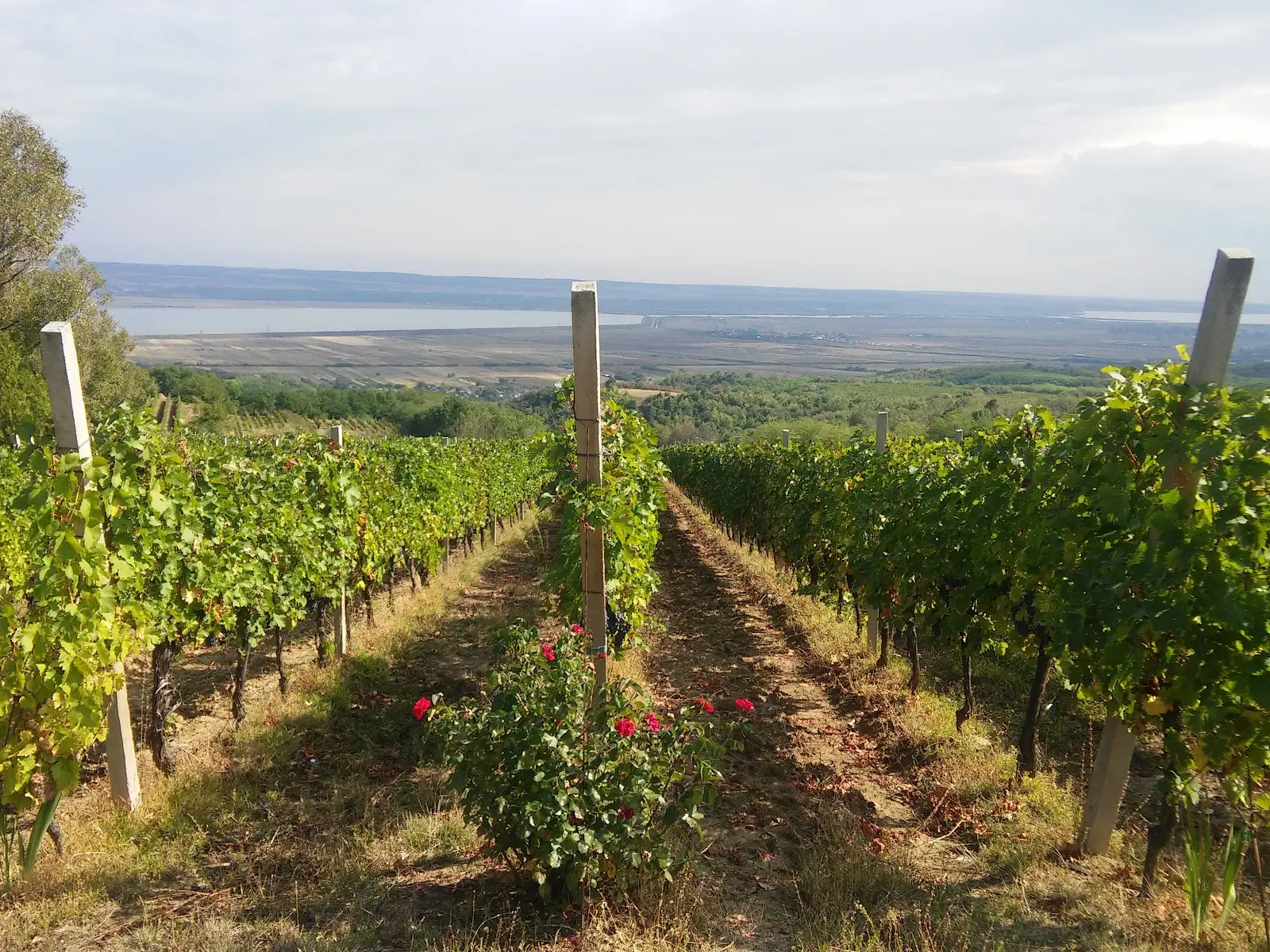
In Drăgășani, the list of things to see is not built from monuments but from hills and wineries. The town is the starting point; the real visit happens out in the vineyards, on the sunny terraces above the Olt. Below, every stop worth making, in the order that works on the ground.
Podgoria Drăgășani — the main attraction
Before any winery, understand the place. Podgoria Drăgășani is one of Romania's oldest wine regions, with viticulture documented since antiquity, spread across the hills on the right bank of the Olt. It is not a sight with a gate and a ticket — it is a landscape you drive through, stopping on the hill roads for the view.
What you are actually looking for:
- The south-facing terraces, where it becomes obvious why wine has been made here for two thousand years.
- The wine villages between the parcels, with low houses, cellars and vines in the yards.
- The view over the Olt valley, at its best in the first and last hours of light.
The grape names you will hear everywhere: Crâmpoșie Selecționată, considered the region's emblematic variety, plus the indigenous reds Negru de Drăgășani and Novac. For the national context, see the guide to Romanian wines.
Prince Știrbey
For most people, Prince Știrbey is where the modern story of Drăgășani begins. The estate has deep historical roots in the area, and its wines carried Crâmpoșie and Negru de Drăgășani onto international tasting tables.
This is the stop to make if you only have time for one: the region's argument is clearest here — local varieties, worked seriously, no apologies. The tasting pays off if you ask your host to pour a white and a red side by side, because the distance between Crâmpoșie and Negru de Drăgășani tells you, in one glass each, everything you need to know about the area. Visits are by appointment.
Avincis
Avincis is the area's other pole: contemporary architecture built into the hillside, precise winemaking and a steady presence in the specialist press. The contrast with a village cellar is large, and deliberate.
It earns its place on the route precisely for that contrast — you see the same vineyard region read through a modern investment, end to end. If you are visiting two estates in a day, pair it with a small one: that combination shows you the real range of the place, from household to architectural project. Appointment needed here too.
Crama Iordache
Crama Iordache is the family project on the list, on a human scale. It is the sort of place where you discuss the wine with the person who made it rather than with a guide, and where naive questions get long answers.
If you have already toured large estates in other regions and want something different, put this one first. Booking is essential — at small producers, whether anyone is at the gate depends on what the vineyard demands that day.
Crama Ștefănești
Crama Ștefănești rounds out a day across the vineyards. It is the stop that shows the area is not reducible to two or three famous names, and that there are layers left for anyone who comes back.
One piece of planning advice: do not attempt all four in one day. Two wineries, visited unhurriedly, with a proper meal between them, make a good day. Four make a day of rushing in which nothing sticks.
St Nicholas Church and the town centre
In town, the landmark is St Nicholas Church. It is the point around which old Drăgășani can be read: a provincial market town with low houses, a market square busiest in the morning, and streets you cover in a short walk.
The walk makes sense once you know the history: Drăgășani is tied to Tudor Vladimirescu's uprising of 1821, an episode that left traces in local memory. Without that, the centre looks merely functional; with it, it becomes legible.
Give it an hour, two at most. The town is not the destination — the vineyards are.
The wine villages between the parcels
Between wineries, the region is best seen from the hill villages. These are places with no declared tourist sights: low houses, wooden gates, cellars dug into the slope, vines trained across a yard next to a walnut tree. Here viticulture is not a project, it is housekeeping.
What is actually worth doing:
- Walk for half an hour along a village lane, around the hour when people come back from the vines.
- Stop at a gate if you see grapes for sale in season — those conversations tell you more about the area than any tasting note.
- Look at how the hills face. You will quickly recognise the good parcels: the ones that catch the sun from morning to evening.
Do not expect tourist infrastructure. There is no signage, there are no interpretation panels and, in many villages, nowhere to eat. That is precisely the appeal: you visit the region as it is, not as it would have been arranged for visitors.
The hills and the Olt valley
Between wineries, the best part of the day is the driving. The hill roads between the wine villages open wide views over the Olt valley, and the changes in elevation mean every bend shifts the perspective.
Worth a stop:
- The high points above the vines, at sunset.
- The bank of the Olt, for the contrast between water and hill.
- The tracks between parcels, for photographs during harvest in September and October.
If you want to fold Drăgășani into a longer trip, the wine road by region shows how it fits with the country's other vineyards.
What not to expect from Drăgășani
- It is not a signposted Tuscany. The roads between wineries carry no tourist signs; use navigation and the exact address you were given when booking.
- It is not a town of monuments. The centre is exhausted in an hour; the emphasis falls on the vineyards.
- It is not walk-in country. Without an appointment, you may only see closed gates.
- It is not automatically cheap. The good wines here are good wines, with everything that implies — come expecting quality, not bargains.
A plan that works
- Morning: the town centre and St Nicholas Church, while it is still cool.
- Late lunch: a solid meal before the tastings, not after.
- Afternoon: two wineries, booked in advance, with the hill drive between them.
- Towards evening: a high point above the vines, for the last light.
And the rule that saves the day: appoint a driver. This is not an area full of taxis, and tastings do not mix with driving.
The full context of the area is in the complete guide to Drăgășani, and the sleeping options — including guesthouses at the wineries — in where to stay in Drăgășani.
Plan your trip
Stays nearby
Stays in Romania
Experiences
Tours & activities
Guided tours, day trips and hand-picked experiences via GetYourGuide — free cancellation on most.
See all experiencesGetting to Romania
Flights, transfer & car
Fly into Romania
Compare fares to Bucharest Otopeni (OTP) and regional airports — Cluj, Sibiu, Iași, Timișoara.
Airport transfer
Private, fixed-price door-to-door transfer — driver waiting from the moment you land.
Rent a car — see the real Romania
A rental car is the key to Romania: the Transfăgărășan, the painted monasteries of Bucovina, mountain roads and the villages of Maramureș that no train reaches.
Find a car











