
Region
Banat
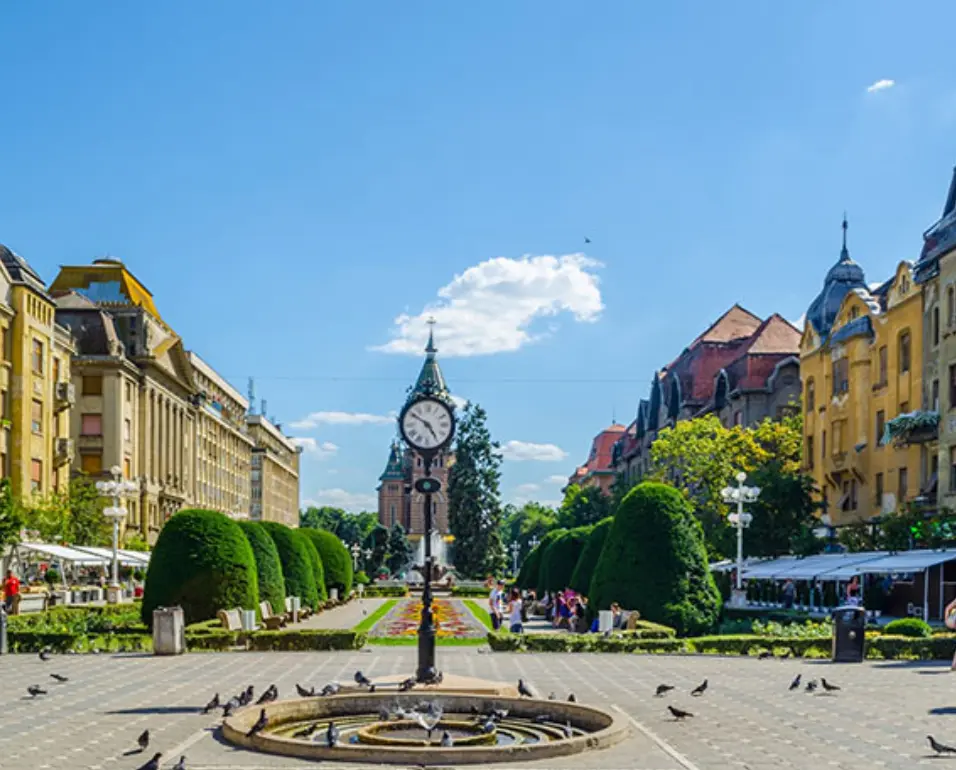
Timișoara and Central-European elegance
The Banat is the Romania closest to Central Europe — a land of fertile plains and gentle mountains where centuries of coexistence among Romanians, Germans, Hungarians, Serbs and Jews have left a singular multicultural legacy. Timișoara, the "little Vienna" on the river Bega and the first city in Europe with electric street lighting, dazzles with its Baroque squares, pastel palaces and cultural effervescence that earned it the title of European Capital of Culture.
Landscapes and cities
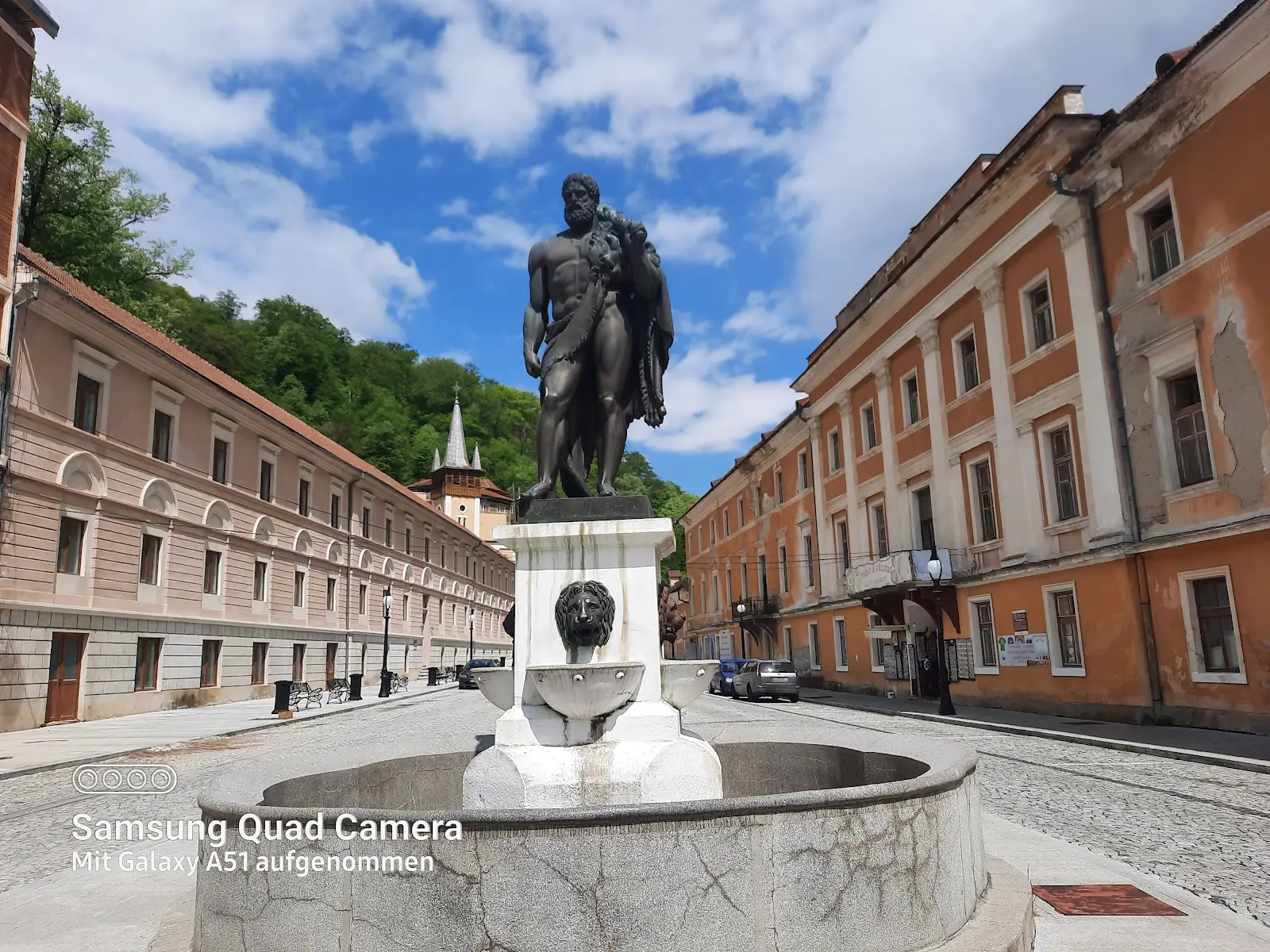
The Mitteleuropa spirit is written in every façade: imperial-yellow frontages, Baroque cathedrals and long-established cafés. Arad, a short drive away, shows off its broad boulevards and star-shaped fortress. To the south and east the land rises into the Semenic Mountains and the spectacular Nera Gorges, with emerald waters, waterfalls and lakes hidden in the forest. Băile Herculane, a thermal spa of Roman origin, blends faded Belle Époque grandeur with steaming springs.
Flavour and reason to go
Banat cooking bears its multicultural stamp — hearty soups, goulash, sausages and Viennese-inspired cakes, matched with hillside wines. A traveller comes to the Banat for its Central European elegance, for the wild beauty of the Nera Gorges, and for the cosmopolitan atmosphere of Timișoara, a city that looks toward the future without forgetting its layers of history.
Destinations in Banat
All destinations →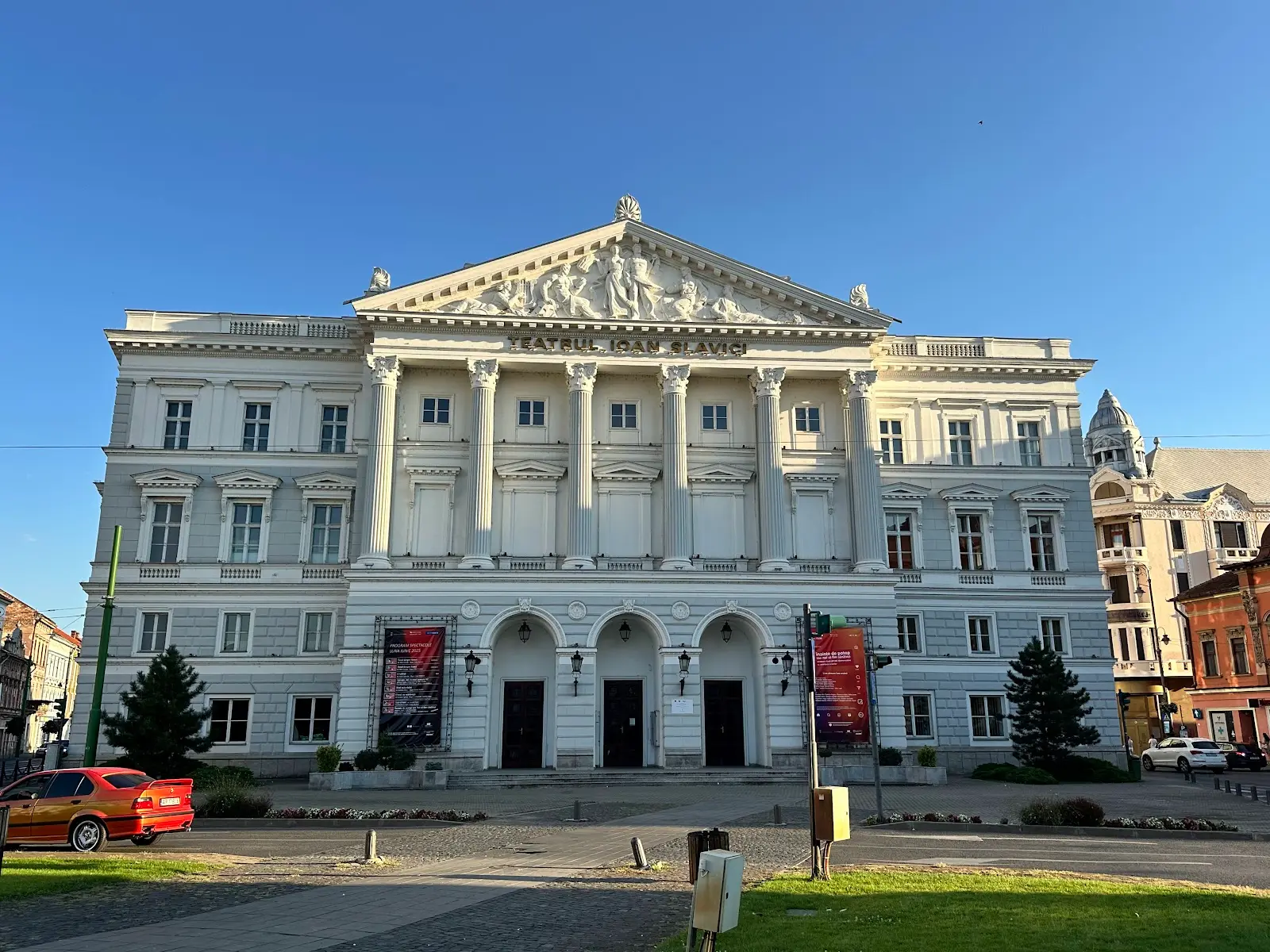
Not to miss in Banat
 Church
Biserica Millennium Timișoara
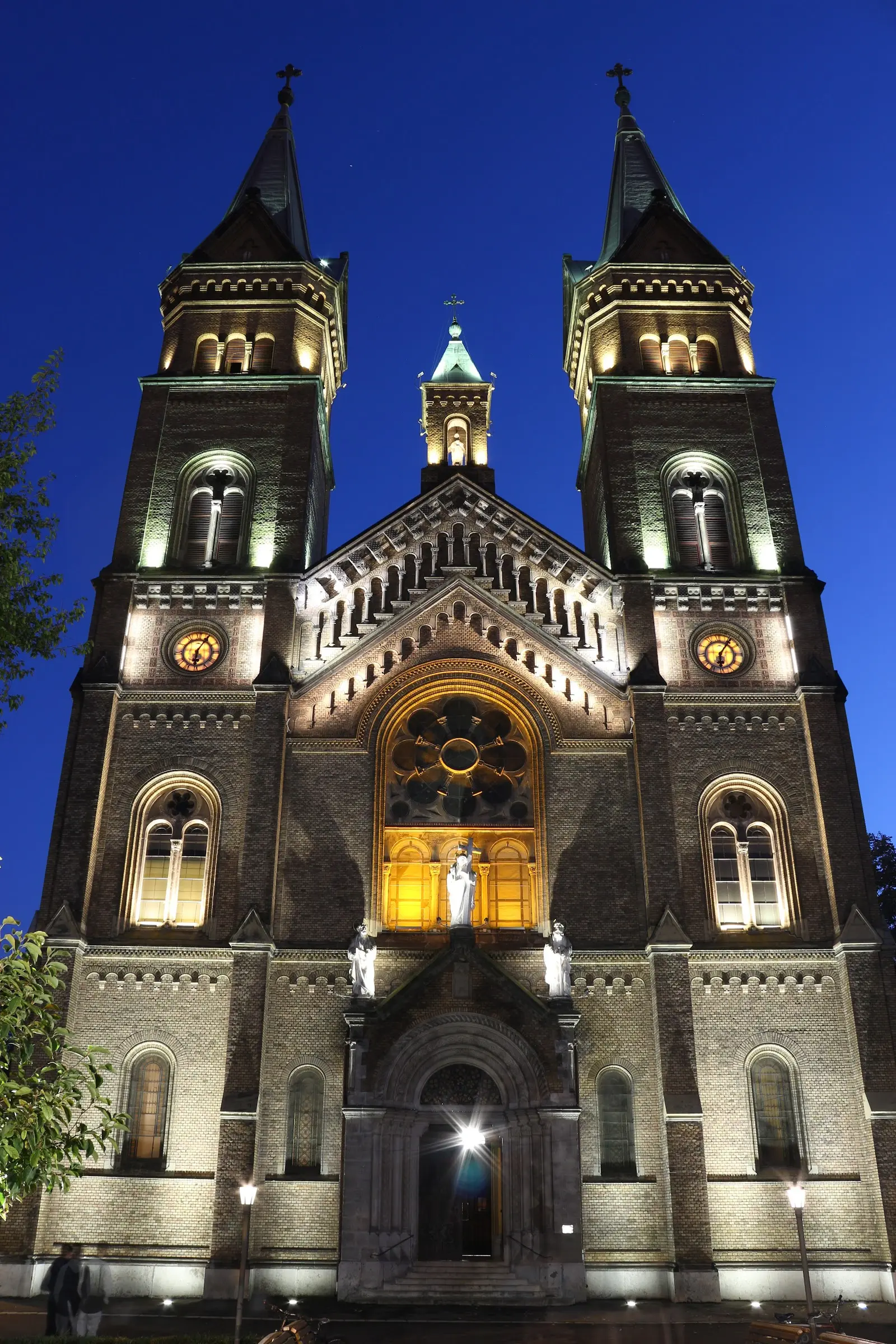
The Millennium Church in Timișoara, in the Fabric district, is the city's largest Roman Catholic place of worship, an imposing church raised in the early 20th century to mark a thousand years since the settlement of the Hungarians in the Carpathian basin. The edifice, built in Neo-Romanesque style with Neo-Baroque accents, stands out for the two twin towers flanking its facade, for its central dome and for its generous dimensions, which make it dominate the landscape of the Fabric district, one of Timișoara's old industrial and residential nuclei. Inside, the church houses a monumental altar, a valuable organ and painted decoration that heightens the solemnity of the space. Raised in exposed brick, with elaborate ornament, the Millennium is an architectural landmark of the city known as a European Capital of Culture. Practical note: combine the visit with a walk through the Fabric district, with its Secession buildings, and with the discovery of Union Square in the historic centre.
 Church
Catedrala Ortodoxă Mitropolitană Timișoara
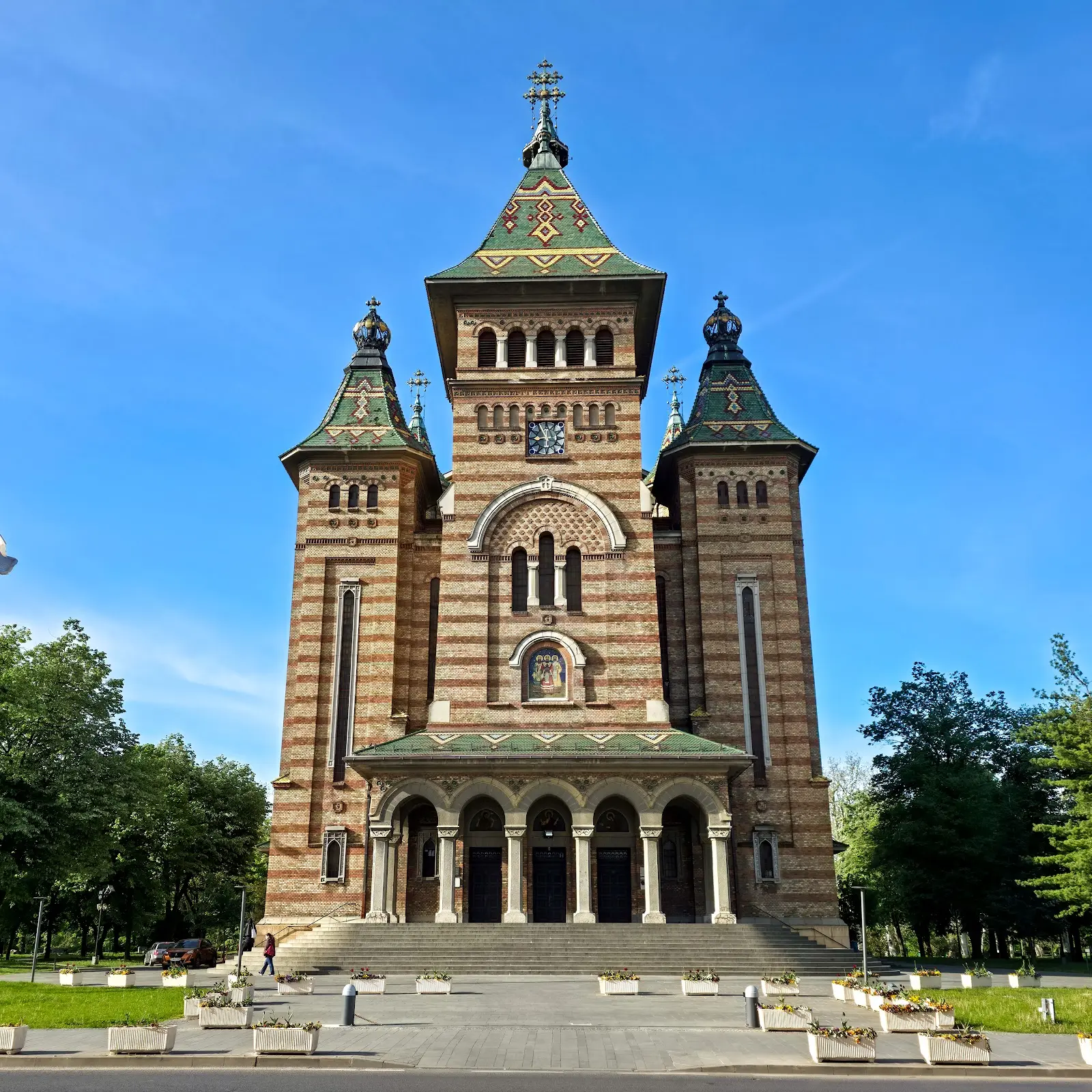
The Orthodox Metropolitan Cathedral of Timișoara, dedicated to the Three Holy Hierarchs, is one of the most representative places of worship in western Romania and a symbol of the city. Built in the 1930s and 1940s, the cathedral impresses with its verticality and its eleven towers roofed in colourful glazed ceramic, blending elements of Byzantine architecture with motifs typical of Moldavian churches. Its slender silhouette, with a tall central tower, dominates the perspective of the boulevard descending toward Victory Square, the heart of the city. The interior holds rich painting, a remarkable iconostasis and a collection of old church art. The cathedral has also become a place charged with historical meaning, tied to the events of December 1989, when dramatic moments of the revolution unfolded in front of it. Set in the pedestrian centre, near the theatre and the opera, it is easy to reach. Visitors are asked to respect the quiet and the dress appropriate to an active place of worship.
 Landmark
Piața Unirii Timișoara
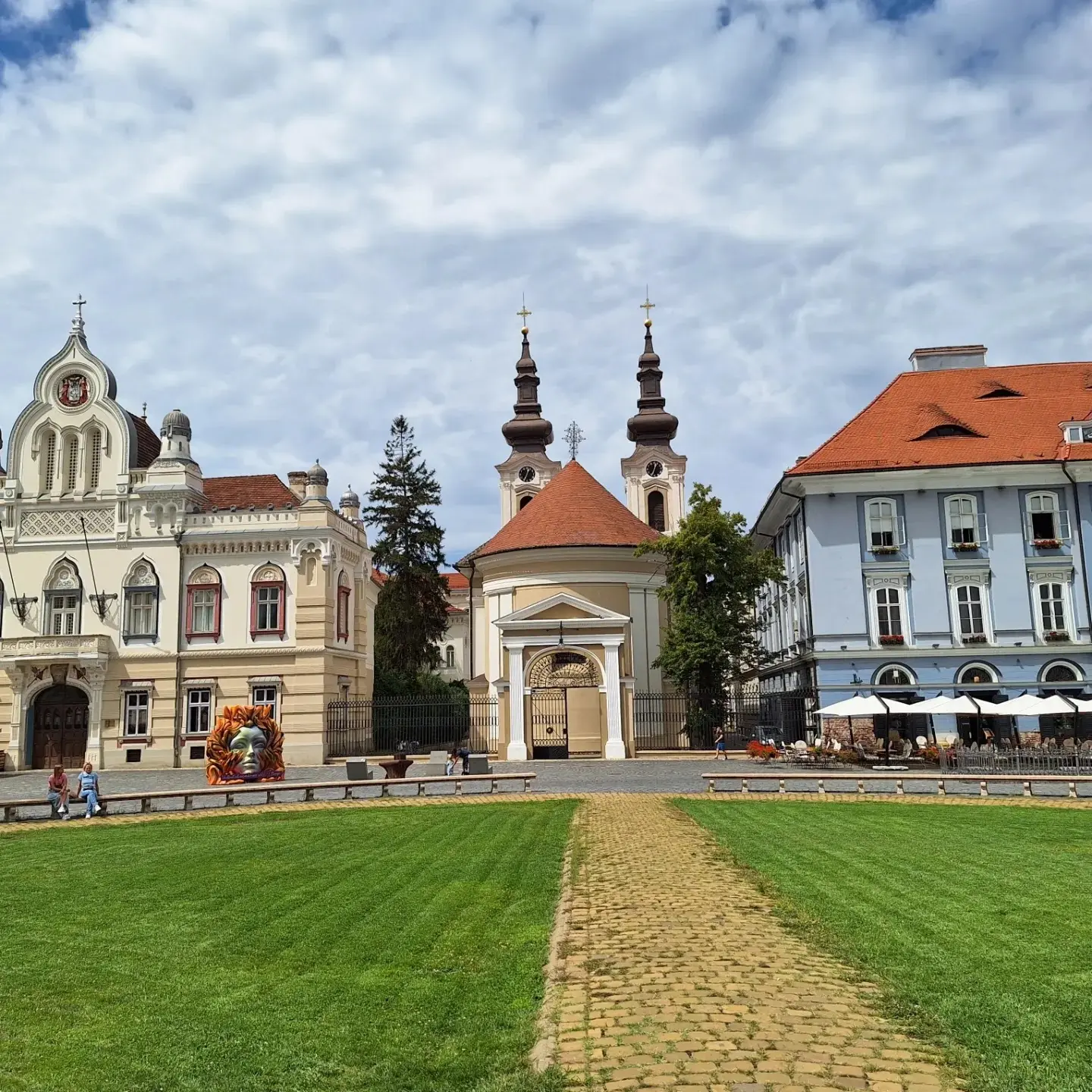
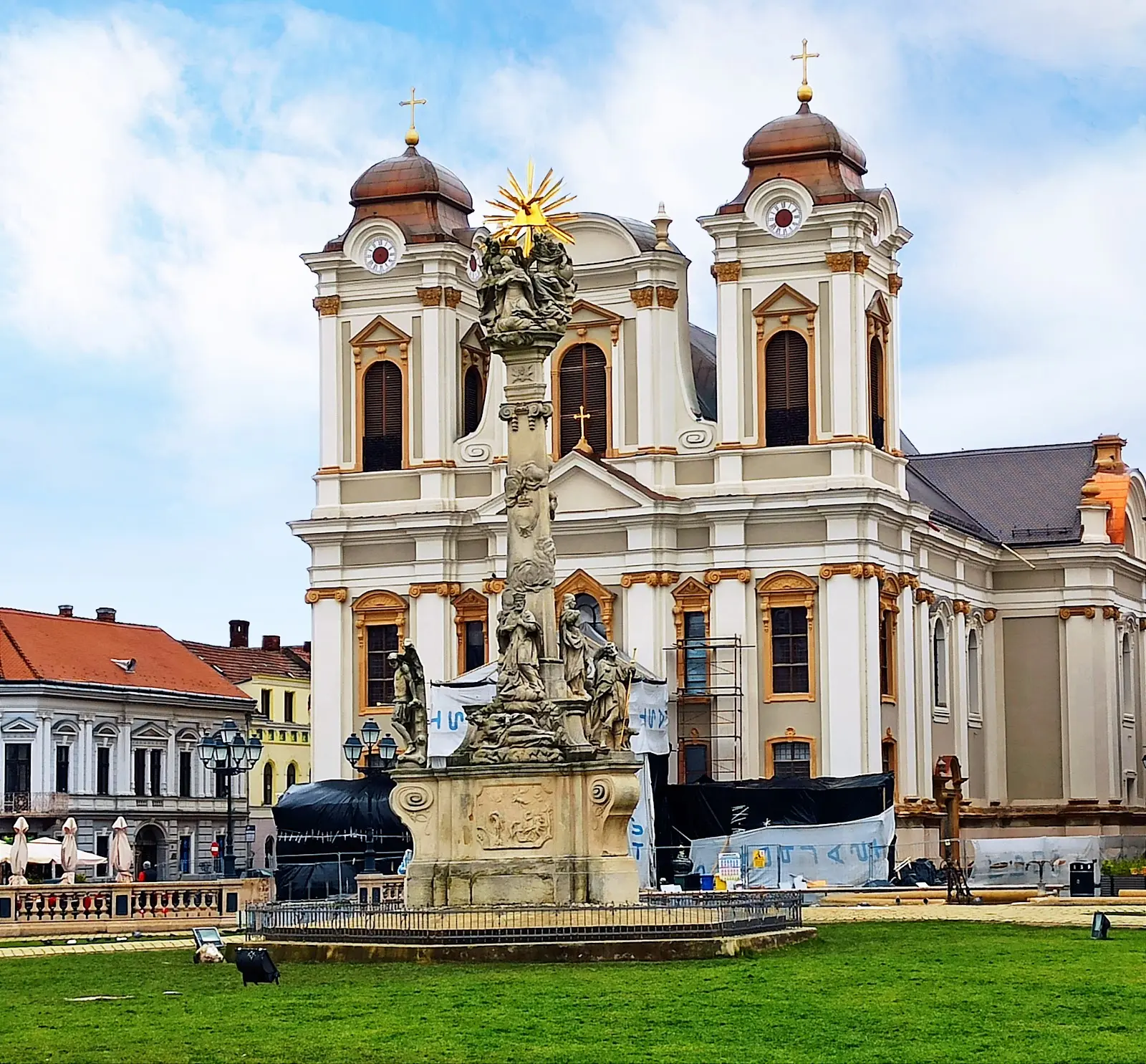
Union Square is one of the most beautiful historic squares in Timișoara and a symbol of the baroque centre of this city in the Banat region. Bordered by elegant buildings erected in the 18th century, the square brings together in a harmonious ensemble the Roman-Catholic cathedral and the Serbian Orthodox church, both in the baroque style, facing each other, a testimony to the religious and ethnic diversity that characterises the city. At the centre of the square stand a monumental column and a fountain, and the carefully restored coloured façades of the surrounding palaces create a picturesque setting, loved by locals and visitors alike. The square has witnessed important events in the city's history and remains a place for meeting and strolling. Timișoara, known for its rich architectural heritage, showcases its multicultural past here. Practical note: the square is best explored on foot, and the surrounding terraces invite a stop, while the visit can extend to the other historic squares and landmarks of the city centre.
 Nature
Cascada Vânturătoarea
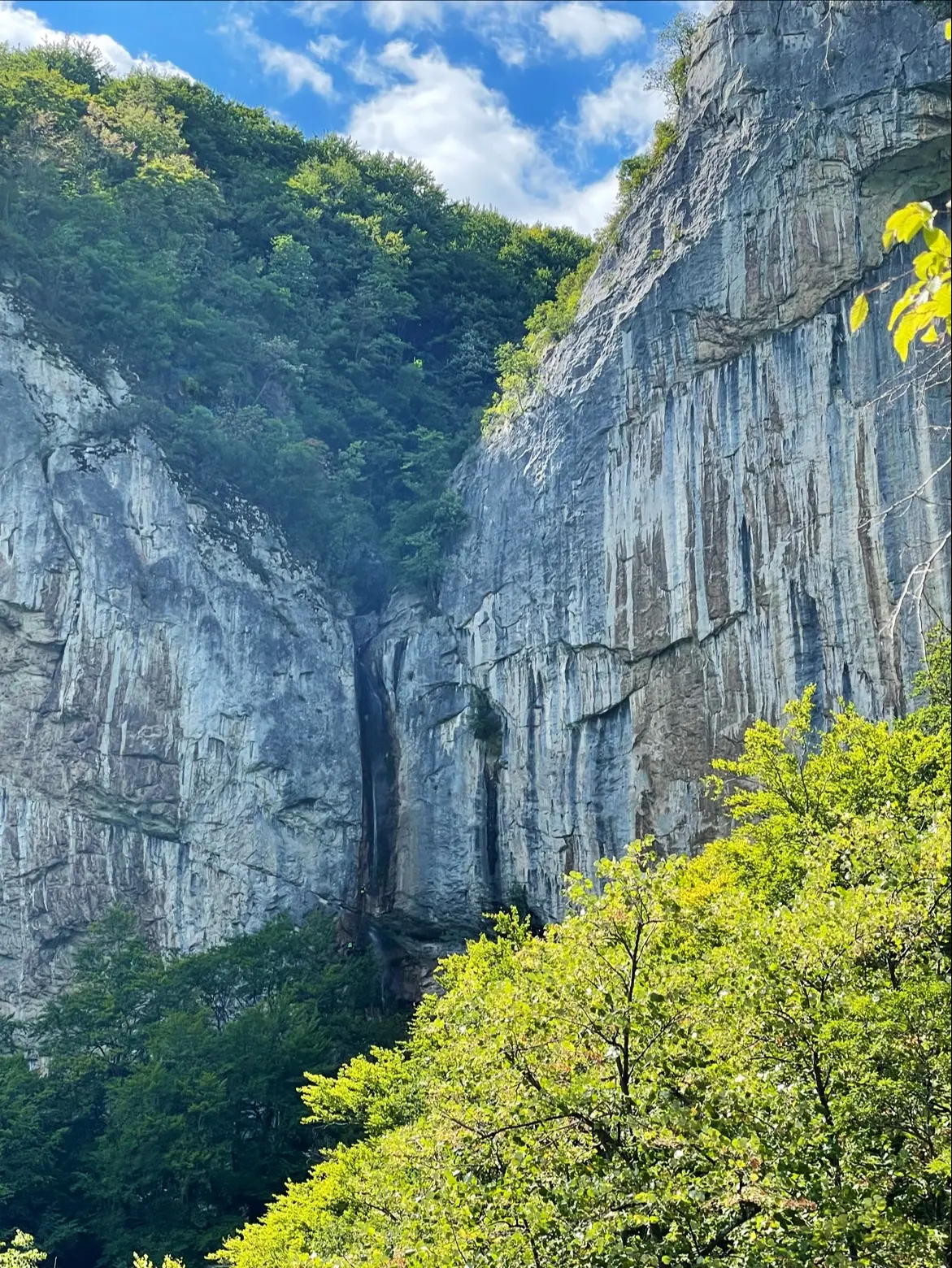
Vanturatoarea Waterfall is one of the most beautiful cascades in the Baile Herculane area, set in the Domogled-Cerna Valley massif within a wild, wooded Carpathian landscape. The water plunges from a considerable height over a rock step, breaking into fine droplets that seem carried by the wind, which gives the fall its evocative name. The access path starts near the road climbing the Cerna Valley and crosses a shady forest, with steeper stretches towards the end, up to the foot of the waterfall. The surroundings, with rich vegetation, limestone crags and the cool forest air, make the hike a pleasant experience. The area lies within the Domogled-Cerna Valley National Park, notable for its biodiversity. Hiking footwear is recommended, along with care on the wet and slippery sections near the water. The visit can be combined with a relaxing day in the nearby spa resort of Baile Herculane.
 Church
Domul Romano-Catolic Timișoara
The Roman Catholic Dome in Timisoara, also known as Saint George's Cathedral, is one of the most valuable Baroque buildings in Romania, set in Union Square in the heart of the historic centre. Raised in the eighteenth century under Habsburg rule, the edifice impresses with its elegant twin-towered facade, its richly decorated interior and its Baroque altars. The dome holds its historic organ and religious works of art of great value, standing as a remarkable example of Central European ecclesiastical architecture. The building reflects the Austrian cultural influence and the role of the Catholic community in the multicultural history of the Banat. Union Square, with its ensemble of colourful historic buildings, forms an exceptional setting for the monument. The dome is a must-see attraction of Timisoara; visitors are asked to respect the quiet and the schedule of services inside.
 Nature
Ochiul Beiului (Cascada Beușnița)
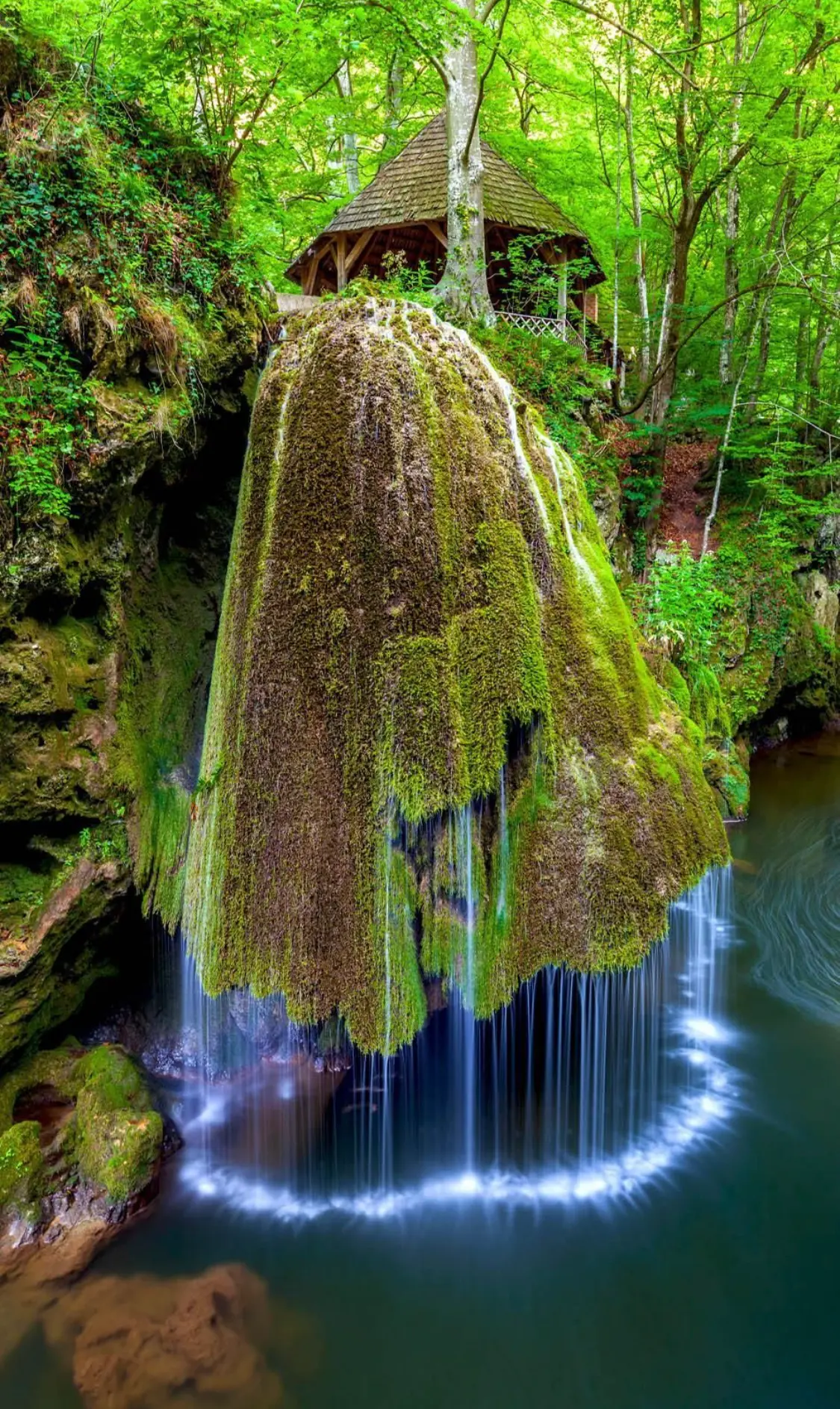
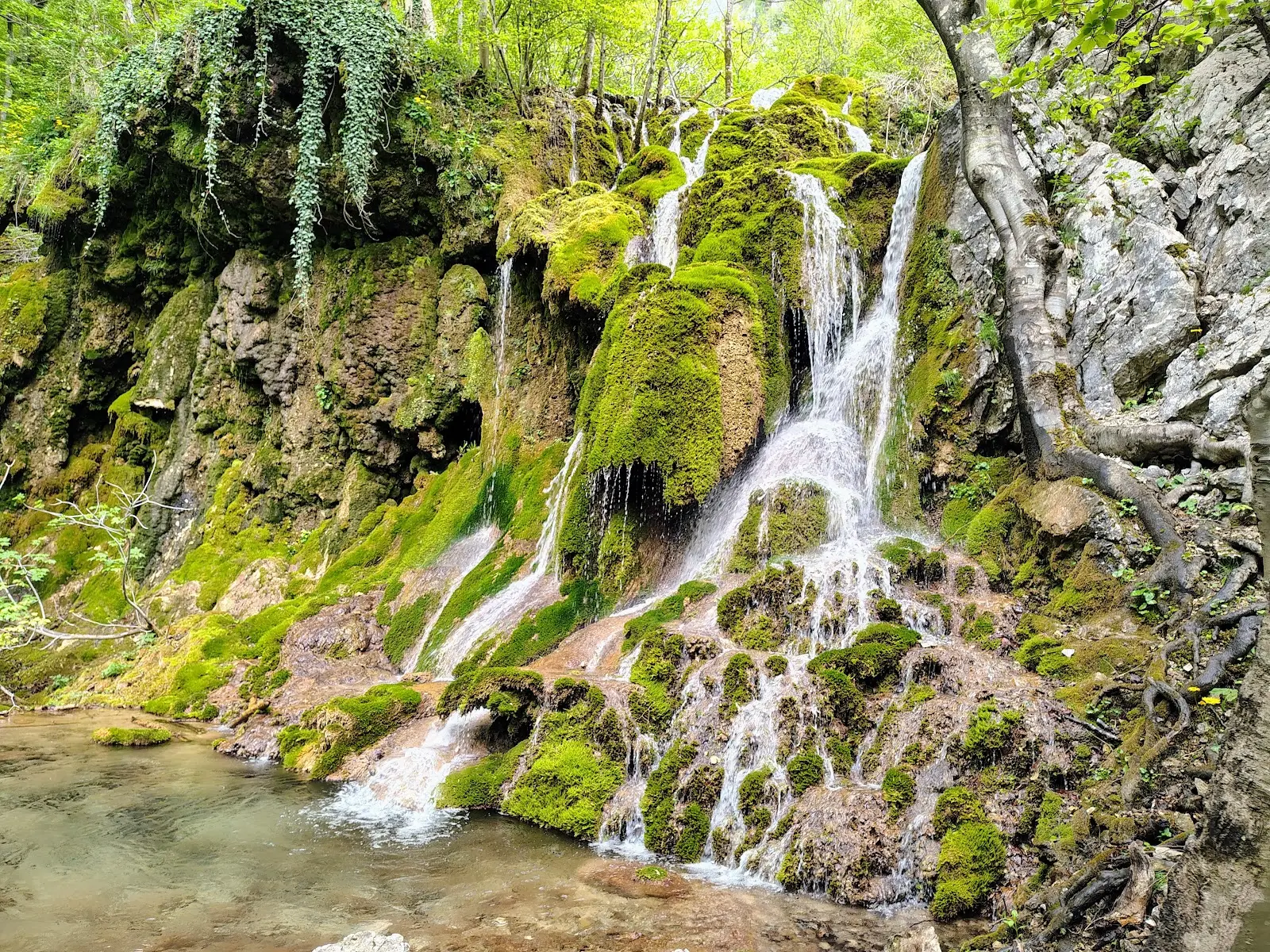
Ochiul Beiului and Beușnița Waterfall rank among the most spectacular natural wonders of the Banat, located in the Nera Gorges-Beușnița National Park near Reșița. Ochiul Beiului is a small karstic lake of astonishing clarity, with intensely turquoise-green waters that never freeze completely and that are fed by underground springs. A short distance away lies Beușnița Waterfall, where water tumbles over moss-covered travertine ledges, creating a cascade of rare beauty often compared to exotic landscapes. The trail linking the two attractions crosses a lush forest with rich vegetation and crystal-clear springs, and is one of the most beloved in Romania. The area is part of a protected zone with remarkable biodiversity, home to rare Mediterranean plant species. Accessible on marked paths, this region is a dream destination for nature lovers, hikers and photographers seeking authentic scenery and tranquillity far from the crowds.
Regional flavours
Tours & experiences in Banat
Experiences
Guided tours in Banat
Day trips, walking tours and hand-picked experiences across Banat — free cancellation on most.
See all experiencesWhere to stay in Banat
Stays nearby
Hotels & stays in Banat