
Banat
Băile Herculane
The Roman thermal resort in the Cerna Valley.
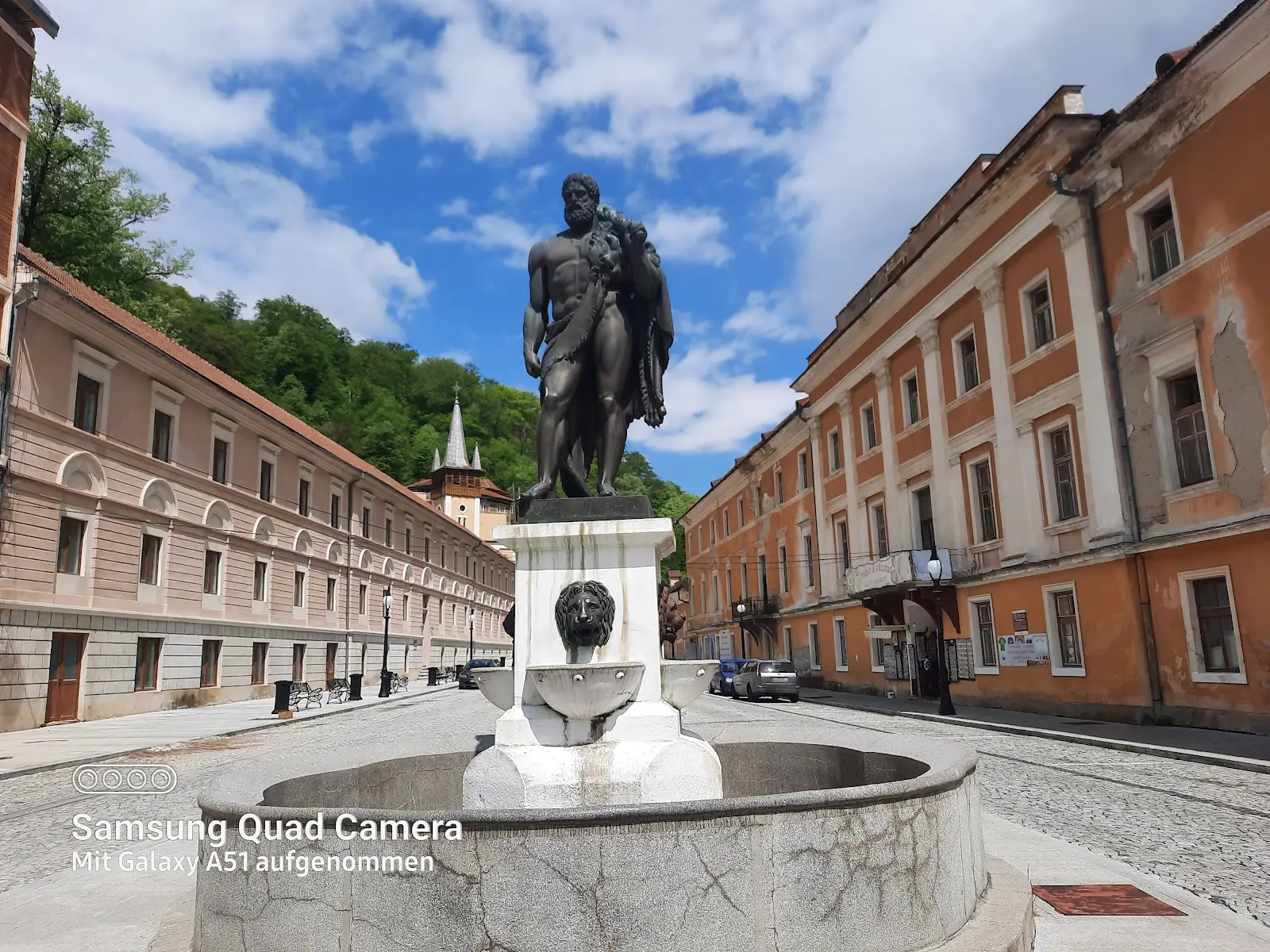
Băile Herculane is one of the oldest spa resorts in Europe, tucked into the narrow gorge of the Cerna Valley in mountainous Banat, at the foot of the Cerna and Domogled Mountains. Legend holds that Hercules himself rested here, and the sulphurous thermal springs were already exploited in Roman times, when the settlement was called Ad Aquas Herculi Sacras. The resort preserves a fascinating Austrian historic core, built in the nineteenth century under the Habsburg Empire: the Casino, the imperial baths, the monumental hotels and the statue of Hercules in the central square make up an ensemble of faded elegance, ruinous in places yet strikingly powerful to the eye.
The thermal waters, rich in sulphur, chlorine and calcium, are used to treat rheumatic, respiratory and nervous-system ailments. The surroundings of the Domogled – Cerna Valley National Park offer trails to the Outlaws' Cave, the White Cross and karst landscapes. The atmosphere blends belle époque nostalgia with the wildness of the surrounding nature.
Banat cooking offers soups, roasts and dishes with Serbian and Austrian influences. Herculane is reached by the DN6 road and the railway from Timișoara and Craiova. It is worth visiting for its millennia-old history, its imperial architecture and the healing power of its springs.
Where to stay
All stays →
What to see
See all →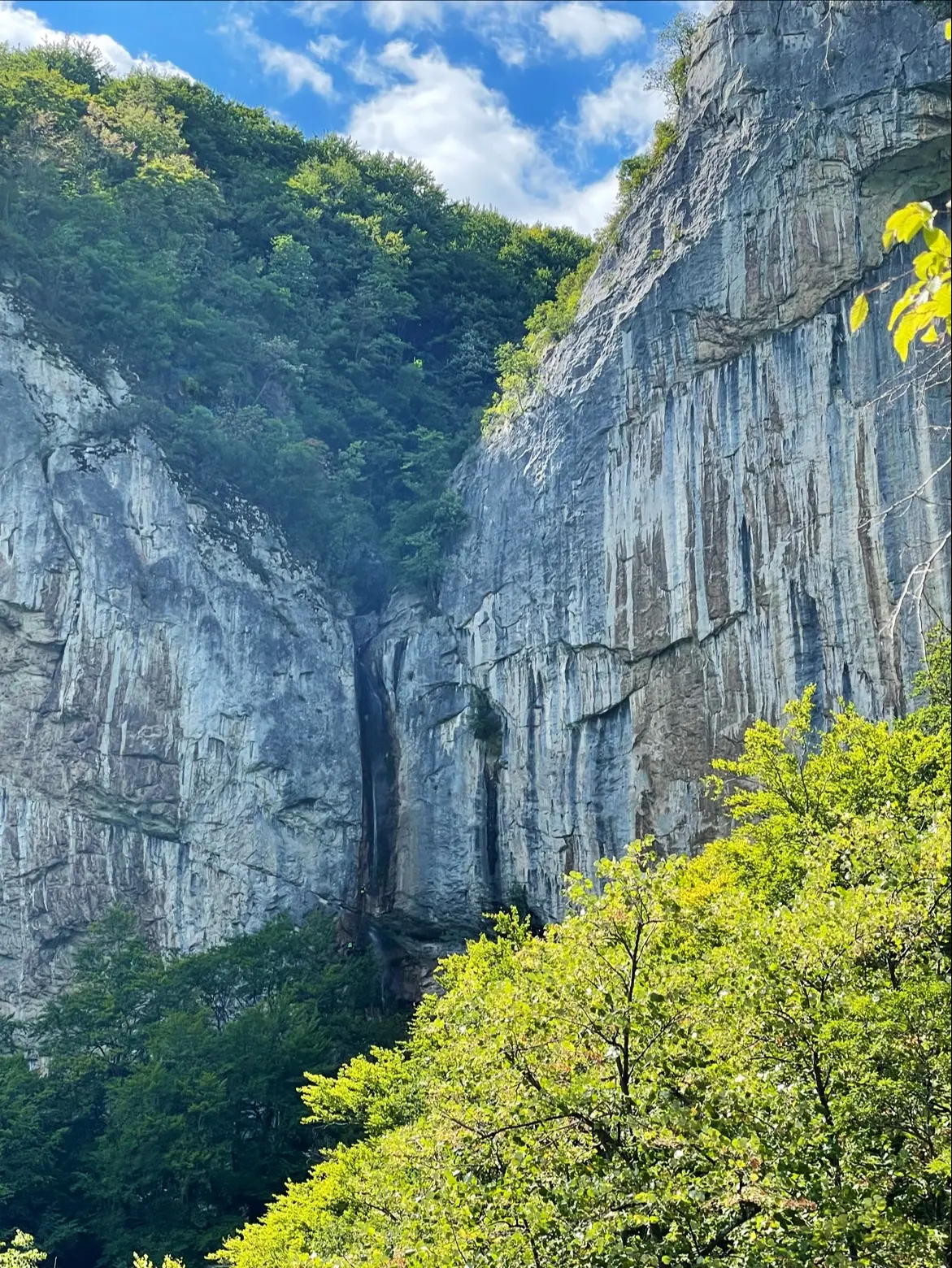 Nature
Cascada Vânturătoarea
Vanturatoarea Waterfall is one of the most beautiful cascades in the Baile Herculane area, set in the Domogled-Cerna Valley massif within a wild, wooded Carpathian landscape. The water plunges from a considerable height over a rock step, breaking into fine droplets that seem carried by the wind, which gives the fall its evocative name. The access path starts near the road climbing the Cerna Valley and crosses a shady forest, with steeper stretches towards the end, up to the foot of the waterfall. The surroundings, with rich vegetation, limestone crags and the cool forest air, make the hike a pleasant experience. The area lies within the Domogled-Cerna Valley National Park, notable for its biodiversity. Hiking footwear is recommended, along with care on the wet and slippery sections near the water. The visit can be combined with a relaxing day in the nearby spa resort of Baile Herculane.
 Viewpoint
Crucea Albă Băile Herculane
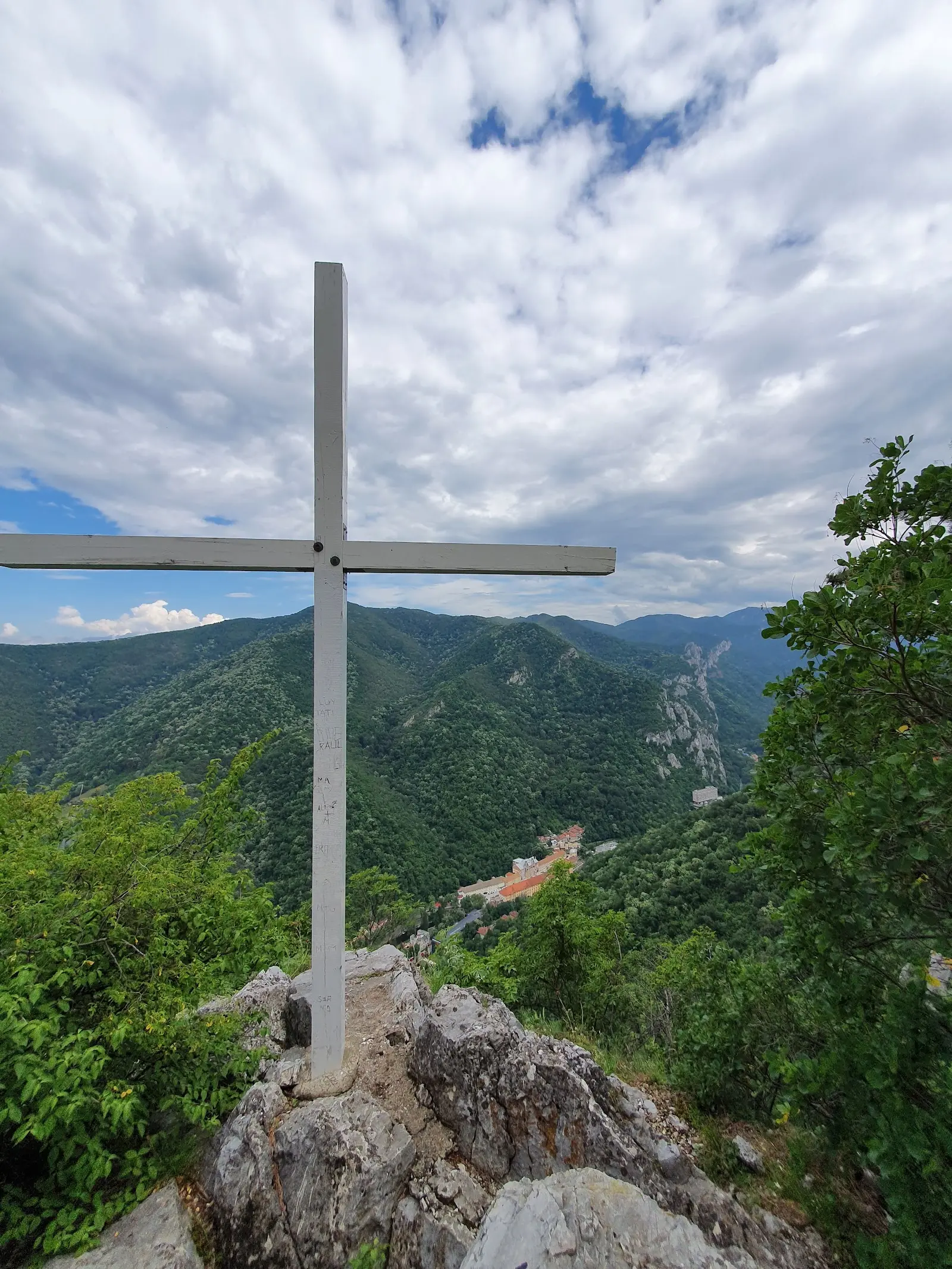
The White Cross is one of the most appreciated viewpoints in the resort of Baile Herculane, set on a slope of the Domogled Mountains above the old spa town in the Cerna Valley. From here a spectacular panorama opens over the entire resort, with its historic buildings, over the Cerna gorge and the wooded summits around it. The cross, raised on the rock, marks the viewpoint and has become a symbol of the place, a favourite goal for those who climb the path to admire the landscape. The trail to the White Cross is a hike of moderate difficulty, starting from the resort and climbing through the deciduous forest, offering many perspectives over the valley along the way. The area lies within the Domogled-Cerna Valley National Park, notable for its biodiversity and wild landscapes. Hiking footwear, water and care on the steeper sections are recommended. The visit can be combined with exploring the thermal springs and the historic architecture of Baile Herculane.
 Mountain
Parcul Național Domogled - Valea Cernei
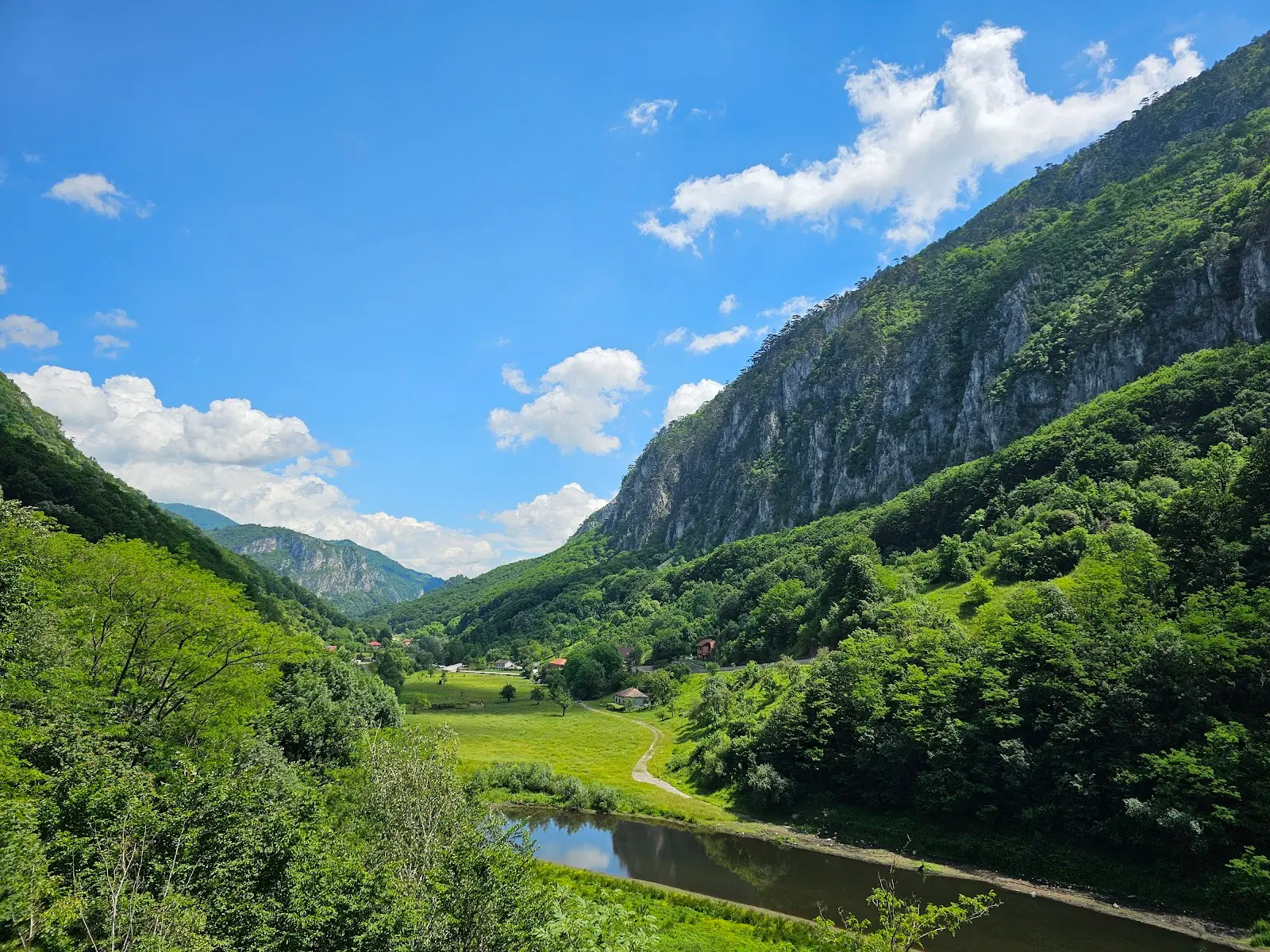
Domogled - Cerna Valley National Park is the oldest national park in Romania and stretches over wild mountains in the area of Baile Herculane, in Caras-Severin county, at the border of the Banat with Oltenia. The reserve protects an exceptional biodiversity, with forests of Banat black pine, spectacular gorges carved by the Cerna river and numerous rare species of plants and butterflies, adapted to the warm climate and Mediterranean influences. The landscape includes rocky peaks, thermal springs, caves and deep valleys, offering hiking trails for every level. From here paths lead to renowned places in the massif, and the closeness of the Baile Herculane resort, with its thermal springs used since Roman times, adds to the appeal of the area. The park is an ideal destination for lovers of nature, hiking and photography, in a wild and little-known corner of the Carpathian Mountains.
LandmarkStatuia lui Hercule
The Statue of Hercules is the emblematic symbol of Băile Herculane, Romania's oldest spa resort, with a history reaching back to Roman times, when the legions discovered the thermal springs of the Cerna Valley. The bronze statue, cast in the mid-nineteenth century in Vienna and given to the resort during the Austrian Empire, depicts the mythological hero Hercules leaning on his club, the skin of the Nemean lion over his shoulder, evoking the legend that the god healed his weariness here in the curative waters. Set in the historic centre of the resort, the statue watches over monumental buildings in a baroque and eclectic Austrian style, many of them witnesses to the golden age of the place, when it was frequented by European aristocracy. The surroundings, with historic architecture, thermal springs and the natural setting of the Cerna Gorges, make the statue a central point for photography and a starting place for walks. Visitors can combine the visit with the discovery of nearby springs and historic buildings.
 Nature
Grota Haiducilor
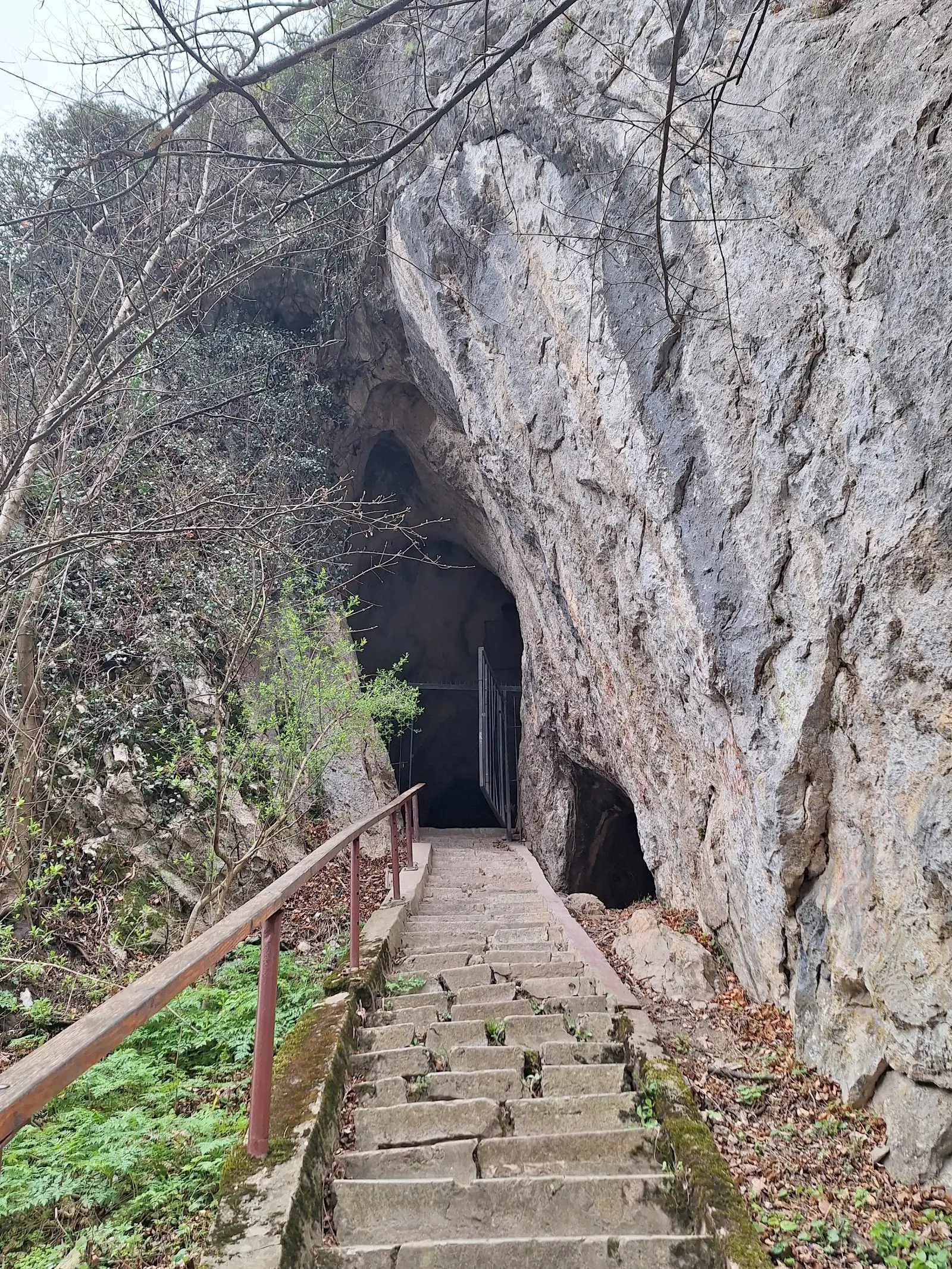
The Outlaws' Grotto is a cave near the resort of Băile Herculane, one of the oldest spa resorts in Europe, set in the gorge of the Cerna River in the Banat. The name evokes legends about the outlaws who are said to have sheltered in such caves in the surrounding limestone massif, using them as hideouts in olden times. The grotto opens on the rocky slopes around the resort and can be visited during walks on the local trails. The surrounding landscape, with steep walls, rich vegetation, and thermal waters rising to the surface, makes the whole valley of the Cerna a remarkable place, prized since Roman times for its healing springs. Băile Herculane preserves historic buildings and an old-world air that complements the beauty of the nature. Visitors can combine exploring the grotto with discovering the heritage of the resort. Suitable footwear is recommended for the access paths and caution on the rocky trails.
Frequently asked questions
What is Băile Herculane known for?+
Băile Herculane is best known for sights such as Cascada Vânturătoarea, Crucea Albă Băile Herculane, Parcul Național Domogled - Valea Cernei.
How many days do you need in Băile Herculane?+
One to two days is enough to see the highlights of Băile Herculane; stay longer to use it as a base for day trips.
Where should I stay in Băile Herculane?+
See our selected stays above, or check live rates and availability on the accommodation map.