A Latin island in the East
Culture & Identity
A Latin language, Orthodox faith, folk art, the music of Enescu, the literature of Eminescu and Caragiale, Brâncuși — and the truth behind the Dracula myth.
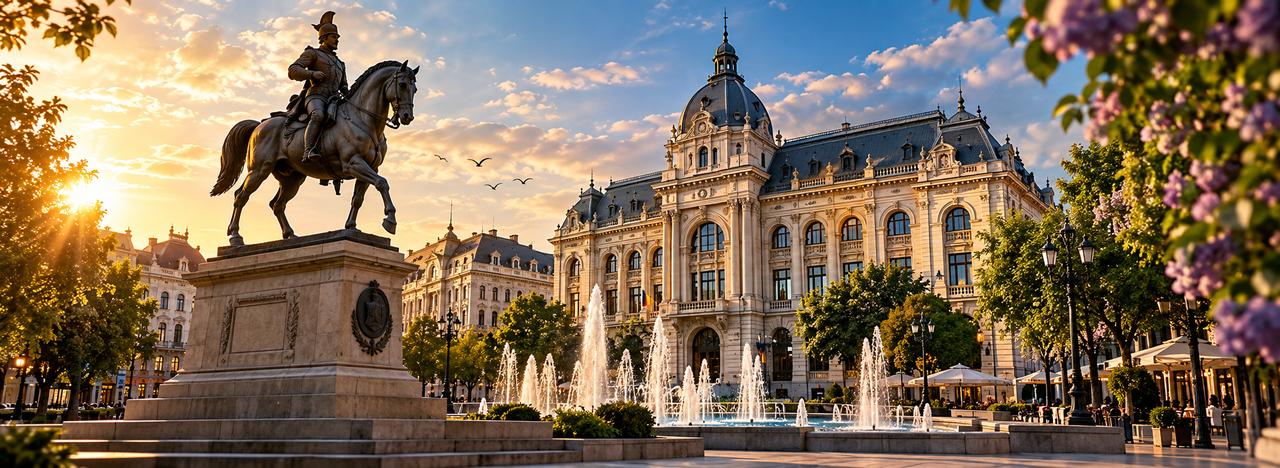
Romanian culture formed at the meeting point of Latinity, the Byzantine Orthodox world and Central European influences — a mix unique on the continent.
Language and Latin roots
Romanian is the only major Romance language in Eastern Europe, a direct heir of the Latin brought by Roman colonists to Dacia. Though surrounded by Slavic languages and Hungarian — from which it borrowed words — its structure remains deeply Latin. This Latinity is a central element of national identity.
The Orthodox faith
Most Romanians are Eastern Orthodox Christians, and the Church played an essential role in preserving the language and identity over the centuries. The religious heritage is visible everywhere: from the painted monasteries of Bucovina and the wooden churches of Maramureș to the great monasteries and the rhythm of the Orthodox calendar's feasts.
Folk art
Romania has one of the richest traditions of folk art in Europe: the ie (the embroidered blouse, celebrated internationally), the ceramics of Horezu and Corund, woven textiles, painted eggs and the carved gates of Maramureș. Village museums, such as those in Bucharest and Sibiu, gather peasant houses from every region.
Music
From the doina — the melancholy song of longing, recognised by UNESCO — to lăutari (Roma) music and great classical works, music is a backbone of the culture. George Enescu, composer and violinist, is the country's foremost musical figure; the festival that bears his name, in Bucharest, is one of Europe's major classical events.
Literature
The national poet Mihai Eminescu is regarded as the highest voice of the Romanian language; Ion Luca Caragiale wrote satirical comedies still relevant today; Ion Creangă gave literature stories and childhood memoirs that became classics. In the twentieth century, thinkers and writers such as Mircea Eliade, Emil Cioran and Eugène Ionesco had international careers.
Brâncuși and the visual arts
Constantin Brâncuși, one of the fathers of modern sculpture, left at Târgu Jiu the monumental ensemble of the "Endless Column", the "Table of Silence" and the "Gate of the Kiss". In cinema, the Romanian New Wave (directors such as Cristian Mungiu, a Palme d'Or winner) brought the country international recognition after 2000.
Gastronomy
Romanian cuisine is hearty and seasonal: sarmale (stuffed cabbage rolls), mămăligă (polenta), sour ciorbă soups, mici (grilled minced-meat rolls), mountain cheeses, and sweets such as cozonac and papanași. Each region has its specialities, and the vineyards (Dealu Mare, Cotnari, Murfatlar, Recaș) produce increasingly admired wines.
Dracula: myth and history
No confusion is more widespread than that between Dracula and Vlad the Impaler. Count Dracula is a fictional character, invented by the Irish writer Bram Stoker in his 1897 novel — a vampire with no real link to Romanian history. The distant model for the name was Vlad III the Impaler (Vlad Dracula), a fifteenth-century voivode of Wallachia, feared for the cruelty of his punishments but also respected as a defender against the Ottomans. Bran Castle, marketed to tourists as "Dracula's castle", in fact has only a tenuous historical link to the voivode — a distinction worth making when you visit Transylvania.
Plan your trip
Stay, tour and get there
Stays nearby
Where to stay
Experiences
Tours & activities
Guided tours, day trips and hand-picked experiences via GetYourGuide — free cancellation on most.
See all experiencesGetting to Romania
Flights, transfer & car
Fly into Romania
Compare fares to Bucharest Otopeni (OTP) and regional airports — Cluj, Sibiu, Iași, Timișoara.
Airport transfer
Private, fixed-price door-to-door transfer — driver waiting from the moment you land.
Rent a car — see the real Romania
A rental car is the key to Romania: the Transfăgărășan, the painted monasteries of Bucovina, mountain roads and the villages of Maramureș that no train reaches.
Find a carKeep exploring