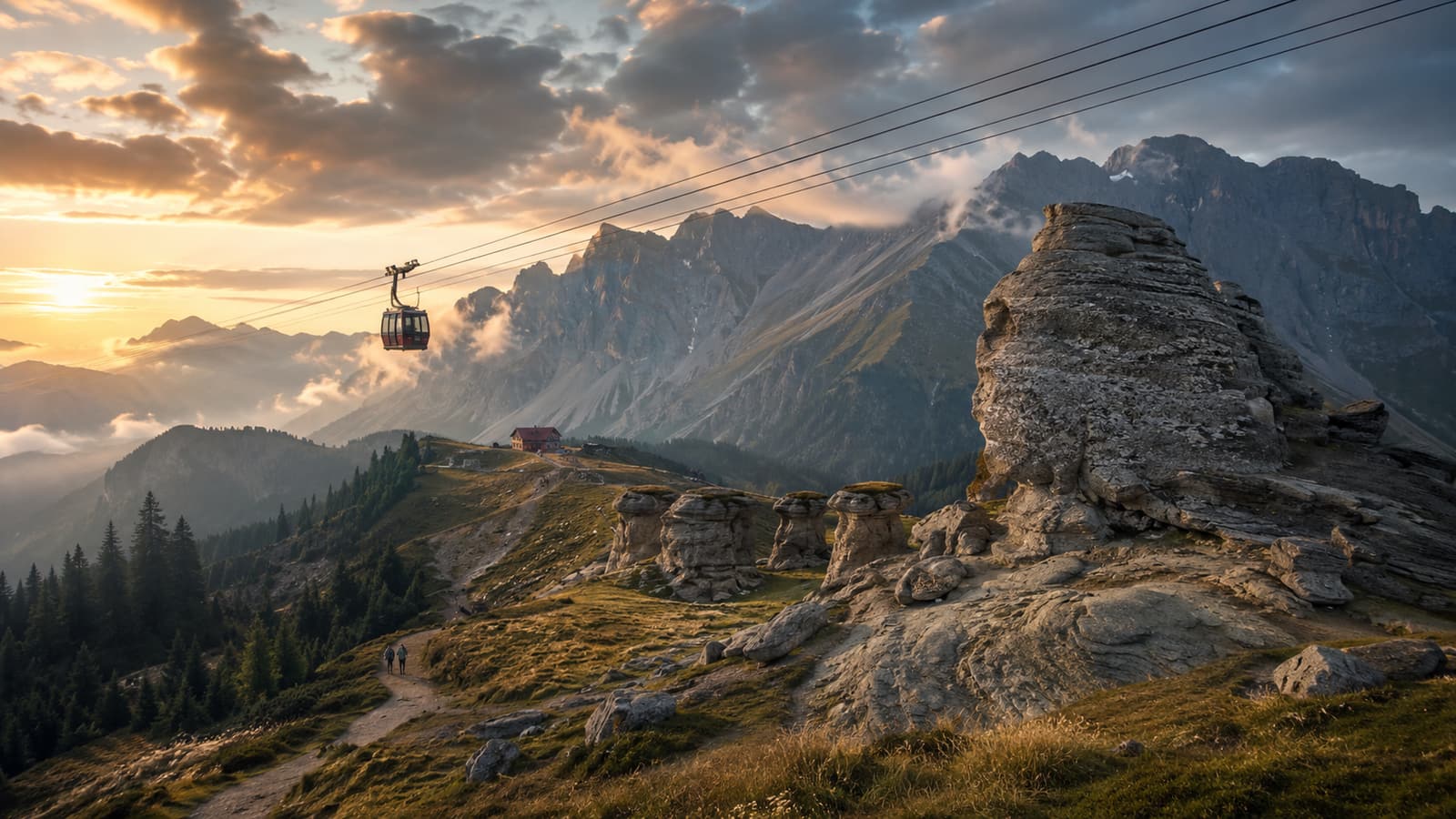
Nine worlds in one country
The Historic Regions
Transylvania, Moldavia, Bucovina, Maramureș, Banat, Crișana, Oltenia, Wallachia and Dobruja — each with its own landscape, architecture and cuisine.
Though a unitary state, Romania is best understood through its historic regions, inherited from centuries of differing imperial borders. Each has its own character — from the Saxon architecture of Transylvania to the wooden houses of Maramureș.
Transylvania
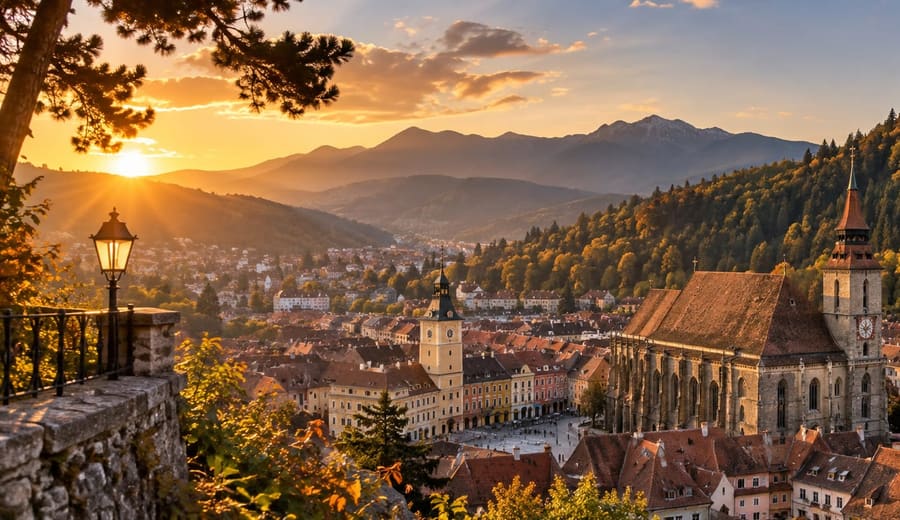
The geographic heart of the country, enclosed within the arc of the Carpathians, Transylvania is perhaps the best-known region. Here are the medieval Saxon towns — Sibiu, Brașov, Sighișoara (birthplace of the voivode Vlad the Impaler, a UNESCO site) — the fortified churches of the Saxon villages, and castles such as Bran and the Corvin Castle at Hunedoara. Deeply multicultural, Transylvania preserves Romanian, Hungarian, Saxon and Székely imprints.
Moldavia
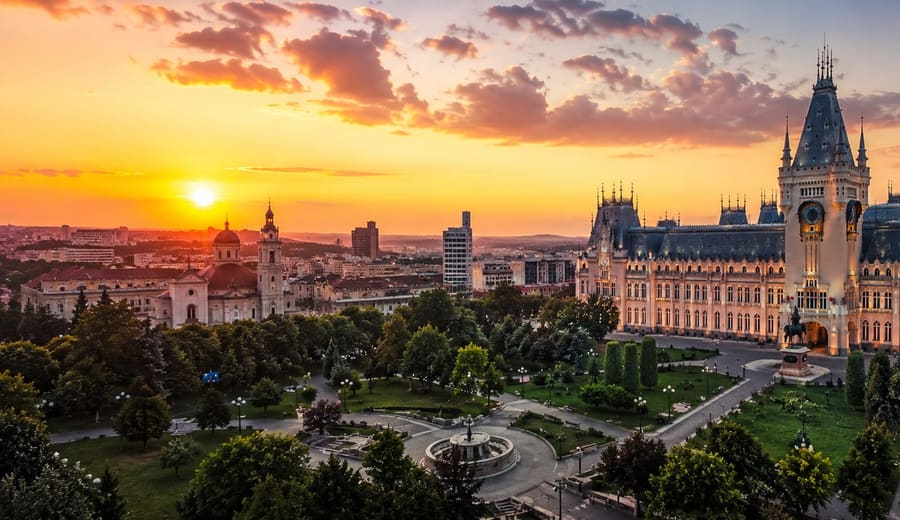
East of the Carpathians, Moldavia is the land of Stephen the Great, with cities such as Iași — the old cultural capital — and renowned vineyards (Cotnari). The landscape is one of hills and plateaus, and its scholarly and ecclesiastical tradition runs deep.
Bucovina
In the north of historic Moldavia, Bucovina is home to the painted monasteries — Voroneț, Sucevița, Moldovița, Humor — masterpieces of sixteenth-century exterior frescoes, inscribed on the UNESCO list. It is a region of green hills, quiet villages and living crafts.
Maramureș
Isolated among the mountains in the north, Maramureș is a living museum of the Romanian village: wooden churches with tall, sharp spires (a UNESCO site), carved gates, the "Merry Cemetery" at Săpânța, and a peasant life that remains remarkably authentic.
Banat and Crișana
In the west, Banat (with the city of Timișoara, Romania's first European Capital of Culture and the spark of the 1989 revolution) and Crișana (with Oradea, remarkable for its Art Nouveau/Secession architecture) are prosperous, multi-ethnic regions with a strong Central European influence.
Oltenia and Wallachia
South of the Carpathians lies Wallachia, divided into Oltenia (west of the Olt river, with Brâncuși's sculptural ensemble at Târgu Jiu) and Muntenia (to the east, including Bucharest and the mountain resorts of the Prahova Valley, such as Sinaia, with Peleș Castle).
Dobruja
Between the Danube and the Black Sea, Dobruja is the most cosmopolitan region and the oldest in terms of urban history: here are the seaside (Constanța, Mamaia), the Danube Delta, and Greek and Roman remains such as Histria.
Each region has its own page on România Mea, with destinations, sights and detailed recommendations.
Plan your trip
Stay, tour and get there
Stays nearby
Where to stay
Experiences
Tours & activities
Guided tours, day trips and hand-picked experiences via GetYourGuide — free cancellation on most.
See all experiencesGetting to Romania
Flights, transfer & car
Fly into Romania
Compare fares to Bucharest Otopeni (OTP) and regional airports — Cluj, Sibiu, Iași, Timișoara.
Airport transfer
Private, fixed-price door-to-door transfer — driver waiting from the moment you land.
Rent a car — see the real Romania
A rental car is the key to Romania: the Transfăgărășan, the painted monasteries of Bucovina, mountain roads and the villages of Maramureș that no train reaches.
Find a carKeep exploring