Romania's Lesser-Known Castles
Bran and Peleș get almost all the guidebooks, yet some of Romania's most spectacular castles sit quietly off the main route. From the Gothic fortress at Hunedoara to the „Transylvanian Versailles” at Bonțida, here are the castles worth the detour.
If you came to Romania for castles, you have almost certainly heard of two: Bran, tied to the Dracula myth, and Peleș, the royal residence at Sinaia. Both are beautiful and worth visiting, but they are also the busiest in the country. The truth is that, beyond them, Romania hides a whole string of castles and citadels that are just as impressive, some even more spectacular, that few foreign visitors put on their list.
We have gathered here the castles that justify a detour of a few hours, ordered by character rather than by fame. You can string them into a road trip of a few days across Transylvania and Moldavia, with Bucharest as your starting or finishing point.
Corvin Castle (Hunedoara)
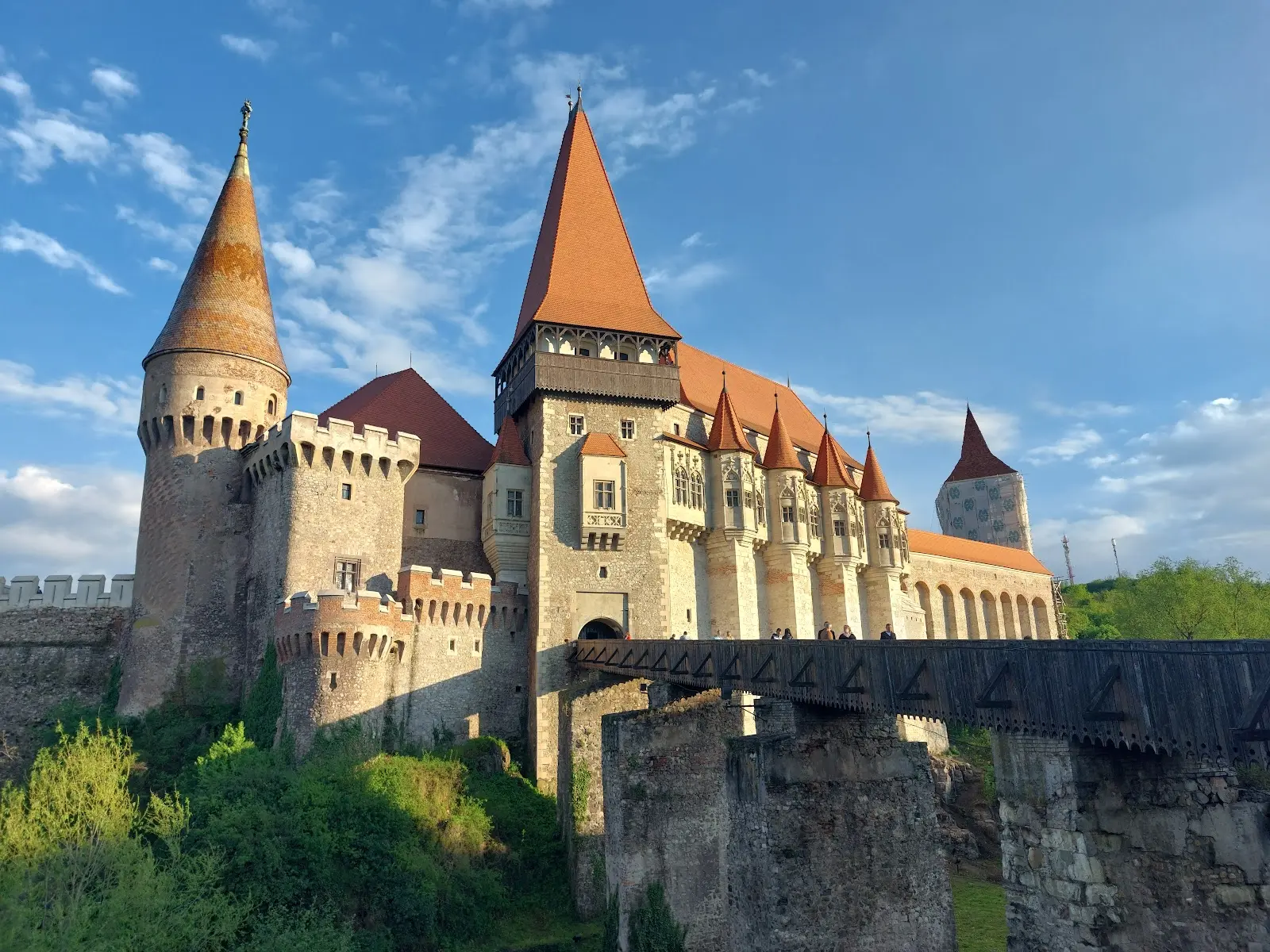
If we had to name a single castle more beautiful than Bran, many Romanians would say Corvin without hesitation. Built in the 15th century on the site of an older fortification, in the time of the Corvin family, it is one of the largest Gothic structures in Eastern Europe, with later Renaissance additions.
It rises on a rock above a stream, with massive towers, a dramatic wooden bridge at the entrance, a vaulted knights' hall and a genuinely medieval, fortress-like atmosphere. Unlike Bran, which is more of a house-museum, Corvin actually looks and feels like a fairy-tale castle.
- It stands in the town of Hunedoara, in western Transylvania.
- The interiors include vaulted halls, inner courtyards and towers open to visitors.
- It is surprisingly under-visited by foreigners given its stature — a real bonus if you want peace and quiet.
Cantacuzino Castle (Bușteni)
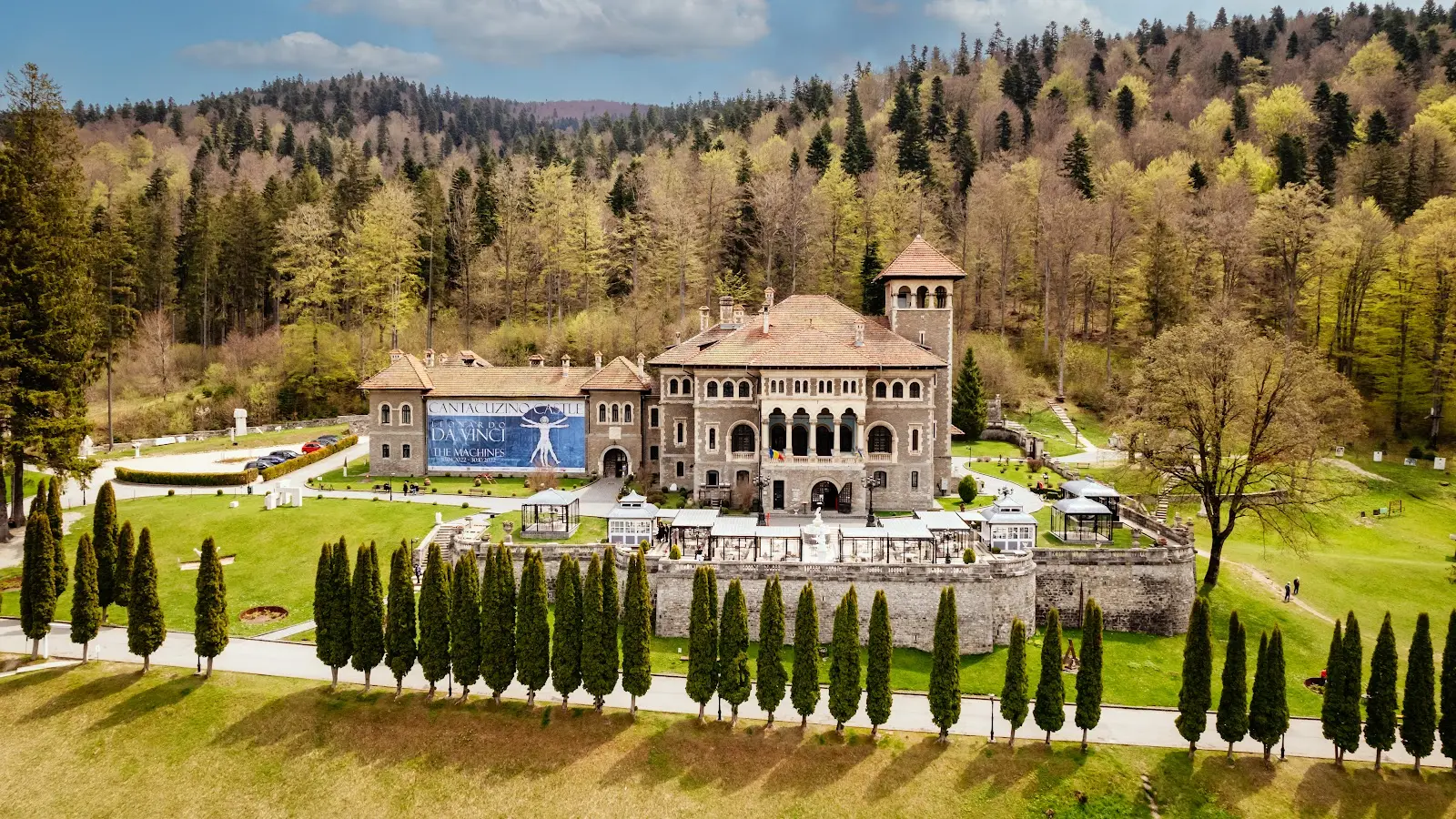
In the heart of the Prahova Valley, at Bușteni, Cantacuzino Castle is a Neo-Romanian jewel, built in the early 20th century for Prince Gheorghe Grigore Cantacuzino, nicknamed „the Nabob”. Stone facades, arcades and decorative detail blend with terraced gardens and a direct view toward the Bucegi mountains.
The castle earned international attention after appearing as a filming location for a hugely popular television series, which is why you now see more and more young visitors photographing the terraces. Even so, it remains an elegant place, ideal to combine with a mountain day in Bușteni or Sinaia.
- The terraced gardens and fountains are the highlight of the visit.
- The view toward the Bucegi and the Caraiman Cross makes for memorable photos.
- It is easy to reach, right in town, in the Prahova Valley.
Sturdza Castle (Miclăușeni)
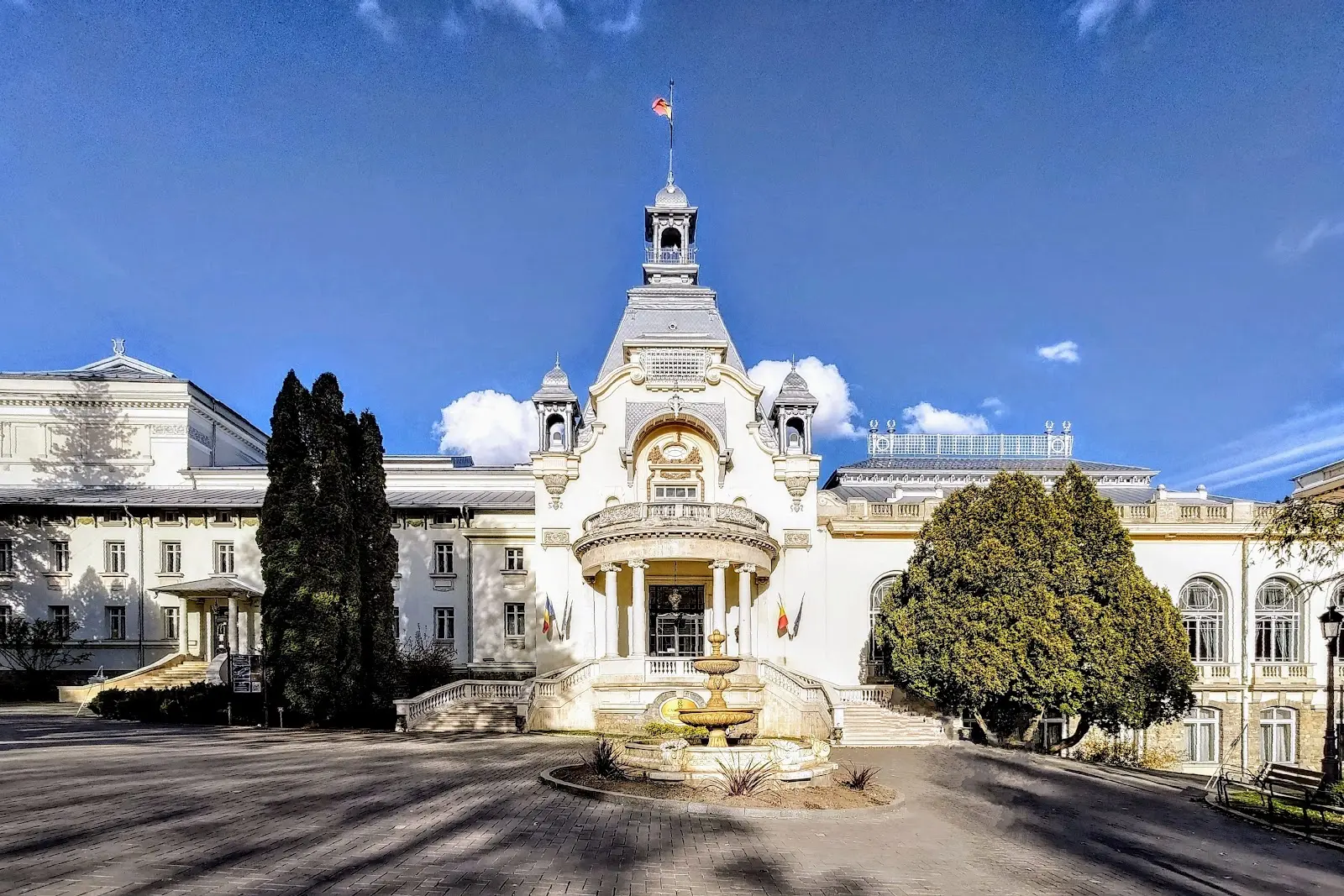
Tucked away in Moldavia, between Iași and Roman, Sturdza Castle at Miclăușeni is a neo-Gothic „little palace”, built in the second half of the 19th century by the Sturdza family. With turrets, pointed windows and an arboretum around it, it has the romantic air of a castle from a northern fairy tale, transplanted onto the Moldavian plain.
It went through hard times — it was looted and damaged over the course of the 20th century — but restoration work has brought it back onto the tourist map. It is the least known on this list, and precisely for that reason it offers one of the quietest visits.
- It stands near the village of Miclăușeni, in Iași County.
- The surrounding park and the family chapel round out the visit.
- It makes an ideal stop if you are exploring the monasteries of northern Moldavia.
Banffy Castle (Bonțida)
Nicknamed the „Transylvanian Versailles”, Banffy Castle at Bonțida, near Cluj-Napoca, was the residence of one of the most important Hungarian noble families in Transylvania. The Baroque complex was devastated during the Second World War and left in ruins for decades.
Today it is undergoing an extensive restoration, led in part by heritage foundations, and the rebuilt wings host exhibitions and workshops. For many young people, though, the name Bonțida means something else entirely: the castle is home to Electric Castle, one of the largest music festivals in the region.
- It can be visited in part, depending on the stage of restoration.
- It blends noble history with a living cultural scene perfectly.
- It is close to Cluj-Napoca, easy to fit into a day trip.
Mogoșoaia Palace (near Bucharest)
Just a few kilometres from the capital, Mogoșoaia Palace is the most accessible sight on this list and a superb example of the Brâncovenesc style — the Romanian synthesis of Venetian, Ottoman and traditional elements, built in the early 18th century by ruler Constantin Brâncoveanu.
Set on the shore of a lake, with an elegant loggia and warm red brick, the palace is surrounded by a large park much loved by Bucharesters for weekend walks. It is the perfect choice if you have only half a day free in Bucharest and still want to see authentic Romanian architecture.
- It is about a 30–40 minute drive from central Bucharest.
- The park and lakeshore are free and open for walking.
- The interiors host art exhibitions and period objects.
Citadels to add to the route: Râșnov, Făgăraș, Poenari
Besides castles, Romania has medieval citadels worth including, especially if you enjoy military history and views from the ramparts.
- Râșnov Citadel — a peasant fortress on a hilltop near Brașov, with mountain views; it pairs easily with Bran on the same day.
- Făgăraș Citadel — one of the best-preserved citadels in the country, with a water-filled moat, in the centre of Făgăraș town, on the road between Brașov and Sibiu.
- Poenari Citadel — the real „fortress of Vlad the Impaler”, perched above the Transfăgărășan; you reach it after climbing more than 1,400 steps, but the view rewards the effort.
How to get there and how to build a castle road trip
Romania's castles are spread out, so the most comfortable way to see them is by car. The distances are not huge, but mountain roads take time, and a relaxed route over a few days beats rushing to tick everything off in one go.
A classic circuit would look like this:
- Day 1 — leave Bucharest for the Prahova Valley: Peleș and Cantacuzino Castle at Bușteni.
- Day 2 — pass through Brașov: Bran plus Râșnov Citadel in one day, then Făgăraș Citadel on the way west.
- Day 3 — deep Transylvania: Corvin Castle at Hunedoara, the most spectacular stop.
- Day 4 — head up to Cluj for Banffy Castle at Bonțida, or return toward Bucharest via Poenari and the Transfăgărășan (summer only, when the road is open).
If you have more time and want to see Moldavia too, add Sturdza Castle at Miclăușeni to a route toward Iași. Always check opening hours before you set off: many castles have closing days and reduced winter schedules, and those under restoration may have sections temporarily closed.
For broader context on the country's castles and citadels, see our dedicated castles theme as well — Bran and Peleș remain the starting points, but the real discovery begins beyond them.
Plan your trip
Experiences
Tours & activities
Guided tours, day trips and hand-picked experiences via GetYourGuide — free cancellation on most.
See all experiencesGetting to Romania
Flights, transfer & car
Fly into Romania
Compare fares to Bucharest Otopeni (OTP) and regional airports — Cluj, Sibiu, Iași, Timișoara.
Airport transfer
Private, fixed-price door-to-door transfer — driver waiting from the moment you land.
Rent a car — see the real Romania
A rental car is the key to Romania: the Transfăgărășan, the painted monasteries of Bucovina, mountain roads and the villages of Maramureș that no train reaches.
Find a car