County · Transylvania
Mureș County
Seat: Târgu Mureș
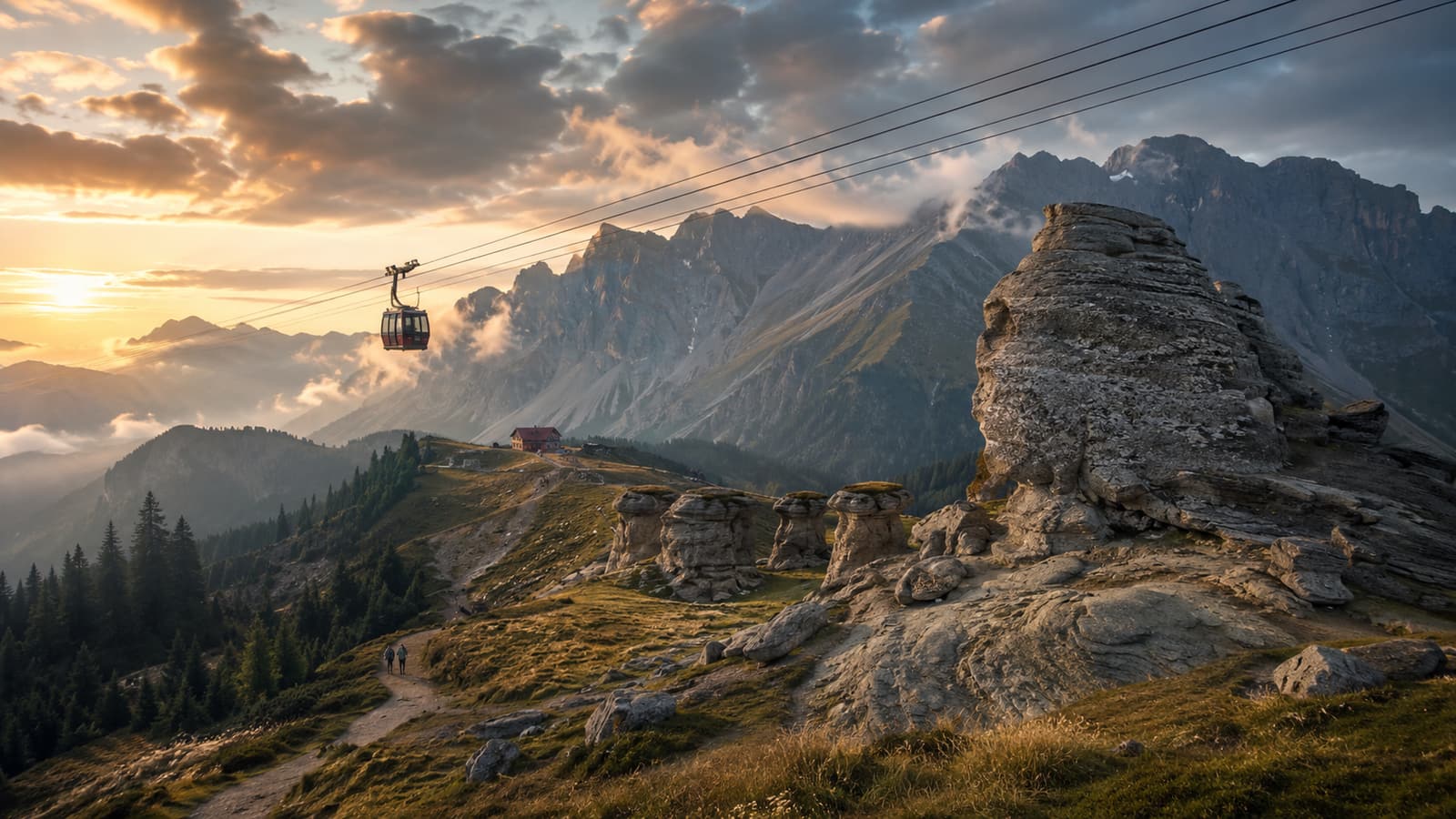
A county in central Transylvania, set along the Mures valley and the Tarnave hills, with vineyards, Saxon villages and medieval citadels. Mures is the land of Sighisoara, a still-inhabited medieval citadel on the UNESCO list, birthplace of Vlad Dracul, father of Vlad the Impaler. At Sovata, Bear Lake and its heliothermal waters draw visitors for treatment and bathing.
The Tarnave hills and the Jidvei cellars yield some of the country's most admired white wines. The county seat, Targu Mures, impresses with its Palace of Culture and the secession architecture that lends the city its distinctive air.
Cities & places in Mureș
Not to miss in Mureș
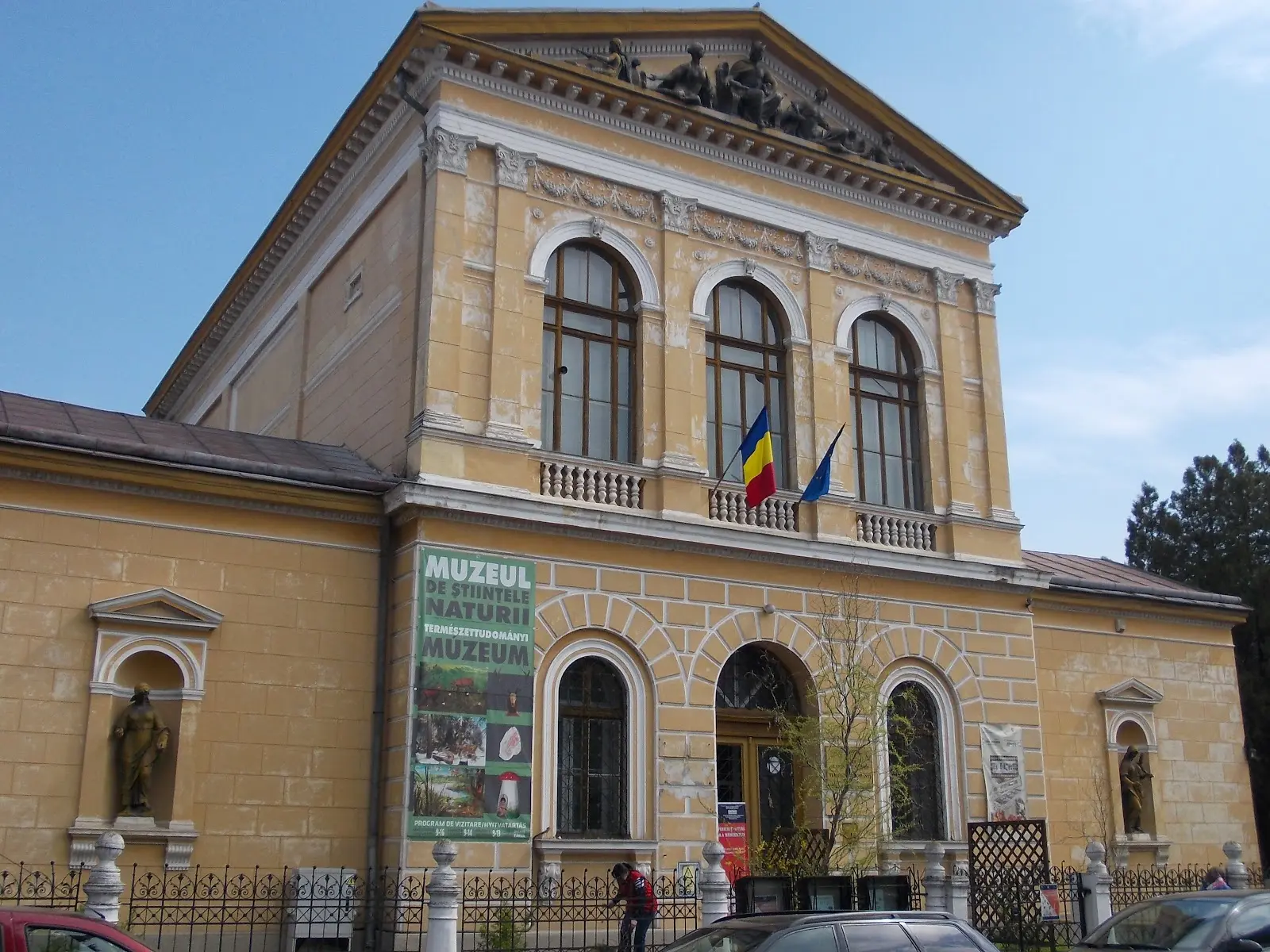 Museum
Muzeul de Științe Naturale Târgu Mureș
The Natural Science Museum of Târgu Mureș, part of the Mureș County Museum, holds collections that illustrate the richness of the living world and the natural environment of Transylvania and beyond. Here visitors discover zoology exhibits, with mounted animals from local and exotic fauna, dioramas that recreate natural habitats, and collections of mineralogy, palaeontology and botany. The diversity of the pieces makes the museum an educational space prized above all by families and schoolchildren, who can observe up close species they would rarely meet in the wild. Târgu Mureș, a town with remarkable cultural heritage, thus rounds out its museum offer, alongside the history, archaeology and ethnography sections of the county museum, as well as the sumptuous Palace of Culture with its decorated halls. Set in the town centre, the natural science museum is a fitting stop for a family visit, offering a pleasant and instructive foray into the mysteries of nature in a setting accessible to all ages.
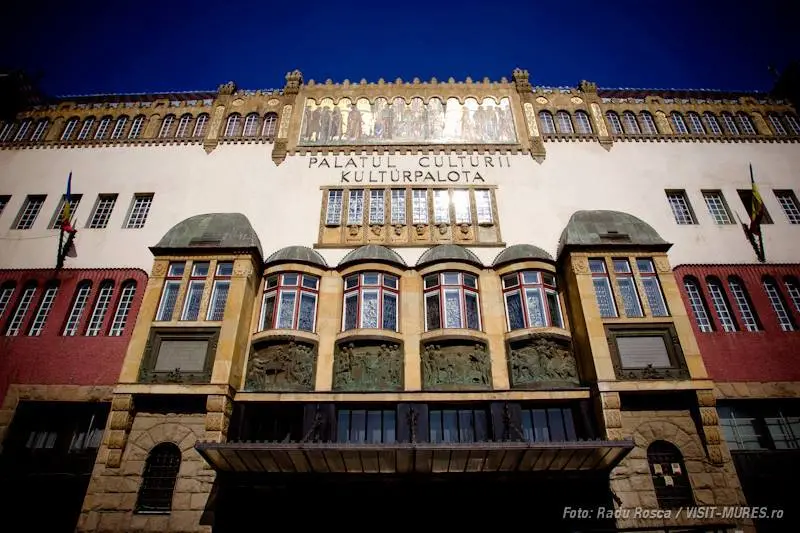 Museum
Muzeul de Artă Târgu Mureș (Palatul Culturii)
The Art Museum of Targu Mures is housed in the Palace of Culture, one of the most spectacular Secession-style buildings in Romania. Raised in the early twentieth century, the palace impresses with its richly ornamented facade, colourful mosaics and glazed-tile roof. Inside, the Hall of Mirrors stands out, with stained-glass windows made in the Hungarian workshops of the period, illustrating legends and folk scenes. The museum collection covers modern and contemporary Romanian painting and sculpture, with valuable works gathered over the decades. The palace also contains a concert hall with a remarkable organ used for recitals. The whole complex sits in the centre of town, beside the county administration building, forming one of the most photographed architectural corners in Transylvania. It is an essential stop for lovers of art and architecture.
 Landmark
Turnul cu Ceas al Cetății Târgu Mureș
The Clock Tower of the Târgu Mureș Citadel guards the entrance to the medieval fortress and is one of the city's symbols. Originally built in the 15th century and rebuilt after fires, the massive tower, with its characteristic roof and clock faces visible from the square, today houses a history exhibition. From the top, up a narrow staircase, opens a fine panorama over Roses Square, the city's roofs and the surrounding hills. The tower is part of the Medieval Citadel complex, a well-preserved fortification with walls, guild bastions and a Reformed church inside, restored and turned into a pleasant space to stroll. Together, the tower and citadel tell the story of a Transylvanian border town, multicultural and mercantile. It is an easy stop in the city centre, right for a visit of a few hours. Check the exhibition hours and tower access, which may be limited.
 Landmark
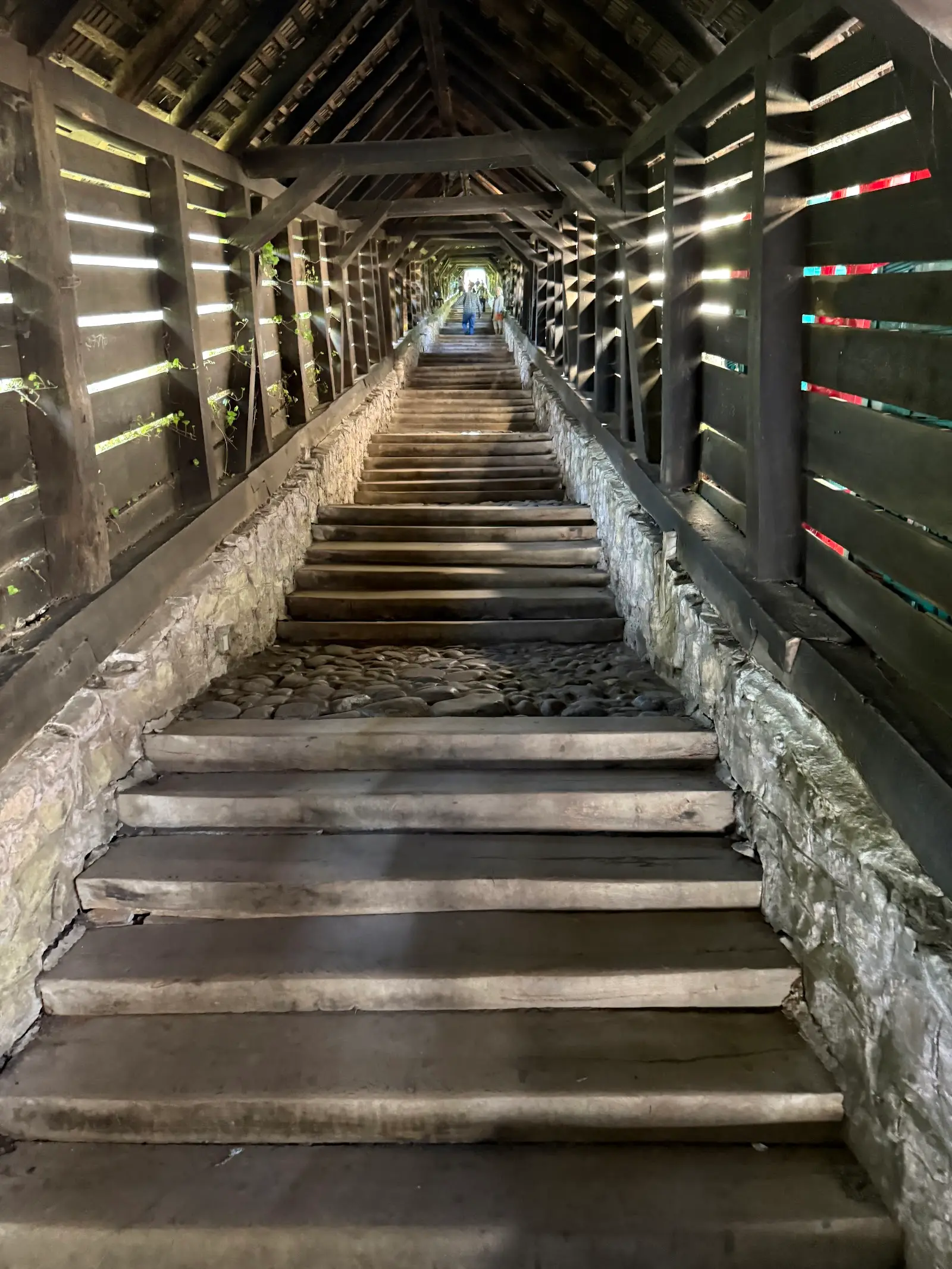
Scara Acoperită (Scara Școlarilor)
The Covered Staircase, also known as the Scholars' Stairway, is one of the most picturesque medieval monuments of Sighisoara, the famous Transylvanian citadel in Mures county. Built in the seventeenth century, the staircase links the centre of the citadel to the hill where the Church on the Hill and the old school stand, allowing an ascent protected from the weather and the snows. Originally the staircase had more steps, of which around a hundred and seventy are preserved today, bordered by a covered wooden tunnel that shelters it from rain and cold. Pupils could reach the school even in bad weather, which gives the staircase its name. Climbing the stairs, visitors arrive at the Gothic church and the old Saxon cemetery, from where a beautiful view opens over the town. The Covered Staircase is a symbol of medieval Sighisoara, part of the world heritage site.
 Spa
SpaBăile Sovata
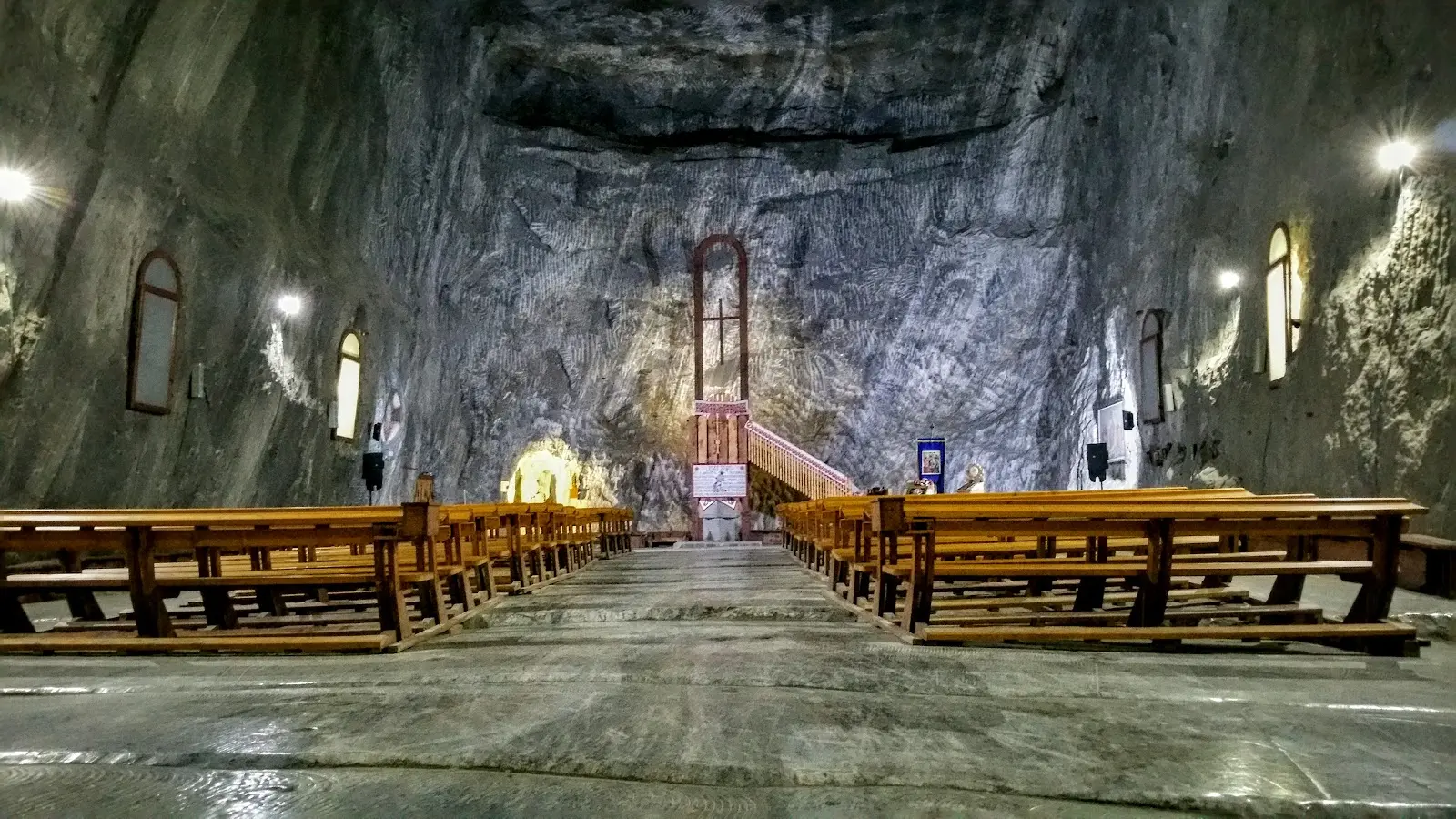
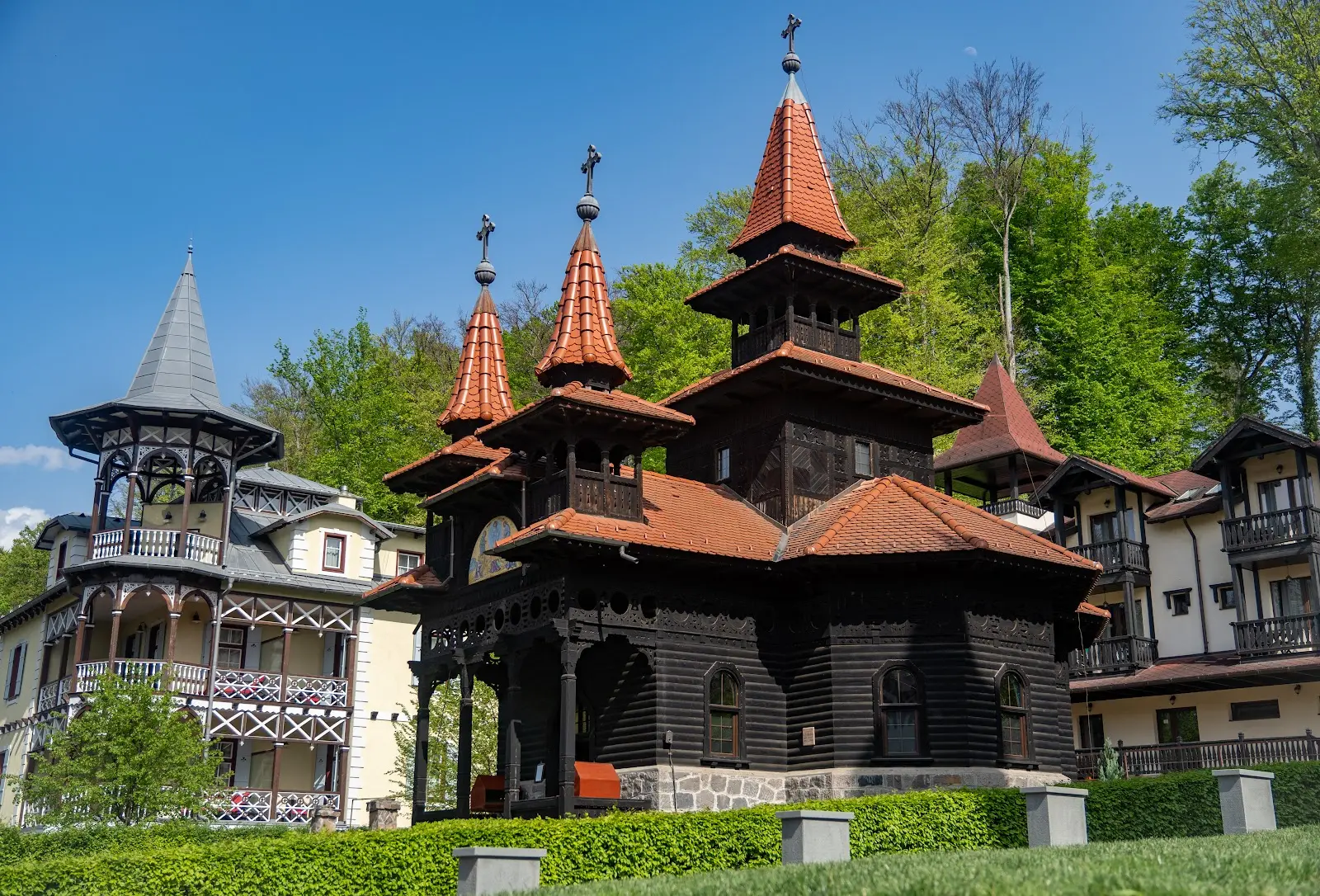
Sovata Baths is one of the most renowned spa resorts of Transylvania, built around the string of salt lakes formed on the salt massif at the foot of the Gurghiu Mountains, in Mureș County. The star of the resort is Bear Lake, the largest heliothermic lake in Europe, whose waters, heated at depth owing to differences in salinity, reach high temperatures in summer, to the delight of bathers. Alongside it, Black Lake and the other salt lakes complete the therapeutic offer, feeding treatments based on concentrated saltwater and sapropelic mud, recommended for gynaecological, rheumatic and peripheral nervous system conditions. The resort earned its fame as early as the late nineteenth century, when villas of characteristic architecture began to rise among the woods. Today Sovata combines its spa tradition with modern hotels and wellness centres, arranged beaches and walking trails. Surrounded by forested hills, it is a destination for relaxation and treatment prized in every season.
 Church
Biserica din Deal
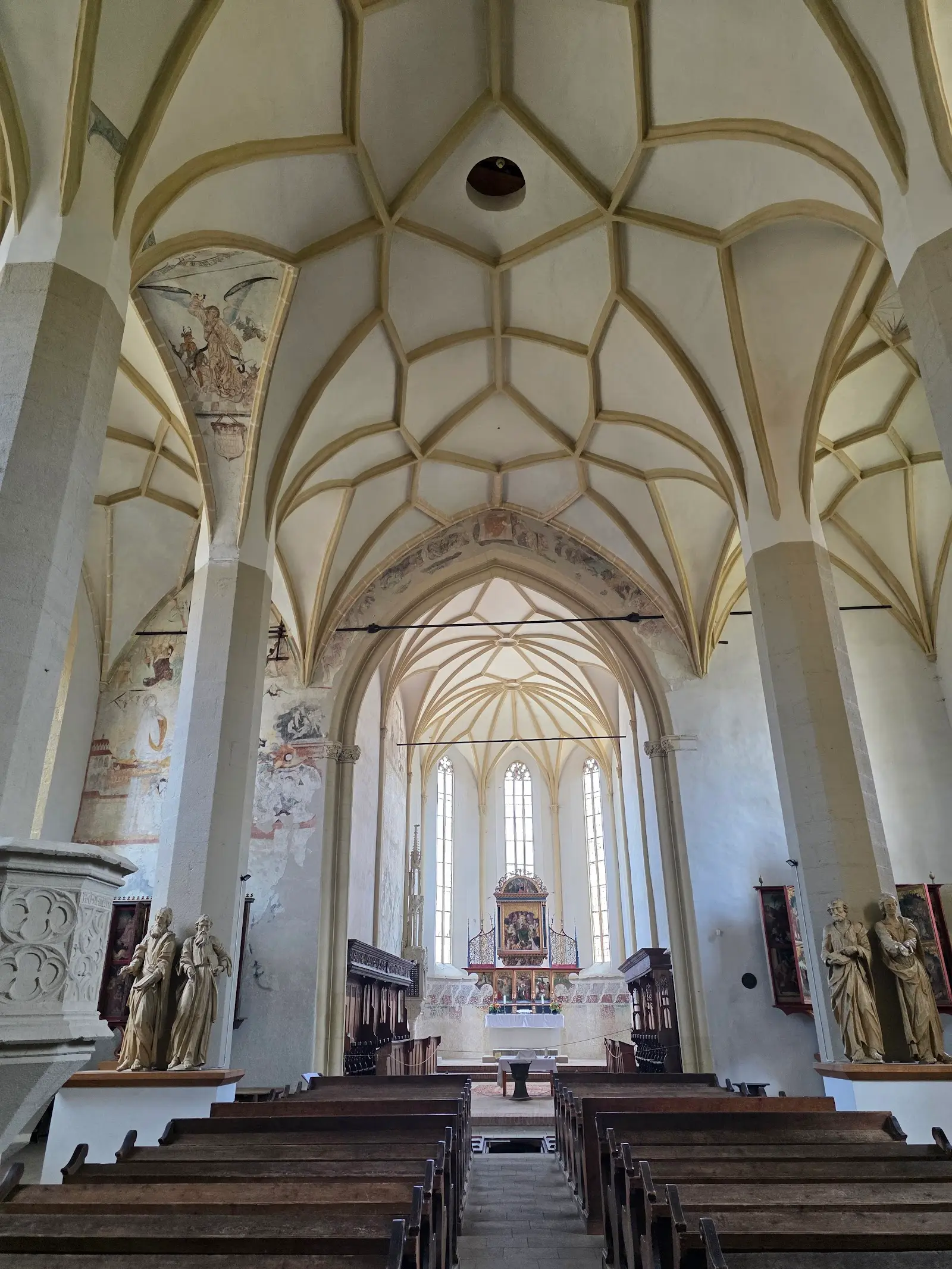
The Church on the Hill in Sighișoara, Mureș County, is the most imposing religious monument of the medieval citadel, a majestic Gothic hall-church raised by the Saxon community between the 14th and 15th centuries, on the highest point of the hill overlooking the town. It is reached by climbing the famous Covered Staircase, a wooden passage of more than 170 steps, built to shelter pupils and parishioners from bad weather on their way to the church and to the school on the hill. Inside, the building preserves medieval frescoes, a valuable altar, a crypt and a solemn atmosphere, and around it lies the old Evangelical cemetery, shaded by centuries-old trees. From the hill, the view over the red roofs of the citadel, part of the UNESCO heritage, is memorable. Practical note: climb the Covered Staircase for the authentic experience of the path to the church, and set aside time to explore the historic cemetery around it.
 Museum
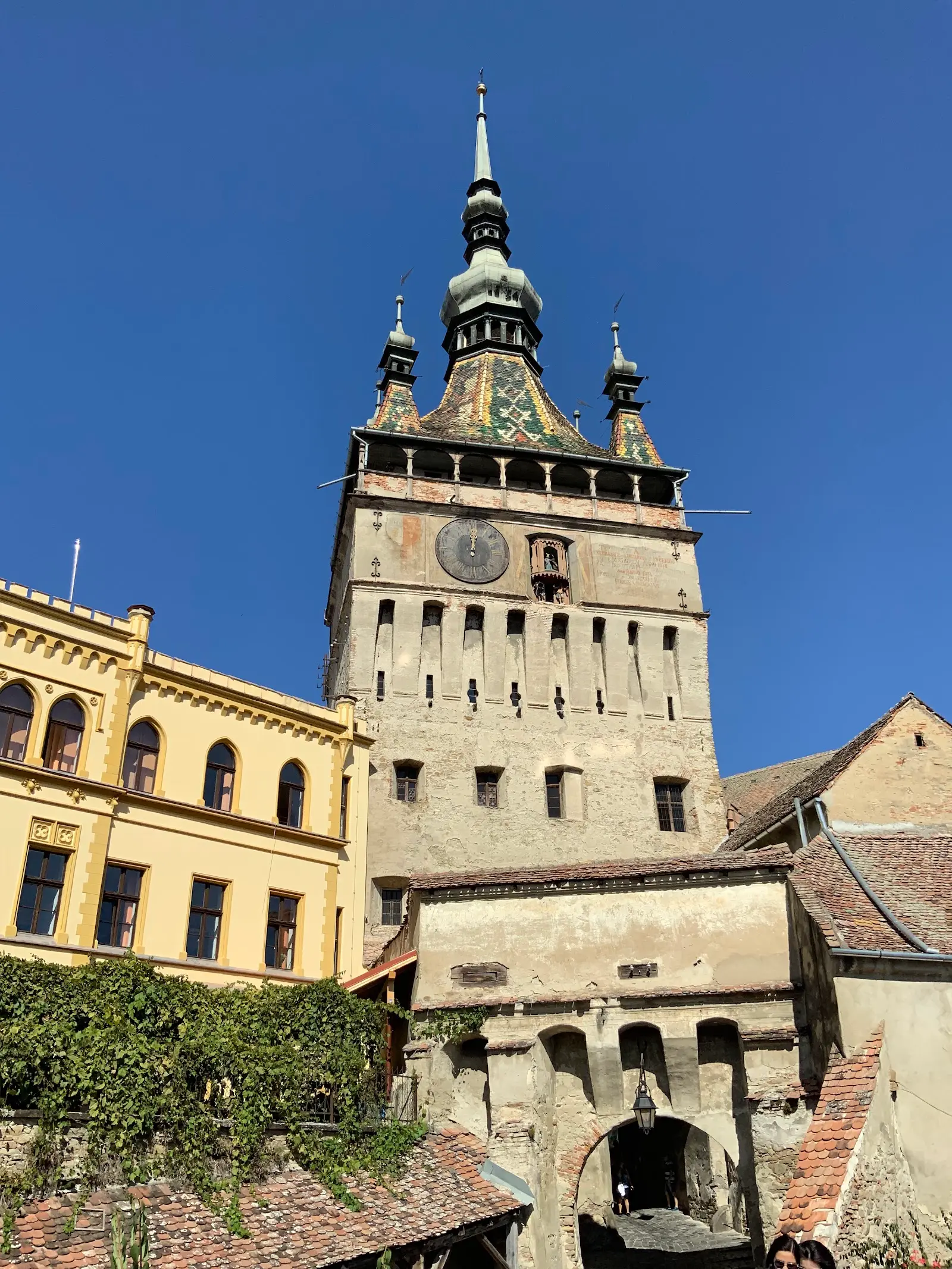
Muzeul de Istorie Sighișoara
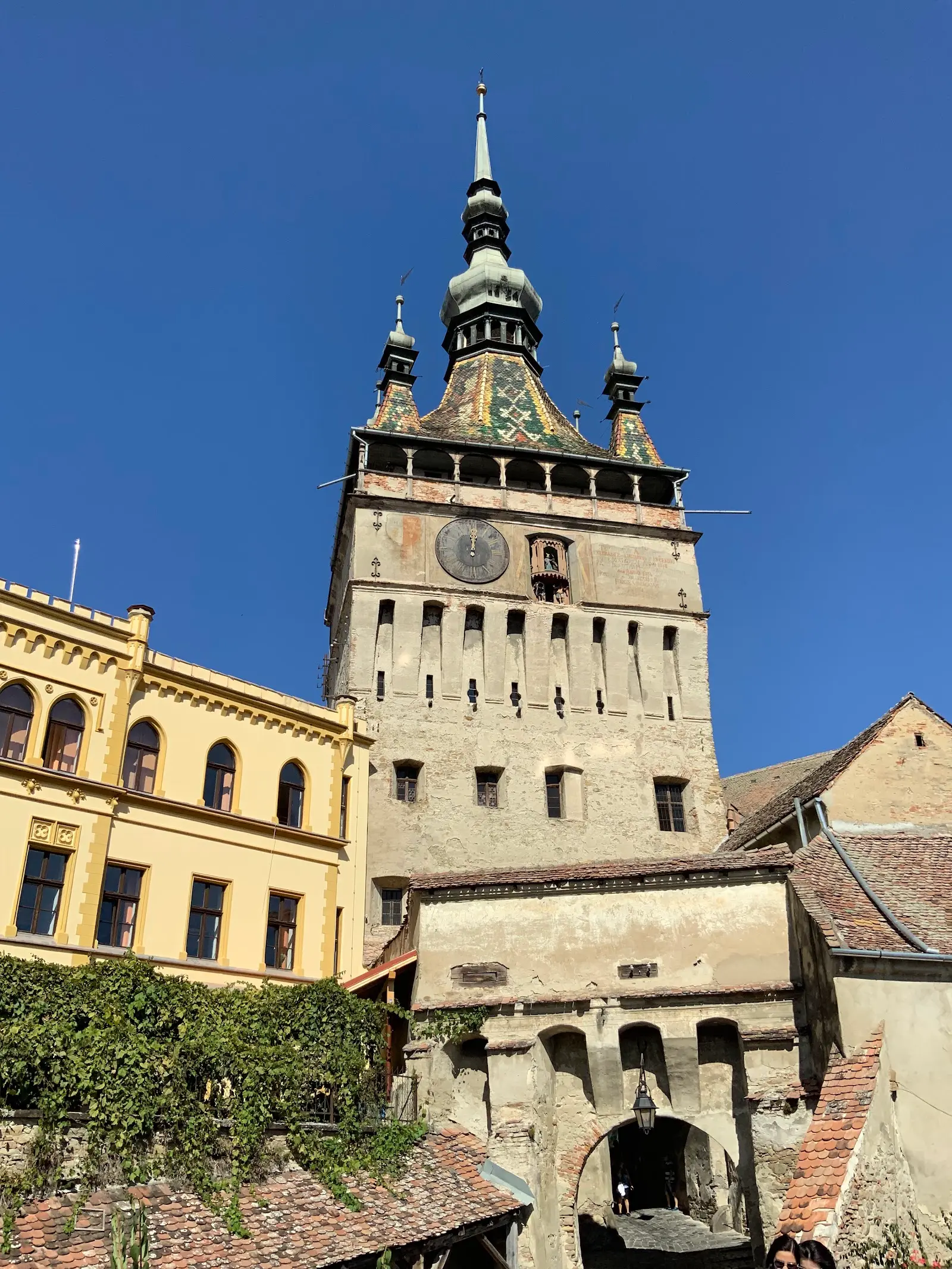
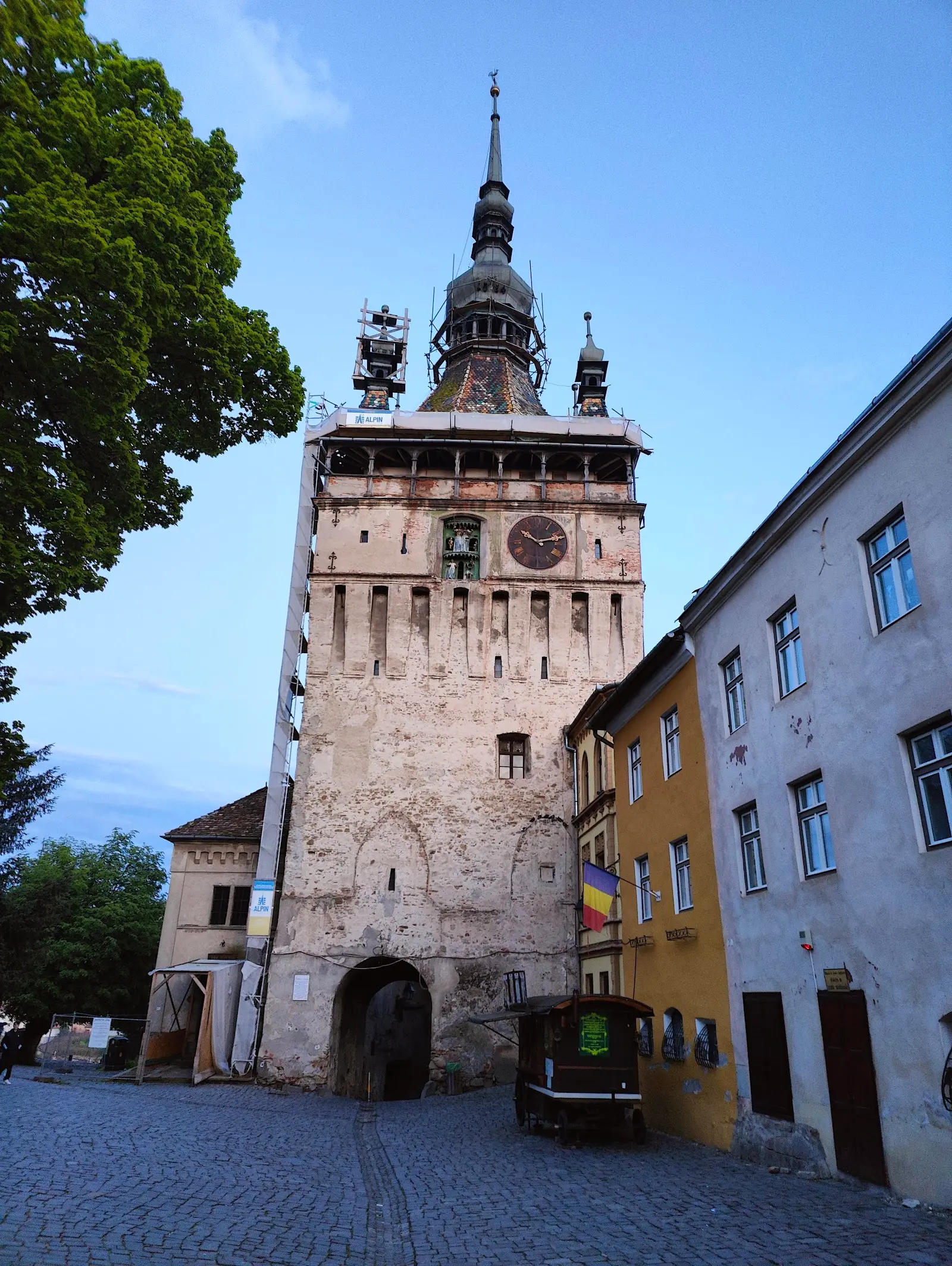
The History Museum of Sighișoara occupies the Clock Tower, the most imposing bastion of the medieval citadel built by the Transylvanian Saxons and inscribed on the UNESCO World Heritage list. Rising almost 64 metres, the tower long served as the main gate and as the seat of the town council. Inside, the collections trace the history of the town and of the craft guilds that brought it prosperity, with tools, ceramics, weapons and period furniture spread across several floors linked by steep wooden staircases. The most admired feature is the clock mechanism with its carved wooden figurines that mark the passing days of the week, a genuine masterpiece of clockmaking. From the upper gallery, visitors enjoy a wide view over the red rooftops, the hill church and the valley of the Târnava Mare. It makes a natural starting point for exploring the cobbled lanes of the citadel.
 Fortress
Cetatea Medievală Târgu Mureș
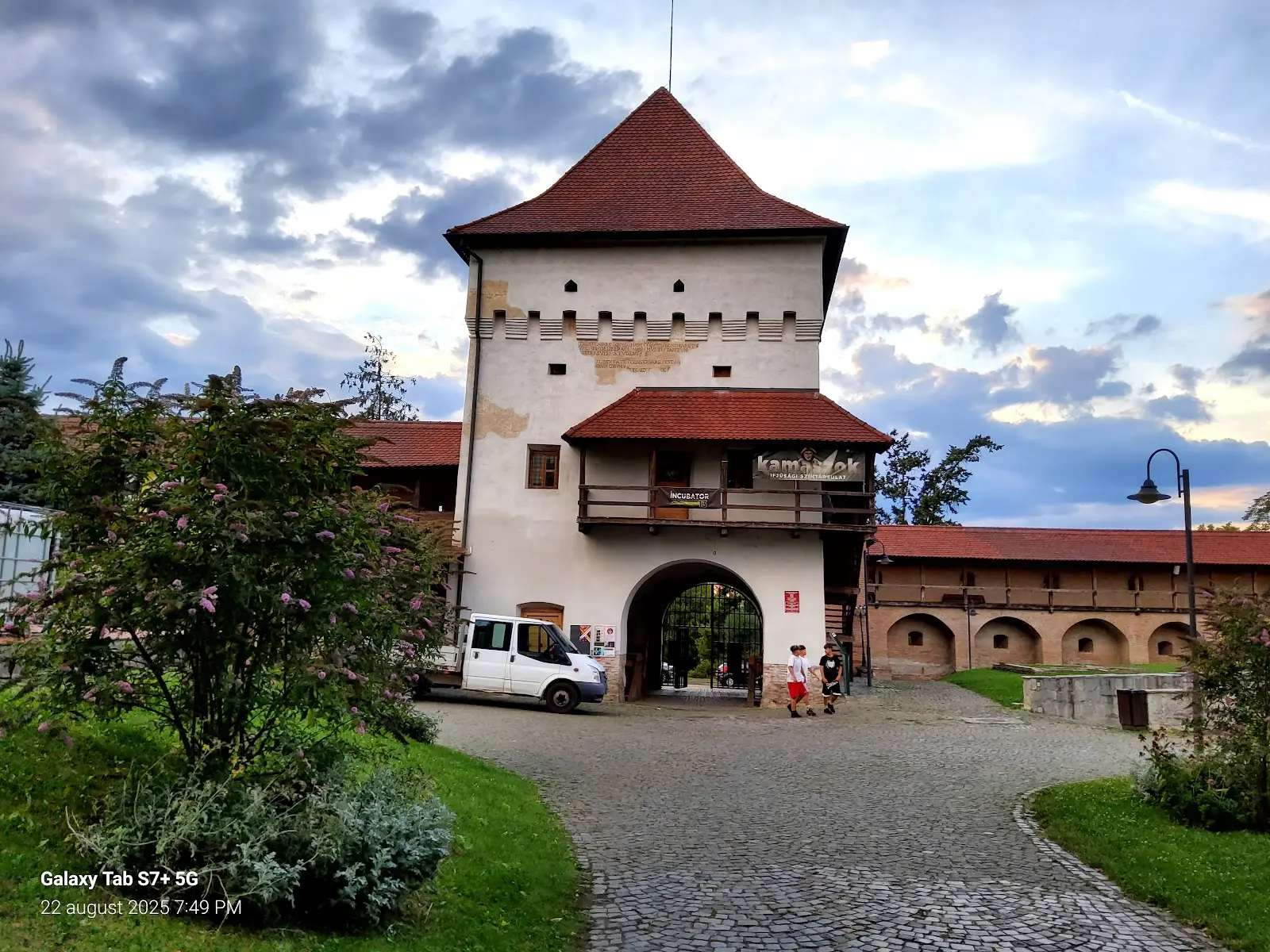
The Medieval Citadel of Târgu Mureș is one of the best-preserved town citadels in Transylvania, built in its present form in the 17th century by the city's Saxon and Hungarian community. The solid walls, reinforced with seven bastions built and defended by guilds — of the butchers, tailors, cobblers and others — enclose a vast precinct containing a 14th-century Reformed church, the city's oldest building. Extensively restored, the citadel has become a pleasant public space, with paths, greenery and buildings housing museums, workshops and events. A walk beneath the walls and past the bastions is an incursion into the city's mercantile and craft history. It is the historic heart of Târgu Mureș and a meeting place for locals. Entry is free, while the museums and towers keep their own hours, worth checking beforehand.
ParkGrădina Zoologică Târgu Mureș
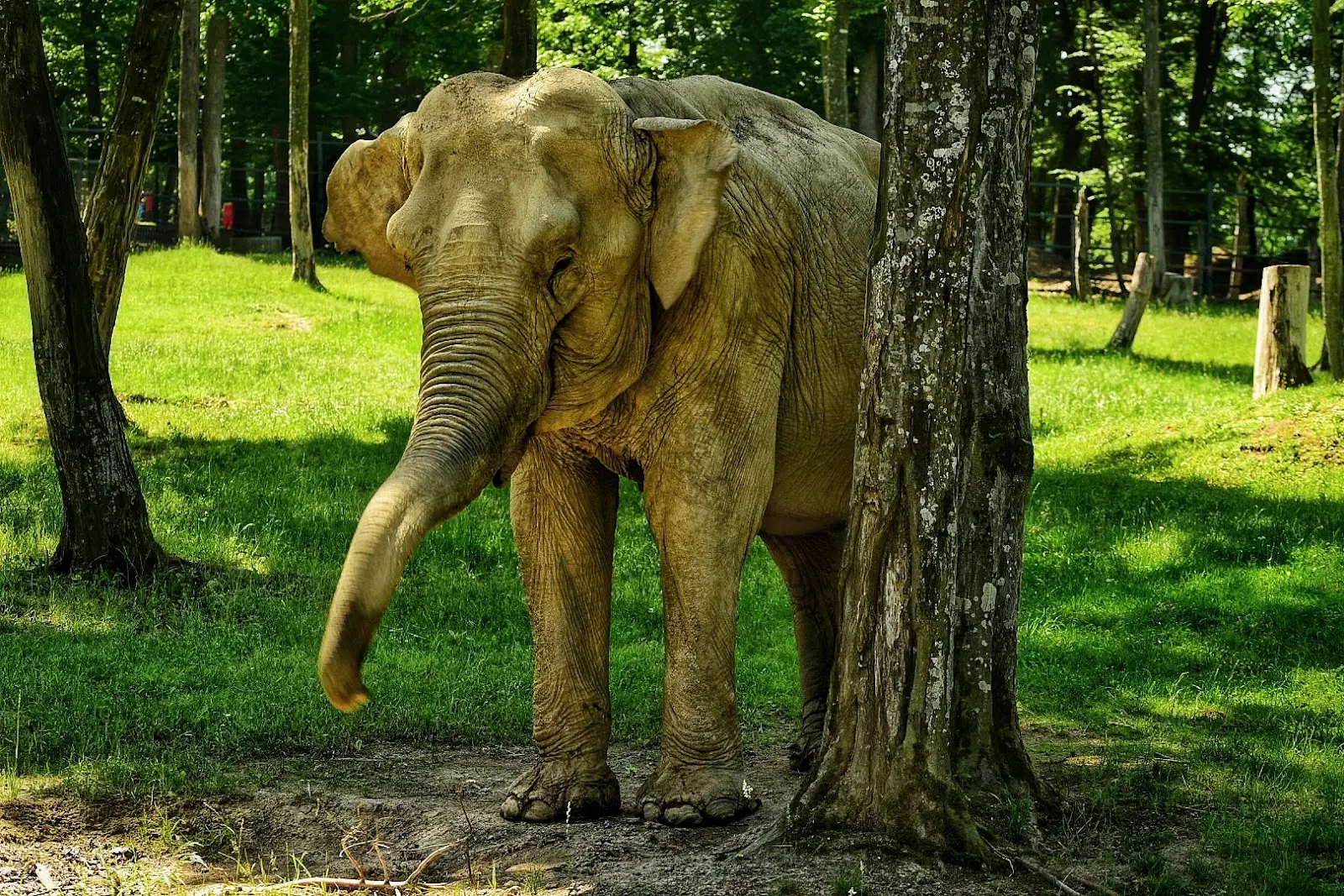
The Târgu Mureș Zoo, laid out on the Cornești Plateau above the city, is one of the largest and best-regarded in Romania. Spread across dozens of hectares of forest, it gives animals generous space and visitors a natural setting closer to a safari park than a classic zoo. Here you can see animals from around the world — big cats, bears, primates, giraffes, zebras and many bird species — as well as an aquarium and areas for children. The plateau setting adds a bonus: wide views over the city and the cool forest air, pleasant especially in summer. It is a family destination par excellence, where a visit can easily last several hours along long walking paths. It combines well with a stroll on the Cornești Plateau and the nearby lookout tower. Check the schedule, which is shorter in winter, and wear comfortable shoes for the distances involved.
 Fortress
Cetatea Rupea
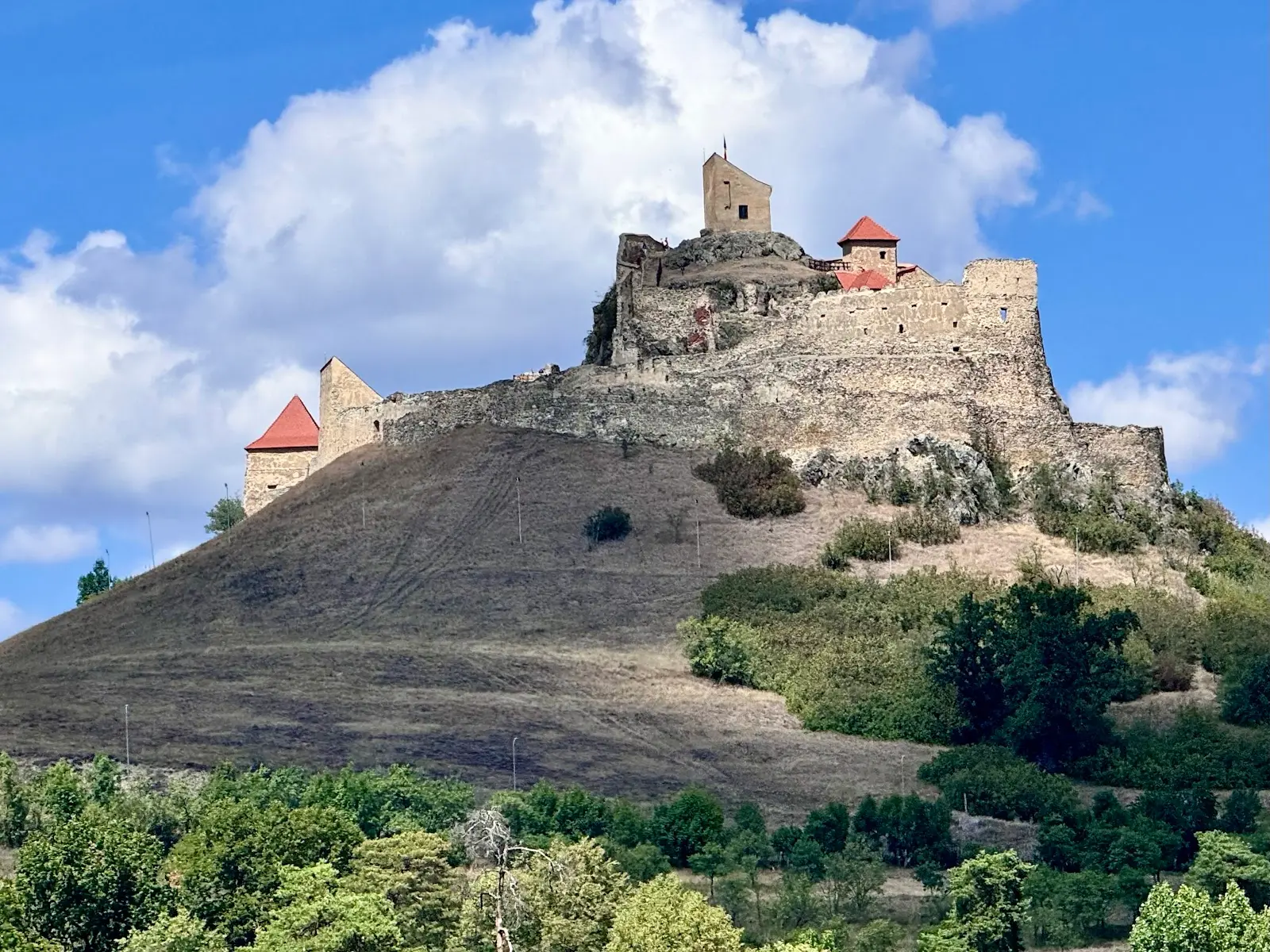
Rupea Citadel, perched on a basalt ridge above the town of the same name, between Brașov and Sighișoara, sits on one of Romania's oldest inhabited sites, with traces of settlement going back thousands of years. The medieval fortress we see today grew between the 14th and 17th centuries as a Saxon peasant citadel, a refuge to which the community withdrew in times of danger. It has three concentric enclosures — upper, middle and lower — linked by walls, towers and courtyards climbing the rock in stages. Extensively restored, the citadel now offers an attractive visiting route and wide views over the Transylvanian plateau. Its silhouette, especially at sunset, is among the most photogenic in the area. It is a good stop on the road between Brașov and Sighișoara, easily combined with the surrounding Saxon villages. Wear comfortable shoes for the climb and check the schedule, reduced in winter.
 Church
Biserica Fortificată Saschiz
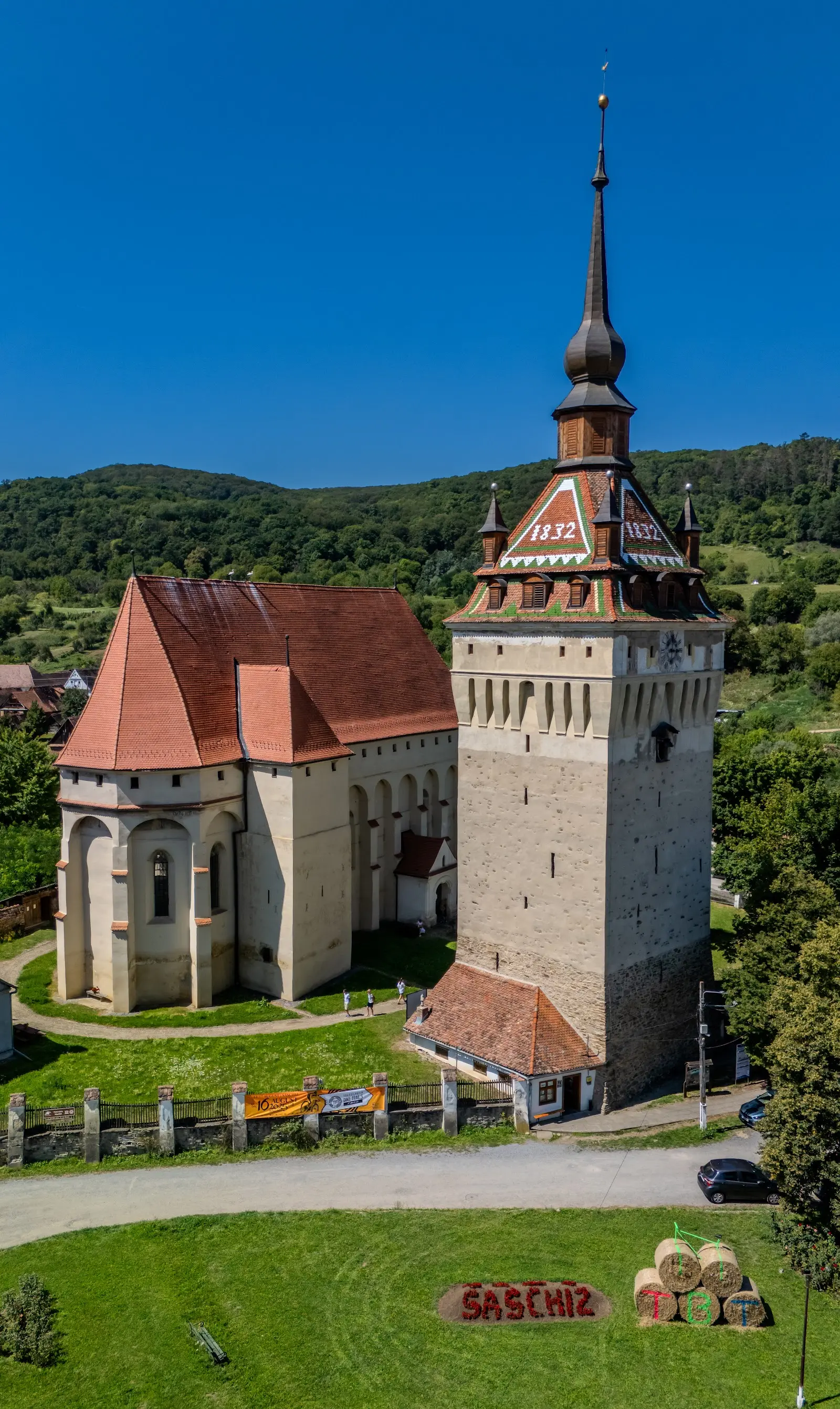
The fortified church of Saschiz, a Saxon village near Sighisoara, is one of the most valuable monuments of its kind in Transylvania, inscribed on the UNESCO World Heritage list together with other villages with fortified churches. The hall-type building, raised in the fifteenth century, combined the role of a place of worship with that of a refuge against attack, with thick walls and defensive features. Nearby stands the clock tower, inspired by the one in Sighisoara, set apart from the church on a rise. The Saxon community that built the complex shaped the look of the village, with its coloured houses and typical barns. Today Saschiz is a landmark of cultural tourism in the hilly country of the Tarnava valleys. Visitors can climb for views over the village; checking the opening schedule is recommended.
 Castle
Castelul Haller Ogra
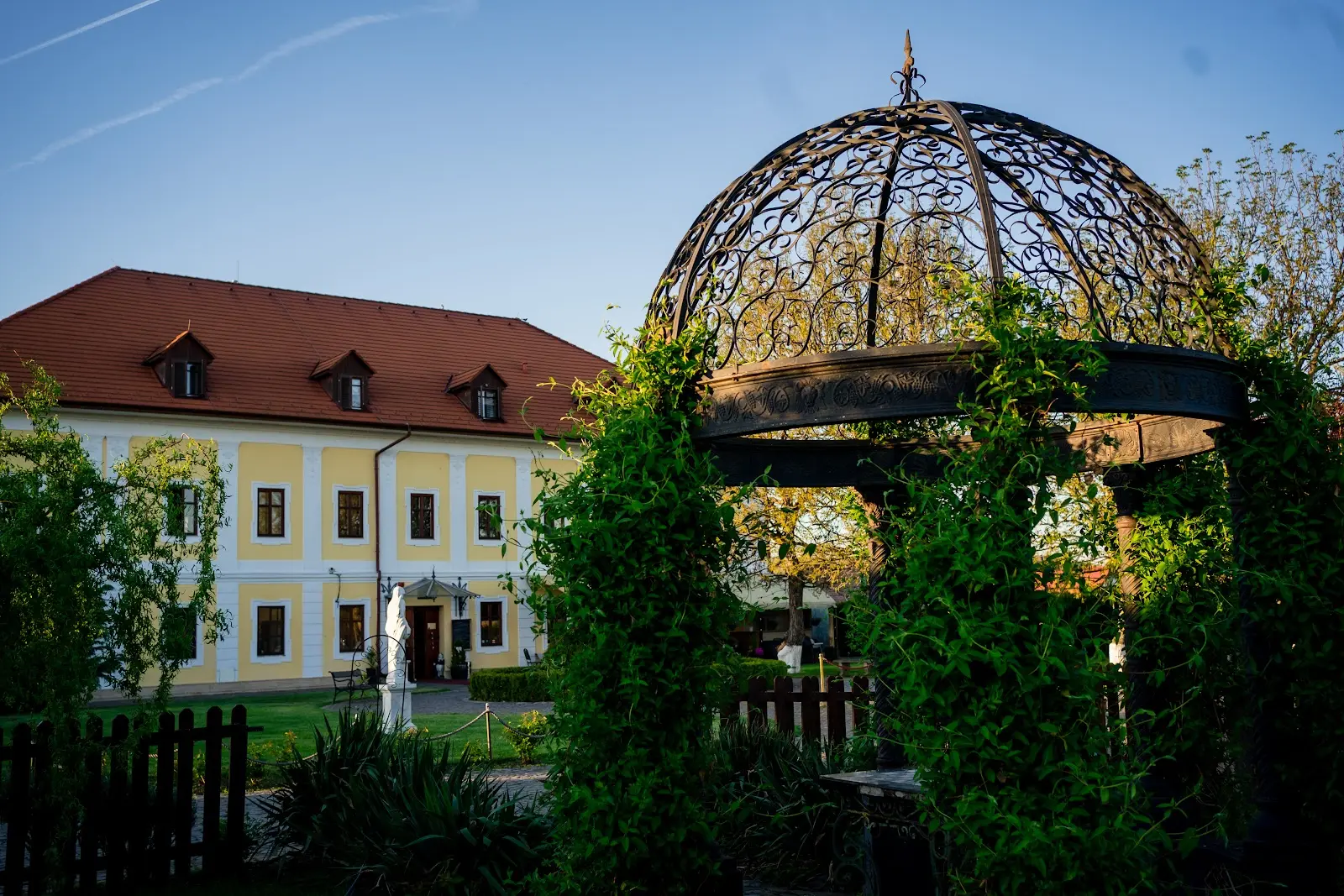
Haller Castle in Ogra, Mureș County, is a Transylvanian noble manor raised by the powerful aristocratic Haller family, who held vast estates along the Mureș Valley for centuries. The building, with origins reaching back toward the 16th and 17th centuries and later remodelling, blends medieval fortification elements with Baroque manor accents, with massive walls, corner towers and a silhouette that dominates the lowland village. A dendrological park once spread around the castle, and the interiors held period collections and furniture until the nationalisation that followed 1948, when, like many noble residences, it entered a long decline. Today it stands as a silent witness of the Hungarian aristocratic world of Transylvania, prized by heritage lovers and photographers for its melancholy atmosphere. Practical note: check the visiting arrangements in advance, since access to the interior may be limited depending on the building's condition and status.
Plan your trip
Stay, tour and get there
Stays nearby
Stays in Mureș
Experiences
Tours & activities
Guided tours, day trips and hand-picked experiences via GetYourGuide — free cancellation on most.
See all experiencesGetting to Romania
Flights, transfer & car
Fly into Romania
Compare fares to Bucharest Otopeni (OTP) and regional airports — Cluj, Sibiu, Iași, Timișoara.
Airport transfer
Private, fixed-price door-to-door transfer — driver waiting from the moment you land.
Rent a car — see the real Romania
A rental car is the key to Romania: the Transfăgărășan, the painted monasteries of Bucovina, mountain roads and the villages of Maramureș that no train reaches.
Find a carKeep exploring